
Financial Adviser: 5 Business Lessons Everyone Can Learn from Adrian Ramos, CEO and President of National Bookstore

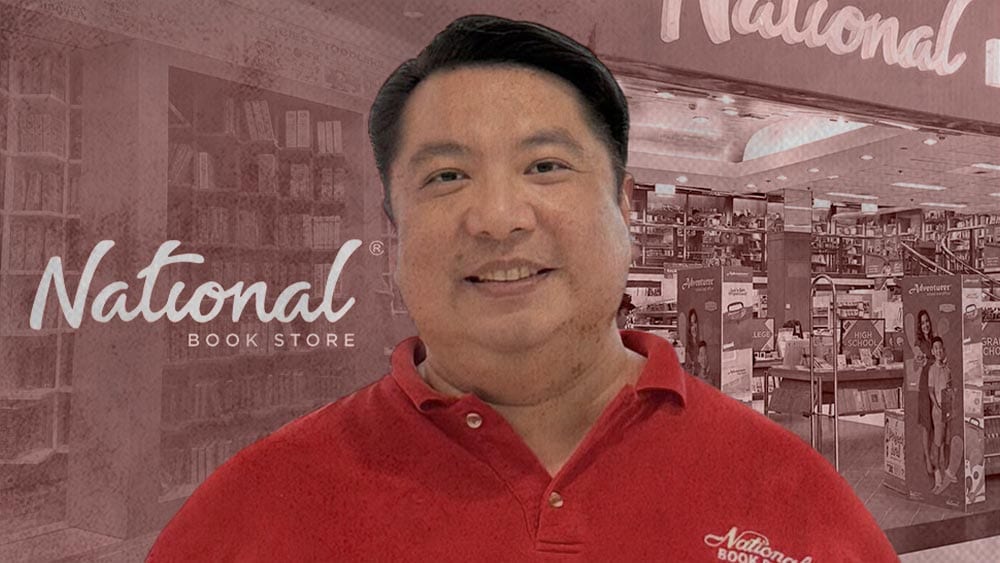
National Bookstore, a household name in the Philippines, represents resilience, innovation, and family values. The story of its founding is deeply rooted in the humble beginnings and extraordinary vision of Socorro Ramos, known affectionately as “Nanay Coring.”
In 1942, during the Japanese occupation of the Philippines, Socorro and her husband, Jose Ramos, opened a small stall in Escolta, Manila. They sold books and school supplies, despite the challenges posed by wartime shortages. The couple’s first venture was not without setbacks. Their store burned down during the Battle of Manila in 1945. Undeterred, they started over, rebuilding their business from the ground up.
The couple’s perseverance paid off. By the 1950s, National Bookstore had grown into a thriving business, becoming the go-to place for students, teachers, and book lovers alike. Socorro’s keen business sense and dedication to customer service propelled the company’s success, transforming a modest bookshop into the largest bookstore chain in the Philippines.
Today, the legacy of National Bookstore is carried forward by Socorro Ramos’s grandson, Adrian Ramos. Adrian, the youngest son of the late mining tycoon Alfredo Ramos, who passed away in 2022, has taken the helm as CEO of the family business.
Ramos’ journey to this leadership role is built on a strong educational background and diverse professional experience. He graduated with a degree in management from Ateneo de Manila University and earned his MBA from the prestigious Kellogg School of Management at Northwestern University in Chicago. Before joining National Bookstore in 2017, Ramos gained experience working at McKinsey & Company, a leading global management consulting firm.
Under Ramos’ leadership, National Bookstore continues to thrive, with 240 outlets nationwide. His role as CEO symbolizes a new chapter in the company’s history, blending the wisdom and traditions of his grandmother with modern business strategies suited for today’s market.
Ramos’ leadership ensures that the store’s rich legacy will continue to inspire and serve future generations, staying true to the values of hard work and perseverance that have been at the heart of the business since its founding.
How does Ramos plan to continue the legacy of his grandmother, Socorro Ramos, in leading National Bookstore? What strategies does he employ to ensure that National Bookstore remains true to its roots while adapting to modern retail challenges?
Here are the five business lessons every family business can learn from Adrian Ramos, CEO of National Bookstore:
ALSO READ
1| Know how to preserve tradition and implement strategic changes
Traditional values often form the core identity of a business. They define the company's culture, guide decision-making, and establish a unique brand identity that customers recognize and trust. By maintaining these values, businesses can promote strong brand loyalty among customers who appreciate consistency and authenticity.
A company that successfully balances tradition with innovation can differentiate itself in the marketplace. While many businesses may rush to adopt the latest trends, those that integrate new strategies while staying true to their core values can create a unique position, attracting customers who value both innovation and tradition. This approach allows them to adapt to changing market conditions without losing their essence, ensuring they remain relevant and competitive over time.
Ramos' grandmother, the founder of National Bookstore, had a hands-on approach to store operations. She was meticulous about the details of how items were displayed, ensuring that the stores reflected a consistent and inviting atmosphere. Ramos recognized the importance of maintaining this legacy while introducing strategic innovations, focusing on the core values that had defined the business.
Despite National Bookstore’s established presence, having been in business for 82 years, Ramos recognizes the importance of innovation to stay competitive. He continuously looks for ways to improve and adapt the business. His willingness to pilot changes and experiment with new ideas reflects his understanding that innovation is crucial for long-term success.
Ramos demonstrates resilience in managing the challenges of scaling up a business while staying true to its core values. He carefully manages the growth of National Bookstore by ensuring that each expansion is done thoughtfully and strategically. His resilience is also seen in his ability to recover from setbacks, such as those faced during the pandemic, by emerging stronger and returning to the foundational principles that have sustained the business for generations.
“Based on what I’ve heard, when my father graduated, I think in the late ‘50s or early ‘60s, he started working at Kimberly-Clark,” Ramos says. “He was already helping out with National Bookstore. I remember that they were making postcards. Si Daddy yung sumasama dun sa German photographer around the entire country. Sila yung kumukuha ng pictures for National’s postcards in the ‘60s, so by that time, my dad had already traveled the whole country.
“My dad had to beg his parents for many years to open stores outside the first two locations, which were in Recto and Rizal Avenue. He had to convince them to open in Cubao and Makati. Kasi sila, yung perspective nila at that time, was everything should remain in downtown Manila.
“When Araneta Coliseum opened, it was considered to be in the middle of nowhere; there was nothing around it. Similarly, when Makati Commercial Center opened, it was also in the middle of nowhere. My father had to push them to let National Bookstore grow. According to the stories, it took a few years, and it was for a very simple reason: everything was handled in a very traditional Chinese way, like sino magbibilang ng pera? Kasi cash basis lahat nung time na yun.
“I never got the full story of how it really happened, but my dad was the one, along with his siblings, who grew the business beyond downtown Manila. Siya yung nag-push for the expansion. Kaya namin naunahan yung mga ibang bookstores nung time na yun. Kami yung unang nagbukas sa Cubao, Makati, Quezon Avenue, and Harrison Plaza.
“Up until the end of the 1990s, National Bookstore had only 40 stores. In the first decade of the 2000s, we went from 40 to about 100 stores, and in the second decade, we expanded from 100 to over 240 stores. So, in hindsight, the challenge was really how to scale up properly.
“When the business was smaller, you knew everyone, and it was easy. But when you go nationwide, it’s one thing to have controls and processes in place, but how do you maintain the spirit of what Lola built across the whole country, over that many people, and across 240 stores? That’s the difficult part. It’s easy to create processes and systems, but how do you maintain the spirit, the culture, and the brand? I think we could have done that better.
“Dati kasi, I remember, Lola and the second generation were very hands-on in terms of, ‘Dapat ganito yung ayos, dapat ganyan yung pagka-display ng items.’ Pagkatapos, nung sobra ng lumaki, nawala yung touch na yun. I think it became impossible to maintain that level of involvement, so we really went back to our roots. My brother and the rest of the team, nag-ikot sila. Ine-experimentuhan nila what's possible. We would pilot changes in a store and figure out how to display the items, whether the stores had the resources to move things around in the right way, and what kind of materials they had to create bins and boxes.
“So that’s what we did—we piloted in several stores and then disseminated the methods, either by inviting other managers to the pilot stores, documenting the process in memos, or using photos to show how things should be arranged and organized. For me, it was the number one thing to restore the entrepreneurial spirit in the stores, the customer focus. Hindi lang siya parang magbubukas tayo tapos ganon na lang.
“When we were doing this, one aspect we considered was open and direct communication. Secondly, when we wanted to do something, the first question we asked was, 'Kaya ba ng stores? Can they execute?' Thirdly, how do we make it easy for them to execute? Kasi dati when we were trying to scale up and introduce a lot of controls and processes, everything became so bureaucratic, complicated, and difficult. But our new goal is that whenever we want to do something, it’s important and it’s not easy, but how can we make it as easy as possible for the stores to execute?
“If you think about it, sabihin mo gawin nila, but if you don’t give them the tools, then it won’t happen the way you want. During the pandemic, we tried to reorganize a lot of the stores and improve wayfinding. Everything now has its place. I don’t know if you remember before, but there was a time when there were bins for every item, and everything was just there.
“Now, everything has a bin, everything has a place. It’s not yet perfect, and we’re trying to optimize as we go along. Pero, that in itself, was very new, and a lot of credit goes to my brother and our team. My brother is also involved in store look, store layout, and store organization. When we agreed on the strategy and what we were going to do, talagang nag-ikot sila to teach the stores how to do it and kung hindi nila kaya, we need to provide assistance on how we could help them.”
2| Know how to adapt a business model to market changes and stay competitive
Consumer preferences and expectations are not static; they evolve over time due to various influences such as technological advancements, economic conditions, and changing lifestyles. To align with these trends, businesses must continuously monitor and understand their customers' evolving needs and desires.
In a highly competitive market, standing still is not an option. Competitors are always looking for ways to innovate, whether by improving existing products or launching new ones. If a business fails to keep pace, it risks losing its market share to more agile competitors.
To stay competitive, businesses need to be proactive in understanding and adopting industry trends. This could mean enhancing customer experiences through new service models, or even entering new markets where they see potential growth opportunities.
Ramos observed a decline in textbook sales as the market shifted towards direct school sales. Recognizing this change, he reduced the space allocated to books in the physical stores, reallocating it to school and office supplies, which had a steadier demand.
Ramos prioritized making books affordable rather than just maintaining a vast selection. By sourcing from various suppliers, both local and foreign, he ensured that National Bookstore could offer a wide range of affordable books, especially in an inflationary environment where prices were rising globally. This strategy involved sacrificing some profit margins on new imported titles to remain competitive in the local market.
In response to the shifting market conditions, Ramos decided to focus on National Bookstore’s core business—school and office supplies—while still maintaining a meaningful presence in the book market. This focus allowed the company to remain profitable and competitive, even as the landscape of book retailing changed.
“In the early days, when National was all in, textbooks were part of its business, right? Over time, the textbook business became more direct to schools, so that segment became less significant. But in reality, even back then, even when textbooks were part of the business, the sales of books only made up a maximum of 30 percent, including textbooks.
“When textbooks went away, sales of books dropped to about 20 percent. However, the store allocation for books was maybe 50 percent. In reality, though, sales were only about 20 percent without the textbooks. So, while I understand that part of it was also that we had to match the demand with allocation space overtime, that’s why maybe when you enter the store now, some people feel, or some people see, which is true, that there’s a bit more space allocated to the school and office supply side than to the book side.
“The truth about books is that for a lot of people, if they know the title they want and they're willing to pay for the shipping, it's easier to find it online rather than shop in a physical store. So books, actually for us, and I think for others as well, are stronger online.
“Our goal is not to be the best bookstore; our goal is to make books as affordable as we possibly can for as many readers as we can. Maximizing inventory turnover, di ba? To make our books affordable, we need to find many sources, both local and foreign, that offer affordable books for children, for classics, for all kinds of literature. But this also means that we have to sacrifice a bit of our margins on the new imported titles because we are benchmarked against U.S. prices, and they keep raising prices. So now, it's not that our margin is shrinking, but we can’t just do the same thing we used to do, which was to follow U.S. pricing.
“My goal is not to have the greatest selection of books. My goal is to promote reading to as many people as possible who can still afford it. Because we're in an inflationary environment, the U.S. is raising prices for their market, and sabit lang tayo. The affordability here is different from their affordability over there, right? So, for a bookstore to have the widest range, you would need really big margins to absorb the cost of inventory, correct? Yes, as we build it up, and hopefully one day we can reconsider the possibilities of bringing back more books, for example. But today, we're really focused on getting back to basics and concentrating on our core business.
“The question about what defines a bookstore is understandable, but the reason we're called National Bookstore, and so were all the other bookstores when National Bookstore was founded, is rooted in tradition. At that time, when all of these were founded during the late 1930s or around World War II, a bookstore in the Philippine context was really a mix of school-related items, both for reading and school materials, because there are synergies between reading and school materials.”
3| Know how to leverage data for smarter business decisions
Accurate data allows businesses to make more precise forecasts regarding sales, inventory needs, market demand, and other important factors. This minimizes the risk of overproduction or stockouts, optimizing inventory management and reducing costs.
With accurate forecasts, businesses can allocate resources more efficiently, ensuring that capital, labor, and materials are used where they are needed most. This leads to better operational efficiency and cost savings.
By improving data accuracy, businesses can better assess risks and opportunities. Accurate data helps identify potential threats early, allowing companies to develop strategies to mitigate risks and capitalize on emerging opportunities.
Businesses that rely on accurate data can anticipate market shifts and adjust their strategies accordingly, staying one step ahead of competitors. This agility is essential in a rapidly changing business environment.
Ramos understood that accurate data was the foundation of effective business strategies, allowing him to predict trends, manage inventory efficiently, and meet customer needs. He recognized the complexity of managing a vast and diverse inventory with numerous SKUs and small items.
To address this, he introduced a mobile app that enabled store personnel to scan barcodes of items upon arrival. This innovation made it easier to log inventory immediately, reducing delays and minimizing potential errors.
Ramos used data to analyze sales trends and customer preferences. This insight allowed him to adjust inventory orders accordingly, ensuring that the store stocked more of what customers wanted, thereby optimizing sales and reducing excess inventory.
Ramos’s efforts to simplify processes for store staff, such as making inventory logging easier, reflect his practical approach to business. He valued efficiency and understood that making processes user-friendly for employees would lead to better data accuracy and ultimately, better business outcomes.
“The pandemic actually did allow us to sort of clean up and sell down a lot of old stuff because that's all we had,” Ramos says. “I think we have the single most complicated inventory in the whole Philippines because we have a huge number of SKUs and not just a huge number of articles, but also a lot of what we call 'abubot'—many small items, like a single pen or other small things.
“We have an ERP system that handles this but the issue is volume. For example, for an ERP system to work properly, you have to make sure that inventory transfers are recorded on time. They will always be recorded at some point, but what you want is to make it as easy as possible for the store.
“Again, I go back to how we can make it easy for the stores to receive and log inventory on the first day. During peak seasons, pag dumating yung deliveries arrive, dagsaan yung deliveries, sabay-sabay over several weeks. We have a hard time keeping up. So, we developed a new system because hindi agad nare-receive yung inventory, right?”
“It's not the fraud that I’m worried about. It’s the accuracy of the data so we can make predictions. As part of what we did, we created a mobile app so that when the items arrive, they just scan the barcode, and that's it. But when we first implemented the ERP, we didn't have that, medyo mahirap, diba? So again, we go back to how we can make it easy for the stores to follow the processes.
“Data is everything because that’s how we know what's selling, customer preferences, and customer trends. So, we actually collect as much data as we possibly can. For example, if you have a ballpen with three colors—black, red, and blue—do you order equal amounts of all three?
“The answer is no, because black will always sell more than red and blue. But it's the same model, so we need that kind of data to know that for sure. The same applies to books, right? In all of our categories, we need to know where they are, how fast they're selling, and whether they've paid for themselves or kung naipit ba. Kung naipit, then we need to think about whether we should do that again in the future. Things like that.”
4|Know how to build team collaboration and maintain strategic focus
When decisions are made with input and agreement from multiple stakeholders, team members are more likely to feel ownership of the decision. This buy-in leads to stronger commitment, as people are more invested in the success of a plan they helped create.
Involving team members in the decision-making process promotes collaborative work environment because when decisions are made by consensus, there is usually less resistance to implementation. People are more likely to support changes when they have been part of the decision-making process, reducing the friction that can come with new initiatives.
By staying focused on these goals, a business can maintain a consistent strategy that aligns with its vision, even when faced with short-term challenges or distractions. They ensure that a business is not just reacting to immediate circumstances but is also planning for future success.
Ramos emphasized the importance of starting small by piloting ideas on a smaller scale before launching them fully. This approach allowed the team to learn and understand the initiative thoroughly before committing significant resources. By involving the team in these pilot projects, Ramos promoted a collaborative environment where everyone could contribute to the success or improvement of the idea.
Ramos’s leadership style was heavily centered on building consensus. He made it a point to gather input from multiple team members before making any significant decisions. This inclusive approach ensured that everyone felt heard and valued, leading to stronger commitment and buy-in.
Ramos acknowledged that noise, such as external opinions or criticism, could be distracting, especially during challenging times. However, he emphasized the importance of not overreacting to this noise. Instead, he trusted in the data and the research they had conducted, allowing the business to stay on its intended path without being swayed by temporary distractions.
“When we try something, we always pilot it on a small scale before launching big so that we can understand what we're trying,” Ramos says. “It's better to start small and then go big rather than going big right away because there are many lessons to be learned when you pilot an idea. Secondly, my leadership style has always been about consensus. I will make the decisions, but I generally don't make decisions until I hear from a multitude of people.
“The best decisions are when everyone has said, ‘Game tayo dyan.’ Kasi pag malakas ang loob ng lahat ng tao, buo yung loob nila. There’s buy-in, and if it doesn’t work, at least it wasn’t because people were forced to do something they didn’t agree with. If we made a mistake, then we made a mistake, and we move on. But generally, I try to get consensus as much as possible from different angles, and I want to make sure that everyone is fully committed.
“I think one of the important lessons I learned is that you have to be able to not overreact to noise. Kasi when you're struggling, there's a lot of noise, and sometimes, of course, it feels personal, right? But if you let it affect your decision-making, you may doubt yourself.
“Admittedly, if we take on more than what we can actually handle at any given time, it won't work. And although there's a lot of noise—like questions about whether we're still a bookstore and why we don't have enough books—if we overreact to that instead of sticking to our vision, we lose sight of the long-term journey. Kasi bigla kang kakabig, bigla kang gaganun. You have to trust the data. We do a lot of market research, both formal and in-store, and we have to trust that we know what we can do and that we know how to do it in a disciplined manner.
“So you really have to not let the noise get to you, but that doesn't mean you shouldn't listen to feedback. Of course, you should take feedback, right? But you should take the feedback and try to build on it, without overreacting. Just because may nagsabi sayo ng ganito, ganito na lang. You have a path, and while you can fine-tune based on feedback, the path is still there. Sales of paper books in the US and globally are the largest they've ever been. So, this idea that books are dying is really not true.
“The US paper book business is the largest it's ever been, and what most people don't realize is that in the US, only nine percent of people read only ebooks. One-third read both, and there are people who exclusively read paper books, which also makes up one-third. Nagbabago naman talaga, but TikTok has actually driven younger people to read and to go back to physical books.
“Kasi ngayon parang buhay na ulit. I mean, in terms of production. I talked to one printer. People, especially younger ones, still want the hard copy. For example, with romance novels, they prefer the hard copy. They don't like to go for online or ebooks, because it's about ownership. It’s something tangible that you have, right? Last year, for the first time in 20 or 30 years, vinyl sales have overtaken CD sales. Why is that? Because people want to have it, or maybe they haven't experienced it before, so they want to have it. It’s a collecting thing. It’s actually because of fandom.
“Fan followings are a lot more passionate and stronger today, so it's part of the experience of being a fan, right? There will always be this unknown digital push, and then there will always be a push back to analog. So many technology companies, so many businesses, have tried to change the way books are sold, and none of them have worked. They’re trying to fix a problem that people don’t think is a problem because the people who love books just love books, period.
We don't take for granted that we will always be the preferred choice. So, we always have to innovate. We always have to do better, and we always have to project and communicate that we're innovating. We don't assume that we will stay number one because we’ve seen that it can change. At the end of the day, it's about the customers. We try to get to know our customers as much as we can because we’re focused on this category. All of our energy is focused on these categories. Yes, I'm sure everybody does it, but maybe there’s an advantage in having a head start.”
5| Know how to honor and apply the founders’ wisdom and values
The practices and values established by the founders serve as the foundation of the company’s identity. They provide a guiding compass for decision-making, ensuring that the business remains true to its original mission and vision.
The strategies and practices that led to the company’s early successes are often a direct result of the founders’ insights. These successful approaches are refined over time, becoming best practices that can be relied upon in similar situations.
Equally important are the lessons learned from failures. Founders encounter numerous obstacles and setbacks, and the wisdom they gain from these experiences teaches them what to avoid.
By understanding the reasons behind past failures—whether they involve market misjudgments, operational inefficiencies, or strategic missteps—the business can steer clear of these pitfalls moving forward.
Ramos learned not through direct teaching but by observing his father in action. He tagged along with his father, watching how he conducted business, handled negotiations, and made decisions. This hands-on approach allowed Ramos to absorb valuable lessons in deal-making and leadership, even though his father wasn’t the type to explain things step by step.
Ramos recognized his father’s risk-aggressive nature. While he is more risk-averse, Ramos still honored his father’s legacy by understanding the importance of taking calculated risks when necessary. He learned to balance his father’s boldness with his own caution, ensuring he could manage complex challenges without becoming overwhelmed
From his grandmother, Ramos learned the importance of truly understanding the customer. His grandmother’s approach was more operational, involving direct interaction with customers and attention to detail.
Even though business operations have become more sophisticated, Ramos continued to apply this principle by conducting customer surveys and ensuring that the business remained customer-centric, especially during challenging times like the pandemic.
Ramos acknowledged that his father was a high-level strategist, focused on deal-making, while his grandmother was more operational, concerned with the finer details of the business.
By balancing these two approaches, the CEO ensured that the business was both strategically sound and operationally efficient. He applied his father’s strategic insights while also honoring his grandmother’s meticulous attention to detail.
“My Dad was not the teaching kind; he was more of a 'doing and just watch' type. He is one of the most risk-aggressive business people I know. In the field of natural resources, there's always a high level of risk. Very risky. I'm actually more risk-averse than he is, so ako yung pumipigil. So, if you ask me about risk, it's actually different. He was always the risky one.
“You know, the problems of restarting the copper mining operation at Atlas in Toledo City were enormous—nobody else would have done it except him. Nobody else would have done it except him. When I first went to Toledo City in 2005 or 2006, the place had shrunk so much from its former state.
“Within a few years of us restarting operations, there was a McDonald's, may Jollibee na, at may tatlong malls na. The problems they had to overcome from the past, inherited from the previous owner, were truly enormous. So for me, when you’re faced with that level of complexity, you have to tackle it one step at a time kasi pag iniisip mo lahat, it can be really overwhelming.
“My dad was the best dealmaker. He was a real dealmaker, and I’m less of a dealmaker—I'm more operational. I think what we all learned is that my dad always treated people well, treated them with respect. He wanted to make sure that no one could say anything bad about him. So maybe he would give in a little here, give in a little there, just to ensure no one had anything negative to say.
“Reputation was everything to him. I think that this is one of the most important things he taught us. My dad was very hands-off in a way—he let us find our own paths until he felt it was necessary to step in. I always appreciated my dad. Of course, we were exposed to his work, but he never really brought home the problems he faced at work. We were exposed to his business life because my dad loved to entertain. We would meet his business partners and foreign publishers, so we were exposed in that way. But he never directly taught me. I had to figure things out on my own.
When I first worked for him, I tagged along—meaning I went with him everywhere. That’s how I learned. I watched him, observed how he talked to people. When we talked about deals, we would discuss them, but he wouldn't necessarily say, 'Oh, this is how you do it, step by step.' That wasn’t his style.
“One lesson I learned from my lola is that you have to understand your customer. We just do it in a more sophisticated way now because there are more people involved, so we actually have to conduct surveys and things like that.
“Dati kasi lagi nyang sinasabi na siya yung kumakausap dun sa mga tao kasi sya yung nasa harap. It's the same principle, right? You really have to know your customers. It was really helpful during the pandemic when things were really bad for me because I would always remember parang whenever we would talk about challenges during the last 20 years, for example, she would always say, 'Ah wala yan, kami World War 2, ganun ganun. Wala yan, kami nga binagyo, etc.’
“Back then, I used to think, 'Oh Lola, you don't know what you're talking about, right?' But actually, those words came back to me, and I suddenly realized what it really meant—that it could be worse, right? You have to put things into perspective, and then you just have to work hard. At that point, ‘pag may problem na, wala ka nang magagawa kundi kumayod, so just keep working.
The opportunity na talagang tuturuan nya ako was less nga because I wasn't working with her that much. It was more with my father. Pero I would watch her in our meetings, and talagang my Lola is the most charming person. I guess the lesson I really learned from her is that no matter how difficult the conversation is, you can always handle it politely. She never argued. Never siya nang-aaway even in negotiations; it was always polite. And that's something I've tried to emulate as well.
“My Lola, as an entrepreneur, was more operational—more front-of-the-shop type. My dad was more strategic, focused on deal-making behind the scenes. Like, my dad never wanted attention, right? But my Lola could talk to anybody. So, personality-wise, they were very different.
“My dad was more of a high-level dealmaker, but I can't honestly say that he was interested in the color of a certain notebook, right? My Lola, on the other hand, was. She was obsessed with everything in the shop—every color, every detail. She was particularly focused on the shop windows and how the shop front looked to outsiders, making sure it was inviting. She would always check yung ayos ng pagkadisplay ng mga libro. She did that in all the branches.”
