

Financial Adviser: 5 Business Lessons Everyone Can Learn from Genevieve Lim-Santos, Founder and CEO of Zagu

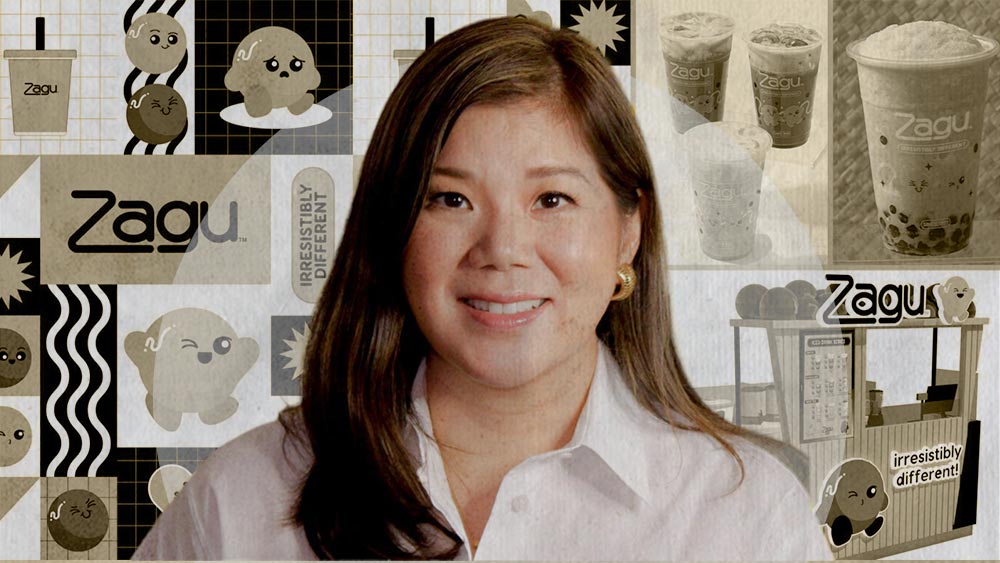
Genevieve Lim-Santos grew up in Vancouver, Canada, where her family relocated in the 1980s. From a young age, she showed a deep fascination with the workings of laboratories and research.
This interest naturally led her to pursue a degree in Food Science at the University of British Columbia. Her academic journey was driven by curiosity and a desire to innovate in the world of food technology. Upon graduating, however, Santos faced an unexpected challenge when she returned to the Philippines in 1997—a time when the country was grappling with the effects of the Asian financial crisis.
The financial crisis made job hunting difficult, with limited opportunities in her field of study. Instead of succumbing to the pressure of unemployment, Santos decided to create her own path. She drew inspiration from her fondness for bubble tea in Vancouver, a beverage that was gaining popularity in Canada at the time.
However, instead of merely replicating the concept, Santos innovated. She introduced a new twist by using fruit juice, crushed ice, and tapioca pearls, giving birth to what would soon become known as the "pearl shake." This initial success fueled her determination, leading her to establish her own brand, Zagu.
Within two years, the number of Zagu outlets skyrocketed to over 200. The franchising model she adopted not only accelerated Zagu’s growth but also empowered local entrepreneurs to partake in the success of the brand.
Today, Zagu boasts over 500 outlets nationwide, making it the leading pearl shake brand in the Philippines. This success story is a testament to Santos’s strategic foresight and her ability to manage the complexities of a trend-driven market.
How did Santos’ approach to leadership and decision-making contribute to the resilience and longevity of the Zagu brand? In what ways has Santos’ journey with Zagu inspired other entrepreneurs, particularly those facing similar market challenges?
Here are the five business lessons every entrepreneur can learn from Genevieve Lim-Santos, founder and CEO of Zagu:
ALSO READ
1| Know how to validate your startup idea before launch
Many startups fail due to a lack of market demand or misalignment with customer needs. Validation helps you avoid these common pitfalls by providing a reality check on your assumptions and ideas. By validating your idea early, you can avoid wasting resources on a concept that may not work. Instead, you can refine or pivot your idea based on feedback, ultimately saving time and money in the long run.
Validation ensures that your product or service meets the needs and desires of your target market. By understanding your customers' pain points and preferences, you can create a product that truly resonates with them. Knowing that there is demand for your product gives you and your team the confidence to move forward.
Santos identified an opportunity to bring bubble tea to the Philippines after seeing its popularity in Canada. She recognized that Filipinos were already familiar with sago, which could help the product gain acceptance. This shows her ability to spot market gaps and capitalize on them—an essential skill for any entrepreneur.
Santos used the resources available to her, such as her father's coffee shop, to test her product before launching it widely. She leveraged available resources creatively to validate and refine her business idea.
Santos was also willing to take risks by introducing a new product to the market. Even when faced with skepticism, she continued to experiment with her idea. By test-marketing her drinks in her father's coffee shop, she gathered direct feedback from customers, which validated her product idea. This step illustrates the importance of customer validation in ensuring that there is a demand for the product before scaling the business.
Santos was willing to adapt her approach based on the feedback and reactions she received from potential customers and partners. This adaptability is important for startups, which often need to pivot and adjust their strategies based on market responses.
“I took up food science in Canada,” she says. “My plan at that time was to work in laboratory research and development. I didn’t even know the course existed until I spoke to a cousin of mine. She was about to enter university, so I asked her what she was going to take. Sabi niya, ‘food science.’ Sabi ko, ‘What's that?’
“Often, the impression of food science is that it’s culinary, but it’s not—it’s the science of food, so she explained it to me, for example, you could work for Nestlé, and they might ask you to develop a kind of chocolate with low sugar, ganyan-ganyan. Sabi ko, ‘Oh, okay, I find that interesting.’ It’s actually a five-year course. It can even pass as a pre-med course in Canada.
“My goal then was to work for a multinational food company. My vision was like Frito-Lay or Nestlé, the big companies in food. I think when you cook, your creativity comes into play. When you cook kasi, you can customize it to your taste, to your preference. There's flexibility, which allows you to be creative, unlike baking kasi baking is very precise; you have to follow the recipe exactly.
“So it started 1999. At that time, I was a fresh grad. I was living in Canada, but I’ve always wanted to return to Manila. I had a degree from Canada, so I felt like I could get a good job with a foreign degree, but this was during the 1997 Asian economic crisis, so walang jobs available. Everyone was on hiring freeze-hiring, and there were no opportunities.
“So I found myself back in Canada again, and my friends and I would frequently visit bubble tea places. That’s where we would hang out, and we became so addicted to the boba. We thought, ‘This is good, parang this could work in the Philippines.’ Kasi we’re not foreign naman to sago—we have sago, right? The white one, so sabi namin, parang magcli-click ito.
“So I came back again, and at that time, my Dad had acquired the operation of a coffee shop in Green Valley. We operated the coffee shop there. Since we had a coffee shop, that's where I test-marketed the drinks. I already had the materials kasi nag-uwi na ako.
“At that time, I was only preparing two flavors—Taro and Honeydew, so parang in-include lang nila sa menu and offered them to the bowlers, yung clientele lang ng bowling alley (where the coffee shop was). The reception was very positive, which gave me more courage to pursue the business. They enjoyed the drink, na parang hinahanap-hanap nila. So ang feeling ko meron nga talagang potential yung product. I decided to put up a cart, and then I just went from there.
“It was very interesting. In fact, even before I put up the cart, I was already offering it to some establishments, like Goldilocks. I remember trying to sell them the idea, and then I would just supply the product to them. It was like that initially. Pero I remember one of them saying, "Black sago? Food na black?" They weren't interested kasi it was something new, and people didn’t really eat black-colored food, especially 25 years ago.”
2| Know how to bootstrap and scale your startup on a budget
Bootstrapping forces you to be resourceful and make the most out of limited funds, ensuring that every peso is spent wisely. This mindset helps you focus on essentials, reducing waste and unnecessary expenses.
Working within a budget often sparks creativity and innovation. When you have to find cost-effective solutions, you’re more likely to develop unique strategies and products that stand out in the market.
Scaling on a budget encourages sustainable growth. You grow at a pace that your resources can handle, which reduces the risk of overextending and facing financial difficulties. This approach allows you to build a solid foundation for long-term success.
Santos bootstrapped her startup, Zagu, by relying on creativity, resourcefulness, and careful management of limited funds. She began by brainstorming with friends to come up with the brand name and design, doing much of the work in-house, including creating the logo and adjusting the product concept for the local market.
Instead of relying on expensive tea-based products from Taiwan, she localized the flavors to appeal to Filipino tastes, such as Buko Pandan and Chocolate, which saved costs and made the product more marketable in the Philippines.
Her first store was set up in a high-traffic area, using a space owned by a relative, which minimized initial expenses. She also personally handled marketing by offering samples directly to potential customers, relying on word-of-mouth to spread awareness rather than expensive advertising campaigns. This approach was both cost-effective and highly successful, as the product quickly gained popularity.
Santos focused her limited funds on research and development rather than marketing, ensuring that the product quality remained high and met customer expectations. This strategy paid off, as Zagu became a popular brand with a strong customer base, without the need for heavy marketing expenditures.
Santos also took a hands-on approach in creating her own franchise contract based on knowledge gained from seminars, rather than spending large amounts of money on professional services. This do-it-yourself approach to franchising further exemplified her bootstrapping mentality and allowed her to expand the business while keeping costs under control.
“Zagu is just a glamorized name for 'sago,' Santos explains. “Pasosyal lang. I had a brainstorming session with a few friends and then we wrote out everything, all the ideas, but the logo was professionally designed. Yung font na Z-A-G-U, sariling gawa namin yun. Then you learn stuff like the trademark. Natutunan ko yun sa franchising.
“When I brought the concept to Manila, tinanggal namin the tea kasi it was originally tea-based from Taiwan. Ako rin, personally, my favorite was pearl milk tea. We said the Filipino market hindi iinom ng tea. This was 25 years ago, before Starbucks was even here. But at that time, ang gusto lang namin was to bring the sago here, so, we took out all the tea, kaya yung flavors namin Buko Pandan, Chocolate, and Cookies and Cream na walang tea. Ni-localized ko yung flavors.
“The first outlet was actually in Mabini. My uncle had a car aircon shop there. It was a very high traffic street so we put up a roadside store there na may parang small window pero we had to do a lot of sampling kasi people didn’t know what this was. Syempre, when you say "sago," they know sago, but this was black and chewy kaya we had to define what Zagu was. We described it as an ice-blended shake with chewy and seductive black tapioca balls. We had to explain and educate Filipinos kasi it was foreign to them.
“Doing sampling was direct marketing talaga. I was personally there, explaining, giving out samples, and getting people to try it. You know, kasi I believe that if we enjoy something, we almost always share it with our family and friends; we buy it for them, or we tell them about it, di ba? So the product talaga sold itself. That’s why we didn’t have to do very heavy marketing. I believe the product sold itself, the brand sold itself, through word-of-mouth.
“The sales were generally good kasi people were curious, like, ‘Ano yan?’ They would stop and try it. It started slow, but eventually, it picked up. It didn’t take long na magpick-up siya. Mabilis din yung word-of-mouth na nag-spread. During the height of Zagu, I think I remember it was in Glorietta, we were selling like 1,000 cups a day. Ang problem was we were running out of ice.
“We were using the Osterizer blender, yung sa bahay, kasi as I said, we didn’t envision it to be very big. Yun lang meron available at that time. Nasusunog palagi so palit ng palit, but it was doing so well that we didn’t mind. Eventually, we upgraded to more industrial blenders nung nag-evolve na yung business.
“When I opened my own store, I wanted something that looked foreign, parang imported, so people thought it was a foreign franchise, but actually, it was just a local concept put together. At that time, because my only source was Canada, all my materials were coming from there—my pearls, my drink mixes, everything except the packaging, which was local, pero, at the time, the supply of cups was unreliable, and even the dome lids parang bago pa lang eh. Those were the challenges in the beginning.
“I would say the heart of our business was research and development rather than marketing. I've never really spent much on marketing. Many times, I was asked about getting an endorser ganyan ganyan, pero I believe more in R&D than in marketing. I'd rather spend my money there, especially when we we were starting out. Syempre funds were limited, so I didn’t also have the money to invest in an artist to endorse my product.
“In a year, we were able to open five, I think, from April to December. We had Landmark, SM Centerpoint, and even Robinsons Galleria, so medyo kalat. Ako pa nga nagde-deliver before. We do everything ourselves to this day; it's been 25 years. I've never joined any trade shows to franchise. I've never worked with any franchising companies, although they've asked me and approached me to do my franchise contract.
“But admittedly, at that time, I didn’t have the funds, and I wasn’t willing to spend because it was quite a big amount of money to get them to do the contract. My priorities were different at that time. It wasn’t for that, so I did my own contract. I just attended a seminar about franchising, and then someone spoke about it and provided a sample. From there, we created our own.”
3| Know how to pivot a business model to changing market conditions
Market conditions are constantly evolving due to factors like consumer preferences, and economic shifts. Pivoting allows a business to stay relevant by adapting to these changes. When market conditions change, new opportunities often emerge. By pivoting, a business can take advantage of these opportunities, potentially opening up new revenue streams or markets.
As customer needs and preferences evolve, a business that pivots can continue to meet these needs, ensuring customer satisfaction and loyalty. A business that adapts its model in response to changing conditions is more likely to sustain long-term growth. It avoids stagnation and remains competitive in the market.
Santos initially introduced franchising because there was a demand for it. She didn’t plan to franchise from the start, but when potential customers expressed interest, she explored the opportunity. This shows her willingness to adapt the business model based on customer needs.
When the market became saturated with similar products and Zagu experienced a dip in popularity, Santos didn’t give up. Instead, she reacquired and repositioned mismanaged stores, which helped her maintain Zagu’s brand presence and market share.
Santos strategically chose locations and adapted the business model to fit different markets, ensuring the brand’s scalability and long-term success
Santos also constantly introduced new flavors and variants, improved packaging, and even expanded the product line to include ice drinks. This constant innovation helped keep the brand fresh and appealing to customers.
“The idea of franchising only came up because people were asking about it, like, 'Can we franchise?' So I thought, 'What’s franchising?' and I had to look into it,” Santos says. “That's why I attended a franchise seminar to familiarize myself. Kasi at that time, everyone was franchise-crazy na. So I thought, ‘Parang okay ito ah.'
“Eventually, we started giving out franchises in 1999. My first franchisee was a relative in Festival Mall. The height of Zagu was in 2000. Parang I think by 2001, we had around 200 stores na. We grew so fast, and at that time, it didn't matter kung saan mo ilagay kasi talagang kikita siya and then, just like any business cycle, we peaked, and then there were mismanaged stores.
“Saka yan din yung time na maraming ibang store na nag-mushroom. Yung hype noon, nakisabay lahat. At one point, there were maybe 100 brands. I mean pati yung mga kariton rin. Parang lahat na lang meron version ng Zagu. May Sagoo, Zaguu, and all sorts. So that was challenging kasi at one point, Zagu became generic, like when people said 'mag-Zagu tayo,' what they meant was pearl shake. So when maraming nagsara, syempre people were saying ‘fad lang yan.’ Sabi nila sarado na yung Zagu. But they didn’t necessarily mean our brand, it was the other brands.
“So nung nag-dip, we had to re-evaluate. We reacquired some stores and repositioned them. Some closed stores had to be relocated, while others were just mismanaged, so we had to take over. We had to buy back some of the stores that we felt were just mismanaged. We went down to around 100 outlets.
“So we had to reposition and then put locations strategically na. And since the product did not change, we've maintained our quality. I believe that even before, when they were saying it was a fad, sabi ko, kung masarap siya and affordable naman, why would people stop eating it? Unless napagsawaan mo na, right? So I’ve always believed that. And then we just kept innovating, introducing new things. Even the packaging—nag-innovate kami. We were able to improve and it was sustained naman.
“Packaging, for example. Dati we used dome lids. Naku, ang daming complaints kasi na-overfilled namin yung cup. Nag-oopen kasi and natatapon. So, we switched to sealed cups with sealing films. We also constantly came out with new flavors and variants. We started with just two flavors, and now we have around 20.
“Recently, as part of our brand refresh and launch, we introduced ice drinks. Since we were known for ice-blended shakes, we now offer an ice drink line, which is like another new category. Para siyang milkshake. Its non-dairy.
“We have 500 outlets now, but it depends on the people you talk to, the circle, the social class. Sometimes they feel we're not there anymore because we're not in Rockwell, we're not in Greenbelt, but we have 500 stores nationwide. There are many in Calabarzon. We're very strong in Cavite, Laguna, Batangas, and then also in Cebu. We have stores in malls and roadside, sa mga bayan. Marami rin sa malls pero yung maliliit in some areas.”
4| Know how to ensure consistency in product quality
In a competitive market, consistency in product quality can serve as a key differentiator. It allows a brand to stand out, especially when competitors may struggle with variability in their offerings.
Consistent quality builds trust with customers. When consumers know they can rely on a product to meet their expectations every time, they are more likely to become repeat buyers and remain loyal to the brand.
A consistent product leads to satisfied customers. When products consistently meet or exceed customer expectations, it increases the likelihood of positive reviews, referrals, and overall satisfaction.
Santos prioritized maintaining high product quality even when competitors attempted to imitate the concept. She emphasized the importance of consistent quality, which helped Zagu stand out as a leader in the market.
Instead of reducing ingredients or compromising on quality when costs increased, Santos absorbed the additional expenses, which ensured that Zagu's products remained consistent in taste and quality over the years.
Santos recognized the importance of R&D in sustaining product quality. She pointed out that businesses often fail when they cannot reformulate or improve their products as costs rise. Zagu's dedication to R&D allowed them to adapt to changing customer preferences, such as adjusting sweetness levels.
“You can copy the concept; I cannot stop people from coming up with the same concept. But come up with your own name, di ba? Be more creative, ang dami namang puede. You can ride on the popularity of the product, but not the name.
“We were the leader at the time, and parang copycat lang sila. So we made sure to maintain our quality, and to this day, we continue to do so. That's why when we do a market research study, one of the things that keep coming up was that the quality of Zagu has remained consistent over the years.
“Many businesses don't sustain themselves when costs go up because they don't know how to improve their product. They keep cutting corners, reducing ingredients, and the taste changes—iba na yung lasa. They're not able to reformulate or improve the product. That’s why I feel like R&D is so important.
“There was a time when the dollar shot up from P39 to P50. We didn't pass that increase on to our franchisees; the company absorbed it. Even when costs go up, we don't automatically raise our prices. Over the last 25 years, I think we've only raised our prices about 10 times, and even then, the increases were minimal. We’re not the kind of company that raises prices every year. We try to keep our prices affordable without compromising quality.
“We have in-line quality control (QC) and retain product samples to ensure consistent quality. We also have mystery shoppers and inspectors conducting audits nationwide. While we can't completely stop issues like employees cutting corners, we address them through audits and education. Yung number one problem is yung nagde-deploy ng untrained service crew. Usually, it's not the owner but the crew yung nagbabawas ng powder or other ingredients. We educate them by explaining. For example, kikita ka short-term, pero long-term, masisira ka rin.
“That's why we train all the service crew here, and we don’t even charge for it—it’s part of our package. We want them to be trained properly because if there was a fee, franchisees might hesitate to send them for training. So, it’s free and included in the package. You can send as many crew members as you need, and we'll train them all. If your turnover is fast, you can send us 50 crew members, and we’ll train all 50.
“We manufacture everything now, and the quality is probably even better than before. I think our taste preferences are changing, too. Some of our formulations haven't changed, but when we taste them now, they seem sweeter. I feel like the sweetness level preferred by Filipinos has decreased over the years.
“With the availability of customizable sugar levels in bubble tea, for example, where people often choose 50 to 75 percent sugar, many have become accustomed to a lower sweetness level. So when they try our products, they might find them too sweet. We have to adjust that as well because what was once standard is now considered too sweet. Filipinos have gotten used to a lower sugar level.”
5| Know how to balance passion and profit in business
A business driven by passion often has a more authentic and compelling brand identity. Customers are drawn to companies that are clearly passionate about what they do, which can build a loyal customer base and positive reputation.
Passionate entrepreneurs are more likely to remain resilient when faced with obstacles. Their passion can help them manage setbacks with a positive attitude and a willingness to find solutions, rather than giving up when profits are temporarily affected.
Aligning passion with profit helps ensure that a business is not solely focused on short-term financial gains. Instead, it promotes a long-term vision where both the business’s financial health and its core values are prioritized.
Santos emphasized that her passion for serving good food and taking care of her franchisees was always her top priority. She made it clear that money was secondary, allowing her to focus on what truly mattered to her—quality and relationships.
While other businesses might prioritize quick profits, Santos chose to focus on sustaining her business over the long term. She believed that by staying true to her passion and values, success and profits would naturally follow, even if it took longer.
Santos found greater fulfillment in the positive impact her business had on the lives of her franchisees. Stories of how Zagu improved their lives, such as helping families reunite and supporting their children’s education, were more rewarding to her than financial success alone.
By focusing on providing value to her franchisees and ensuring that their businesses thrived, Santos created a mutually beneficial relationship. She helped them grow, and in turn, her brand expanded and became more profitable, but always with a focus on ethical and sustainable practices.
“I think my mentor would probably be my Dad because he is the businessman of the family,” she says. “He’s also more of a risk-taker. He gave me a lot of advice. In a way, you have to strike while the iron is hot, but at the same time, you have to be prepared. I think the key to sustaining the business is that I’ve learned that starting a business is easy, but sustaining the business is the real challenge. It’s really the real challenge to be able to sustain it for 25 years.
“Never underestimate an idea. If you believe in it, you pursue it. That's what I did. Of course, I didn't get support from everybody, but I truly believed it would succeed here, so I pursued it—that's one lesson. Another thing my dad always told me is that if you're thinking about it, someone else is thinking about it, too. The question is, who will do it first? Yun ang panalo, di ba? So you can never say, 'I thought of that too,' because it’s all about who did it and did it right.
“And then for me, it's really about the passion. That's why I’ve always said money is secondary to me, even from the beginning. My passion is to serve good food and to take care of my franchisees. That’s really my priority. And because of that, it has given me what I have now, though maybe it took longer.
“But I think that's what has sustained us over the years, as opposed to other formulas that are just about money. Money might come in fast, but maybe mabilis rin mawala. Siguro I never really made money my number one priority. We have a saying nga: knowing you have enough is enough. You know, when you see an item, just knowing you can afford it is good enough. I don't have to buy it. I'm not materialistic in that way, na parang I have to have it. It's more like, okay na, knowing I can is good enough.
“This way, we have the loyalty of our franchisees. They’re very thankful. When I got to meet them, some were even in tears in front of me. There were two franchisees I met during our anniversary. One of them said, ‘Ma’am, you’ve changed our lives and made it better.’
“Before, they used to send money, and their spouse would manage everything. Their life was so hard, but now, their spouse is home, no longer needing to work abroad as an OFW. Zagu was already providing for them. We even put their kids through medical school, and those kinds of stories really touch me. So I don’t mind sharing the success.
“For me, my life here is more fulfilling than money. Having enough is okay with me; I don’t need to move up to the next level, even though I know I can, right? But it’s just not my driving force. Now, I’m focused on coming out with good food products, and I need them to grow with me as well. We help each other. They help me, and of course, I make money from it.
“They grow my brand, but their lives are also better because of it. That’s why our expansion isn’t necessarily with new franchisees; it’s the existing franchisees who are expanding. We’re more strict now too. Just because you’re already a franchisee doesn’t mean you can open 10 more stores. We also qualify them, asking how ready they are to expand, because operating one store is different from operating three stores.”
Henry Ong, RFP, is an entrepreneur, financial planning advocate and business advisor. Email Henry for business advice hong@financialadviser.ph or follow him on Twitter @henryong888
