
The Most Reliable Banks in the Philippines, According to a Report

Campaigns in the country over the last few years to get more unbanked people into the formal financial system seem to be working. According to the Bangko Sentral ng Pilipinas’ Financial Inclusion Survey, the rate of account ownership surged to 56 percent in 2021 from a mere 29 percent in 2019. This means the number of unbanked Filipinos dropped to about 34.3 million, or 44 percent of the total adult population in 2021 from 51.2 million in 2019.
Many of the new account holders transact digitally through online channels, which makes digital banking services all the more crucial. Trust and reliability are the cornerstones of our relationship with banks and financial institutions: the more banks show that their customers can trust and depend on them, the more likely it is that they earn even more banking customers in the process.
ALSO READ
A New Bill Will Let You Choose Your Bank for Your Payroll Account
How Much Money Does the Typical Filipino Keep in His Bank Account?
Global open finance technology provider Brankas recently published its first-ever ASEAN Bank Stability Report, which includes a look into the “uptime” performance of banks in the Philippines and Indonesia. Uptime refers the measure of the percentage of time that a bank is available to users for online data and payment transactions.
The report provides some fascinating insights into consumer banks and, according to the report, helps inform “businesses, partners, and end users on the infrastructure reliability of the banks they trust.” Most of us know the feeling of frustration and helplessness during downtimes, contributing to inconvenience, potential financial losses, and erosion of trust in digital banking.
The most reliable banks in the Philippines

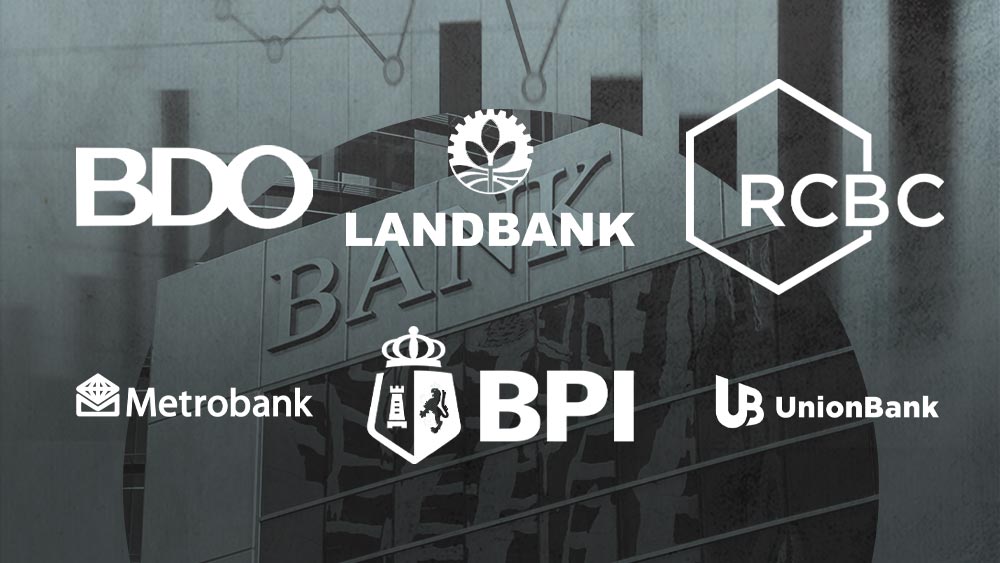
In the Philippines, of the banks included in the report, RCBC logged the highest uptime percentage at 98.30 percent. It was also found to have had the lowest total downtime hours for the year at 31.
RCBC was also found to have had the longest run of no downtime out of all the banks in the report at seven months.
Landbank came in at second place with a total uptime percentage of 97.83 percent and total downtime of 41 hours.
BDO was at third place with uptime at 97.46 percent and a total downtime of 55 hours.
BPI and Metrobank followed with total percentage uptime of 96.56 percent and 96.36 percent and total downtime of 117 and 123 hours, respectively.
Bringing up the rear of all the banks included in the study is UnionBank, with 95.98 percent uptime percentage and total downtime of 183 hours, including last May 20 when it logged a total downtime of 20 hours. That was equivalent to being offline for 7.6 days in a year.
According to the report, Landbank and Metrobank were the most proactive with advisories for both planned and emergency maintenance, while BPI “primarily had advisories for scheduled maintenance, but lacked communication for unexpected disruptions.”
“UnionBank and BDO failed to provide prompt advisories for planned and unplanned system disruptions,” the report added.
Meanwhile, it’s interesting to note that the Indonesian banks included in the study logged higher uptime percentages overall compared with the Philippines-based banks, with Bank Mandiri and Permata Bank both achieving above 99 percent uptime last year (99.59 percent and 99.20 percent, respectively).
“Now that e-payments and digital banking are becoming the norm, constant access to reliable digital banking services is no longer a luxury, but a necessity,” said Todd Schweitzer, CEO and co-founder of Brankas. “Uptime is a critical metric that impacts trust and stability, and we hope that Brankas’ latest report sheds light on the ASEAN region’s commitment to financial reliability and security.”
According to Brankas, bank availability data for the report was retrieved independently from public sources to determine service reliability for operations including bank statement retrievals, payments, and money transfers.
Looking ahead
Brankas say it expects the top banks in Southeast Asia to maintain an average uptime of 99 percent in 2024. This is in line with the requirements of financial governing bodies like the Monetary Authority of Singapore (MAS), which requires banks and financial institutions to maintain approximately 99.95 percent of uptime yearly.
“With the emergence of digital banks, fintechs, and non-financial institutions that are beginning to offer financial services, incumbent banks are required to compete at the same agility of the new market entrants,” the report said.
Brankas also offered some suggestions to financial institutions based on the results of ita Bank Stability Report.
“Every bank needs to balance the necessity of routine maintenance and system upgrades with the need for continuous service,” Brankas said in its report. “Customers today expect transparent communication so businesses and end users can plan accordingly. Brankas recommends that banks inform customers of scheduled downtime at least 5 working days in advance.?
“Unplanned incidents and unforeseen extended outages can cause huge inconveniences and reputational damages to banks, “it added. “In such scenarios, clear communication becomes even more vital.”
