

This Former Student Activist Now Owns the Largest Pawnshop Network in the Country

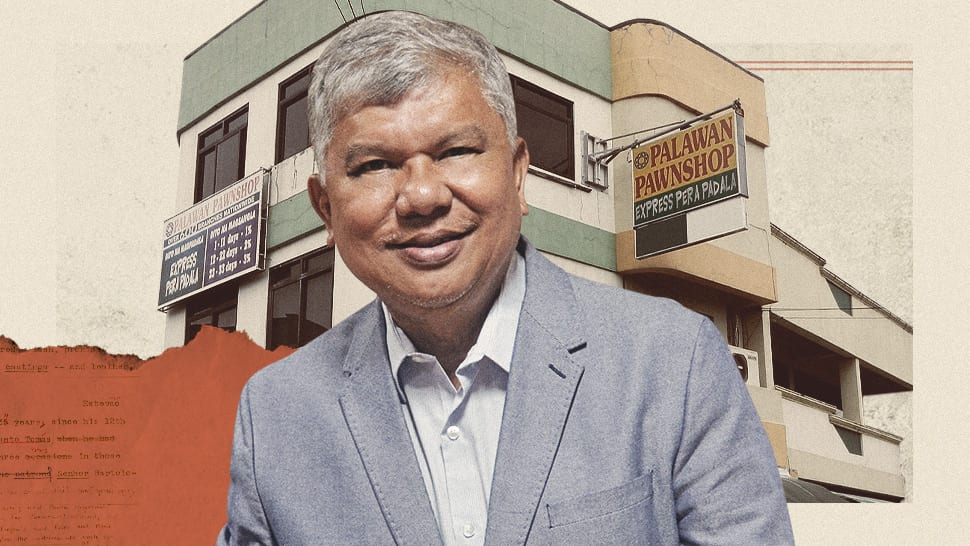
In Bobby Castro’s book, An Entrepreneur’s Journey, he devotes an entire chapter to answering the question about who exactly founded Palawan Pawnshop. Everybody knows him today as the big guy behind the country’s largest network of pawnshop and money remittance centers, but in the book, he clarifies he’s not actually the one who founded it, in the strictest sense of the word.
Also read: Backhanded, Condescending Remarks You May Not Realize You're Making
“For the record, I did not start Palawan Pawnhop,” he says. “It was in existence since the early 1980s, opened by the Rodriguez family of Roxas, Palawan.”
But later in the chapter, Castro mentions having watched the film The Founder with his wife Angie during a long-haul flight. That movie is about McDonald’s, one of the world’s largest fast-food restaurant chains, which was founded by the McDonald brothers in 1948. But it was also about Ray Kroc, the man who became the general franchisee of the brand and introduced innovations in the menu and the management system.
Bobby Castro at the blessing of Palawan Pawnshop's Davao Regional Center in Davao City, 2019

“Now, who really was The Founder?” Castro asked in the book. “The McDonald brothers, who first established McDonald’s? Or Ray Kroc, who expanded it is to what is today?”
The parallels are unmistakable. But Castro’s story as the guy who expanded Palawan Pawnshop and turned it into an industry-leading brand is even more fascinating when you consider his background.
Student activism
Castro was a former student activist and fierce freedom fighter who was in the thick of the riots and demonstrations against the dictator Ferdinand Marcos in the early 1970s. Apart from the book, he’s also talked about this at length in other interviews over the years, but I couldn’t help still asking him about it when I got the chance to chat with him via Zoom.
“I went to high school at the Philippine Science High School and eventually went to UP Diliman,” he says from his office in Puerto Princesa, Palawan. “But that didn’t last long because I joined the (revolutionary) movement.”
Castro entered UP in 1971, at the height of the so-called First Quarter Storm that was marked by an intense series of anti-Marcos protests.
“Like many others, after only one semester, I decided to drop out of school and work full time in the national democratic movement,” he writes in the book. “I was assigned to organize urban poor communities, trade unions and student organizations in Metro Manila. When Martial Law was declared, I had to go underground.”
Detention and freedom
I asked him what his parents had to say about that. Castro’s father Gregorio is a graduate of the Philippine Military Academy who became a pilot in the Air Force, among many other accomplishments. His mother Lilia was a homemaker who died when he was 19.
“Magkagalit kami for a long time,” he chuckles. “But (my father and I are) okay now. He’s 90 years old now.”
Castro was arrested in 1975 and detained at Camp Crame for over a year. He rejoined the movement after being allowed out on a pass to visit family. In 1977, he was hit by bullets in the head and shoulder and almost died. He recovered but was again detained, this time in Camp Olivas, and held without charges for one year.
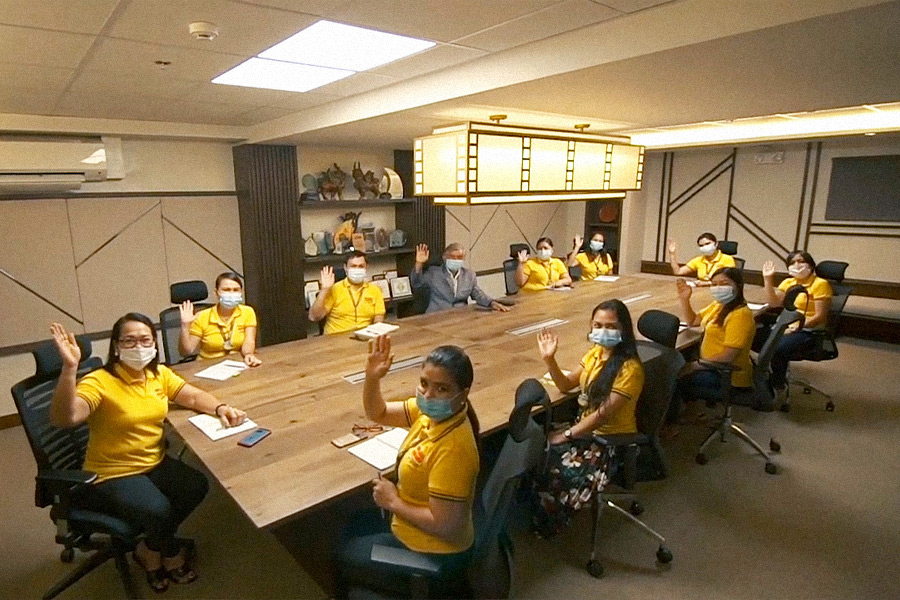
Castro during a meeting with Operations Department key personnel
“During that time, the student population wanted change,” when I asked what occupied his thoughts during his incarceration. “I was one of them. I was dreaming of a better Philippines and kept thinking, anong pwede gawin kung makalabas. (what could I do when I got out)? I had no idea then because, walang charges, so I didn’t know if I would ever get out.”
A series of businesses
When he did get out in 1978 as part of an amnesty program for rebels, Castro married Angie, whom he had met at PSHS and who was also part of the movement but never got caught. The two relocated to Puerto Princesa, where he helped his father start a business.
Castro went into a few odd jobs and businesses in his home province. He also found time to go back to school at the Palawan Teacher’s College (now the Palawan State University) where he finally finished a Business Education degree. It was also around this time that he and Angie started a family. Today they have five kids.
While his father was able to secure a loan and build the two-story CIRCON Building, Castro dipped his toes into a variety of businesses. In addition to helping manage the family hotel and restaurant, he started a wood sash factory and furniture store. He also sold diapers and gift items, bought and sold bangus fry and wild honey, opened a small carinderia and exported some Palawan-made products to Hong Kong.
But it was when he acquired the Palawan Pawnshop business in 1985 for P40,000 that Castro’s fortunes drastically changed.
Acquiring Palawan Pawnshop
Castro had no clue how to operate a pawnshop business. For him, it was really just because that was the only business available at the time.
“Wala kaming kaalam-alam, hindi kami business family (We had no clue. We weren’t a business family),” he says. “My wife, who was my classmate, wala rin siyang alam. But eventually she studied jewelry appraising in Manila. When she came back, she helped man the store. It was just the two of us back then.
In the beginning all the couple thought about was how to keep the company afloat. It was barely earning, Castro says. The monthly profit would only be around P5,000. People were pawning things like motor engines; appliances like boxy TVs, Betamax and VHS players; and even chainsaws.
“Somebody even tried to pawn yung papeles ng kalabaw nya (carabao ownership),” Castro says.
That was life for many years for Palawan Pawnshop. Slowly, the business expanded and opened more branches around the province. Without a lot of capital, Castro says they turned to borrowing money from relatives and friends.
“P50,000 here, P20,000 there,” he says. “We were just thinking that we wantd to offer the best product to our customers. Hindi ko pa iniisip yung ‘empire.’”
By 1998, the company had 16 branches throughout Palawan, and it was then that they decided to expand outside of the island. They first went to Negros, in the cities of Silay, Victorias, and Cadiz.
Expanding the business
“Our strategy was to start in towns where we felt our competitors were still not dominant,” Castro writes in the book. “We thought, so much the better if we were the first pawnshop to open in that town.”
And it wasn’t just the branches that the company expanded. In 2003, it started to offer a money remittance service, which it called Palawan Express Padala. The initial operations were between branches in Puerto Princes and Cuyo in Palawan.
The next year was a milestone as it was when the company opened its first branch in Metro Manila, in España, Manila.
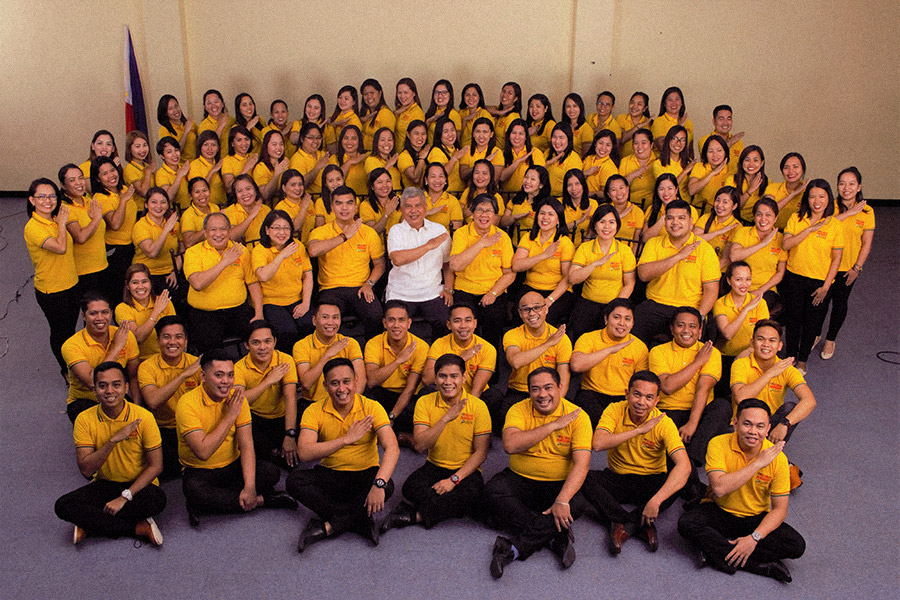
Palawan Pawnshop head office and area management officers
Today Palawan Pawnshop has 3,100 company-owned branches across the country. The count goes up to over 5,000 if you include the agent partners for its Palawan Express Padala, which is present in locations such as 7-Eleven and SM malls. The company has also partnered with multiple companies and institutions, which use Palawan Pawnshops and Palawan Express to dispense payroll to employees, accept school tuition, and many other services.
I asked the company chief what it is about the pawnshop business that most people don’t realize.
“Pawnshops are the go-to of many Filipinos,” he says. “Whenever you need something, it’s there. Dati-dati, people looked down on pawnshops. People think lolokohin ka, babawasan halaga ng alahas mo (People think they’rll trick you or wouldn’t give you the correct appraisal). But nobody is doing that in the pawnshop business now. We compete about interest rates. Everybody’s lowering their rates. That’s probably one reason why we’re grown as big as we have.”
Thinking about the future
Castro says they’re also well aware of the lightning-fast way financial technology or FinTech has grown worldwide, especially over the last few years.
“Yes, we need to keep up with the times,” he says. “Rigt now, we are the number one in brick-and-mortar (branches). So that’s the reach. But that’s the biggest the biggest liability. There’s a process of transformation going on. We want to ensure that Palawan will still be there. Pag nag-iba na imbes na pawnshop, it’s a “money” shop, where we can accept (other forms of) collateral and not just jewelry. And offer things like money transfers, e-wallet, et cetera.
“We are taking steps, he adds. “That’s our responsibility to our 15,000 partners. Our business should continue. I believe everyone that’s like us, are trying to transform into that stage and create a platform. If you don’t transform, malalaos ka. You’ll die.”
