

Financial Adviser: 5 Business Lessons Everyone Can Learn from the Founders of Papemelroti

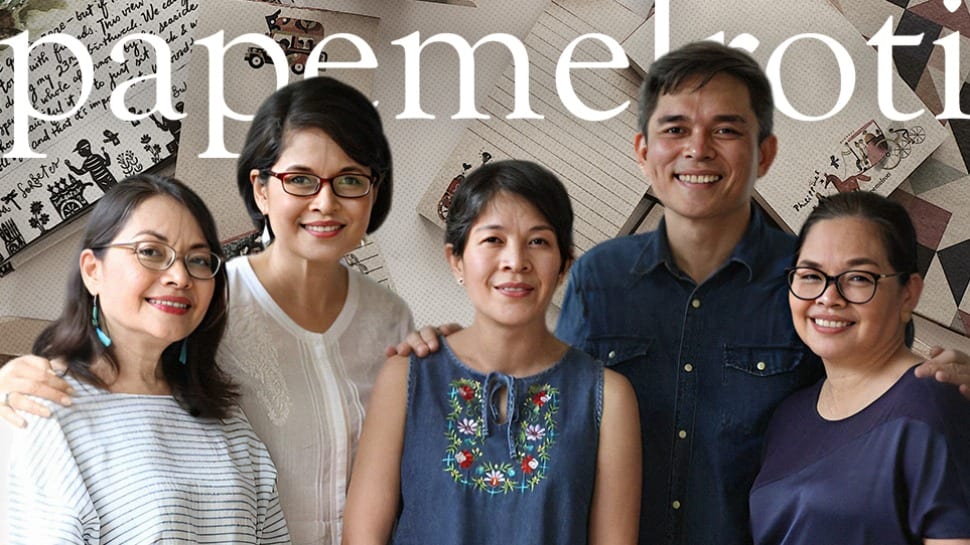
Papemelroti is more than just a chain of gift shops known for their uniquely Filipino, handcrafted items—it is a family legacy that has endured for over five decades, powered by faith, values, and a deep commitment to local artisanship.
Its story began in 1967 when husband-and-wife Benny Alejandro and Socorro “Corit” Alviola Alejandro opened a small gift shop named Corben Gifts, which was derived from their own names.
The store was located on Tomas Morato in Quezon City, occupying a corner of the ground floor of the family’s apartment building. What started as a modest hobby—making handcrafted items at home—slowly blossomed into a family business.
Corit, a former Fine Arts student, created handmade dolls, figurines, and other art pieces, while Benny crafted wooden furniture and play sets. Their shared love for art and craftsmanship laid the foundation for what would later become a multi-branch enterprise. The business also served as a creative and spiritual extension of their values, with products often reflecting inspirational themes and messages.
As their five children—Patsy, Peggy, Meldy, Robert, and Tina—grew up, they naturally became involved in the operations. From molding clay and painting designs to taking part in customer service and eventually managing key aspects of the business, each child played a role in shaping the store’s growth.
In 1976, the name “Papemelroti” was officially born, combining the first syllables of the siblings’ names. The rebrand marked the opening of their branch in Ali Mall, Cubao, and symbolized the family's unified creative spirit.
After more than 50 years, Papemelroti continues to thrive and has grown into one of the country’s largest specialty gift and home décor shops, with over 20 branches across Metro Manila and beyond. Known for its personalized, eco-friendly, and Filipino-themed stationery, gifts, and décor, the brand has cultivated a loyal following rooted in its core values of creativity, sustainability, and spiritual inspiration.
As the business entered its second generation, the children of the original five siblings began taking part in operations and now contribute new ideas while honoring the founding principles. Despite challenges such as health issues, shifts in market demands, and operational changes, the family continues to uphold the brand’s mission.
How did Papemelroti manage to maintain its appeal across different generations of customers? What strategies did the company use to keep its products aligned with the changing tastes and values of Filipinos? What can other family-run businesses learn from Papemelroti’s journey of lasting more than five decades?
Here are the five business lessons every entrepreneur can learn from the founders of Papemelroti:
ALSO READ
1| Know how to turn small steps into long-term success
Building a business slowly but surely allows entrepreneurs to focus on sustainability and long-term success, rather than chasing rapid growth that may not be manageable. When growth is gradual, it becomes easier to lay a strong foundation. This approach gives business owners time to test ideas and learn from mistakes.
Financially, steady growth builds discipline. Many businesses that expanded too quickly ended up overextended and faced pressure they could not handle. In contrast, a business that grew slowly remained aligned with its core values. Without the rush to scale, founders had the freedom to improve it products and maintain quality.
The early journey of Papemelroti began in 1967 not with capital or inventory, but with a vision. Without money for merchandise, Patsy’s mother, Corit worked with what she had—retasos and secondhand items—and turned them into sellable products like handmade toys.
Instead of borrowing or spending beyond their means, she reinvested every peso earned. This steady reinvestment demonstrated the discipline of growing only as much as the business allowed.
The saying she lived by, “Yard by yard, life is hard. Inch by inch, it’s a cinch,” captured the philosophy behind her approach. She focused on gradual, achievable steps rather than rushing into expansion.
“We started in 1967 because my mom was a very creative person,” Patsy says. “It was my mom’s idea to be in business. She always had this desire to have a store, so she prayed. She had this particular Saint that she was praying to and then, at that time, my father needed a phone for his work, and my mom said, when you look for a place to stay, ‘look for a place where I can have a store. So we transferred from UP Village and moved to Tomas Morato.
“There was a store on the ground floor, and we lived on the second floor. It had a display window, and my mom started working with that. She was very prayerful, and what she wanted was to stop working outside the home so she could take care of us, her children. We are five siblings, but when the business started, the youngest—Tina—was not yet born. I was 11 years old.
“It’s funny because she didn’t have any capital. What happened was she opened the store, but she had no merchandise yet. She just filled up the window with displays. There was a sign that said, “Please ring bell,” so people would ring the doorbell because of the window—but there was nothing inside the store. That was the beginning.
“She was very enterprising. What she would do was roll over the money. When she sold something, she would use the earnings to buy something new to sell. My father encouraged her, saying, “Be brave, buy three,” because that’s all they could afford. We lived solely on my father’s income from his work.
“From there, the business slowly grew. My mom’s favorite quotation was, ‘Yard by yard, life is hard. Inch by inch, it’s a cinch.’ She lived by that. She made things by hand—she would buy retasos, secondhand clothes, and use them to make stuffed toys. Her stuffed toys were like Santa Claus with a sack filled with all sorts of things, or Goldilocks with the three bears. She would sell those.
“Eventually, she got into making figurines, although they were a bit distorted because she didn’t know how to make perfect ones yet. The important thing was, we were always involved—us five siblings. I’m Patsy, this is Peggy, and then there’s Meldy, Robert, and Tina. The first store was named Corben, after my mom and dad’s name, Corit and Benny.
“So it was very slow in the beginning because she would buy dolls na walang damit, then she would dress them up. It was a buy-and-sell business. All sorts. Kahit ano. I remember there were these little toys that we wanted to buy and she would buy all sorts of things just to fill up the store.
“And then my dad—before, it was easier to import—so he would import samples, so the store became quite interesting with all the imported goods like Fugal glass, art and text, miniature animals, Christmas décor. It was always for gifts and decorative accessories, which is what we continue today.
“But later on, we stopped importing. Daddy took up ceramics—and we decided to do local. Local stuff. My dad likes learning things, starting things, new things. My mom would continue. He was the one who studied so they complement each other. They made wood pieces for figurines so the things that we used to sell before, a lot of them, we still sell now.”
2| Know how to turn family teamwork into business strength
A business built on the foundation of family—with each member playing a meaningful role—can offer a powerful mix of shared values and long-term commitment that’s hard to replicate in other organizations.
When a family works together, the business becomes more than a profit-driven venture; it becomes a shared legacy. Every member is personally invested, not just financially but emotionally, which strengthens accountability and perseverance during tough times.
Having clear roles for each family member also fosters mutual respect and a sense of purpose. It teaches collaboration and creates space for each person’s unique strengths to shape the company. This division of responsibility not only makes operations more efficient but also encourages innovation as different generations bring in fresh ideas while staying grounded in the founding vision.
From the outset, each sibling contributed according to their strengths. Patsy, for instance, took on the role of cashier. Peggy, who was a naturally skilled salesgirl, helped drive revenue by directly engaging with customers. Meldy brought a hands-on, artisanal touch, crafting pillows and caps that became popular items in the store. Robert, the artist in the family, infused the brand with visual creativity. His drawings on wooden eggheads, which he made right in the store after school, sold on the shelves. Meanwhile, the youngest sibling, Tina, though small and young at the time, participated by wrapping gifts on the floor.
Their mother, Corit, served as the creative engine and production lead. She made the molds used in figurine-making and implemented a work ethic in the children by paying them per figurine painted, which instilled both responsibility and discipline. Their father, Benny, also played a strategic role, especially during the early importing phase and later encouraged the transition to local craftsmanship.
“So the kids, we were all, you know, crazy playing around and we said we should have a store named Papemelroti,” Patsy says. “So that’s Patsy, Peggy, Meldy, Robert, Tina. And so when we opened our store at Ali Mall in 1976, we named our store Papemelroti. My dad said, ‘how will it survive? Nobody can pronounce the name. Nobody can remember it.
“We were the first staff. I was the cashier, Peggy was a salesgirl. Up to now, she's very good in selling. My sister Meldy, she was good in making things. She would make pillows and caps that sold very well. And then there's Robert, who used to draw on eggheads. There were eggheads that were wooden, and then he would draw them right there in the store after school, put them on the shelf, and they would sell. And then Tina was very young; she would wrap the gifts on the floor because she couldn’t reach the counter.
“We used to do things as a family. All the kids with my mom—like we’d say, okay, molding—so we would mold things, and some of them were really strange like this working dog, I remember. It was a very small dog with a cart, and we were wondering, what are we going to do with this? So we put it on wood with a sign. And the sign said “Caution: working dog.” Do you know that it sold? So that’s one of the funny things that we used to sell.
“Every Christmas time, we would make—early in the morning—we would assemble things, paint things. We would bring it to the store and sell it during the day. And then the next day we would have to do it again because its Christmas, all items were fast-moving.
“We were all involved. I remember we would make figurines and the figurines were put on the stairs because we didn't have space. We were painting in our bedroom. My brother, si Robert, he was the one in charge of antiquing. And he would get black also—we didn't even know it's toxic. We had a huge bedroom na nakahilera ang beds. Tapos may table dyan, doon din kami nagpipinta. Tapos para matuyo, pag kulang ng space, doon sa stairway.
“My mom was the one who made the mold. So there were several of it. We got paid to paint figurines. Yeah, around five centavos per figurine and then the funny thing is we’d buy it. We’d buy things from the store because she had things that we liked also like miniature hamburgers and stuff like that. We could not get things from the store; we had to buy them.
“So the business evolved from, you know, using foreign designs. In the ’70s, we had a copier that had brown ink, it was a small paper copier because we didn't really have money to buy, and I remember making cards with it. I would put in brown paper, I would design something and copy the design. Then I would make the envelopes one by one, and then we would sell the cards. So that’s the start of our craft paper products. Back then, nobody used craft paper.
“I would be the one to draw it and then copy my designs, and then after that, we found the printer to finally mass-produce it. And then we started making wrappers, notebooks, stationery that are bigger. And the funny thing is, people would ask, ‘Why are you using that? That’s pambalot ng pandesal.’ But people would buy it because it’s earth-friendly.”
3| Know how to create products that uplift and encourage
When products carry messages of encouragement, hope, or shared values, they connect emotionally with customers. This connection builds brand loyalty that is harder to break, even when competitors offer cheaper or trendier alternatives.
Meaningful products also serve a higher purpose. They become tools that can uplift people and remind them of what matters most. This gives the business a soul.
From a business standpoint, emotional resonance provides a strong competitive advantage. Customers return not only for the products themselves but for the way those products make them feel. It reflects the idea that business is not solely about profit—it is also about serving others and offering inspiration.
From the beginning, the founders prioritized meaning over trend. Rather than chasing fast-moving consumer goods, they deliberately designed posters and items intended to inspire. The products weren’t just decorative; they carried messages of hope, encouragement, and faith.
Sustainability was also integrated early on, as seen in their commitment to eco-friendly practices. This reflects responsible entrepreneurship, where profit does not come at the cost of the environment or local livelihood. By choosing to produce locally, the business not only reduced its carbon footprint but also supported Filipino artisans.
Papemelroti’s product philosophy exemplifies how businesses can thrive by staying true to their values. Through meaningful design, commitment to Filipino culture, and a deep understanding of their customers’ emotional and spiritual needs, the founders built a brand that not only sells—but also serves.
“We usually have targets—like for instance, let’s make posters that people can hang in their offices to inspire others as well. But it’s usually inspiring, encouraging messages. So we’ll say, ‘Oh, let’s make things that can be hung in a school.’ So all those things, we try to provide. And then we also have items for different professions.
“What I know is that people like our things because usually they’re eco-friendly—aside from being inspirational and encouraging. Other people message or comment, like how we stay consistent with our values—stuff like that. I think they’re listening—the people who have the same values as us. So our (priorities were) God, country, family; that’s why we have Filipiniana items—because we want to promote our country, love of country. That’s also why we try to make most of our products locally—because we want to provide livelihood.
“So if that’s the kind of values you have—similar to ours, like wanting to be practicing, real Christians, Catholics—then these are also the kind of people who want to buy our religious things. So to us, the business is an extension or reflection of ourselves, of who we are. And the people who have a similar kind of love of God, love of country—yan din ang na-a-attract to our products.
“We sold a lot of posters. Yong time na ‘yon we imported posters, and then we framed it, and then we mounted it. The posters were mostly inspirational. We always had this mind for inspirational products. But at the start, we also had things we would never sell now because they were like funny, pero parang alanganin. Alam mo ‘yong, ‘Go to hell?’ there was one like that. We all agreed after a while na let’s stop selling this kasi parang negative humor, but I think that’s Daddy’s favorite, eh. Although it’s really funny naman, pero parang it’s not inspiring. Why would a person want it?
“We wanted our products to encourage and give hope. We were doing our designs because at first, we did decoupage of ‘yung mga calligraphy. Kasi I remember writing it one by one. Wala pang computer, so we had to be the ones to write it. The “Desiderata,” I did that. When we didn’t have the imported posters, we already had our own designs, which we made.
“There was a time my younger sister wanted to work in Makati and she kept applying and applying pero hindi sya nakuha. And then one day she overheard somebody talking about the figurine in our store. And the figurine kasi said about work. The mother was telling the daughter this figurine daw parang changed the life of her father because it said, ‘Work for the Lord. The pay isn't much, but the benefits...But the retirement plan is out of this world.’ So parang nagkaroon daw ng effect.
“She overheard that and she said, ‘Wow. Imagine, my figurine can change a life?’ So that changed her outlook. At first, she said she's just going to try to work with us, and then she decided that she will work with us. The acceptance—she was called. Yong applications nya came in, but by then she had already decided, na this is where God wants me.
“They're usually people who like what we like also. I remember there was this journalist who told me, ‘If you're going to write a book, ask me because I have a story for you.’ She said that when she was young, she was kind of depressed because her parents were separating. She would go to our store all the time to read our posters and everything, because she felt that when she visited our store, she felt better.
“So I believe, like when I get the chance, I'll display our stuff—just let them stay, you know, even if they don't buy anything. Because it's good if they read the messages, and they might be encouraged. You never know—it might change the life of a person. Like that figurine—you know, it's only one figurine, but we have so many items in the store.”
4| Know how to evolve with the times without losing your core
In a rapidly changing market, products, trends, and customer expectations shift constantly. Companies that adapt remain competitive and relevant—but adaptation without grounding can lead to a loss of identity.
By staying rooted in core values while innovating, a business maintains its authenticity. It preserves the trust and loyalty of its customers, who are drawn not just to what it sells, but to what it stands for. This balance also provides clarity in decision-making: while many options may arise, the business filters choices through its mission and principles.
At the heart of Papemelroti’s longevity lies a commitment to authenticity, innovation, and social responsibility. From the beginning, the founders believed their business should be a reflection of who they are. Instead of following market trends, they built a brand rooted in family values.
Despite its firm grounding in values, Papemelroti consistently introduced new designs and products. The mindset of continuous improvement and creativity allowed the business to stay relevant in a small, competitive market. They did not rely solely on nostalgia or tradition; instead, they embedded innovation into their calendar and operations.
Amid growing pressure from low-cost imports and an increasingly crowded market, Papemelroti held firm to what mattered most: their values, their identity, and their mission. They embraced innovation without sacrificing these foundations.
“I think a business will be successful if it's unique in the way that it expresses the best of yourself,” Patsy says. “So you can't just copy something out there. It's not really you. It has to be something that comes from what's important to you, what you want to share with others. Like our business is really an expression of our family.
“That's why when we opened in Ali Mall, the store next to us told me—the guy there, the owner—said, ‘You know what's really saleable in our store? His green jokes,’ he said. Oh my gosh, we will never sell those. So it has to be...it has to come from an identity. You should know your personality, your character—and let that show in your store.
“Because there's only one family like ours. That's why our store is unique—because it's us. So I believe that a business should be unique in that sense. It should have a personality. It should express what you want to share with others, like that.
“And then the next one—because our market in the Philippines is so small—you always have to have new things. You always have to innovate. You have to think of other things; it cannot be the same every year. So we always have new designs. It's already in the calendar—new designs.
“Our best sellers are, kunyari, the planners—which have new designs every year. But aside from the staple things that sell well, we also have new products. Like I said, the umbrellas, the mugs. And you know, these are products that weren’t available before. We're always looking at what's available that we can put our designs on. So we always have to research.
“There’s plenty of competitors already now and I know it’s very challenging. I don’t claim to be smart. I don’t claim to be a good businesswoman. And my mother also never claimed that. So, to me it’s a miracle that we still thrive.
“If you see the competition now, the competitors are all China. China has all these products that are so cheap and that like. Every time our minimum wage gets higher, of course our production costs gets higher. So for us to survive. People, really have to decide that they’re buying locally. Because sometimes they’ll say, oh, this is cheaper, but then it’s from China. So far we’ve resisted sourcing from China. We focused actually on Filipiniana now because China is not going to make a lot of that.
“We want to help Filipino families. Actually, we used to have more before livelihood projects. We like helping like we teamed up with kidney friends before. These are people who undergo dialysis, so there were several and we gave them projects that we sell. So we teach them something and then we buy it and then we sell it. So these are things that we like to do.”
5| Know how to lead the future by learning from the past
Legacy is more than just a name or a brand—it is the sum of values, decisions, sacrifices, and principles that shaped the company’s beginnings. Learning from the founders allows succeeding generations to anchor their vision in something proven, something rooted in resilience, discipline, and purpose.
When new leaders understand the founders’ traits—such as thrift, hard work, resourcefulness, and innovation—they are less likely to make impulsive decisions detached from the company's DNA. It creates continuity. The founders' stories serve as living examples of how to explore challenges and remain grounded in purpose even during uncertain times.
Moreover, legacy creates a sense of responsibility. When successors recognize the sacrifices and character of the people who built the business, they are more likely to steward it with care and integrity. It becomes more than just financial success—it becomes about honoring history while moving forward with a clear and values-driven direction.
The Alejandro siblings behind Papemelroti inherited more than a business—they inherited the entrepreneurial values of their parents. From their father, they learned the spirit of innovation and relentless drive. Even while bedridden, their father remained mentally active. He came up with new product ideas and moved projects forward.
On the other hand, their mother embodied financial prudence, simplicity, and generosity. Her extreme frugality and careful savings not only sustained the business during difficult times—like the pandemic—but also enabled the family to shoulder emergency expenses even after her passing.
Through her, the siblings learned the value of discipline in money management and delayed gratification. Her ability to live simply despite having the means to indulge showed them that true wealth lies in stability, not status symbols.
Today, the siblings carry forward these lessons not just as strategies, but as principles that guide how they work, spend, innovate, and serve others. Their parents didn’t just build a business—they built character. And that has proven to be their most enduring legacy.
“My dad was very workaholic,” Patsy says. “When he was already bedridden in the hospital, he was still having projects. Kasi my dad was fond of innovations. Projects like, kunyari, pendulum clocks or lamps, he would instruct us about his projects from the bed. Sabi namin, ‘Wow, there’s no hope for retirement.’
“We had this lamp in our Ayala Manila Bay branch. It was my brother Robert’s idea to have this lamp with iba-ibang levels and my dad was in charge of it. So it was like his project, He would always say, ‘I have an idea, I have an idea. You see, I saw something—make something like this.’ And then he’d be the one to source things kasi he liked researching. He was actually so excited about that time—because he said there’s so much to learn. He was always on the internet.
“My mom naman was really matipid. So you know how now people have all these expenses for all these extra things? My mom could live very simply and masinop sya. And I guess that’s why, let’s say during the pandemic, you’re not earning money, but there are people who are relying on you, the business had savings. And that came from my mom’s way of doing things talaga. She could live so simply.
“Even if she could afford things, she would live very simply. But she would save—and well—we benefited. Because when my brother got sick, sya pa rin ang nagbayad nung mga (gastusin) ng brother ko. Even when she died, because she had savings. The family took care of the hospitalization expenses, and I would credit my mom with the way she took care of the money.
“That’s why parang imagine if my mom didn’t save so much. We would have had a hard time because sobrang daming expenses. So she was really a very disciplined person—she could live very simply and save.
“My mom was very masipag with investments in banks. She was also masipag in property. Galing ng mom ko mag-save ng money. Pero sobrang simple siya mamuhay. Very generous. She helped people with livelihood. She would never buy a designer bag or designer clothes.
She buys ukay then she’ll change it to make it a ‘daster.’ Mahilig magtahi 'yon. She would buy something and then she would redesign it to her own specifications.”
