
Financial Adviser: 5 Business Lessons Everyone Can Learn from the 'Coconut King' Romeo Chan, Co-Founder and Chairman of Axelum Resources

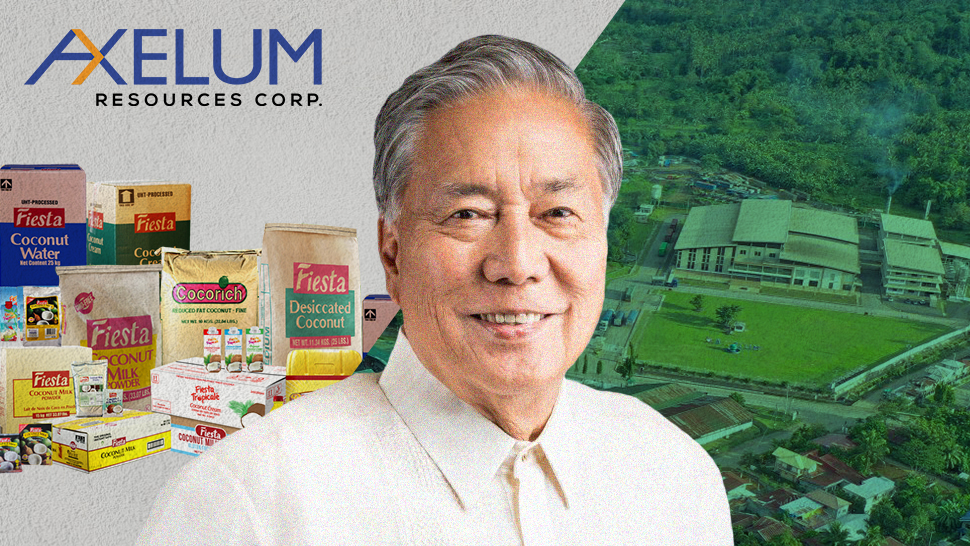
Romeo Chan and Henry Raperoga are two names that may not be widely known, but their story is one of resilience, entrepreneurship, and success.
The duo used to work together in the Middle East doing maintenance facilities, but in 1986, when they returned to the Philippines, they chanced upon an opportunity to take over a foreclosed plant in Medina, Misamis Oriental.
The plant was a coconut production manufacturing that went bankrupt with two previous owners in the past. Without any knowledge in the coconut business, Chan made a bid to take over the debt-ridden company from the bank with P5 million capital at a time when the economy was in crisis and the country mired in political instability.
Chan spearheaded the business’ efforts to revamp its operations while Raperoga, who previously worked for accounting firm SGV, took charge of managing the finances. Despite facing daunting challenges, the two partners were able to successfully turn around the business and elevate it to become the leading manufacturer and exporter of high-quality coconut products in the Philippines today.
In 2019, the co-founders successfully listed their company, Axelum Resources (PSE: AXLM), on the Philippine Stock Exchange. They were able to raise an impressive P4.0 billion, resulting in a market capitalization of P20 billion.
Earlier this year, Metro Pacific Investments (PSE: MPI), one of the largest conglomerates in the country, acquired approximately 34.8 percent stake in AXLM for P5.3 billion. This significant investment is a testament to the hard work and dedication of Chan, Raperoga, and the entire team at AXLM. With this acquisition, AXLM is poised to become a major player in the global market.
What business principles did Chan follow in his approach to managing and growing the company? What lessons can other entrepreneurs and business leaders learn from Chan's success in turning a debt-ridden company into one of the largest players in the industry?
Here are the five business lessons everyone can learn from the ‘coconut king’ Romeo Chan, chairman and co-founder of Axelum Resources:
ALSO READ
Financial Adviser: 5 Money Lessons Everyone Can Learn from 'Mr. Chink Positive' Chinkee Tan
1| Know how to finance a startup from scratch
Bootstrap financing can be challenging, but it can also offer significant advantages for the founders and the business. It requires a strong work ethic, creativity, and a willingness to take calculated risks, but the rewards can be well worth the effort.
The process of bootstrapping forced Chan and Raperoga to think creatively and innovatively to grow their business. They understood that they had to manage their business in a lean and efficient manner to allow for organic growth.
Through their resourcefulness, Chan and Raperoga were able to overcome challenges and achieve success despite limited resources. By focusing on the most critical aspects of their business and minimizing waste, they were able to achieve their goals.
“Kami ni Henry, talagang bootstrapping,” Chan says. “We had no money at all when we started, so we were just we were just going sa mga auctions, companies closing down, we would bid for it, bring it to Medina.
“For example, Nissan Philippines was shutting down their plant in E. Rodriguez, so we went there. We bidded for it, yung mga building nila, we sent our people, they sliced all the GI sheets, we marked them one by one and assembled it in Medina. Yun ang mga building namin doon sa Medina.
“If you go to Medina now, you will see a million-liter oil tank na may dalawang sinturon and yung sinturon, yun yung welding and it says there ‘Leyte Oil. That was from Leyte. We went there, we sliced it, brought it Medina and reassembled it. That was all we could afford.
“And so, they wanted to repaint it, and I said don't repaint that because that's a reminder to us where we came from. And then of course, we put up the new UHT plant, which packs for Vitacoco. It’s the very first plant that is brand new, na walang second-hand na kasama. Everything else puro secondhand or third-hand pa nga e. Yung mga company na nalulugi, punta kami ni Henry, magbi-bid kami kung ano pwede kunin: building, equipment, kung ano-ano. That's how we built the company.
“If you experience poverty, there are many things that you can do. For example, when we started, wala kaming pera so lahat tipid. Some people who come from big companies who asked for big budget, we said no, sa amin walang ganyanan, yung iba hindi tumatagal sa amin. Syempre sa big companies, compartmentalized ang roles and responsibilities and ang resources are snap-of-finger available.
“Ang aming attitude: I always say start with a platform. Lagyan mo ng four wheels and then takbo na, tsaka mo na dagdagan ng manibela, bubung, wiper, saka na yun. Platform, four wheels, run, everyday that plant is operating, no matter how imperfect we are, we are winning.
Why are we winning? Because everyday people get employment, they put food on their tables every day and because of that we have production every day. Yan ang importante: four-wheels, platform, run.”
2| Know how to invest that will create value in the long-term
When Chan acquired the struggling plant in Medina, he knew the importance of prioritizing the well-being and livelihoods of the over 1,000 workers employed there.
By aligning the resources of the business towards creating long-term value, Chan transformed the struggling plant into a thriving business, with a dedicated and skilled workforce that was proud to be a part of the organization.
His focus on creating long-term value helped ensure the sustainability and stability of the business, as well as secure the livelihoods of the community.
“I always believe that you must know what you want, but equally important, you must know what you don't want. For example, yung lumabas yung mga nata de coco and all that, everybody was going to it parang hot pandesal. Everybody put up his own corner store and I said no, that's not the way to go, so we didn't do it. Some people made a lot of money for one year and then wala na.
“When we started the company, we had something like 1,000 workers and half of them were in banana chips. The world market, from what I understood, wanted a Rolls Royce, but they're only willing to pay a cheap price for the banana chips, and so I said, what's the point? We didn't continue that business and we just shut it down.
“In one meeting with a bank, there were 40 banana chip suppliers and there were only a handful of four to five suppliers operating and what are the rest doing? Waiting for prices to improve that kind of business? That kind of business is not something that you want to go into. So sabi ko, let's focus our efforts into something which has long-term value. That's why we went into Tetra packaging. If you look at our facility, it seems like you think it's one contiguous plant, but actually it is six different factories with six different technologies.
“We started with only one: the drying, desiccated coconut. There was a baby spray dryer for a coconut milk powder and from there we said we need to make it grow, and so we invested in more equipment.”
3| Know how to change mindset and culture to boost productivity
Chan recognized the critical importance of promoting a culture of sanitation and hygiene in his factory. To achieve this, he focused on changing the mindset of his workers, who came from different towns across the province.
Chan understood that many of his workers may not have had access to the same level of education or exposure to good hygiene practices. Therefore, he implemented a comprehensive training program to educate his workers on the importance of sanitation and hygiene.
By changing the mindset of his workers and promoting a culture of sanitation and hygiene, Chan was able to create a safer and healthier work environment for his employees.
This, in turn, helped to increase productivity and efficiency in the factory, as workers were more focused and motivated to do their jobs.
“We're trying to be topnotch in technology, quality, et cetera,” he says. “When we started, the community, our people, our workers, didn't even have running waters in their homes. They did not even have latrines or toilets. Parang kung saan-saan lang. How do you expect people like that with no concept of hygiene or sanitation, when they cross the factory gate all of a sudden, they become conscious of being clean? They don't even want to shower. When they go in, they have to take a shower.
“The solution: we brought the fight to the communities. We brought the fight there. We started giving them digging wells, putting up public toilets, you know, community toilets for them, and then teaching them. It was a difficult process for that culture.
“When you go to our factory, before you can enter, may turnstile with are two levers, with the soaking tank, the sanitation, water, one chemical, so you have to dip your hand in it, pull it up, pull up the lever so you can push and then enter. So you're forced to clean your hands.
“Bring the fight to their homes, that’s where you start. You can’t expect them sa bahay hindi sila naghuhugas ng kamay then all of a sudden, naghuhugas, so we brought it there. We campaigned. We had people going around giving values seminar, teaching them about sanitation and personal hygiene basics.”
4| Know how to develop shared values among key members of the organization
Developing shared values in a team is essential for building a strong and cohesive organizational culture. When team members share common values, they are more likely to work together towards a shared vision and goals. This creates a sense of belonging and encourages collaboration, which can lead to increased productivity and innovation.
Chan built trust among his managers by sharing his business and leadership values. By fostering a culture of shared values, he created a supportive work environment where team members feel comfortable expressing their opinions and ideas.
“When we started, we were directly involved in hiring. Ngayon, we limit ourselves to hiring and selection of managers, and then we rely already on managers who already have our mindset. Sila na bahala sa mga supervisors. Sabi namin, when you hire a supervisor, you make sure that they understand that their job is to be in service, not to command people.
“The success of your supervisor depends on how his people are able to get everything they need from him so they can do their job well. Our present crop of managers, we personally interviewed them and hired them. And most of them come from Manila so to transport them to Medina, it's a major challenge to stay in that place.
“How do you train the people? How do you change their mindset? I always tell our supervisors, there’s nothing better than your own example. That's it. You just have to live it and we teach our people. The higher you are, the more a servant you are.
“If you're a supervisor or a manager, your job is not to order people and then yell at them, ‘Bakit hindi nagawa yan? Your job is to understand what they need. They need a budget. They need money. They need extra manpower or hands and feet to help them. They need training, they need tools, equipment. Your job is to provide those and make sure that they're available so your people can do their job well. So the higher you go in this company, the more a servant you are, the more in service you should be. And of course, the number one servant is me.
“I go around asking the managers. We talk about a situation, a problem. ‘Anong problema? Anong kailangan mo? Eto ba ang best solution?’ And having come from poverty—the company and personally, too—an engineer will come and say, ‘Sir, eto ang estimate, eto ang kailangan ko na materials.’ We argue about it and we talk about it and in the end, we ask the same question: if it's your money, gagastusin mo ba yan? If it is your own money, will you spend it? More or less sa umpisa, 100 percent, they will go back to the drawing board. Today kaunti na lang yun, because they know already the question that I would be asking.”
5| Know how to give back to society and create positive impact
Giving back to society is an act of kindness that can bring about blessings and positive outcomes. When we give back to others, whether through charitable donations, volunteering, or other means, we are making a positive impact on the lives of those around us.
Chan and Raperoga are committed to giving back to society as a way to cultivate gratitude, humility, and a sense of purpose in their lives. By recognizing the blessings and opportunities they have been given, they are able to give back to others in a meaningful way and live a more fulfilling life.
“By nature, I suppose, we're very super competitive, and anything we do, we always want to be on top,” Chan says. “I hate losing a tennis game even with the young ones. I think by now, the mindset of the people, yung mga founders also, we're very competitive, in the sense that we enjoy making money, that's Chinese by nature.
“My father told me a long time ago: if you don't have your own business, you're nobody. But I thought, when I saw my father in the funeral parlor, the whole family was there, nobody was minding the store, so I said, ‘Dapat talaga, may kasama.’ So here we own the company together and that's why we don't feel like, it's time to go. But today, while we enjoy making money, we enjoy giving money away even more.
“There is a saying: God cannot be outdone in generosity. Being super competitive, I said, I will try to outdo you, that's what I mean by being super competitive. That’s what I meant when I said we enjoy making money, we enjoy more giving it away. When you give, your well will never go dry.
“There was a time when we had so many problems. Fuel in 2008 in subprime now commodities went up, gasoline went up. Our costs were so high, labor costs were so high, and our prices were going down, and then aside from that, we had internal issues. That was the most difficult time. My wife told me ‘If you truly believe this is the Lord's vineyard, then it's not your problem, talk to Him. He will take care of it. That's all.
“You know what happened after that? There was a worldwide crisis and it saved our company. Ang nangyari samin, we had accumulated stocks. We were not selling but others were. In 2008, the prices doubled because when the stock market fell, you cannot invest in real estate because of subprime. You can only invest in commodities. Dumoble. So yung kita namin doble-doble from nothing.”
Henry Ong, RFP, is an entrepreneur, financial planning advocate and business advisor. Email Henry for business advice hong@financialadviser.ph or follow him on Twitter @henryong888
