

Financial Adviser: 5 Business Lessons Everyone Can Learn from the 'Father of Renewable Energy,' Vince Perez, Founder of Alternergy

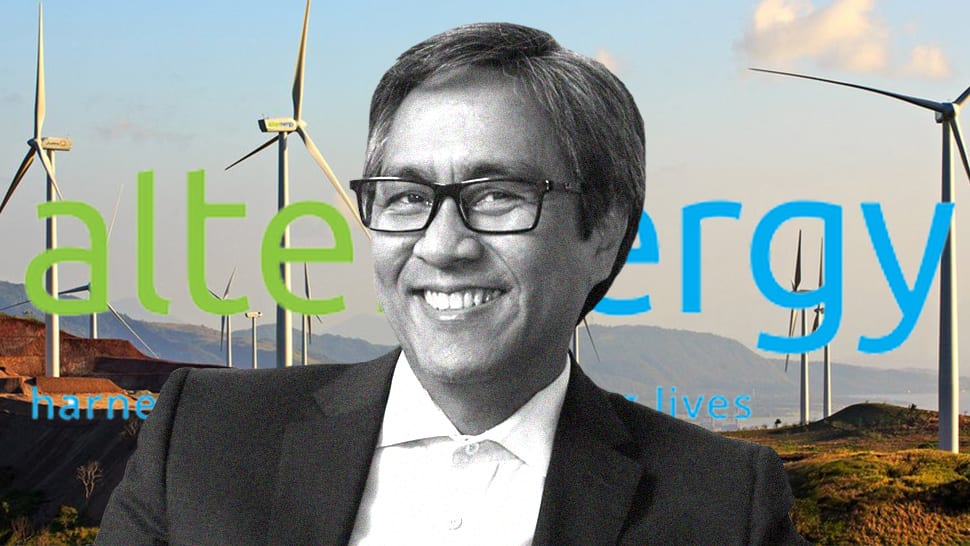
Vicente “Vince” Perez Jr. is a name that rings a bell in the world of investment banking and renewable energy. He is a successful expatriate who has made a name for himself in the industry.
After graduating from the University of the Philippines with a degree in business economics, Perez landed an internship in the US, which he saw as a stepping stone towards his ultimate goal.
While he worked hard to establish himself, he had his sights set on something bigger: a Master of Business Administration from the prestigious Wharton School of the University of Pennsylvania.
Perez was determined to earn his MBA, and didn’t let the high tuition fees stop him. Instead, he applied for a teaching assistant role at Wharton to earn extra income. This decision proved to be a turning point in his career, as it was during his MBA stint that he began his career in investment banking.
Within a few years, Perez became a star trader and quickly made a name for himself in the industry. His exceptional skills and expertise led him to become the first Filipino partner of Wall Street investment firm Lazard at the young age of 35.
In the late 1990s, after achieving success as an investment banker, he sold his share in Lazard and established his own private equity fund called Next Century Partners.
One of the most successful investments he made as a private equity investor was a startup called Smart Telecom, which he eventually sold to PLDT.
In 2001, Perez was invited by his former University of the Philippines professor, then-President Gloria Macapagal, to join the government. He accepted the offer and became the first head of BOI (Board of Investments) and then Energy Secretary for four years.
During his tenure, Perez saw the vast potential of renewable energy in the Philippines and identified an opportunity to make a positive impact on the environment while creating a profitable business.
When Perez left the government in 2005, he took on the new challenge of establishing his own renewable energy company. It took him three years to organize his business before Alternergy was official launched.
Over the years, Alternergy has become a pioneer in the Philippine renewable energy industry, with an impressive portfolio of 10 hydro, solar, and wind farms.
Last month, Alternergy (PSE: ALTER) made its public debut and successfully raised P1.6 billion, giving the company a market capitalization of P5.0 billion that will allow Perez to expand its operations further and solidify its position in the renewable energy market.
What lessons can we draw from the success of Vince Perez? What strategies did he employ to achieve success, and how can we apply them to our own endeavors?
Here are the five business lessons everyone can learn from ‘the Father of Renewable Energy in the Philippines,’ Vince Perez:
ALSO READ
Financial Adviser: 5 Money Lessons Everyone Can Learn from 'Mr. Chink Positive' Chinkee Tan
1| Learn how to cultivate the drive to achieve success
People who are determined are more likely to achieve their aspirations because they don't let setbacks or failures deter them from their objectives. They view challenges as opportunities to learn and grow, rather than obstacles that impede their progress. People without determination only work on their goals when it is convenient for them. They only pursue their dreams and take action when they feel motivated.
Perez was determined to pursue his career goals in the US, despite facing financial challenges. His unwavering commitment allowed him to earn an MBA degree and launch his investment banking career.
“When I was still in UP, I set up AIESEC and I had an advisory board just to help me out and guide me,” he says. “One of them was Raul Locsin who was editor of Business Day. The other one was Jobo Fernandez, who was president of Far East Bank.
“My first job was an internship with Far East but I wanted to go abroad to get an AIESEC internship in the US. I wanted to do it by myself to prove that I can be self-reliant so I wrote a letter to Mr. Locsin (to ask) ‘Do you mind sponsoring me? I want to try it in the U.S.’ So he paid for my airfare ticket.
“And then I wanted to get an MBA. Because of my stint, I got to Wharton. Again, remember I wanted to do it on my own, so I wrote to 24 professors. ‘Please, do you need a teaching assistant? Do you want a research assistant?’
“Twenty-three said no but one said yes. ‘You're from the Philippines? I need someone to do research on the labor unions of Southeast Asia.’ I did not know anything about labor unions, so I worked, while studying for my MBA. I worked for a research center at Wharton and spent 15 hours a week and that paid for part of my tuition.
Somehow at Wharton, I became president of the Wharton Asian Students Club. Japanese, Indian, Filipinos, Malaysians, I became their president, so what happened was when companies go to Wharton to recruit students from Asia, they would write to me, ‘Can you organize a cocktail? Because we want to present who we are, maybe get resumes, and then maybe interview them.’ So I got a letter from Citibank and that’s how I got to work during the summer.
“But my fourth and last semester, kinapos na ‘ko ng pera. Wharton said, ‘Well, do you have a job offer?’ Yes. I got a job offer from Mellon Bank. ‘How much are you gonna get?’ $30,000 a year. ‘Okay. Good. We will not give you your diploma. You pay us installment and once you are fully paid, we'll release the diploma.” So effectively I got an interest-free loan.”
2| Learn how to develop team thinking to lower risk in decision-making
Team thinking and group thinking are two different approaches to problem-solving and decision-making.
Group thinking is a phenomenon where individuals prioritize conformity and unanimity over rational thinking, often leading to suboptimal outcomes. In contrast, team thinking emphasizes collaboration, open communication, and diverse perspectives to generate innovative solutions.
Perez understands the importance of harnessing the collective intelligence of a group of individuals. Team thinking leverages the strengths of each team member, allowing for more comprehensive problem-solving and a higher likelihood of generating creative solutions.
By fostering a team thinking approach, organizations can drive innovation, increase productivity, and ultimately achieve better outcomes than with group thinking.
“We were four partners at Next Century Partners,” Perez says. “We all were of the same mentality. Para bang group think. Everyone thought similarly so nobody was questioning, should we not invest in a restaurant? Para bang nobody was saying ‘no’ or ‘are you sure?’
“There was no rhyme or reason. You learned everything about telecoms and then you start investing in a pineapple plantation. Anong synergy ‘non? and then you start investing in a semiconductor company selling chips and then you start investing in a restaurant. You'll never learn and grow and have synergy so in Alternergy, its only focused on renewable power.
“At Alternergy, we're all different. Somebody will tell me ‘Vince, I don't think it's a good idea” Okay… Why? We're all different. We all complement, that's my lesson learned. Have a different variety of partners.
One is a civil engineer, one is formerly American solar, one is a banker with IFC, one is a lawyer, one knows hydro but have worked with DENR, DND, NEDA, and one is finance. You need to have a group of partners who are different so they could tell you what’s wrong. ‘Tell me if I'm smoking dope’ is an American expression. Tell me if I'm smoking marijuana. Tell me if I'm crazy. Tell me if I'm nuts.
“I give them the license to tell me, what am I not seeing? Where is my blind spot? What am I missing from the accounting side? What am I missing from the engineering side? What am I missing in the legal side? This is your blind spot eh.”
I have an MBA. I know how to structure deals. I know cost of borrowing, but legal? I'm not a lawyer, so I have a lawyer partner. Accounting, is there an accounting treatment here that we are missing in consolidation and everything.”
3| Learn how to choose the right business partner
Finding the right partner in business is critical to the success of any venture. The right partner can provide complementary skills, knowledge, and experience, which can help fill gaps in your own expertise. They can also bring a fresh perspective to your ideas, challenge your assumptions, and offer valuable insights and feedback.
On the other hand, choosing the wrong partner can be detrimental to your business. A partner who lacks commitment, has different values or goals, or is difficult to work with can create tension and conflict within the company, and ultimately harm its success.
Perez meticulously chooses his partners and investors. He achieves this by carefully assessing them and ensuring that there is a shared vision, mutual trust, and respect between all parties involved.
“First, you must have the same values. Same expectation. Before we even talk, what’s your expectations? Are you here for the long run? Are you going flip it? Are you going to have an exit? For me, I feel like it’s best to work with them first with one project, if we get along, we’ll do a second one.
If we don’t get along, then maybe best to split. If you’re over negotiating just the NDA, kung ang dami mong comments, pano yan? What’s with the shareholders’ agreement? Are you going to be as complicated? Then ang hirap. That’s what you call shareholder drag.
“So I have many people now because renewable is the flavor of the year. They are coming to me from France, Copenhagen, Denmark, US, Japan, Singapore, Thailand, Norway, but at the end of the day, do we share the same values?
“Life is too short. I’d rather work with partners that we know how to resolve issues together, because everything you planned will not always happen. There will always be some hiccups somewhere. You have to be able to be mature enough to deal with issues you could solve together.
“For instance, a hedge fund could give you a hundred million but at the little sight of trouble, out, so I learned that may not be the right partner for a private equity fund.
“Dapat you must have the same view so we really vet who are our partners if they know that we’re gonna have problems and we’re gonna have medium-term view. I mean investment here should be about three or four years in the stock because that’s where we’re gonna go.”
4| Learn how to protect your capital by cutting your losses
Knowing when to cut losses is a critical aspect of successful investing. When investing, it's important to recognize that not all investments will be profitable. In fact, losses are an inevitable part of investing. Knowing when to cut your losses and exit a business that is not performing well can be the difference between sustained success and significant losses.
Perez manages his risk by cutting his losses at the appropriate time. By doing so, he is able to protect capital and redirect his resources towards more profitable investments.
“There is no one who doesn’t lose. We all take losses. Like last year everyone was at a loss, if you had equity portfolio globally. You should be able to hold it. Ride your wins and cut your losses, as the saying goes.
“If we have to ride a loss then enough is enough. We’ve been spending too much time on this project. It doesn’t seem to go anywhere, cut. We all know nothing is always going to work out fine, but you learned the discipline of cutting losses.
“There’re so many projects we’ve pulled out because we don’t think it’s going to happen and we already spent so much on this and just cut the losses. Lesson learned. They will be naïve to think that you will never have losses.”
5| Learn how to apply lessons learned from parents in business
Applying the lessons and values learned from parents is important for personal growth and success in various areas of life. The teachings and values instilled by parents can shape an individual's mindset, behavior, and approach to life, including personal relationships, career development, financial management, and overall well-being.
By applying the positive lessons and values learned from parents, individuals can tap into a wealth of knowledge and experience that can guide their decisions, help them overcome challenges, and achieve their goals.
Perez continuously strive to embody the values that he learned from his parents in his business to lead a fulfilling and successful life.
“My dad was a navy man. He would take us out on his vessel. I was the eldest, but he had the foresight. Sabi nya, you know, someday China will become an important country. You go to Xavier School even if we don’t have Chinese blood.
The values I learned from my dad is integrity because you can only earn it. You can not buy it. Your reputation, if you lose it, you’re gone. That’s it.
“On my mother side, compassion. She’s a principled woman with a lot of compassion. I remember when I was 10 years old. My mother asked me what would you like for your birthday gift, and I said “Mommy, I want one more hour in a day. She said “how am I going to give this kid an extra hour in a day? What kind of gift is this?”
“The reason was we were living in Del Monte in Quezon City, way up in Quezon Boulevard and the commute to Xavier was an hour by school bus. So what they did was they bought a house in Little Baguio so that from Little Baguio which is right beside Xavier, my walk was five minutes and that's how they gave me an extra one hour, by not riding a bus one way in the morning and one way one hour in the afternoon.
“A lot of the business I do always has social aspect to it. When I was in El Nido Resorts, we wanted to make sure the employees were treated well and why was I into fish farming? Because I wanted to make sure that the fishermen had sustainable livelihood. Hindi ‘yong dynamite fishing. It was something that would benefit the community.
“When I was making a lot of money in New York, I started having self-doubt. What do they say Wall Street is? A rat race. Somebody said to me, ‘Ah! You’ve become a big rat! You’re a big rat, Vince.’
“If you use the word ‘rat race,’ its like dog-eat-dog. So, I started looking, investing in projects that would help the economy in the Philippines, that’s rural-based, export-oriented because the Philippines needed, labor intensive, which is very precise and my love for the environment and the water.
I lost money here because of the Pinatubo eruption, but okay lang. Move on. It’s the (thought) that I employed a lot of people in my life and you have this thing called quadruple bottom line to help the community. That’s from my mother.”
Henry Ong, RFP, is an entrepreneur, financial planning advocate and business advisor. Email Henry for business advice hong@financialadviser.ph or follow him on Twitter @henryong888
