
Ramon Ang's San Miguel Corp. Wins P170.6 Billion Project to Rehabilitate NAIA

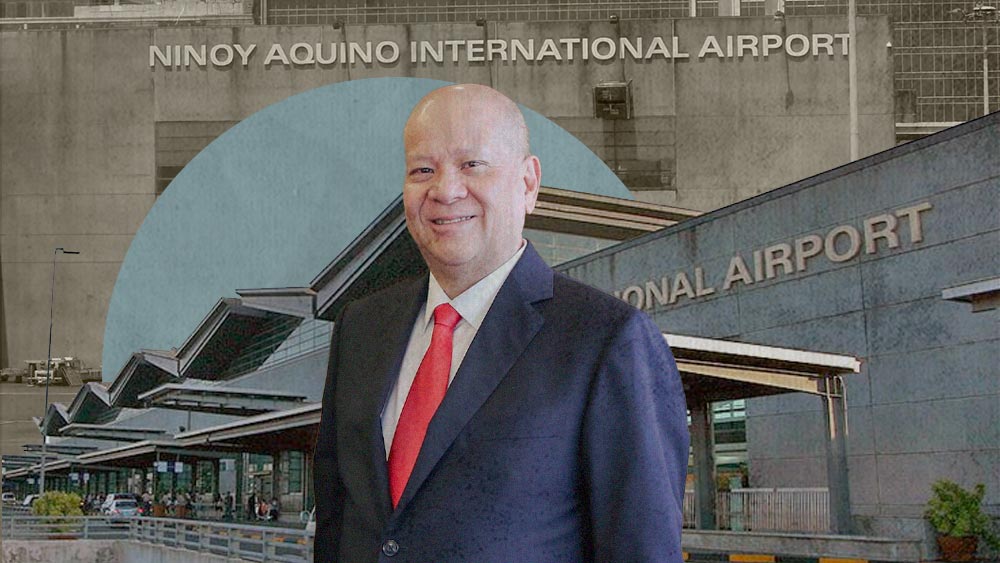
After a painstaking monthslong process, the Department of Transportation (DOTr) officially awarded the P170.6 billion contract to rehabilitate the aging Ninoy Aquino International Airport to a consortium led by San Miguel Corp.
DOTr Secretary Jaime Bautista announced the awarding himself during a press conference on Friday (February 16).
The SMC-SAP & Co. Consortium—which is composed of San Miguel Corp., RMN Asian Logistics, RLW Aviation, and Incheon International Airport Corp.—won the deal after it submitted the best bid during the public auction, offering a government share in revenues of 82.16 percent. Meanwhile, GMR Airport Consortium’s offer was at 33.3 percent while that of the Manila International Airport Consortium (MIAC) was at 25.91 percent.
ALSO READ
How Ramon Ang’s San Miguel Corp. Won the P170-Billion NAIA Rehabilitation Project
Only Three Bids to Rehabilitate NAIA Pass the Department of Transporation's Compliance Test
According to Transportation Undersecretary Timothy Batan, the deal, is expected to generate government revenues of about P900 billion over the course of its 25-year concession period.
“The payment to the government consists of three things: P30 billion of upfront payment, P2 billion annuity, and 82 percent of revenues. If you add those three up, that’s a total of P900 billion for the duration of 25 years,” Batan said in the same press briefing.
In comparison the total dividends remitted by the Manila International Airport Authority (Miaa) to the national government between 2010 and 2023 is only P23.2 billion.
Transportation Secretary Jaime Bautista said the project was one of the “fastest solicited” projects of the government, having the auction completed within 12 months.
“We have issued the notice of award we have sent it today and one of the reasons why it’s one of the fastest is because we really worked hard to see that this is implemented the fastest possible time — because we think that this is a very important project,” Bautista said.
The reason the government was able to implement the project so quickly was because of adjustments in several institutional and regulatory policies, including the Public-Private Partnership (PPP) Code and the revision of the Build-Operate-Transfer (BOT) Law.
But while this particular deal took roughly around one year, the effort to privatize the operations of the country’s main gateway has been 30 years in the making, spanning six administrations starting from the Piatco-Fraport attempt during the administration of then President Fidel V. Ramos, according to Bautista.
NAIA currently operates beyond its capacity of 35 million passengers per annum, resulting in poor service levels and inconvenience to passengers. The awarding of the contract to SMC-SAP should see service improvements at the airport within a year.
Improvements to NAIA
The NAIA PPP project seeks to rehabilitate and expand the current three-terminal gateway in Manila and expand its capacity from 62 million passengers per annum (MPPA).
The concession was initially set for 15 years with an option to extend by 10 years as long as the concessionaire is “not in flagrant violation of the concession agreement.”
When sought for comment, SMC-SAP said it is grateful for the conduct of “a fair and comprehensive bidding process.”
"Our proposal is designed not only to elevate NAIA to world-class standards but also to ensure that the government benefits from the most advantageous revenue-sharing agreement. This aims to secure a favorable outcome for our shareholders while prioritizing fairness and long-term sustainability over immediate profits,” SMC-SAP said in a statement.
The consortium also vowed to collaborate with all stakeholders, “recognizing the weight of the responsibility entrusted to us.”
Batan said the formal signing of the concession agreement will be done within 30 days.
