
Financial Adviser: 5 Business Lessons Everyone Can Learn from 'Siomai Magnate' Edwin Bernabe, Founder and CEO of Siomai House

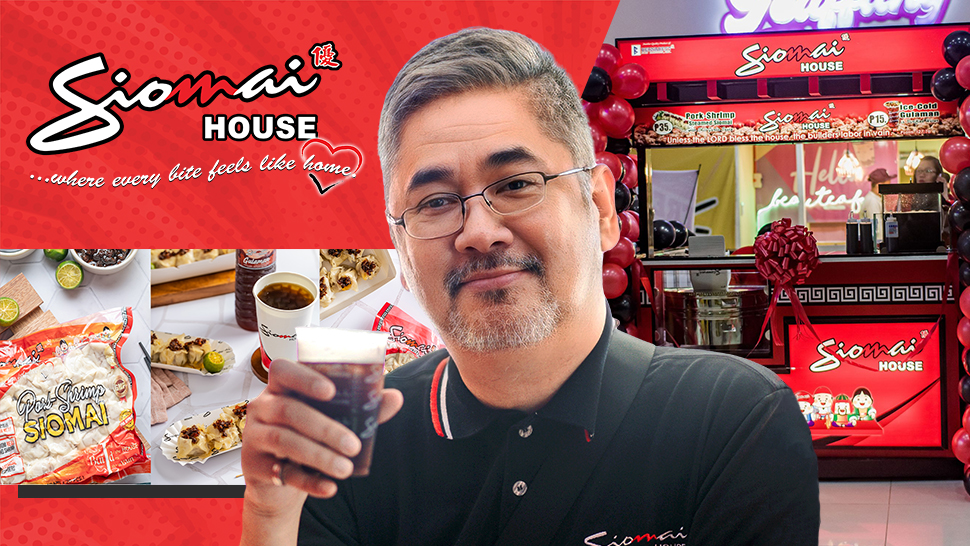
In the bustling corners of the LRT Monumento station lies a story of ambition, resilience, and unexpected success. A tale that began with a young man's dream of medicine but took a delightful turn into the world of business, all thanks to Empanada Especiale and Siomai House.
Edwin Bernabe's academic journey in pre-med was halted due to the family’s impoverished state. Taking a desperate leap of faith, his mother decided to work in Italy, against her husband's wishes, in hopes of better fortunes.
However, fate had a different plan. She was illegally recruited and, instead of Rome, landed up as a domestic helper in Sicily, serving an ex-mafia member. During her stay, Bernabe's mother mastered the art of making empanadas and dutifully noted the recipe in her diary.
On her return in 1995, the family leveraged this recipe, with Bernabe and his brother selling empanadas locally. After a potential business deal, Bernabe collaborated with a partner to launch Empanadas Royal. However, with a vision to cater to a broader market, he later established a separate brand, Empanada Especiale.
Bernabe’s first stall for his Empanada business in LRT Monumento quickly became a hit among commuters. In 2003, a spot next to their store became vacant. Fearing that a competitor might move in and undercut their prices with cheaper empanadas, the brothers decided to rent the spot even though they didn't have a new product to sell yet.
Upon the suggestion of Bernabe’s brother, they ventured into selling siomai and gulaman. This led to the birth of Siomai House, a name that would soon resonate across LRT stations and beyond. Within the first year, its daily sales skyrocketed to P40,000 pesos, and its presence expanded to 20 prominent locations.
Today, Siomai House stands as an iconic brand in the country. From its humble beginnings, producing 5,000 siomai pieces daily, the empire now rolls out an astonishing 240,000 siomai every day and boasts about 1,000 outlets. This success is a testament to Bernabe's relentless drive and passion for food.
What started as a dream of stethoscopes and white coats morphed into a legacy of crispy empanadas and succulent siomai. Edwin's journey is a testament to the unexpected twists life offers and how seizing the right opportunity can lead to unparalleled success.
How did Bernabe handle competition and market dynamics in the evolving food industry? What are some lessons that emerging entrepreneurs can learn from Bernabe's journey?
Here are the five business lessons everyone can learn from the founder and CEO of Siomai House, Edwin Bernabe:
ALSO READ
1| Know how to turn adversities into opportunities
Businesses face inevitable challenges, from economic downturns to unexpected disruptions. By viewing adversity as an opportunity, businesses can pivot and adapt, ensuring their continued survival and even growth during tough times.
Entrepreneurs that effectively handle adversity often emerge stronger on the other side. They not only weather the storm but also gain a competitive edge, having improved their operations, entered new markets, or developed new products in response to challenges.
Faced with financial adversities in the 1980s, Bernabe's family found an unexpected opportunity when his mother went to work in Italy. Despite being misled into a challenging role in Sicily, she acquired the skill of making empanadas, which eventually led to the launching of Empanadas Royal.
“The business transitioned from adversity to opportunity, a journey that began in 1981,” Bernabe says. “I was in my third year of pre-med and we were so poor that my mother decided to work as a chambermaid in Italy, against my father's decision, kasi talagang mahirap na mahirap.
“Sadly, she was illegally recruited. Instead of working as a chambermaid in Rome, she ended up as a domestic helper in Sicily, serving a retired mafia member. Fortunately, they treated her well. They even extended an invitation for our entire family to migrate there, but my father declined. So, what's the connection with our business?
“At that time, my mom learned the recipe for empanadas and noted it in her diary. When she returned after a year, she would make the empanadas only on special occasions kasi it was difficult to prepare the fillings and the dough.
“In 1995, when my mother returned, my brother got the empanada recipe from her and began selling them in our neighborhood. It was challenging; I would also sell to my friends. Ang hirap kasi ikaw gagawa, so I had to learn how to make them myself. I would prepare the empanadas and then sell them to my office mates.
“Once, someone placed an order with me. A lady tasted the empanadas at a gathering and asked her relative, "Where did you get this?" The relative replied, "I ordered it from my doctor friend. It's delicious." The lady then proposed, "Tell him I'll buy the recipe for P10,000."
“I told her that I wasn't familiar with the business side of things and suggested, ‘Let's be partners. You provide the empanadas, and I'll handle the rest.’ So, in 1995, we launched Empanadas Royal.
“However, I was set to go to Saudi Arabia that same year, in November 1995. I entrusted everything to my family: my mom, brothers, and sisters. By the time I landed in Saudi Arabia, they had already commenced the business, and it was doing well.
“Making our empanadas requires a hands-on approach with tender loving care, and we've chosen to maintain that method. Even today, we don't use machines. From 1995 to 2001, I worked with a partner. I then expressed my desire to expand to markets and LRT stations to cater to middle and low-income customers.
“She preferred to stick to mall locations. So, I informed her that I would launch my own venture. Thus, I started Empanada Especiale, under a different brand, and we opened our first store at LRT Monumento in 2001.
“By 2003, there was a vacant spot next to our empanada store. We were concerned that another empanada store might take the spot and sell at a much lower price. My brothers and I were alarmed, so what we did, we decided to rent out the space even though we had no product yet. We are eight in the family. Mahilig kami kumain eh. My brother then thought of the siomai he used to prepare during special occasions. There's nothing particularly special about the siomai; it's made of ground pork with shrimp and some spices, and then steamed. We decided to give it a try. The rest is history. We are now on our way to opening our 1,000th store.”
2| Know how to simplify branding with power of single-product focus
Brands that focus on a single product often enjoy a clear brand identity. When customers think of that product, they think of the brand, creating a strong association in the consumer's mind.
When a brand focuses on a single product, it is often perceived as a specialist or expert in that domain. This can give consumers more confidence in the quality and reliability of the product. It’s also easier to maintain consistent quality. The brand can pour all its resources and attention into ensuring that the one product it offers is the best it can be.
Bernabe emphasized the importance of a streamlined branding approach, focusing specifically on a single product to minimize customer confusion.
By highlighting their product as a gourmet item, and ensuring it catered to quick consumption needs, they were able to stand out in a marketplace that often overwhelms customers with choices, like in stores such as Goldilocks.
The design and brand identity were meticulously crafted to be both distinctive and deeply symbolic. Opting for a clear black and red theme, they incorporated elements like the eight trellises to represent family members, adding a personal touch to their brand story. The straightforward brand name, Siomai House, not only ensured easy recall but also suggested expertise in their product offering.
“We've learned from our business that it's beneficial to present your product as a gourmet item, focusing on just one product,” he says. “Often, when you visit a store like Goldilocks, there are too many choices. Your turn around because you don’t know what to choose. But when you come to us, whether it's for empanada or siomai, there's only one product to choose from.
“Kasi when you come to us, your only purpose is to eat. Of course, knowing the need for somebody to eat it quickly in seconds or maybe less than a minute. That's what we aim to provide. If you're in a rush and want to satisfy your hunger, within a minute you can be enjoying our siomai.
“While I was in Dubai, my brothers would frequently email or call me. They'd ask, "Tol, how should we design the cart?" They believed that since siomai is Chinese, there should be pagodas in the design. However, they weren't sure how to draw it. So, we decided on a black and red theme.
“The red is Asian, whether it's Japanese or Chinese. My brother then sketched the cart using only straight lines. We added eight trellises, symbolizing the eight of us in the family. My brother Eric handwrote the brand name. He simply wrote, Siomai House, and that was it.
“So bare na bare yan. The name was very straightforward: just Siomai House. One day, while I was in Dubai, someone sent me a “Kong Hai Fat Choi” greeting with only seven characters. But we were eight in the family, I forwarded this to my brother Eric and told him to find an artist to add one more character to represent a girl, because we were six boys and two girls, and this is what came out. We had it trademarked at IPO and it was approved.
“We just decided to call it Siomai House. Wala lang, kasi siomai eh, but we realized later that it was a mistake because it limited the scope of the business. This became a problem with the malls. They will not allow addition of new products.
“Maybe later on, if it's really a Chinese, siguro, they might allow it because we already have the siopao. Maybe they might allow us to have both siomai and siopao. I would also like to introduce xiao long bao.”
3| Know how to blend tradition and innovation in food business
In busy streets and corners, food cart customers are looking for quick yet exciting flavors. With access to global cuisines and plenty of food choices, they expect diverse options from food carts. Therefore, introducing innovative dishes or twists on classics can be appealing.
There might be dozens of food carts in a popular area, all vying for the attention of the same clientele. Differentiating one's offerings ensures that the food cart becomes a memorable spot, drawing in both new and repeat customers.
While siopao was dominant, Bernabe recognized that siomai, a lesser-known but personally beloved dish, had potential. This realization allowed him to introduce something relatively fresh to the market.
Bernabe didn’t just jump into selling siomai without considering other possibilities. There was a thoughtful process, weighing the merits and drawbacks of various options, like lumpia in its various forms and Pancit puti.
Bernabe set aside the use of traditional steaming methods in favor of a taho-style, round steamer. This innovation not only made serving faster but also enhanced the sensory experience for customers, drawing them in with the enticing aroma of freshly steamed siomai.
He also introduced gulaman, a popular drink to match with his siomai offerings. He even maintained the nostalgic “salok” container, giving his gulaman a unique touch and an affordable price point.
Despite having a successful product, Bernabe was receptive to external feedback. He was open to learning and enhancing the product. This led to the introduction of crunchy chili garlic and even a new fish siomai variant.
“At that time, no one knew about siomai,” Bernabe says. “It was always siopao. However, we loved siomai. There was a siomai store in the old Ever Grand Central at the basement, just outside the supermarket. They used a generic bamboo steamer. Every time I came home for a vacation from Saudi, we would go there and eat siomai.
“When we were considering which product to offer in our vacant spot, we looked at various selections. We wanted Barangay Lumpia and anything else that could be wrapped with a lumpia wrapper, like turon, toge, lumpia shanghai, and lumpiang sariwa. But the problem arises when a customer specifically wants to buy Shanghai.
“And if you still have to cook the Shanghai, how efficient would that be? What about the lumpiang sariwa? Madaling mapanis. We also considered our pancit Puti and pancit bihon without the soy sauce. But again, how would an LRT commuter manage to eat it?
“We eventually settled on siomai. It was manual. We began making siomai in a small apartment. At one point, we hired up to 50 women per shift to make the siomai. This manual approach resulted in varying sizes for each siomai.
“When customers came to the store and opened the steamer, they could choose the pieces, ‘I like that one, that one’ kasi the sizes are different. Later, we changed the concept of how you can serve it faster. We adopted the taho version, yung round steamer, the ‘bilog one’ instead of the traditional counter steamer.
“So when you open the steamer, the aroma will come out and be smelled by the customer. As for the sauce, we concocted a garlic sauce. Sa super anghang nun, people were asking for anything to drink.
“So we thought of gulaman. We would ask somebody to buy gulaman in the supermarket, yung the colored ones. We would prepare it but eventually we improved it. So doon lang nag umpisa yun. Tapos we continued to use the “salok” container. Di ba yung nakikita mo sa palengke, yung novelty, we did not change it, maririnig mo yung yelo nag ‘klok, klok, klok’. At that time, magkano ang gulaman sa goldilocks, versus ours, our price was only P20.
“Somebody must be orchestrating everything, and then another angel was sent to us. There's this Chinese guy; we didn’t know him. He just came to our small commissary. At that time, he said, ‘Sarap siomai nyo, pero wala kwenta chili garlic.’ Tinuruan kami on how to make a crunchy chili garlic. He did not ask anything. May dala-dala pa syang isang caldero ng spare ribs. His name is Mang Benito. Tapos tinuro pa nya how to make a fish siomai. Pumunta sya sa factory para i-demo.”
4| Know how to identify the right time to scale up the business
Scaling up requires a substantial investment of resources—money, time, and manpower. If a business scales up too early, without having the required resources or without the demand to justify the expansion, it can strain its operations and finances. Conversely, scaling up too late might mean missed opportunities.
A business needs to scale up when there's a clear market demand. Scaling without genuine demand can lead to wasted resources. However, if a business waits too long to scale in the face of increasing demand, it may lose potential customers to competitors.
The right timing can help businesses get ahead of competitors. Being the first to scale in a niche or market can allow a business to establish itself as a leader, making it harder for later entrants to gain a foothold.
Bernabe relied on a combination of market demand, financial indicators, opportunities presented to them, and the interest and success of early franchisees to identify the right time to scale up the business.
In the early days, since Siomai House was unfamiliar to the malls, Bernabe couldn't secure prime spots within them. He was relegated to locations outside the mall. However, once he demonstrated the success of their product, he seized the opportunity to request a space inside, which significantly aided in expanding the business.
“We were in bangketa lang noon eh, first attempt was in the Grand Central kasi eto yung LRT and andyan yung North Mall, small mall and the big one was the Grand Central,” he says. “We applied sa Grand Central, doon sa likod.
“Dati kasi takot na takot kami sa rent, yung rent na above P10,000 at that time, kakabahan ka na, but we wanted to expand. We started to look for another outlet after the first one but the problem was mahal yung rent, wala kaming pera, imagine P180,000 ang ilalabas.
“At that time, one of the first challenges was acceptance. The malls did not know us. They would not entertain us. They would tell us politely naman that they don’t have available space for our concept. Well said. So we went for the worst place, yung walang aircon, doon sa mga dry goods.
“Yung opening day. I was in Dubai, and tumawag ako siguro mga 11 a.m. sa Manila. Sabi ko ‘Kamusta na? Sabi ng brother ko, ‘Walang benta.’ Then yung mga 12pm, tumawag ulit ako, sabi nila ‘tol, wala eh. Walang benta.’ So hindi na ‘ko tumawag. But later in the afternoon in Manila, tumawag brother ko, sabi nya, ‘Tol nagkakagulo na,wala na kaming paninda.’
“I realized three o’clock pala yung critical time. 3 p.m. onwards. We were selling at that time P40,000 per day. Actually naka ROI agad kami in less than one month, and then nagkaroon ngayon ng parang event sa loob ng mall, in front of the supermarket. We requested ‘pwede ba mag stay na kami sa loob?’ Pumayag. So naglagay kami ng another branch.
“That time yung nag-uumpisa kami may isang tao na about to retire sa bank. Nag-LRT lang sya and then meron sana syang bibilhin na soft ice cream machine sa Monumento. So she took the LRT, baba sya ng Monumento. Pag baba nya, nakita nya yung empanada and siomai, pag baba ng tao magkakagulo dun tapos after few minutes, mawawala, dadating na naman yung next batch, hindi sya makasingit kasi after few minutes eto na naman.
“Sabi nya, ‘Parang eto ang gusto kong i-franchise ah.’ Nagtatanong sya sino yung may ari nyan, then may nagsabi, ‘Ayun o, yung nagsasalok ng gulaman.’ That was my brother Eric. Then sinabi nya, ‘Gusto ko mag-franchise nito. Sabi ng brother ko, ‘Ano po yung franchise?’
“At that time parang wala pang franchising. Sumulat yung kapatid ko: ‘Tol maghanap ka nga ng franchise agreement? Ethat time, hilaw na hilaw pa tayo noon sa internet. Tapos hahanap kami ng one page contract or two page contract. May nag-approach sa amin na franchise consultant, nalula naman kami ang mahal so kami na lang gumawa na sarili, unti-unti. E napaka insistent nitong si franchise number 1, at that time, parang P50,000 pa lang yung aming franchise package.
“So etong si franchisee, gusto nya ilagay yung outlet sa may mall sa Malinta. Dito nya gusto ilagay. Sabi namin, ‘Ma’am, na-survey na namin yan. Zero yan, negative kami dyan.’ Sabi nya, ‘Hindi, pera ko naman yan.’ Alam mo, clueless kami, she dropped her money and told us to deliver the cart. Yung the day before na ma-deliver yung cart nya, she went to the factory and got the cart, kinuha nya. Today, 20 years na sya and she’s still doing very well, nabuhay yung mall. Pinuntahan namin yung mall dati, ang lungkot eh pero lumakas because of Siomai House.”
5| Know how to lead with heart in a competitive marketplace
When businesses act with sincerity and genuine concern for their customers, trust is built. Trust is a cornerstone of brand loyalty and repeat business. In a competitive marketplace, winning the trust of consumers can differentiate a brand from its competitors.
While short-term gains can be achieved without leading with heart, long-term sustainability requires genuine care for stakeholders, including customers, employees, and the community. Businesses that prioritize these values are more likely to weather challenges and evolve with changing times.
Bernabe's leadership with heart is rooted in authenticity, resilience, a deep sense of purpose, and genuine care for stakeholders. By embedding these values into the DNA of Siomai House, he has successfully navigated the challenges of a competitive market.
The founder maintained the authenticity of his products. Unlike competitors who used internal organs and textured vegetable protein, Siomai House stayed true to its commitment of offering genuine ground pork and shrimp.
Bernabe's “PRICE TAG” approach begins with making a positive impact on people, be it employees, customers, suppliers, or the environment. This demonstrates a commitment to going beyond just profit and genuinely caring for the wider community.
“At that time, wala pa kaming competitor na food cart. Of course, there was Chowking and Hen Lin. Mga sinasamba ko yan, mga pinapangarap ko yan na, one day we will be like them.
“Now ginaya na kami. Siguro nga di ba the greatest form of flattery is imitation. Meron nga iba ginaya kami the same colors, pati yung characters.
“Ang sa akin lang, sana, if you imitate, make it better, di ba? Yung mga nag copy, they could not copy our ingredients, kasi yung mga competitors they are using internal organs and a lot of texture vegetable protein, while at Siomai House, totoong ground pork and shrimp.
“The competition kasi nowadays is not just siomai to siomai. There are new products entering the market. It could be milk tea, it could be doughnuts. Competitor mo din yan.
“To me, an entrepreneur must have a heart with the acronym 'PRICE TAG'. 'P' stands for positive impact on people: be it employees, customers, suppliers, or even the environment. 'R' represents resilience. You must adapt to changing times. The pandemic, for instance, was a real test; many companies, including big names like McDonald's and KFC, had to shut down locations, even in schools.
“'I' is for integrity; it relates to the authenticity of what you're selling. 'C' stands for compassion towards employees and how you interact with customers, as well as empathy. 'E' represents the need to take risks, not mere chances.
“'T' stands for having a true sense of purpose. 'A' emphasizes the importance of being authentic in all dealings. And 'G' reminds us to always be grateful in every circumstance. If you can check off all these attributes, then you truly are an entrepreneur with a heart. This summarizes our approach here.”
Henry Ong, RFP, is an entrepreneur, financial planning advocate and business advisor. Email Henry for business advice hong@financialadviser.ph or follow him on Twitter @henryong888
