
Financial Adviser: 5 Worst Performing Blue-Chip Stocks in First 11 Months of 2024 and How to Profit from Them

The year is almost over yet the stock market shows no significant improvement. Persistent market uncertainties remain large, driven by the looming threat of tariff wars and global recession. These factors continue to cast a shadow on investors' sentiment, contributing to the market's stagnant state.
The downtrend in the PSE Index and the low volume turnover of trading reflects the market's anticipation of an economic slowdown in the months ahead.
Despite encouraging corrections in the inflation rate, the rise in interest rates this year has kept investors at bay, compelling them to keep their funds outside of the stock market.
Moreover, growing fears of a global recession could lead to a decrease in consumer and business confidence, which, in turn, can negatively impact the overall economy and contribute further to the decline in stock market.
The PSE Index has lost as much as 1,045 points or 13.7 percent from its peak in October this year. Although the market has shown signs of recovery lately amidst a correction in inflation and interest rates, investor sentiment remains negative.
The recent breakdown of the PSE Index below 7,000 is a strong indication that the stock market is likely to trend lower towards the historical support level of 5,700.
While most stocks nowadays may look cheap, there is no assurance that a sustainable recovery is underway. In fact, share prices may get cheaper with the prevailing market pessimism.
The Price-to-Earnings (PE) ratio of the market currently stands at 11.7 times, which is historically low. Still, given the uncertainties and sentiment, pricing multiples may fall further.
For example, we can value the stock market based on the current opportunity cost, calculated by adding a risk premium to the current 10-year bond yield, which is 5.98 percent.
Assuming a standard risk premium of five percent, we can calculate a total opportunity cost of 10.98 percent. Based on this rate, we can estimate the fair value of the PSE Index at a PE ratio of 9.1 times. At a market PE of 9.1 times, we should expect the PSE Index to decline by 25 percent from its current level to the 5,300 area.
It may take some time before the market finally recovers. In the meantime, it would be good for investors to be aware of potential value stocks in the market.
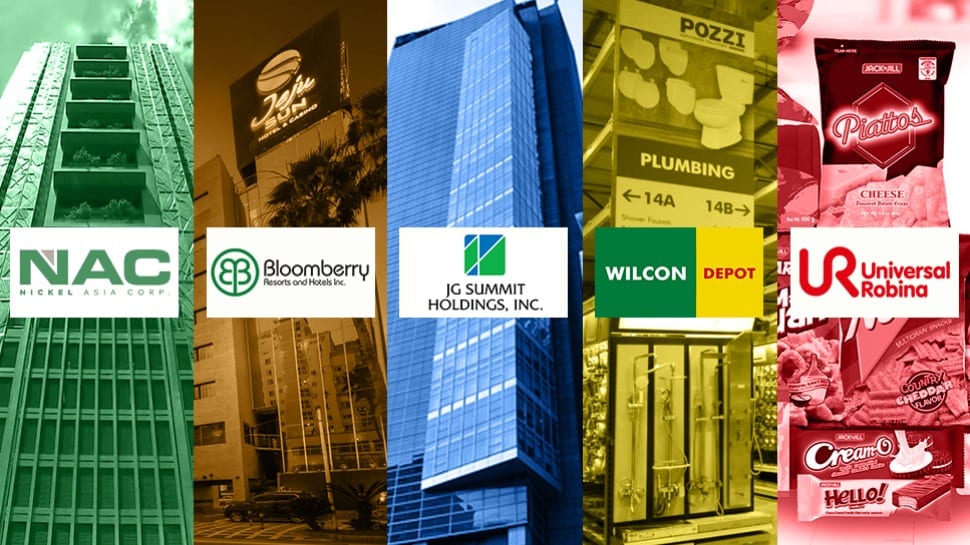
For the first 11 months of 2024, let’s take a look at the five biggest blue-chip losers to date and where you can possibly pick them up.
ALSO READ
1| Nickel Asia Corporation
Price: P2.97
Year-to-date loss: -45.8 percent
Nickel Asia (PSE: NIKL) is the largest producer of lateritic nickel ore in the Philippines, and one of the largest nickel companies in the world. It also has a growing interest in renewable energy development.
NIKL operates four major mines: Rio Tuba in Bataraza, Palawan, which has a capacity of 24,000 tonnes of contained nickel; Taganito in Surigao del Norte, which a capacity of 36,000 tonnes; Hinatuan in Surigao del Norte; and Cagdianao in Dinagat Islands.
The company is also into renewable energy business through its 86.3 percent subsidiary, Emerging Power, Inc., which operates a 132 MW solar plant in Subic Bay freeport as well as geothermal service contracts in Mindoro and Biliran.
NIKL’s revenues, 92 percent of which come from ore and limestone sales, have been growing by an average of 12.5 percent for the past 14 years from P4.7 billion in 2009 to P24.7 billion in 2023.
This growth in revenue has resulted in 19.6 percent annual growth in net income from P303 million in 2009 to P3.7 billion in 2023.
Prices of nickel ore in the global market have been declining since last year, which have significantly affected the company’s revenue growth.
Last year, NIKL’s total revenue fell by 11.7 percent from P28 billion in 2022 to P24.7 billion last year. The fall in revenues brought down its total net income for 2023 by 52.7 percent to P3.7 billion from P7.9 billion in the previous year.
This year, sustained weakness in global nickel prices led to a sharp decline in NIKL’s first nine-month revenues, which dropped by 12 percent to P16.9 billion, compared to P19.3 billion in the same period last year. The fall in revenues resulted to 29 percent decline in NIKL’s net income from P5.2 billion in 2023 to P3.7 billion.
The stock of NIKL has been on a steady decline since the beginning of the year, losing 45.8 percent from its closing price of P5.48 per share in 2023. This marks the second consecutive year of decline for NIKL. In 2023, the stock suffered a loss of 30 percent from its peak of P7.87 in January.
Based on NIKL’s 12-month trailing earnings, the stock’s PE ratio currently stands at 16.2 times. At this pricing multiple, the current share price of NIKL at P2.97 per share still represents a 38.5 percent premium over the market average of 11.7 times. If priced at par with the market PE ratio of 11.7 times, the stock should be a good buy around P2.14 per share.
Given the current weakness in the global prices of nickel, NIKL’s earnings might continue to fall this year. Lower earnings mean lower dividend payouts also.
Last year, NIKL paid a total dividend of P0.24 per share, which represents a decrease of 47 percent from 0.45 per share in dividends it paid in 2022. This year, the company has paid 0.13 per share in dividend last March, which was 23.5 percent lower than the previous year.
Given the lower dividend of P0.13 per share this year, the prospective dividend yield of the stock at its current price is 4.4 percent, which is significantly lower than its average dividend yield of 8.06 percent in 2022 and 2021.
2| Bloomberry Resorts Corp
Price: P5.48
Year-to-date loss: -44.3 percent
Bloomberry Resorts Corp (PSE: BLOOM) is one of the largest operators of resort and gaming companies in the country. BLOOM owns Solaire Resort Entertainment in Entertainment City and Jeju Sun Hotel and Casino in Jeju Island, South Korea.
BLOOM derives its revenues mainly from gaming, constituting about 87 percent with hotel, food and beverage contributing about six percent and retail also accounting for six percent.
BLOOM’s revenues have been growing by an average rate of 14.5 percent, rising from P12.3 billion in 2013 to P47.8 billion in 2023. Over the same period, its net income also increased at a compound annual growth rate of 19.7 percent, from a P1.3 billion net loss in 2013 to a P9.5 billion net income in 2023.
The robust performance of BLOOM has mirrored the significant increase in its stock price, which grew by as much as 52 percent to a high of P11.68 per share in 2023.
This year, BLOOM's stock price took a significant reversal, dropping by as much as 50 percent from its peak of P10.94 per share last March. This sharp decline in stock performance closely aligned with the company's weaker earnings results for the year.
Although BLOOM’s total nine-month revenues increased by six percent to P38.3 billion from P36.1 billion last year, its operating costs and expenses surged by 27 percent, which caused its operating income to fall by 33.8 percent to P8.30 billion from P12.53 billion last year.
In addition to higher operating costs, interest expenses increased by 14.4 percent due to higher borrowings and rising interest rates. As a result, BLOOM’s net income plummeted by 57.6 percent to P3.50 billion, compared to P8.27 billion during the same period last year.
At current share price of BLOOM at P5.48 per share, the stock is trading at 12-month trailing PE ratio of 13.15 times, which is 14.7 percent lower than its pre-pandemic historical PE of 15.7 times.
However, with the prospects of elevated inflation and interest rates next year, the momentum of slowing revenue growth could impact BLOOM’s recovery. If we price BLOOM’s P/E ratio in line with the market average, its share price should trade near the P4.00 level.
3| JG Summit Holdings
Price: P22.05
Year-to-date loss: -42.2 percent
JG Summit Holdings (PSE: JGS) is one of the largest and most diversified conglomerates in the Philippines. It is majority owned and controlled by the Gokongwei family.
About 50 percent of JGS’ revenue is contributed by its subsidiary, Universal Robina Corporation (PSE: URC), one of the largest snack food and beverage companies in the ASEAN region. Following closely is the pioneer budget airline, Cebu Pacific Air (PSE: CEB), contributing 19 percent, and top property developer Robinsons Land (PSE: RLC), contributing 16 percent.
JGS also has significant stakes in PLDT (PSE: TEL) with an 11.2 percent share, and Meralco (PSE: MER) at 26.4 percent. JGS also owns 37 percent of SingLand or Singapore Land Group Limited (SGX: U06), a leading property developer in Singapore.
JGS’s total revenues over the past 13 years have been growing by an average of 10.4 percent per year from P94 billion in 2009 to P343 billion in 2023. This steady growth resulted in annual earnings growth of 6.8 percent from P8.5 billion to P20 billion in 2023.
This year, JGS’s total revenues for the first nine months of 2024 grew by 9.9 percent, increasing from P251 billion last year to P276 billion. The rise in revenues increased the company’s operating income by 17.8 percent to P36.6 billion from P35.9 billion in 2023.
However, this improvement was partially offset by higher other expenses, including a 20 percent increase in financing and borrowing costs, along with valuation losses. As a result, JGS's net income grew by a more modest 6.2 percent, reaching P27.8 billion, compared to P26.2 billion last year.
The stock of JGS has been declining for the past few years, losing about 71 percent of its value from its peak price of P75.9 per share in 2021 to only P22.05 per share this year.
At the current share price of P22.05, the stock is trading at a 12-month trailing PE ratio of only 7.05 times, which is roughly half of its historical PE average of 15 times in 2023. Given the company's single-digit earnings growth record, both historically and prospectively, at less than seven percent per year, the current pricing multiple of the stock appears to be justified.
Given the earnings growth trend of JGS, assuming we price the stock at a 6.0 percent growth rate to match its PE ratio, we can expect the stock to trade further lower, in the P18 per share range.
4| Wilcon Depot
Price: P13.00
Year-to-date loss: -37.8 percent
Wilcon Depot (PSE: WLCON) is the leading home improvement and construction supplies retailer in the Philippines, offering extensive selection of local and international brands across all categories with 18 branches spread all over Metro Manila and 68 stores in key cities and municipalities of Luzon, Visayas, and Mindanao for a total of 86 operating stores nationwide.
WLCON's total revenues have experienced robust growth, expanding by 18.2 percent over the past six years, climbing from P12.3 billion in 2016 to P33.6 billion in 2022. This steady rise in revenues has translated into an impressive annual net income growth rate of 27 percent, surging from P886 million in 2016 to P3.8 billion in 2022.
Last year, WLCON’s total revenues began to slow down, growing only by 3.0 percent to P34.6 billion. Higher operating expenses, higher finance charges and slower revenue growth led WLCON’s net income to fall by 9.5 percent from P3.8 billion last year to P3.5 billion.
This year, WLCON’s total revenue growth continues to weaken, primarily due to a slowdown in the property sector and the economy as a whole. WLCON’s first nine-month revenues declined by 1.0 percent to P25.7 billion, while its net income fell by 22 percent to P2.8 billion.
WLCON’s stock price has been on the decline since last year, losing about 62 percent of its value from its P34.45 in 2023 to P13.00 this year. Despite the fall in the share price, WLCON’s 12-month trailing PE ratio is still relatively high at 18.5 times compared to the market average of 11.7 times.
The uncertainties surrounding WLCON’s earnings outlook, stemming from the slowdown in the property sector, may persist, continuing to dampen investor sentiment on the stock.
Currently, WLCON’s premium over market average is about 58 percent. If we adjust WLCON’s premium to 25 percent to reflect current market environment, this will mean that the stock’s PE ratio will have to fall to 14.6 times.
At 14.6 times PE, WLCON’s stock price should fall further to P10 per share level over the medium term.
5| Universal Robina Corporation
Price: P83.00
Year-to-date loss: -29.8 percent
Universal Robina (PSE: URC) is one of the largest branded food product companies in the ASEAN region, with leading market shares in snacks, candies, chocolates, and biscuits.
Some of URC’s popular consumer brands include Jack n’ Jill’s Chippy, Piattos, Magic Flakes, Maxx, C2, Blend 45, Great Taste, Swiss Miss, and Vitasoy.
URC’s branded consumer food products contribute about 70 percent of its total sales, while its international operations contributed about 22 percent of total.
URC’s total revenues have grown at a compounded annual rate of 6.9 percent, rising from P80.9 billion in 2013 to P158.3 billion in 2023. However, its net income has increased at a much slower pace of only 1.9 percent per year, from P10 billion in 2013 to P12.1 billion in 2023, primarily due to escalating costs of sales and higher finance charges.
This year, for the first nine months of 2024, URC’s total revenues grew modestly by 1.47 percent to P118.9 billion compared to P117.2 billion in 2023. But net income declined by 11.1 percent, falling to P9.2 billion from P10.3 billion in 2023 due to higher operating expenses and finance costs.
URC's modest compounded earnings growth has mirrored its share price performance, which has steadily declined over the past decade. From a peak of P228 per share in 2015, the stock has fallen to a low of P76 per share this year.
Based on its 12-month trailing net income, URC’s PE ratio is trading at 11.6 times, which is roughly half of its historical average PE ratio in the past three years at 23.4 times.
But given the current downward earnings momentum of URC, the stock price could fall further towards the P65 per share level over the near term.
