Financial Adviser: 5 High-Yield Dividend Stocks that Could Pay You Up to 18.9 Percent Annually and How to Profit from Them

Dividend-paying stocks have long been a staple for investors seeking regular income, often representing mature and stable companies with predictable earnings.
These dividends, a tangible return of value to shareholders, signal confidence from management about the company’s future cash flow generation. But investing in dividend stocks isn’t as simple as chasing yield. It requires a closer look at how payouts work and whether they can be sustained, especially in today’s volatile market.
The dividend yield is a deceptively simple metric: cash dividends divided by the current stock price. As prices fall, yields rise, making dividend stocks appear more attractive. But this is a double-edged sword.
Falling stock prices may reflect deeper concerns about a company’s fundamentals, including its ability to sustain payouts. In contrast, rising markets, often driven by optimistic earnings projections, push prices up and yields down, which require investors to weigh the trade-off between income and growth potential.
The past few years, marked by economic uncertainty and market volatility, have created a fertile ground for dividend opportunities. The post-pandemic recovery saw companies recalibrating their capital allocation strategies, and many opted to return excess cash to shareholders.
Dividend yields have increased over the past three years, accompanied by a rise in the number of companies paying dividends. This year, 145 companies distributed dividends with a median yield of 4.0 percent, compared to 118 companies with a 2.7 percent median yield in 2023 and 111 companies with a 2.5 percent yield in the previous year. However, these overall figures hide an important reality: not all dividend stocks are the same.
In today’s markets, where earnings growth faces headwinds and valuation metrics shift rapidly, the challenge isn’t just finding income—it’s finding sustainable income. The true art of investing lies in understanding not just the returns but the risks that come with them.
An essential question to ask is whether a company can maintain its current dividend levels in the coming years. How much have its dividends grown over the past five years? What are the odds that the company will weather and recover from this economic crisis?
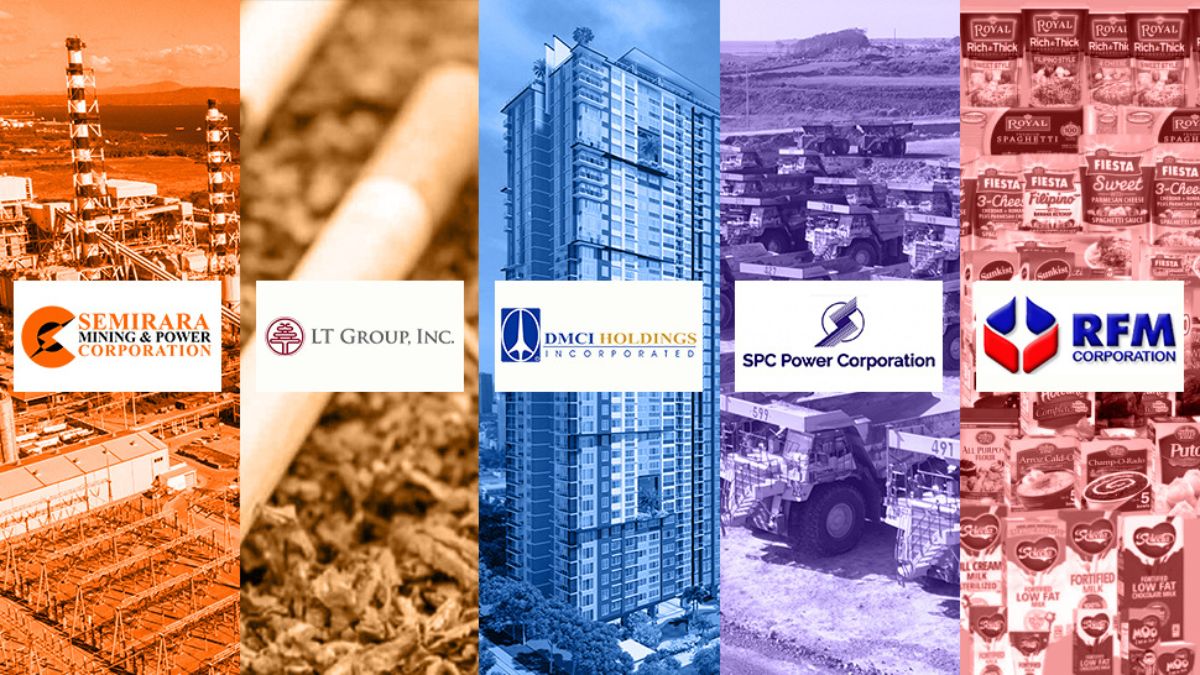
By thoroughly understanding a stock’s fundamentals before investing, you can minimize risks and make more informed decisions. With this in mind, here are five top dividend-paying stocks in the market that could be promising for those pursuing value investing:
1 | Semirara Mining and Power Corporation
Price: P31.75
Yield: 18.9 percent
Semirara Mining and Power Corporation (PSE: SCC) is the largest coal producer in the Philippines and the only power generator in the country that is fully vertically integrated. By mining its own coal, SCC ensures a steady and cost-efficient fuel supply for its operations, setting it apart from competitors.
The company serves as a critical supplier of affordable fuel to power plants, cement factories, and other industrial facilities across the Philippines. Beyond the domestic market, SCC exports coal to key international markets, including China, South Korea, Brunei, and other neighboring countries.
Through its subsidiaries, Sem-Calaca Power Corporation (SCPC) and Southwest Luzon Power Generation Corporation (SLPGC), SCC provides baseload power for the national grid. These power plants deliver electricity via bilateral contract quantities (BCQ) and participate in the Wholesale Electricity Spot Market (WESM) to ensure a reliable and flexible power supply for the country.
SCC’s revenues, which is comprised of 65 percent coal sales and 35 percent power revenues, have been growing by an average of 10.9 percent per year since 2013, from P27.3 billion to P76.9 billion in 2023. This revenue growth has translated into a 14 percent annual increase in net income, which grew from P7.5 billion in 2013 to P27.9 billion in 2023.
This year, SCC’s total revenues for the first nine months decreased by 11.6 percent, from P56.2 billion in the same period last year to P49.7 billion. The decline in revenues was primarily due to a significant drop in coal revenues, which fell by 16.0 percent, as well as a 3.7 percent decrease in its power segment.
As a result of rising costs and a drop in other income sources, SCC’s net income for the first nine months this year fell by 30.6 percent to P15.71 billion from P22.62 billion last year.
SCC demonstrated a more conservative financial position. The debt-to-equity ratio for total liabilities decreased from 0.36 to 0.24, while the ratio for interest-bearing loans dropped from 0.11 to 0.06.
The net debt-to-equity ratio highlights the company’s financial strength, which shows a negative value due to surplus cash exceeding interest-bearing loans.
Furthermore, SCC’s current ratio increased from 2.38 in December 2023 to 3.12 in September 2024, indicating stronger capacity to meet short-term obligations.
SCC declared total cash dividends of P6.00 per share this year, representing a 14.2 percent decrease from the P7.00 per share distributed last year. This reduction reflects the company's lower earnings performance this year.
At P6.00 per share, SCC's current dividend yield stands at 18.9 percent. If total cash dividend payments next year decrease by 50 percent to P3.00, SCC's projected dividend yield would still be generous at 9.4 percent, assuming its stock price remains at P31.75 per share.
ALSO READ
Financial Adviser: 5 Highest Dividend-Yielding REITs in 2024 and How to Profit from Them
Financial Adviser: 5 Highest Dividend-Yielding REITs in 2024 and How to Profit from Them
2 | LT Group, Inc.
Price: P10.38
Yield: 12.04 percent
LT Group (PSE: LTG) is the holding company of business tycoon Lucio Tan, who owns 100 percent of Tanduay, the third-largest distilled spirits producer in the country with 25 percent market share, and 100 percent of Asia Brewery Incorporated.
LTG also owns an indirect stake of 49.6 percent in Philip Morris Fortune Tobacco, the leading tobacco manufacturer with a 67 percent market share; 56.5 percent in Philippine National Bank (PNB); and 100 percent of Eton Properties.
LTG's total revenues—about half of which come from PNB, with the balance from Tanduay and Asia Brewery—have been growing by 7.6 percent annually for the past 10 years, from P55.4 billion in 2013 to P115 billion in 2023. This growth in revenues translated to 11.3 percent annual growth in net income to P25.2 billion from only P8.7 bllion in 2013.
This year, LTG’s nine-month total revenues increased by 12.8 percent to P95.2 billion from P84.3 billion in the same period last year, driven by strong performance in the banking segment (+13.4 percent) and distilled spirits (+14.7 percent). As a result, LTG’s net income increased 4.9 percent to P26.7 billion from P25.4 billion last year.
Because of the higher earnings this year, LTG paid total cash dividends of P1.25 per share, slightly higher than the total dividends it paid last year at P1.20 per share. At this cash dividend, LTG enjoys a dividend yield of 12.4 percent.
LTG is currently trading at 50 percent discount to its book value of P20.76 per share, making it one of the most undervalued conglomerate stocks in the market.
3 | DMCI Holdings, Inc.
Price: P10.32
Yield: 11.6 percent
DMCI Holdings, Inc. (PSE:DMC) is one of the largest conglomerates in the country with interests in power, construction, property development, and water distribution.
DMC’s 56.6 percent-owned listed company, Semirara Mining and Power Corp (PSE:SCC), contributes about 50 percent of the company’s total net income.
DMC’s wholly owned subsidiary, DMCI Property Developers, shares about 20 percent while DMC’s 25 percent interest in Maynilad Water Holdings provides about 16 percent, making up a total of 86 percent.
Interestingly, DMC’s construction company, D.M. Consunji, Inc., whose engineering expertise the company was originally known for, contributes only less than 10 percent.
DMC’s total revenues have been growing by an average of 8.2 percent for the past ten years, from P55.9 billion in 2013 to P122.9 billion in 2023. This growth in revenues translated to an annual 2.7 percent growth in net income to P24.7 billion in 2023 from P18.8 billion in 2013.
This year, DMC’s nine-month total revenues went down by 16.3 percent to P77.37 billion from P92.39 billion in the same period last year. The decline was driven by lower revenues across major segments, including coal mining (-16.0 percent), real estate sales (-36.7 percent), construction contracts (-16.9 percent), and nickel mining (-37.5 percent).
Because of this, DMC’s total net income dropped by 25.3 percent to P21.9 billion compared to P29.3 billion in the prior year. Despite these pressures, the company effectively managed costs, which partially offset the impact on profitability.
The decline in DMC’s earnings this year led management to reduce its cash dividend payments by 17 percent, from P1.44 per share last year to P1.20 per share. With this cash dividend, DMC’s dividend yield stands at 11.6 percent based on the current share price.
If DMC reduces its cash dividends by another 17 percent next year, bringing them down to P1.00 per share, the stock will still offer a relatively high dividend yield of 9.6 percent.
4 | SPC Power Corporation
Price: P9.10
Yield: 10.99 percent
Previously known as Salcon Power Corporation, SPC Power Corporation (PSE: SPC) specializes in power generation and distribution through its operating subsidiaries located in Iloilo, Naga, Bohol, and Cebu. Approximately 67 percent of SPC’s revenues are derived from power generation, with the remaining 33 percent coming from power distribution.
SPC’s revenues have been growing by an average of 8.2 percent annually for the past ten years, from P2.0 billion in 2013 to P4.6 billion in 2023. This consistent revenue growth enabled SPC to grow its net income by 4.2 percent every year to P1.2 billion in 2023, from P771 million in 2013.
This year, SPC’s nine-month total revenues increased by 5.3 percent to P2.36 billion, from P2.24 billion in 2023. The increase in revenue was driven by growth across various segments, with a notable rise in the power generation and distribution sectors.
However, SPC’s cost of operations rose sharply by 39.2 percent, amounting to P2.13 billion in 2024 compared to P1.53 billion in the same period in 2023. The increase in costs outpaced revenue growth, which led to a decline in gross margin from 31.6 percent in 2023 to only 9.6 percent.
As a result, SPC’s net income fell by 17.1 percent, dropping from P1.22 billion in 2023 to P1.01 billion in 2024. Despite the drop in revenue and higher costs, the company managed to maintain a relatively solid level of profitability, aided by lower tax expenses and some reductions in operating costs.
SPC’s financial liquidity remains strong. Its current ratio increased substantially to 10.69 as of September 30, 2024, from 6.75 at the end of 2023. This increase indicates that the company’s current assets are now over ten times its current liabilities, which reflects a much stronger liquidity position.
SPC’s debt ratio also improved from 0.10 at the end of 2023 to 0.06 as of September 30, 2024. This reduction indicates that SPC has reduced its financial leverage, relying less on borrowed funds and more on equity to support its operations.
SPC’s strong revenue growth prospects in the coming years have led the company to increase its total cash dividends for this year to P1.00 per share, a fivefold increase from P0.20 per share in 2023. As a result, SPC’s dividend yield has risen to 10.99 percent.
This marks the first time in two years that SPC has resumed distributing cash dividends of at least P1.00 per share. During the pandemic in 2022, the company reduced its cash dividends from P1.55 per share in 2021 to only P0.20 per share, which it maintained through 2023. This recent increase signals a renewed commitment to rewarding shareholders amid improving financial performance.
5 | RFM Corporation
Price: P3.89
Yield: 9.92 percent
RFM Corporation (PSE: RFM) is a major player in the Philippine food and beverage industry. It operates primarily in the manufacturing, milling, and marketing of food and beverage products, with its business divided into distinct units.
RFM's retail group, which includes flour-based and rice-based products, contributes the majority of its sales at 72.24 percent, while institutional clients account for the remaining 27.37 percent.
Over the past decade, RFM has demonstrated consistent growth, with total revenues increasing at an average annual rate of 7.3 percent, rising from P10.2 billion in 2013 to P20.6 billion in 2023.
During the same period, its net income has grown by an average of 4.9 percent per year, climbing from P787 million in 2013 to P1.3 billion in 2023. This steady performance reflects the company’s robust market presence and effective business strategies.
This year, RFM's total revenues for the nine-month period grew by 3.2 percent, rising from P14.5 billion in 2023 to P14.9 billion in 2024. Meanwhile, its net income surged by 13.7 percent, from P981 million in 2023 to P1.1 billion in 2024. These results highlight the company’s improved profitability and operational resilience.
RFM’s liquidity position remained robust as of September 30, 2024, with a current ratio of 1.26, slightly better than the 1.25 last year. This indicates that the company has maintained its ability to meet short-term obligations efficiently.
On the leverage side, RFM exhibited a conservative debt profile. The debt-to-equity ratio, calculated using only bank loans, remained very low at 0.064 as of September 30, 2024, compared to 0.061 in 2023. This underscores the company’s minimal reliance on bank debt relative to its substantial equity base of P14.9 billion.
RFM’s cash dividends have grown at an average annual rate of 15.2 percent, increasing from P0.06 per share in 2013 to P0.246 per share in 2023. This year, RFM further boosted its total cash dividend payout to P0.39 per share, representing a substantial 58 percent increase compared to the previous year.
At this elevated dividend rate, RFM’s dividend yield now stands at an impressive 9.92 percent, which underscores its commitment to delivering strong returns to shareholders.
Assuming RFM maintains its dividend growth rate of 15.2 percent and does not include a special dividend, the minimum cash dividend for next year would be P0.288 per share. At this projected rate, RFM’s dividend yield would still offer a relatively attractive return of 7.4 percent.