

How Will Ramon Ang Handle Corrupt Government Officials in NAIA?

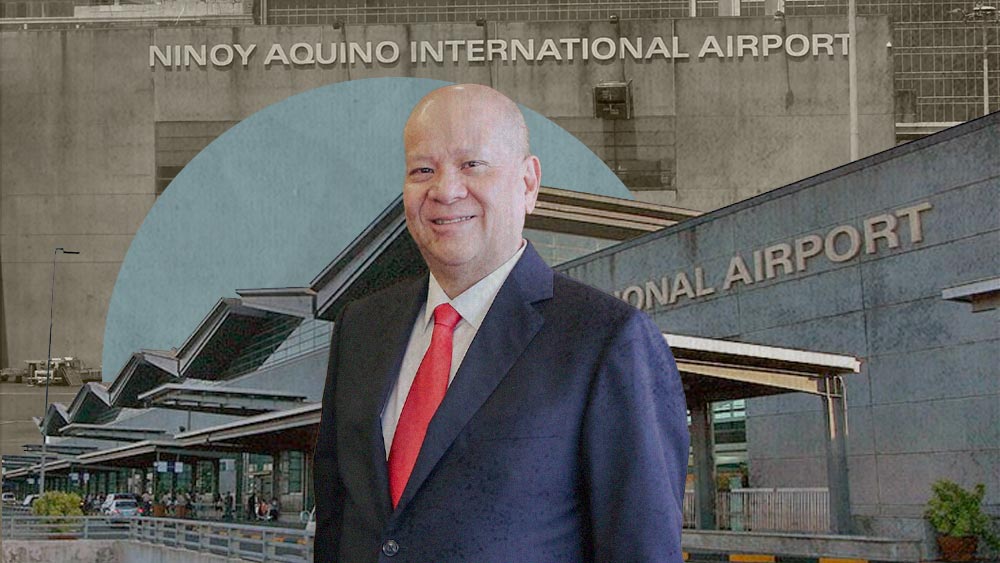
San Miguel Corp chairman Ramon Ang has a simple answer about corrupt government officials at NAIA.
“Ipagdadasal na lang sila (I will just pray for them),” he said.
Ang, who is also the president of New Naia Infrastructure Corp. (NNIC), which is taking over operations of the country’s main aviation gateway, made the off-the-cuff remark during the Economic Journalists Association of the Philippines (EJAP) and SMC Aviation Forum, which also included Transportation Secretary Jaime J. Bautista, representatives of airlines, and the Department of Tourism.
NNIC general manager Angelito Alvarez was more sober about his hopes for change in NAIA. “The confidence is very high, that they [government agencies] will be very cooperative in the significant improvements [we will implement] in the days and months to come.”
ALSO READ
New NAIA Passenger Terminal Building Coming from San Miguel
More Airports in the Philippines Can Expect Better Internet Soon
Alvarez said the NNIC has been meeting regularly with heads of the Bureaus of Customs, Immigration, and other government agencies involved in operations at NAIA.
Corruption has long been a problem at the airport, with reports of theft by personnel of the Office of Transportation Security, bribe-taking at the Bureau of Customs, and Immigration staff escorting VIP guests with questionable papers.
As operations at the NAIA will be handled by SMC, a private company, Alvarez said technological upgrades that the company and the BI will be implementing will help improve the efficiencies and cut down the problems involving certain government personnel.
“The plan is that…the X-ray inspection will be done right after the passengers get their baggage from the carousel, similar to what is happening in Japan, Hong Kong, Malaysia and other countries. That’s one of the things that we’re going to implement,” he said.
At present, the luggage is X-rayed upon arrival, prior to the owner’s retrieval from the baggage carousel. “Then a lot of things happen. There are markings like ‘X’ and then sometimes it’s being erased by the passengers, sometimes in cooperation already with the fixers, or even certain unscrupulous government officials,” he noted.
Meanwhile, Alvarez said the BI’s purchase of new electronic gates (E-gates) will help streamline the passenger arrival experience at the airport.
“I think the interaction with Immigration officials will be somewhat reduced, and I’m sure the passenger experience will be greatly enhanced,” he added. There have been many complaints from arriving passengers Filipinos about E-gates that don’t work, forcing them to use the manned Immigration kiosks.
Alvarez said the NNIC is committing to institute improvements at NAIA within the first three to 12 months. This includes installing new toilets and refurbishing of existing ones; additional seating capacity at the passenger terminals; installation of new air conditioning units and refurbishment of existing units; reliable high-speed Internet; additional backup generators and UPS units; repair of walkalators, escalators, and elevators; to name a few.
The new management behind NAIA also addressed the reported reassignment of passenger terminals, saying that it will be done gradually over three years. NNIC reportedly wants Terminal 1 to be exclusively used by Philippine Airlines, Terminal 2 will handle purely domestic flights, and all foreign carriers will be transferred to Terminal 3.
The old Domestic terminal, now called Terminal 4, will be used by AirAsia, according to the proposal.
“It will be a gradual process,” Alvarez said. “That’s the best that we can do at this point.” He also promised that the company will not disrupt current operations as it formally takes over operations at NAIA on September 14.
At present, AirAsia domestic routes fly out of Terminal 2, while its international flights depart from Terminal 3. Most flights from Cebu Pacific are currently located at Terminal 3, while turbo-props from carriers like Cebu Pacific, AirSwift, and Sunlight Air depart from Terminal 4.
Under the P124-billion airport modernization plan of NNIC, terminal capacity will be increased to 62 million passengers from 35 million per annum. A new terminal to be built on the lot where the old Philippine Village Hotel stands is projected to accommodate some 30 million passengers and will be an extension of Terminal 2. There will also be an increase to 48 Air Traffic Movements (ATM) Peak Hourly Rate from the current 42 ATM.
Under government’s public private partnership program, NNIC was awarded a 15-year contract to Build-Operate-Expand-Transfer the Naia, with the possibility of an extension of 10 years, subject to a review of key performance indicators on the eighth year, or in 2032. NNIC has promised government P911.11 billion in revenues over the 25-year concession period.
