
New NAIA Passenger Terminal Building Coming from San Miguel

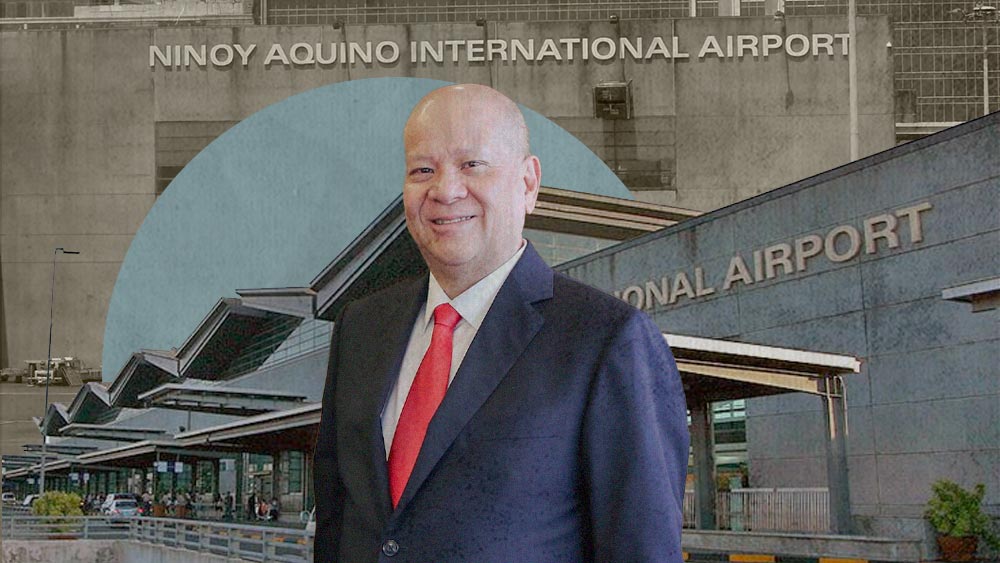
Heads up travelers. A new passenger terminal building for the Ninoy Aquino International Airport (NAIA) is coming soon from the company that secured the project to rehabilitate the aging aviation gateway.
San Miguel Corp announced plans to construct the new passenger terminal building to double the capacity of the airport on Monday (March 18), the same day that it was officially granted ownership of the rehab project by the Department of Transportation.
The DOTr and the Manila International Airport Authority (Miaa) signed the concession agreement for the NAIA Public-Private Partnership (PPP) Project, the first PPP contract to be awarded since the new PPP Code took effect in December.
ALSO READ
How Ramon Ang's San Miguel Corp. Won the P170-Billion NAIA Rehabilitation Project
Ramon Ang's San Miguel Corp. Wins P170.6 Billion Project to Rehabilitate NAIA
The SMC-led consortium called the New NAIA Infrastructure Corp. vowed to “clean” the image of NAIA through several enhancement initiatives, including the construction of a new terminal.
“We saw that the return will be good if we build a new terminal,” SMC president Ramon Ang said. “It will be located at the Philippine Village Hotel. What we need is the approval of the government. We can finish that quickly.”
Ang said the new terminal can be inaugurated in as little as three years from approval.
The new terminal can accommodate 35 million passengers per annum (MPPA) and will be equipped with 50 boarding bridges.
“We have to build an airport that is good for 65 MPPA,” Ang said. “No terminal will be phased out, but we will decongest all terminals by moving the offices to the planned new multipurpose building carpark.”
The transfer of offices to a new location will mean that NAIA’s existing terminals will have 30 percent more capacity, Ang added.
Ang said the company will be optimizing the use of the terminals and will replace aging components, improve runway movements, and ensure a smoother ride to and from the terminals through a dedicated bypass from the NAIA Expressway.
The tycoon also promised that passenger experience will be improved within six months from taking over the operations and maintenance (O&M) of the NAIA, which is scheduled to commence in September.
As many as seven lenders, led by BDO, have committed to fund the consortium’s ambitious plans, which is estimated to cost P170.6-billion. project, Ang said he has already secured the backing of as many as seven lenders.
The NAIA Infrastructure Corp. is composed of San Miguel Holdings Corp. RMM Asian Logistics Inc., RLW Aviation Development Inc., and Incheon International Airport Corp. The consortium won the public auction for the project earlier this year after offering a government share of 82.16 percent of future gross revenues.
“This project has been thought of 30 years ago, but it’s only now that we are able to implement it and we were able to do it in less than one year. The process was very fair and transparent,” Transportation Secretary Jaime J. Bautista said during the signing ceremony.
The NAIA Privatization Project is a Rehabilitate-Operate-Expand-Transfer (ROET) deal led by the DOTr and the MIAA.
Under the terms of reference for the deal, the winning consortium shall provide an upfront payment of P30 billion to the government as premium and another P2 billion in annuity payments. It is also required to remit a certain percentage of the revenues to the government. This was main bid parameter for the auction—the higher the proposed share of the government in the NAIA’s revenues, the better.
“It is a significant milestone in the Philippine infrastructure landscape, highlighting the government’s commitment to its Build-Better-More program. We are confident that the streamlined process this project underwent will serve as a blueprint for future Philippine PPP projects,” PPP Center Executive Director Ma. Cynthia C. Hernandez said.
The concession was initially set for 15 years with an option to extend by 10 years as long as the concessionaire is “not in flagrant violation of the concession agreement.”
