
Masato Kanda Is Set to Take Over the Asian Development Bank

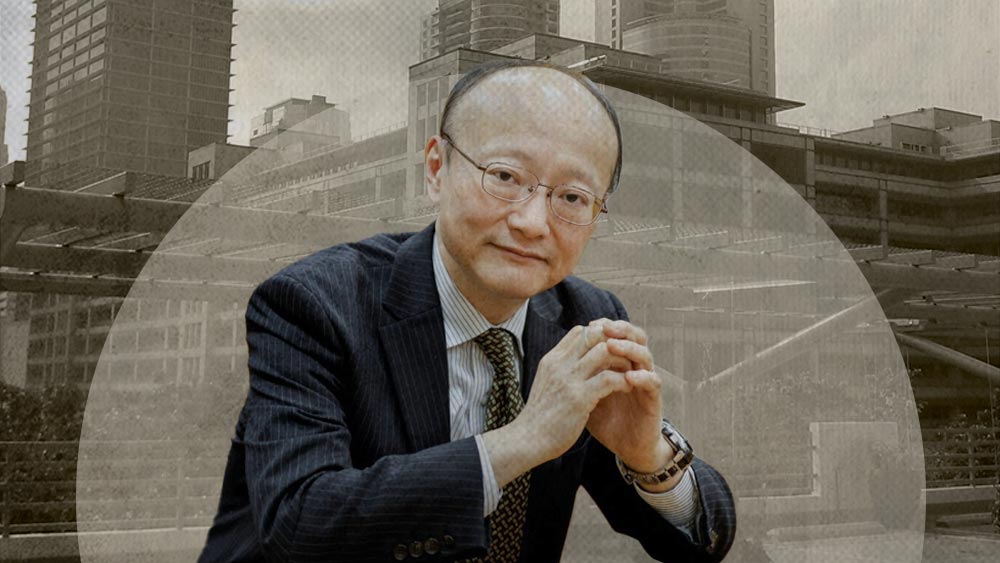
There's going to be some big changes coming for the Asian Development Bank (ABD). President Masatsugu Asakawa had recently announced his intentions to leave his post in 2025. The man who has been nominated to replace him is none other than Japanese financial diplomat Masato Kanda, according to Finance Minister Shunichi Suzuki.
″(Kanda) is most appropriate to lead the ADB as he is well-versed in Asia-Pacific affairs and has built deep networks with executives from various countries and international institutions,” Suzuki said during a press conference.
"Throughout my presidency, I have been continually inspired by the resilience, aspirations, and determination of the people we serve. Each of my visits to DMCs has reinforced my belief in the importance of ADB’s mission and provided invaluable insights to guide our work," Asakawa, likewise, said in a statement.
He continued: "As I prepare to conclude my tenure, I take great pride in what we have accomplished together. Our achievements would not have been possible without the dedication and expertise of Staff and the good guidance and support of the Board of Directors, and member governments, for which I am deeply grateful. Our shared commitment and passion for ADB’s mission have been the bedrock of our success."
Of course, Asakawa's work during the COVID-19 pandemic would lead to the $20 billion response package for the more vulnerable sectors of society, helping improve healthcare systems and economic recovery.
His leadership also made great strides in terms of climate change. It was during his term that the ambition to mobilize $100 billion in climate financing by 2030 began.
Asakawa helped reposition the ADB as the Climate Bank for Asia and the Pacific, as well. His domestic resource mobilization would upgrade the institution's tax systems, and public financial management.
In addition, he focused on capital management reforms and continued regional cooperation. The Capital Adequacy Framework, for instance, will unlock an additional $100 billion in lending capacity over the next decade in support of the organization's development efforts.
Meanwhile, the man who is expected to take his place is Masato Kanda, who brings with him a wealth of experience as a Japanese bureaucrat. He has served as Vice Minister of Finance for International Affairs since 2021. He had first been with the ministry in 1987, occupyig various senior positions during his long tenure.
ALSO READ:
Philippine FinTech Startup BillEase Closes P566 Million in Series B Round
Endeavor Welcomes Philippine Startup BillEase in its Network of 'High-Impact' Entrepreneurs
Who Is Masato Kanda?
The top post at the multi-lateral lender has always gone to a Japanese official, after all. This has been a minor point of contention among emerging economies in the past, questioning why advanced economies continue to occupy these leadership roles.
Still, Kanda himself has had an impressive resume that should translate well into this post. Born on January 17, 1965, he grew up in Nishinomiya, Hyogo, and eventually attended Nada Junior & Senior High School in Kobe.
Kanda obtained his Bachelor's degree in Law and Politics from the University of Tokyo in 1987. He would go on to complete his Master of Philosophy in Economics from Oxford University in 1991. Among his strongest influences during his schooling was international politics from Yoichi Masuzoe, later Governor of Tokyo.
Fresh out of college, he joined the Japanese Ministry of Finance and has since been an integral part of its policymaking. Among the list of positions he has held with the organization include Deputy Director General of the Budget Bureau from 2017 to 2018, Deputy Vice-Minister for Policy Planning and Coordination in 2019, and Director-General of the International Bureau in 2020.
Apart from these, he has also served at the World Bank and the Organization for Economic Cooperation and Development, for which he had been the Chairman of the Corporate Governance Committee. In the past, he has been credited for the market interventions Japan has done recently to save the yen. Interestingly, he has often been referred to as Japan's "FX Tsar."
After three years with the ministry, he left in July. The ex-top diplomat, nonetheless, has retained a special advisory role in the Cabinet of Prime Minister Fumio Kishida.
Suzuki maintains that Kanda is the "most suitable" man for the job. It remains to be seen if he will be elected to the post once his predecessor finally leaves in February 2025.
Established in 1966, the ADB is headquartered in Mandaluyong City in the Philippines. it has around 31 offices around the world, with each of its 68 members dealing with the social and economic progress of Asia. Its model closely resembles the World Bank's and enjoys the status of being an official United Nations observer. As of 2020, Japan and the United States each have the largest portion of shares at 15.57 percent, followed by China at 6.43 percent, India at 6.32 percent, and Australia at 5.77 percent.
