
9 Key Takeaways From President Bongbong Marcos' Third SONA

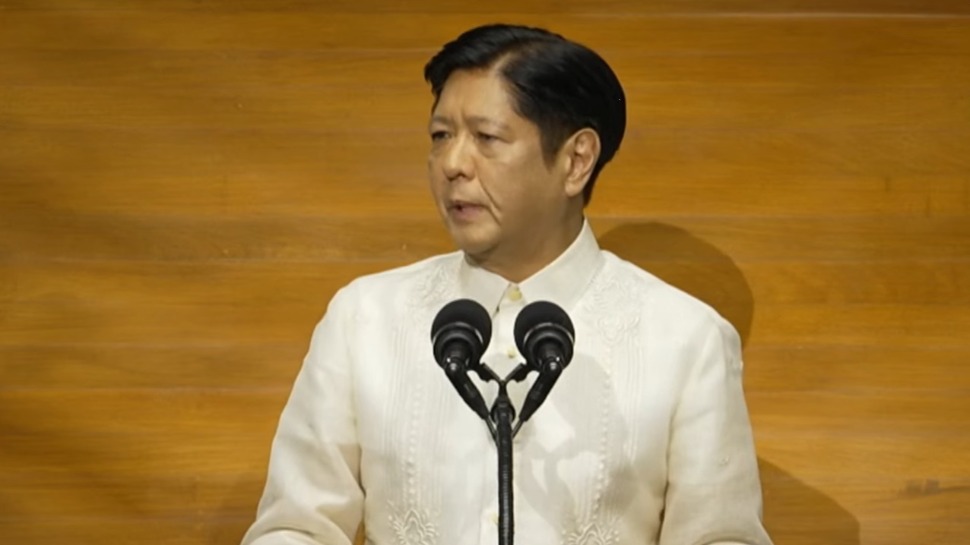
Two years into office, President Ferdinand "Bongbong" Marcos, Jr. looks back on his administration's gains in the past year, including key progress and updates on infrastructure, education, employment, energy, and agriculture, among others. He addressed the nation at the Batasang Pambansa complex in Quezon City on Monday (July 22), before a joint session of Congress, laying out the next steps of his vision, new policies, and what's next for his presidency after his State of the Nation (SONA) address.
Here are 9 key takeways from President Marcos' third state of the nation address:
ALSO READ:
A Short History of the Marcoses' Complicated Ties With the U.K. and the British Royal Family
SONA 2024: Hand-painted Barong, Homegrown Brands, and More
1| Empowering the agriculture industry
Marcos noted that the domestic harvest rate in the country is at its highest since 1987. The administration, nevertheless, hopes to achieve a 97.4% rice self-sufficiency.
“Kaya patuloy nating sinusuportahan ang sektor ng agrikultura, upang mapabilis, mapadali, at mapalakas ang produksiyon….at upang maiwasan din ang pagkasira ng mga produkto.”ADVERTISEMENT - CONTINUE READING BELOW
Marcos also confronted his campaign's original promise of reducing the price of rice to P20/kilo. He mentions that any economic gains mean nothing if common Filipinos still suffer from the high prices.
“The hard lesson of this last year has made it very clear that whatever current data proudly bannering our country as among the best performing in Asia means nothing to the Filipino who is confronted by the price of rice at P45 to P65 per kilo."
2| Infrastructure and the "railway renaissance"
He highlighted the Philippines' disaster preparedness infrastructure. The president also promised to increase nationwide broadband capability (the National Fiber Backbone program should be able to help provide better internet access to more Filipinos).
“Our power and internet services are continuously being upgraded… Patuloy pa ang ating pinaparami na libreng Wi-Fi sa buong bansa. As of 2022, only 77 percent or 20.6 million households were connected to the internet. This is much too low… We will efficiently harness the concept of common towers."
CONTINUE READING BELOWwatch now
Marcos touted the administration's emphasis on public-private partnerships. He also went on to say that the Ninoy Aquino Manila International Airport will be reinvigorated. Marcos emphasized the current "railway renaissance" in the country, as well.
“As of May this year, 12,000 kilometers worth of roads and more than 1,200 bridges have been built and upgraded across the country... We are also in the midst of a railway renaissance... Patuloy ang pagpapaganda ng ating mga paliparan… Unang-una na rito, ang paliparan ng Maynila… Soon, it will be capable of accommodating 48 flights per hour… and catering to more than 62 million passengers every year.”
3| Cybersecurity measures
He, however, didn't mention anything about the latest batch of cyberattacks in the Philippines and the world.
"IT infra requires stronger and more impervious cyber defense. Our national cybersecurity plan lays down the plan to safeguard our systems against cyberattacks," Marcos claimed. "With this said, I have directed the agencies concerned to ensure that the speed and quality of our IT development always mirror the pace and trajectory of our economic aspirations."
ADVERTISEMENT - CONTINUE READING BELOW
4| On education
Earlier this year, the president enacted the “Kabalikat sa Pagtuturo” Act, which should be able to give teachers the said allowance for materials and other expenses. Marcos mentioned some of the education sector's biggest problems, including textbooks, low proficiency levels, test scores of Filipino students, and teacher's salaries. He talks about the success of the National Learning Recovery Program, as well.
“Ito ngayon ang magiging hamon sa ating bagong kalihim (New Education Chief Sonny Angara): na tiyakin ang pagbangon at pagtaas ng kalidad ng edukasyon sa bansa, sa lalong madaling panahon.”
The administration is said to be looking into providing teaching allowance, insurance, and even a "special hardship allowance" for those teaching in public schools.
"Wala na ring utang-tagging sa mga teacher. Hindi magiging hadlang ang pagkakautang upang makapag-renew ng kanilang lisensya. Marapat lamang na sila ay payagan paring makapagturo," Marcos adds.
In addition, his administration looks to empower even more students, turning them into productive and competitive workers on the world stage.
"Our system of education must be strategically calibrated to make sure that our youth are not only taught to become literate. But, it must also consciously develop them into problem-solvers, and into critical thinkers, hungry for success and ready for the future!”
5| On "Super Health Centers" and more
He championed the introduction of the University of the Philippines-Philippine General Hospital Cancer Center and his goal of facilitating more health centers in the provinces.
“Layunin natin na sa lalong madaling panahon, lahat ng lalawigan natin ay may sapat na mga center o pasilidad na may kakayahang makapagbigay ng pangunahing serbisyong-medikal para sa ating mga mamamayan.”
Philhealth coverage has expanded to cover chemotherapy for various kinds of cancer, increasing its P100,000 limit to P1.4 million, for instance, for breast cancer. The president also stressed the new grant under the Pantawid Pamilyang Pilipino Program (4Ps) dedicated to the health and nutrition of children.
6| How prepared is the Philippines for the increased effects of climate change?
Marcos admitted that the Philippines will suffer more than its neighbors in terms of the effects of climate change. He stressed the importance of continued environmental stewardship and that new measures would soon be introduced to mitigate its effects.
“As we can see in all the world, weather events are — as have been predicted — getting more extreme such as torrential rains that instantly shift to scorching heat waves or vice versa."
7| A different kind of 'War on Drugs'
During SONA 2024, Marcos had a more compassionate tone toward drug addicts. He highlighted the administration's new enforcement policy, leading to more than 71,500 operations seized and more than P44 billion worth of illegal drugs intercepted.
He also said that drug-affected barangays have been reduced by 32 percent while claiming that the drug conviction rate is now at 79 percent. Marcos says "extermination" isn't a part of his term's strategy, and that it will continue its "bloodless" fight against illegal drugs.
8| West Philippine Sea and sovereignty
In his speech, Marcos said the administration is working hard to upgrade our armed forces and Coast Guard's capacity in the face of external threats. He thanked the Philippine Coast Guard, the Armed Forces of the Philippines, the Department of Civil Defense, and the everyday fisherfolk for their work in defending our sovereign rights.
“Ang West Philippine Sea is hindi kathang isip lamang. Ito ay atin. At ito ay mananatiling atin hanggang nag-aalab ang diwa ng ating minamahal na bansang Pilipinas."
9| 'Effective today, all POGOs are banned'
Of course, Filipinos have been expecting the president to comment on Philippine Offshore Gaming Operators (POGOs). During SONA 2024, he definitively stated:
"I hereby instruct PAGCOR to wind down and cease the operation of POGOs by the end of the year."
Marcos added that the Department of Labor and Employment should look into providing jobs for displaced Filipino workers at POGO hubs.
