
US Flexes Most Advanced Fighter Jets in Joint Drills With PH

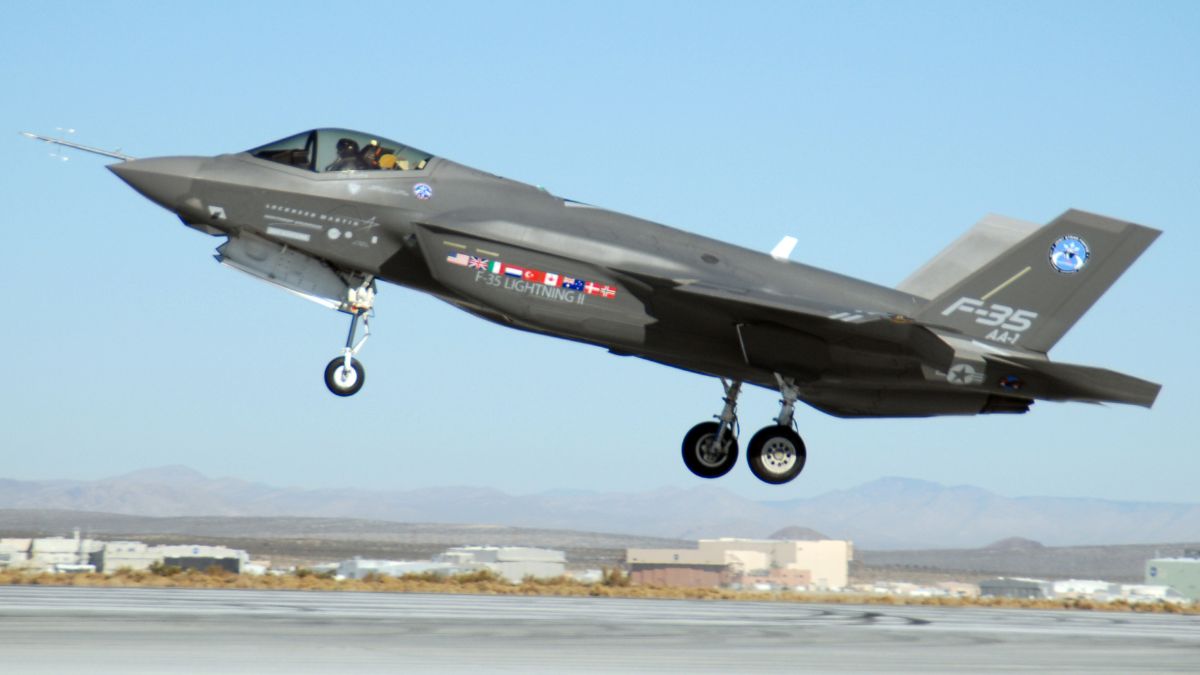
The United States’ newest and most advanced fighters recently visited the Philippines to participate in a live-fire exercise with the Philippine Marines.
From June 3-21, joint US and Philippine forces held the Marine Aviation Support Activity (MASA), an annual event where the Marine units of both nations participate in military practice activities and training to maintain cooperative readiness for any upcoming emergency or conflict.
The US Marine Expeditionary Force sent four F-35B Lightnings to be temporarily based in Clark Air Field, Pampanga. From there, the fighters went on bombing sorties on practice targets located in the waters some distance west of the Naval Education, Training and Doctrine Command in San Antonio, Zambales. At around the same time, Philippine Marine artillery units practiced shelling targets off the coast of Camp Bojeador, Ilocos Norte.
ALSO READ
AFP Details China's Aggression in the West Philippine Sea
The Philippines Reaffirms Ties With the U.S. as Tensions Heat Up in West Philippine Sea
“This year was the most fluid event I’ve ever been involved with. And literally sitting next to another general officer, the deputy commandant of the Philippine Marine Corps, having a conversation about target engagement, rules of engagement and how we would employ our assets together. First time I’ve ever done anything like that. It was absolutely amazing,” said Brigadier General Robert Brodie, First Marine Expeditionary Force commander, in an interview with the US Naval Institute.
Representing the Philippine side of things was Brig. Gen. Romeo Racadio, the current Deputy Commandant of the Philippine Marine Corps.
“It was much bigger than the F-35s just striking,” added Gen. Brodie, emphasizing that his forces were learning a lot from the Philippine contingent. “From a tactical perspective, they are hardened warriors… They know how to operate in all weather, tough weather, in heavy terrain jungle environment. These are things that U.S. Marines oftentimes do not have the opportunity to train in and just simply don’t have the expertise in,” he said.
The stealth jet
The F-35 is the product of the Joint Strike Fighter program, which sought to create a fighter aircraft design that could be used by different service branches, namely the Air Force, Navy, and Marines. The use of a single basic design had the purpose of reducing logistical difficulties and operating costs through parts commonality and the use of similar technologies across different users.
The design also sought to incorporate stealth technology into already existing supersonic fighter capabilities in order to get the best out of all worlds. Stealth capability means that the fighter will have a smaller radar signature and will be harder to detect on radar screens. It is also intended to defeat technology that locks weapons onto targets using radar.
The F-35B is one of three versions of the F-35 fighter built by Lockheed Martin Corporation and is the version used by the US Marines. The A version is for the US Air Force and is the leanest version, capable of conventional take-offs and landings. The C version is for the US Navy and has features that optimize it for carrier operations, such as strengthened landing gear, larger wing area, and folding wingtips. All versions have internal weapon bays to hide weapons from radar, although they are also capable of carrying externally mounted weapons when needed.
The F-35B is the version with Short Take-Off and Vertical Landing (STOVL) capabilities, similar to the British Harrier Jet that could take off and land vertically like a helicopter. The F-35B does this by using a lift fan that generates downward thrust and pointing its jet engine exhaust nozzle downwards. Such features make this fighter one of the most technologically complex pieces of military hardware in history.
The F-35s’ visit is timed right when tensions in the South China Sea and West Philippine Sea between China and the Philippines are at an all-time high. Should a conflict break out, F-35s will be among the mainline assets deployed by the US military to the area of concern. F-35Bs are usually based on Marine landing ships that can be described as scaled-down aircraft carriers.
