
Here’s the Latest On the Australia Bushfires And What You Can Do to Help

History of bushfires in Australia
The country of Australia is no stranger to bushfires, which can be traced back to as early as 1851, according to the Forest Fire Management of Victoria. The first recorded event took place on February 6, 1851, on what is now known as Black Thursday. Back then, the fires covered one-fourth of present-day Victoria, which was measured at five million hectares. This resulted in the loss of one million sheep and cattle, and an estimated 12 human deaths. These natural disasters occur at an almost biannual rate, with flames consuming millions of acres of farmland, millions of animals, and hundreds of lives. Before the latest bushfire crisis, the Black Saturday bushfires back in 2009 were considered the worst in history with a death tally of 173.
Bushfires are typically caused by lightning and occur during the dry seasons, when temperatures are high, rainfall is low, and the soil is dry. For Southern Australia, this is during the summer and autumn, while for New South Wales and southern Queensland, they are most likely to happen during the spring and early summer.
While bushfires may be considered a nuisance, they have been an essential aspect in shaping Australia’s ecosystem. In history, the fires have played a part in expanding grasslands and making areas conducive for hunting. They've also been known to reduce fuel levels.
The 2019 to 2020 bushfires in numbers
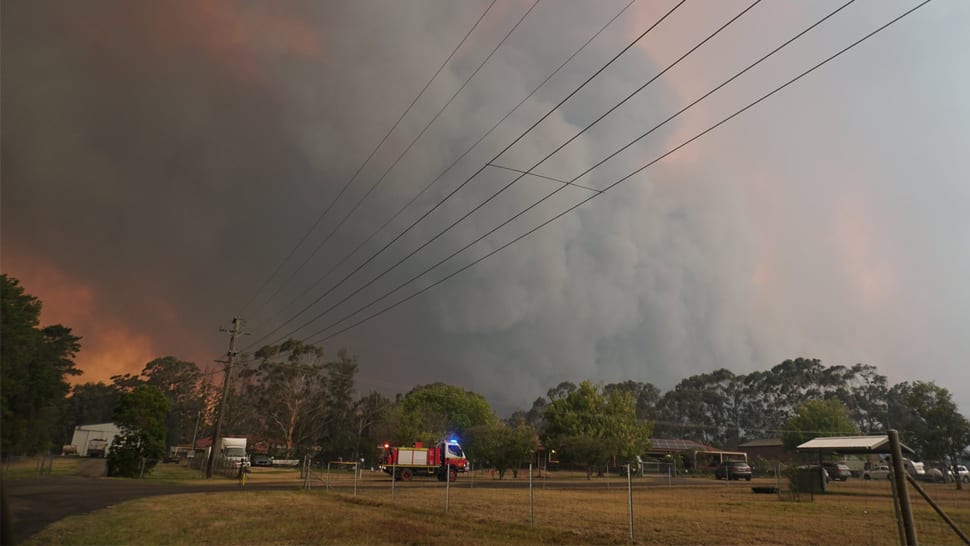
What makes the current incident different from those in the past? The bushfires that began last September are bigger than anything we’ve ever seen in terms of scale. For starters, satellites can spot the bushfires and their smoke from space. The area covered by smoke currently measures at 1.3 billion acres, according to Science Alert.
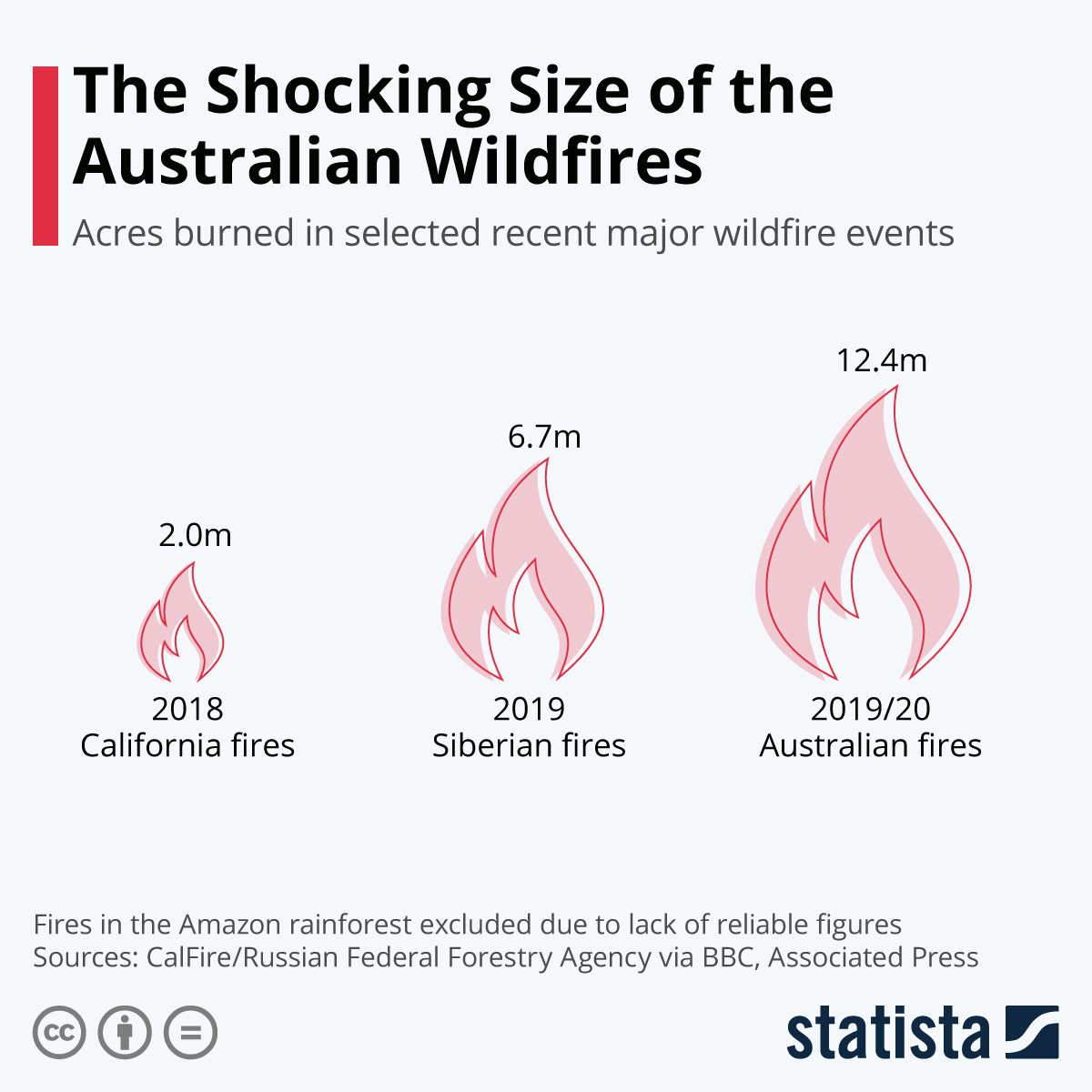
It’s damaged over 14 million acres of land and has killed an estimated 500 million animals, including one-third of the koala population (8,000), and has taken the lives of at least 24 people. Thousands of homes have been destroyed, leaving many displaced, while others are trapped in their homes surrounded by a constant orange glow. The blaze covers an area that’s seven times as bad as the 2019 Amazon fires and three times that of the 2018 California fires.
 You will find more infographics at Statista
What action has been taken?
The main bulk of the work in fighting these fires lies in the hands of volunteer firefighting teams, most of whom are risking their lives and working pro bono. To date, there are an estimated 3,000 firefighters on the field on a daily basis. Meanwhile, firefighters from the U.S. and Canada have flown in to help out their Australian counterparts.
Thank you to our ???????? mates flying out Monday to join more than 100 brave US firefighters helping battle the devastating Australian bushfires. We are grateful all you are doing, alongside our ???????? firies & volunteers & for the many messages of support from friends across the US ???????????????? https://t.co/sRvVxu6ODD
— Australia in the US ???????????????? (@AusintheUS) January 5, 2020
Prime Minister Scott Morrison has been actively issuing statements on the bushfires. On January 2, Morrison held a press conference where he pointedly acknowledged the connection between reducing carbon emissions and protecting the environment. “Our climate policy settings are to meet and beat the emissions reduction targets, emissions reduction under our government is 50 million tons more than the previous government and we want to see them continue for this country and continue to better the achievements we have already made, with measures that achieve that,” he says.
Evacuation on the beach at #batemansbay @abcnews pic.twitter.com/qZzOJcOKz1
— Alastair Prior (@alastairprior) December 31, 2019
Two days later, Morrison announced that the federal government has agreed to an earlier request made that will permanently bump up the fund for Australia’s aerial firefighting services. This will give the government a $20 million advantage to lease four firefighting planes on top of the $26 million fund. Military support is coming in in the form of the HMAS Adelaide, the country’s largest warship. Three thousand defense force reservists are also set to be deployed in affected areas to aid in evacuation efforts.
The defining image for our next decade as we enter a “new normal” of climate change. Thanks Allison Marion for sharing your photo. Hoping your family and loved ones are safe and unharmed. #MallacootaFires #Mallacoota #bushfirecrisis #ClimateEmergency @ScottMorrisonMP pic.twitter.com/RW3GnGkfFq
— James Meldrum (@_JamesMeldrum) December 31, 2019
10:30am update from Dad at the wharf in Mallacoota - “fire front not far away” #Mallacoota #bushfirecrisis pic.twitter.com/MvgeiZqujM
— Daniel (@bluesfestblues) December 30, 2019
How you can help
While thoughts and prayers are expected during a time like this, action is called for through monetary donations. Public personalities, such as comedian Celeste Barber, have taken to social media to call for donations, with Barber reaching $31 million online in a matter of three days. Here are some of the different ways you can lend a hand:
Donations For Firefighters
- Australia Red Cross Disaster Relief and Recovery Fund
- The NSW Rural Fire Service
- The Country Fire Authority in Victoria
- The Country Fire Service in South Australia
- Rural Fire Brigades Association
Community Relief
Housing
Wildlife Protection and Conservation
