
Yes, That New Resort At Chocolate Hills Is As Problematic As It Looks

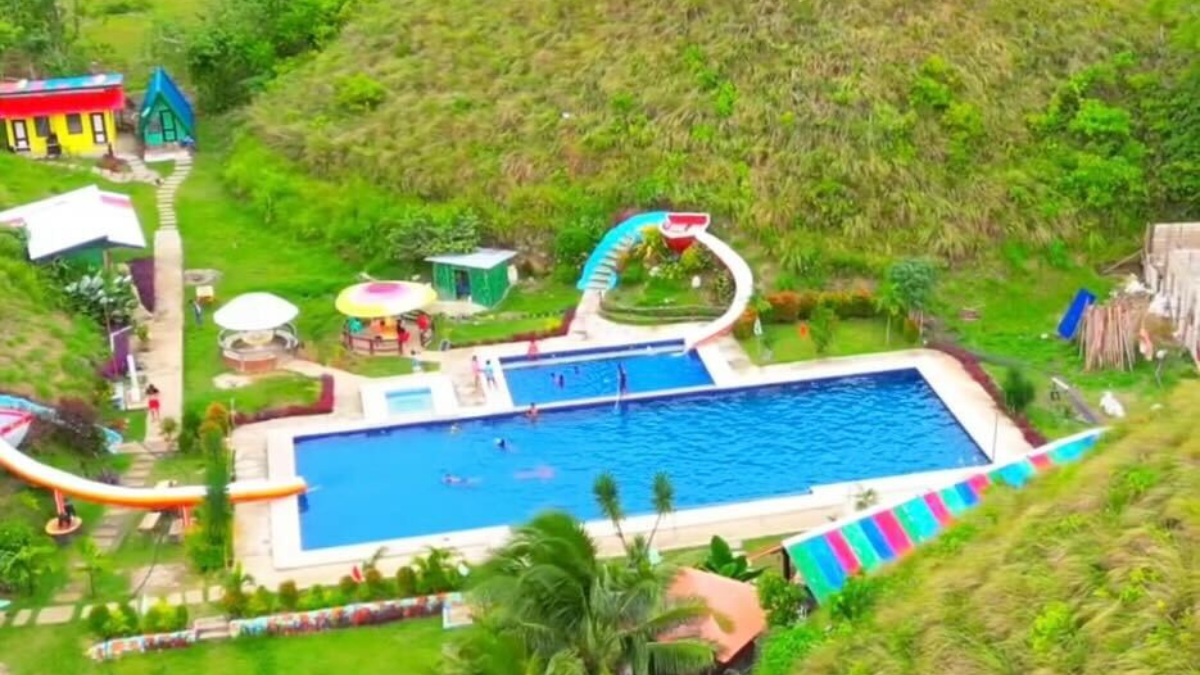
A resort right at the heart of Chocolate Hills in Bohol has been the subject of scrutiny recently. Named Captain's Peak, its swimming pool and slides, together with accents and decorations, were installed in the middle of the famed peaks, effectively calling into question the legality of the site.
Earlier today, the DENR released a statement regarding the Temporary Closure Order of Captain's Peak Resort.
The resort was also slapped with a Notice of Violation for operating without an Environmental Compliance Certificate in January 2024. "As of March 13, 2024, the Regional Executive Director Paquito D. Melicor issued a Memorandum director PENRO Bohol Ariel Rica to create a team to conduct an inspection at Captain's Peak for its compliance with the Temporary Closure Order," it added.
There is, however, a catch: while Chocolate Hills may be a protected area under Republic Act 7586 or an Act Providing for the Establishment and Management of Natural Integrated Protected Areas System (NIPAS), the land may still be privately owned.

ALSO READ:
A P25-Billion Resort Town Is Rising in Bohol
How a Philosophy Graduate From Ateneo Became Bohol's Premium Blademaker
According to a separate report in The Freeman, the owner of the resort's sister, Julieta Sablas explained that they had purchased a titled lot here in 2005. She also reportedly presented the proposal to the Protected Areas Management Board (PAMB) before construction. Hence, the extractions were done in some parts of the foot of the hills.
The NIPAS Act (Republic Act 7586), of course, was signed into law to safeguard protected areas like Chocolate Hills, from the terrestrial and coastline to the marine. Under the law, "mutilating, defacing or destroying objects of natural beauty" and even squatting, mineral locating, and constructing any kind of structure is prohibited.
Just last year, Bohol became the first UNESCO Global Geopark in the country. These are defined as "single, unified geographical areas where sites and landscapes of international geological significance are managed with a holistic concept of protection, education, and sustainable development."
Bohol Island's distinctive geological identity lies in its 150-million-year history, where “periods of tectonic turbulence" raised the island from ocean depths. The island's features, with its beaches, aquaculture, and eco-cultural programs, are only one of a kind in Southeast Asia, as well. Of course, Chocolate Hills punctuates the diversity of its ecosystem.
“Traces of the island’s subterranean past can be found in the limestone which forms characteristic karstic structures. The geopark abounds in karstic geosites such as caves, sinkholes, and cone karst, including the famous cone-shaped Chocolate Hills in the center of the geopark,” UNESCO wrote at the time.
Chocolate Hills was declared the Philippines' third National Geological Monument on June 18, 1988 in recognition of its scientific value and distinctive geomorphic character.
