
How China’s Ships Collided While Chasing Philippine Vessels

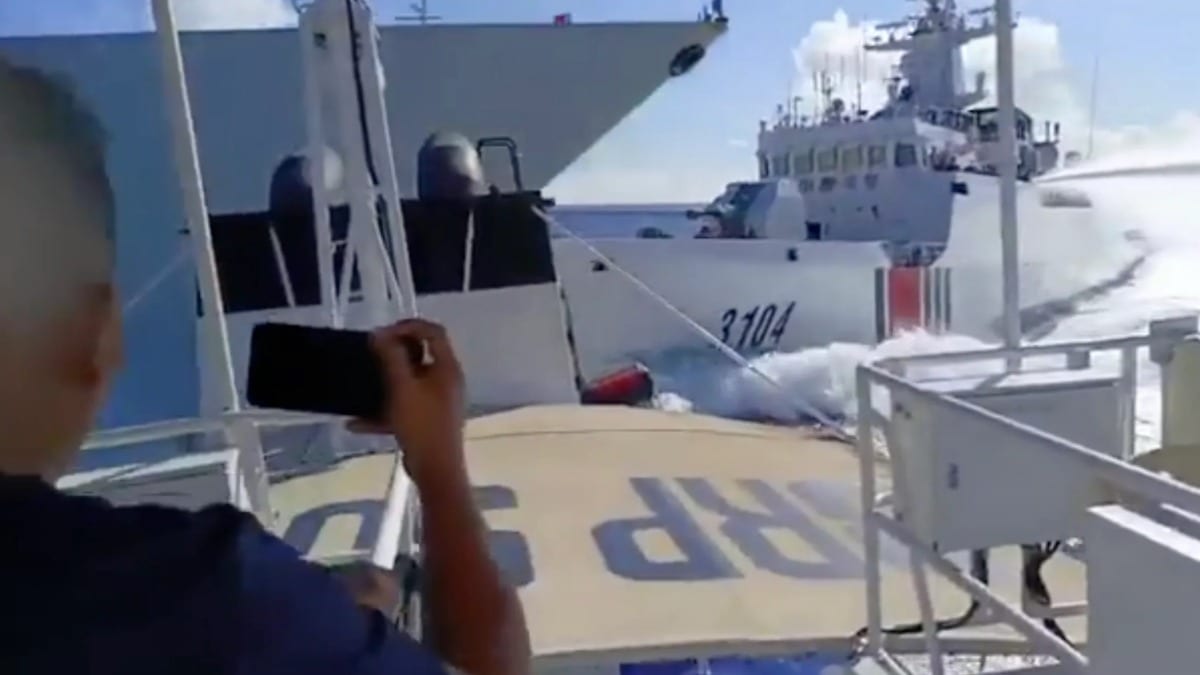
A Chinese warship on August 11, Monday, collided with one of Beijing's coast guard vessels after the latter chased a Philippine Coast Guard vessel at “high speed,” but ultimately missed its mark.
Based on a video published by the Philippine Coast Guard, one of the Chinese vessels lost its bow after it hit the warship. PCG personnel were on a mission to distribute aid to Filipino fishermen near the Scarborough Shoal around the South China Seal, which is being claimed by both countries.
The agency reported that it deployed the BRP Teresa Magbanua and the BRP Suluan, includihg the MV Pamamalakaya for Kadiwa operations meant to distribute supplies to around 35 Filipino ships located in the disputed atoll. The PCG said Beijing’s coast guard carried out “hazardous maneuvers and blocking actions."
The BRP Suluan with PCG crew members aboard evaded the Chinese Coast Guard’s water cannon firing.
ALSO READ:
Why The DND Wants a Revamped Military Modernization Plan
Why the Philippine Coast Guard is Worried About Chinese Research Vessels
Beijing’s coast guard justified the operation by saying it had taken “necessary measures” to kick out Philippine vessels from the shoal, which China is asserting sovereign rights over.
Reacting to the encounter, Philippine President Ferdinand “Bongbong” Marcos, Jr. said Manila’s vessels will stay in Scarborough Shoal, which is locally called Bajo de Masinloc, even after Beijing’s actions.
“We will not instruct any of our vessels to back out,” Marcos said, referring to the Philippine Navy and PCG. “We do not back down because we are afraid. I don’t know about other places, but this government does not withdraw from battles. We Filipinos are brave."
Meanwhile, the Chinese Coast Guard maintained that the operation at the shoal was “professional, standardized, legitimate, and legal.”
China and the Philippines have been locking horns over the South China Sea, which Bejing claims more than 80 percent of.
The waterway is a major trade route with more than $3 trillion worth of goods passing through it.
In 2016, the United Nations Permanent Court of Arbitration voided China’s sweeping claim after it failed to find a legal basis. Southeast Asian countries including Malaysia, Indonesia, and Vietnam also have overlapping claims over the disputed waterway. Manila has failed to enforce the UN ruling leaving only to hundreds of diplomatic protects over “encroachment and harassment” by Beijing’s vast fishing fleet and warships.
“This determines China’s lack of navigational precision and shows their overconfidence to dominate the Philippines’ territorial waters,” Chester Cabalza, founding president of Manila-based think tank International Development and Security Cooperation, told Esquire Philippines in an interview. “Despite possessing the largest coast guard and naval fleets, they are weak on maritime strategy.”
The President has been pushing for a code of conduct on the South China Sea amid continuing tensions with Beijing and its maritime dispute.
The Association of Southeast Asian Nations have been in talks with China on crafting a code since way back in 2002, but has seen stalled progress.
The Chinese Coast Guard has repeatedly blocked Philippine resupply missions to BRP Sierra Madre, a World War II-era ship intentionally grounded to stake Manila’s claim on the waterway.
“This violent gray zone tactics shows their inconsiderate code of conduct. The lesson here is to finalize the COC to stop this barbaric behavior at sea,” Cabalza said
