
What Will Raising The Tariff On Imported Rice Mean To The Economy, Local Farmers?

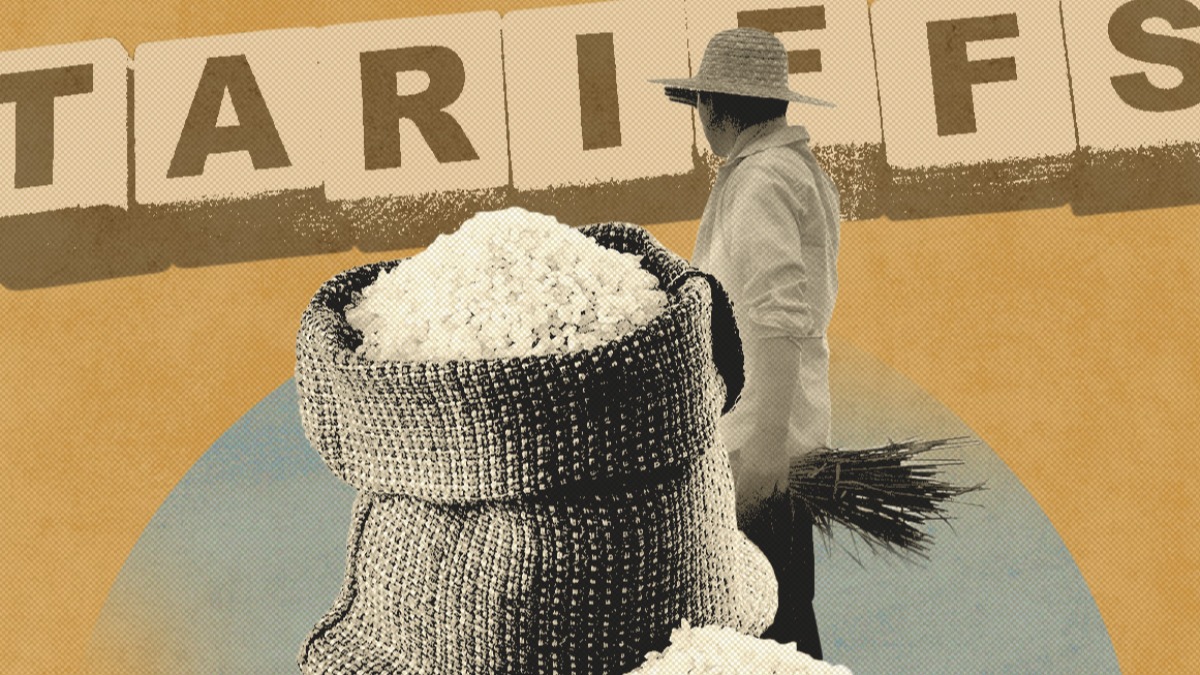
The Department of Agriculture has recommended raising tariffs on imported rice to protect local farmers and their livelihoods. What will this mean for the Philippine economy in the government’s quest to alleviate the woes of our farmers?
The news broke via new Presidential Communications Office Secretary Dave Gomez, who said the agency was recommending the hike in imported rice tariffs pending President Ferdinand “Bongbong” Marcos, Jr.’s meeting with several Cabinet members on the sidelines of his state trip to India.
This also comes at the heels of the President's fourth State of The Nation Address, where he claimed that his government had achieved its goal of being able to offer P20 per kilo rice without hurting the income of Filipino farmers.
“To those who are asking where is the P20 per kilo rice, here is my answer: We have proven that we can implement the P20 per kilo rice. Our farmers will not lose income,” the President said during his address to Congress on July 28.
In June, Agriculture Secretary Francisco Tiu Laurel, Jr. updated congressmen that he had recommended to the Tariff Commission a gradual return of rice import duties from the current 15 percent to eventually 35 percent.
“The Department of Agriculture is recommending an increase in tariff on imported rice and temporarily halt all importation to protect local farmers,” Secretary Tiu Laurel said in the statement. “The Cabinet will discuss this urgent matter with the President in India, on the sidelines of his state visit.”
ALSO READ:
Why exactly is the Philippines the World’s Top Rice Importer?
You Should Know: Local Rice is Healthier Than Imported Rice
Malacañang has backed the Agriculture department’s call to Congress on allowing the National Food Authority (NFA) to buy 20 percent of local rice supply to address the high prices of grain.
Tiu Laurel said the move would allow the NFA to move the needle on rice prices and to influence the market.
“The problem is if importation is halted or DA pegs the import quota to one million metric tons, that will result in severe shortage as we imported almost 4.7 million MTs last year. USDA predicts we will import a higher amount this year," Fermin Adriano, former Agriculture undersecretary for policy, planning, and research, told Esquire Philippines in an interview. “If the DA proposal pushes through, it will result in higher rice prices and jack up inflation. Our economic managers will not like that.”
The Agriculture chief had separately suggested that a tariff hike should coincide with the harvest seasons of Manila’s major supplier or at around late September for Vietnam, and December for Pakistan to minimize the impact on the local market.
In July last year, the government cut tariffs on imported rice to 15 percent as part of state efforts to tame rice retail prices and slow food inflation.
Marcos had issued Executive Order No. 62 that slashed the import duty on rice to 15 percent from 35 percent until 2028, subject to a review of rates every four months to cushion its impact.
The Philippines has consistently been named the world’s top rice importer by the United States Department of Agriculture.
In 2023, Manila bought 3.8 million metric tons to support its domestic production of 13.43 million metric tons of rice, according to the Congressional Policy and Budget Research Department. The Philippines’ top rice markets are Vietnam, Thailand and Pakistan.
Agriculture Experts, Economists on Boosting Farm Production
Adriano floated the idea of adopting a seasonal variable tariff scheme, which would entail lowering imported rice tariffs during off-peak season and raising it during harvest season to afford small farmers protection.
“Another radical idea is to assign rice production solely to the National Irrigation Administration, which has control of irrigation water and hence, most favorable land for palay cultivation. Concentrate assistance to these places to gain significant productivity gains,” Adriano said. “Marginal lands should be diverted to production of non-rice crops.”
Last year, President Marcos issued an executive order placing the NIA under Marcos’ office from the DA, a move that was meant to “streamline and rationalize the functional relations of agencies… in order to promote coordination, efficiency and coherence within the bureaucracy,” based on a copy of the order uploaded to the Official Gazette.
The country’s senators have chided the NIA for slow progress in state irrigation efforts, as they also raised concerns about rigged public bidding in carrying out its projects.
Under this year’s P6.326 trillion national budget, about P24.6 billion is allocated for irrigation services.
The Philippine DA in February declared a food security emergency on rice as it tried to lower the cost of the grain.
The declaration allowed the agency to release rice buffer stocks held by the NFA to stabilize prices and to ensure rice stays accessible to consumers. These stocks could also be released to government agencies, local government units and the KADIWA ng Pangulo program.
“The higher tariffs and import restriction will tend to raise domestic rice prices, which will contribute to inflation,” IBON Foundation executive director Sonny Africa told Esquire Philippines in a Viber message. “This is because there isn't a leap in domestic supply to offset more expensive imported rice or cuts in rice imports.”
House Speaker Martin Romuladez has said the Lower House is prepared to act on a draft bill that is proposing to reinstate the NFA market functions.
Considering the lowered tariff via EO 62, rice prices in June dropped 14.3 percent, an improvement from the 12.8 percent decline a month earlier, based on data from the Philippine Statistics Agency. This was considered the sharpest drop in the price of grain since 1995.
The Department of Economy Planning, and Development (DEPDev) said in early July that the 15 percent tariff on imported rice would stay unchanged until November, as DEPDev Undersecretary Rosemarie Edillon cited the need to look for a “win-win” solution that balances inflation control and protecting farmers.
“The real issue though is not just the tariffs or import restrictions now but rather what the administration is doing to build a resilient and self-sufficient rice sector,” Africa said. “The government should be investing in irrigation, extension, inputs, credit access, and post-harvest facilities for small farmers. Without these the Philippines will remain vulnerable to weather-driven supply disruptions and global rice market movements, and the rural sector will continue to languish.”
The think tank executive director noted that raising tariffs on imported rice would just be a hollow, knee-jerk reaction to domestic price movements without serious moves to rebuild the country’s agricultural base.
“The more permanent solution is to raise productivity of our palay farms by seriously pursuing land consolidation and clustering,” Adriano stressed.
