
Today I Learned: Davao Has Worst Traffic in the PH, According to TomTom Traffic Index 2024

ILLUSTRATION: Igi Talao
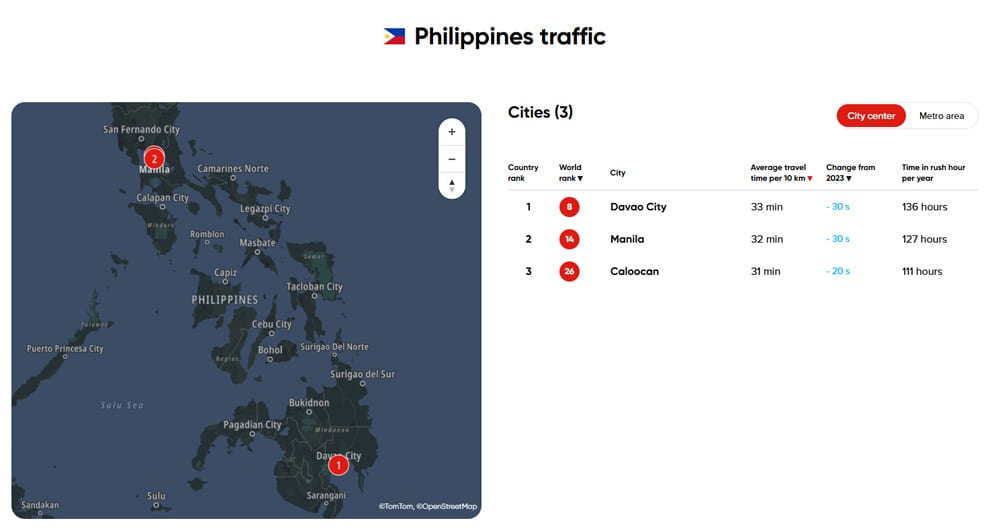
Davao City has the worst traffic in the Philippines, with a ranking of eighth in the world, according to the TomTom Traffic Index 2024.
TomTom Traffic Index 2024: Philippines
ALSO READ:
Apparently, Traffic in Metro Manila Was the World's Worst in 2023
Manila Drivers Spend 188 Hours in Rush Hour Traffic Each Year, According to Study
Davao City Traffic Index in 2024
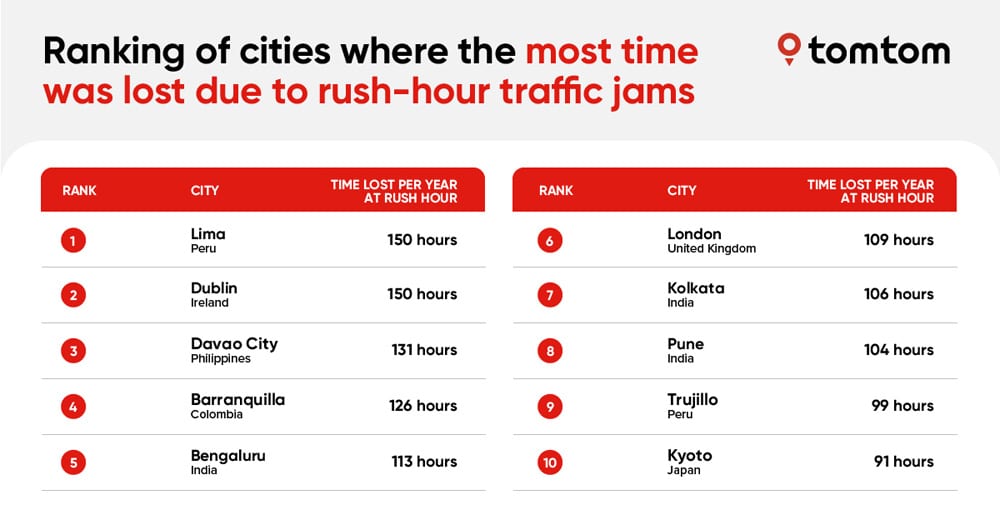
Davao City lost up to 136 hours just by getting stuck in traffic in 2024. That's about five days and 16 hours of extra time spent driving in rush hours over the year; at least, it was three hours and 10 minutes less than in 2023.
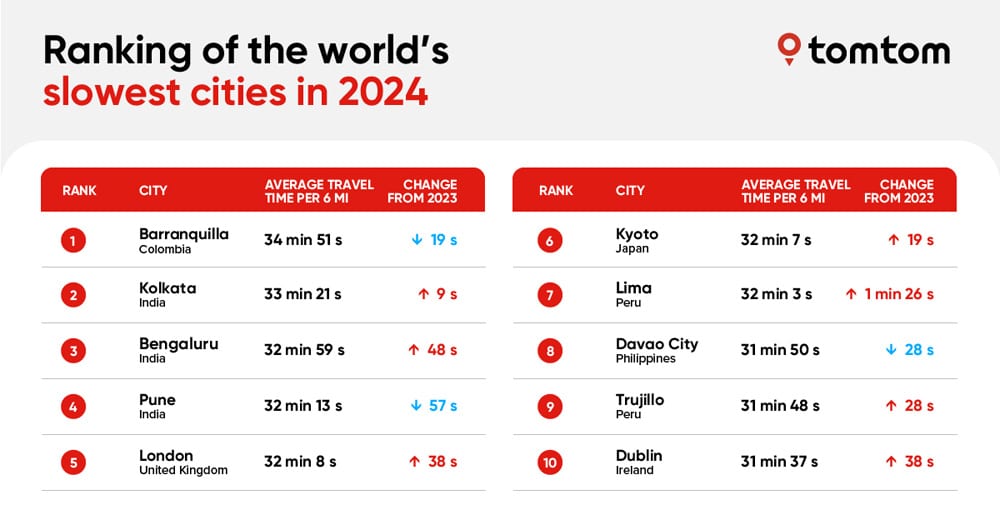
One-way commute of 10 kilometers took up to 35 minutes and 19 seconds in the morning, and got worse in the evening at 45 minutes and one second. Traffic congestion was worse in the evening rush hour, too, at 101%. On average, travel time per 10 kilometers was 32 minutes and 59 seconds, with an average speed of 18.2 kilometers per hour as cars crawled through the roads. This made Davao City the eighth slowest city in the world for 2024. Barranquilla in Colombia was the city with the lowest average speed.
Slowest Cities in the World, 2024
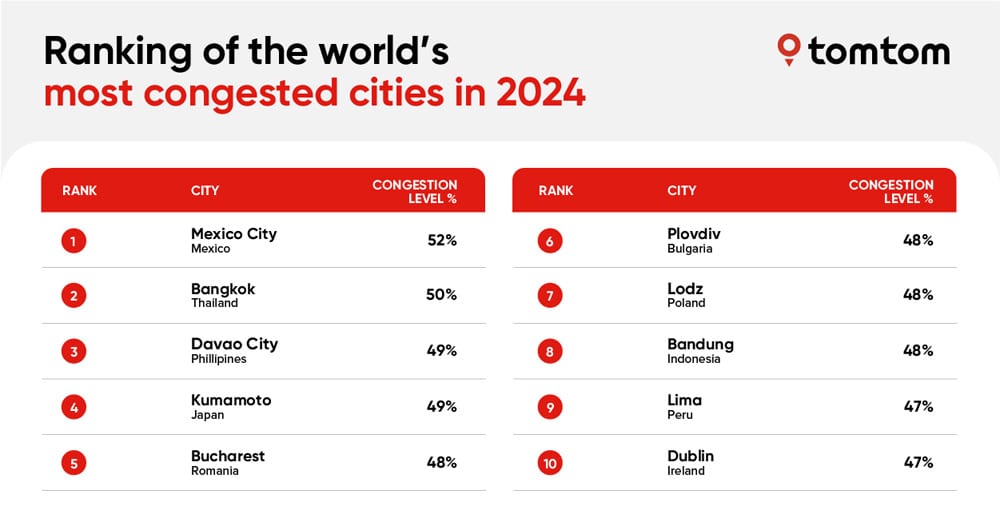
Davao City's congestion level of 49% made it the third most congested city in the world in 2024, just behind Mexico City with 52% and Bangkok with 50%.
The worst day to travel in Davao City in 2024 was Monday, February 5, with congestion level at an all-time high of 78%. It took residents and workers 40 minutes and 9 seconds on average just to drive 10 kilometers.
Most Congested Cities in the World, 2024
Cities Where Most Time Was Lost Due to Rush-Hour Traffic Jams, 2024
Manila: From World's Worst to Rank 14
In 2023, the TomTom Traffic Index cited Manila as having the world's worst traffic. But now, it's at number 14 in the world rankings. The average travel time per 10 kilometers was 32 minutes and 10 seconds, a slight improvement from 2023, which had 30 seconds more. The average speed was 18.7 kilometers/hour, just 0.3 km/h faster than in 2023.
Congestion level ranking was 27th in the world, with 42% congestion level, just 1% less than in 2023.
A 10-kilometer, one-way commute during the morning rush hour took 35 minutes and 27 seconds, with an average speed of 16.9 kilometers/hour and congestion level of 55%. As expected, traffic is worse in the evening, taking people 44 minutes to travel 10 kilometers, with an average speed of 13.6 kilometers per hour and a congestion level of 88%.
Up to 127 hours (or five days and seven hours) were lost to traffic. This was three hours and 24 minutes less than in 2023.
The worst day to travel in Manila in 2024 was November 15, Friday, with a congestion level of 71% and an average travel time of 39 minutes and 37 seconds for a 10-kilometer drive. From experience, we know that Friday is the worst day to be on the road, add to that: 15th is a payday and it's already Christmas season in the country.
Caloocan: Rank 26
Another Philippine city included in the TomTom Traffic Index is Caloocan. It ranked 26th in terms of travel time and 39th in terms of congestion level.
The worst day to travel in Caloocan in 2024 was on August 30, Friday, with a congestion level of 67%. Again, it's a Friday payday.
Caloocan residents and workers, in total, lost 111 hours (or four days and 15 hours) to traffic in 2024. This was 21 minutes less than in 2023. A morning commute of 10 kilometers took 33 minutes and 25 seconds, with an average speed of 18 kilometers/hour and a congestion level of 52%. Traveling in the evening took 40 minutes and one second for 10 kilometers, with an average speed of 15.0 kilometers per hour and a congestion level of 80%.
About TomTom Traffic Index 2024
TomTom (TOM2), the location technology specialist, has been releasing its annual report on global traffic trends for 14 years now. The 2024 edition features 500 cities across 62 countries on six continents. This number is 113 countries more than the 2023 edition, which just meant that the study cast a wider net among urban cities.
"In 2024, 379 cities out of 500 (76%) saw their overall average speed decrease compared to 2023. Despite this decrease, average speeds under optimal conditions, characterized by free-flowing traffic, remained stable and even showed slight improvements in most cities. This suggests that the observed deterioration in average speeds is primarily driven by dynamic factors affecting congestion levels rather than changes in road infrastructure," TomTom's report said on its global traffic trends in 2024.
The TomTom Traffic Index is based on floating car data (FCD). A representative sample is used, spanning 737 billion kilometers.
Factors that affect travel time across cities include static factors, such as the design of road networks. It added that "narrow streets, one-way systems, and complex intersections can slow movement." Traffic light synchronization, roundabouts, and stop signs also affect navigation efficiency.
Dynamic factors also affect average speed, such as traffic congestion during peak hours, seasonal traffic surges (e.g., Christmas season or payday), car accidents, construction projects, and road closures. "The highest levels of congestion are often reached on days when weather conditions are particularly bad," it said. A lot of workers got stranded because of the super typhoons that hit the Metro in 2024, especially since a severe downpour easily caused flooding on our roads.
"TomTom Traffic Index insights help drivers, pedestrians, city planners, carmakers, and policymakers tackle traffic challenges and make informed decisions for a better tomorrow," their website concluded.
