
Finally, Ice-Cold Air-Conditioning: A Closer Look at the New State-of-the-Art LRT-1 Trains

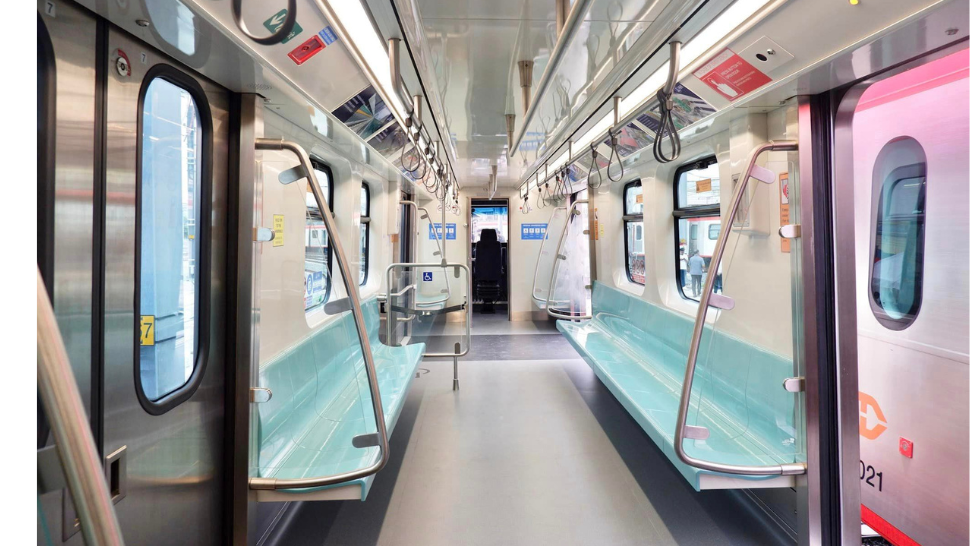
It's about damn time. Our LRT-1 trains are in dire need of a facelift (or just better replacements). The Department of Transportation (DOTr), along with the Light Rail Manila Corporation (LRMC), has heard us loud and clear. Recently, they introduced the fourth-generation LRT-1 trains. And, suffice it to say, we're finally getting ones that don't feel like something that should've stayed in the '80s. Oh yeah, the air-conditioning is apparently "ice cold," too. Thank god.
“These new LRVs are equipped with advanced passenger information system, a new signaling system, and ice-cold air-conditioning—leading to a vastly enhanced passenger experience,” DOTr Secretary Bautista added.
According to the DOTr, the trains' brakes and signaling have also been upgraded for a better passenger safety experience. This should ease the burden of having to wait around for that next one to come along. Waiting time, the DOTr says, has now been reduced to just under three minutes. Pretty neat. There will roughly be 800,000 passengers benefiting from this a day, 1,300 for each ride. The trains can reach speeds of 70 kilometers per hour, as well.
ALSO READ:
'Modernization, Not Phaseout': A Jeepney Driver's Daughter Takes Us Into the Transport Strike
Norway Will Now Help the Philippines Improve Its Public Transportation
The LMRC also noted that the complete deployment of the 30 train sets will be done by the fourth quarter of 2024. This is when the LRT-1 Cavite Extension Project opens.
Once the LRT-1 Cavite Extension Project, the travel time between Pasay and Bacoor and vice versa will only be at around 25 minutes, as compared to the current hour and 10 minutes it takes to travel from city to city.
Photos of the New LRT-1 Trains
Considering that these are part of the LRT-1 Cavite Extension Project, these trains should offer passengers some much-needed comfort in their commute.


Hopefully, this is a sign of more revamps (if you want to call it that) to come into our transportation system.
