What You Need to Know About the ICC’s Murder Charges Vs. Former President Duterte

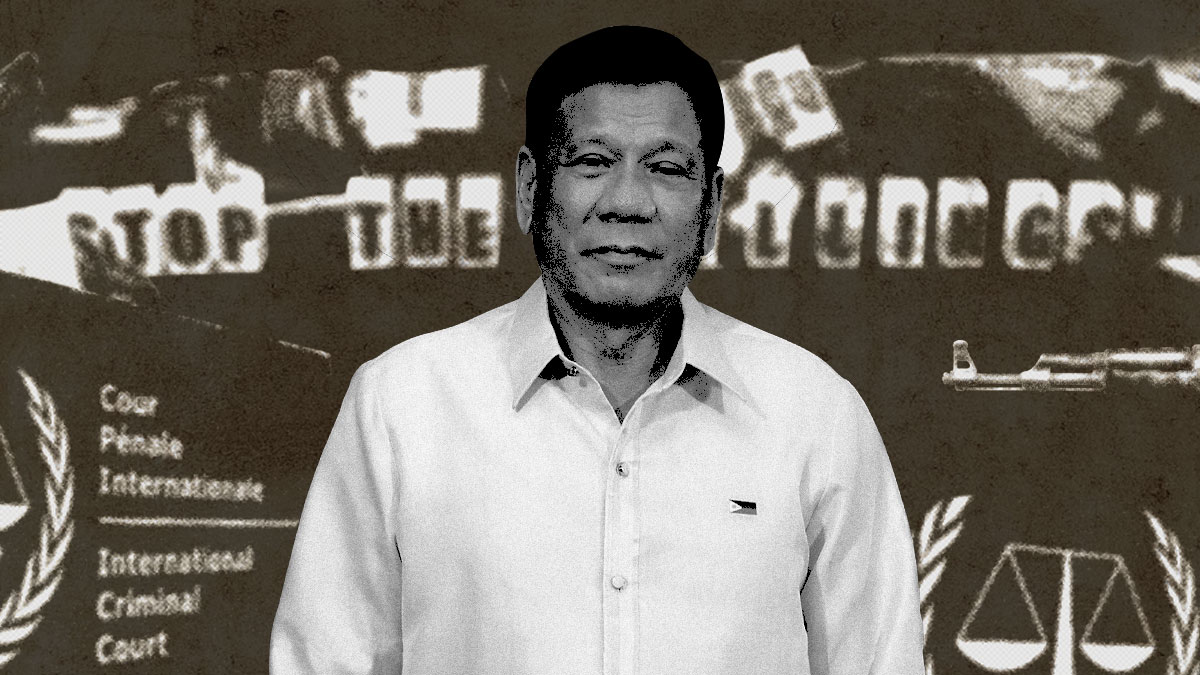
Against the chaotic backdrop of the ongoing tussle between allies of the Marcos family and the Dutertes and the government’s probe of widespread corruption, ex-President Rodrigo Duterte has been charged with murder and then some by the International Criminal Court (ICC) over his deadly anti-illlegal drug campaign.
The Hague-based international tribunal charged the firebrand former Philippine leader with three counts of murder of alleged drug suspects for greenlighting summary executions under his terms as Davao City mayor and President.
To put it into context, most Duterte allies and supporters argue that the tribunal lost jurisdiction over the Philippines when the country withdrew membership in the ICC in 2019 as criticisms ramped up on his government systematically killing drug suspects in police raids. It took effect a year later.
“Duterte and his co-perpetrators shared a common plan or agreement to ‘neutralise’ alleged criminals in the Philippines (including those perceived or alleged to be associated with drug use, sale or production) through violent crimes including murder,” according to the ICC prosecution’s July 4 filing, which was published on September 22, Monday.
ALSO READ:
Duterte Arrested for Alleged Crimes Against Humanity: How Did We Get Here
The tough-talking leader, who is now 80 years old, is on trial before the ICC because of his war on drugs that helped install him as President in 2016. The policy won over Filipino voters through his crime-busting and maverick persona. He had vowed to eradicate drugs within six months upon taking office in his now infamous vitriolic speeches on killing thousands of drug pushers.
Based on government estimates, more than 6,000 drug suspects were killed during anti-drug operations, which is a far cry from the 30,000 death toll human rights groups stand by.
Broken down, the three charges against Duterte involve “murder as a crime against humanity in Davao City” of 19 victims, murder against humanity of “high-value targets,” and murder and attempted murder as crimes against humanity in barangay or local village clearance operations nationwide when he was President.
“The attack was carried out pursuant to a State policy to ‘neutralise’ through violent crimes, including murder, alleged criminals in the Philippines who were perceived or alleged to be involved in drug-related (including production, sale and use) and other crimes (such as theft and murder),” ICC Deputy Prosecutor Mame Mandiaye Niang said in the 15-page charge sheet published on the tribunal’s website.
Duterte rolled out the crackdown on the illegal drug trade, which was a key pillar of his election campaign, as he vowed to kill 100,000 criminals in the six-month span. He even said he would throw bodies in Manila Bay that would lead to fish “growing fat.”
“We must emphasize that the case against Duterte - the most significant criminal case against a Philippine president - was brought forward by victims and other concerned parties, not by Marcos,” Kristina Conti, an ICC-accredited lawyer of drug war victims, told Esquire Philippines in an interview. “This shows how persistence by the poor and the powerless, helped with a bit of luck, can turn the tide against tyranny and impunity.”
Duterte, who is detained in the Netherlands, could be the first head of state to be convicted of crimes against humanity before the ICC.
“This new development will continue and intensify the feud between the Dutertes and the Marcoses as well as their supporters,” Maria Ela Atienza, a political science professor and former head of the University of the Philippines political science department, said in a Viber message. “What is important is that this is a reminder for present and future Philippine leaders that abusive leaders can be brought to court, even if crimes have been committed years ago.”
Earlier this month, ICC judges postponed hearings to finalize these charges against the former head of state after Duterte defense lawyers sought for an adjournment of all proceedings claiming that the 80-year-old was not fit to stand trial.
The tribunal only allowed a postponement up to yesterday’s court hearing on the confirmation of charge, allowing the period to be limited to “the time strictly necessary to determine whether Duterte is fit to follow and participate in the pre-trial proceedings.”
The ICC has never deemed a suspect unfit for trial despite several other pleadings in the past.
“This serves as a milestone in the process of exacting accountability for the crimes committed in Davao City by the DDS and during the drug war all over the Philippines by the so-called 'national network' of death squads, both created and organized by Mayor, then President Duterte, said ML Party-List Rep. Leila de Lima, whom the Duterte government prosecuted and jailed for seven years for drug trafficking after she spearheaded a Senate investigation of his anti-illegal drug campaign.
De Lima, a former Senator and Justice Secretary, is one of Duterte's staunchest critics. She was released from detention and acquitted in her third and last drug trafficking case in June last year.
Duterte last year told senators that he had “no apologies, no excuses,” for his campaign as he was only carrying out his mandate as President to protect the country and the Filipino people. He said he “did his best to address the issue of illegal drugs firmly and without compromise,” denying alleged state-sponsored killings or orders for policemen to kill.
Arjan Aguirre, who teaches political science at the Ateneo de Manila University, sees the development as a factor that would likely heighten the conflict between the warring dynasties, leading to the Dutertes to ramp up their jabs at the Marcoses. This comes at the heels of President Ferdinand “Bongbong” Marcos, Jr. 's crackdown and a burgeoning political crisis involving anomalous flood control projects and his allies being roped in the mess.
“The Dutertes actually will try to exploit the moment and intensify their efforts to paint them as victims of Marcos government persecution,” the political science assistant professor told Esquire Philippines in an interview, noting that only a sure-fire conviction would set a precedent on future erring Philippine leaders.