We Apparently Recorded the Hottest Days in History Earlier This Week

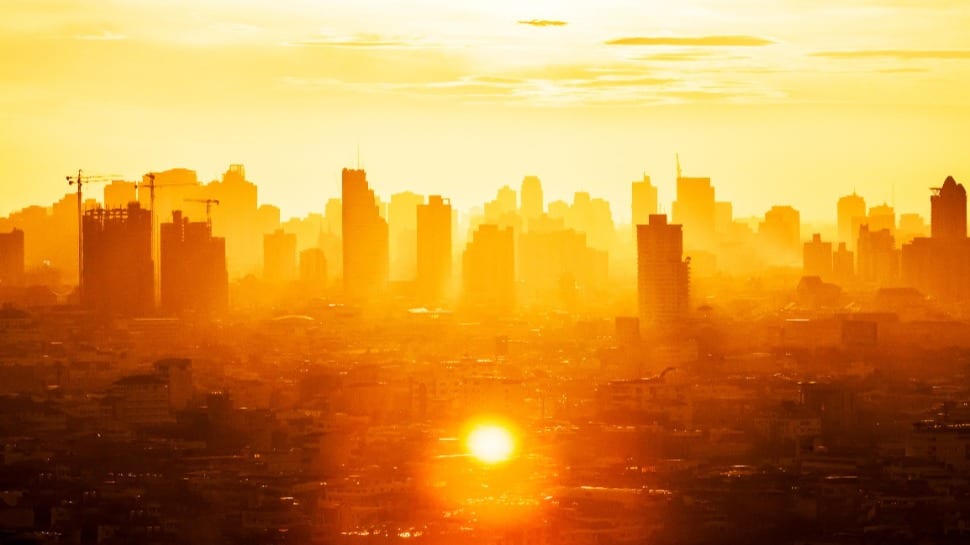
The heat the past week was no fluke. There's such a thing as everyday Philippine heat, but new data shows that the temperature in the United States last Monday and Tuesday (Tuesday and Wednesday for us here in the Philippines) was far worse.
Apparently, we recorded the highest global temperature in history earlier this week, doing so for two consecutive days, according to readings by United States meteorologists. Scientists say that this is a sign of things to come as the world suffers the worst of climate change as fossil fuels continue to burn. Due to human activity, the world burns through roughly 40 billion tonnes of CO2 every year.
The surface of the Earth's air temperature reached 17.18 degrees Celsius (62.92 Fahrenheit), according to research from the US National Centers for Environmental Prediction. This is the highest temperature ever, after the prior day's 17.01 degrees Celcius.
Monday and Tuesday broke the previous daily record at 16.92 degrees Celsius last August 2016 and July 2022. These recent highs are also the first instances where the globe has eclipsed the 17-degree Celsius mark since records were tracked in 1979.
ALSO READ:
Climate Change Will Hit the Philippines the Worst, According to a Report
Metro Manila Is Expected to Get 4°C Hotter by 2050, Thanks to Climate Change
NCEP has placed Earth's average temperature yesterday as the hottest single day thus far measured by humans.
— Dr. Robert Rohde (@RARohde) July 4, 2023
This is driven by the combination of El Niño on top of global warming, and we may well see a few even warmer days over the next 6 weeks. pic.twitter.com/RCrROHaWwp
On Tuesday, the World Meteorological Organization also confirmed the return of El Niño. This, combined with increased heat from anthropogenic global heating led to the unusually hot days. Experts predict that July could be the warmest month ever in 120,000 years, Leipzig University research fellow in atmospheric radiation Dr. Karsten Haustein told The Guardian.
Global averages for air temperature, the data notes, usually hover around 12 degrees Celsius to a hair under the 17 degrees Celsius threshold annually. From 1979 to 2000, that figure was around 16.2 degrees.
Unfortunately, all signs point to the temperature being worse over the next few weeks. Officials from the Philippine Atmospheric, Geophysical and Astronomical Services Administration (Pagasa) also confirmed that the country is facing El Niño, asking the public to prepare for the expected drought in the coming months.