
Why Marcos Wants a Code of Conduct on the South China Sea

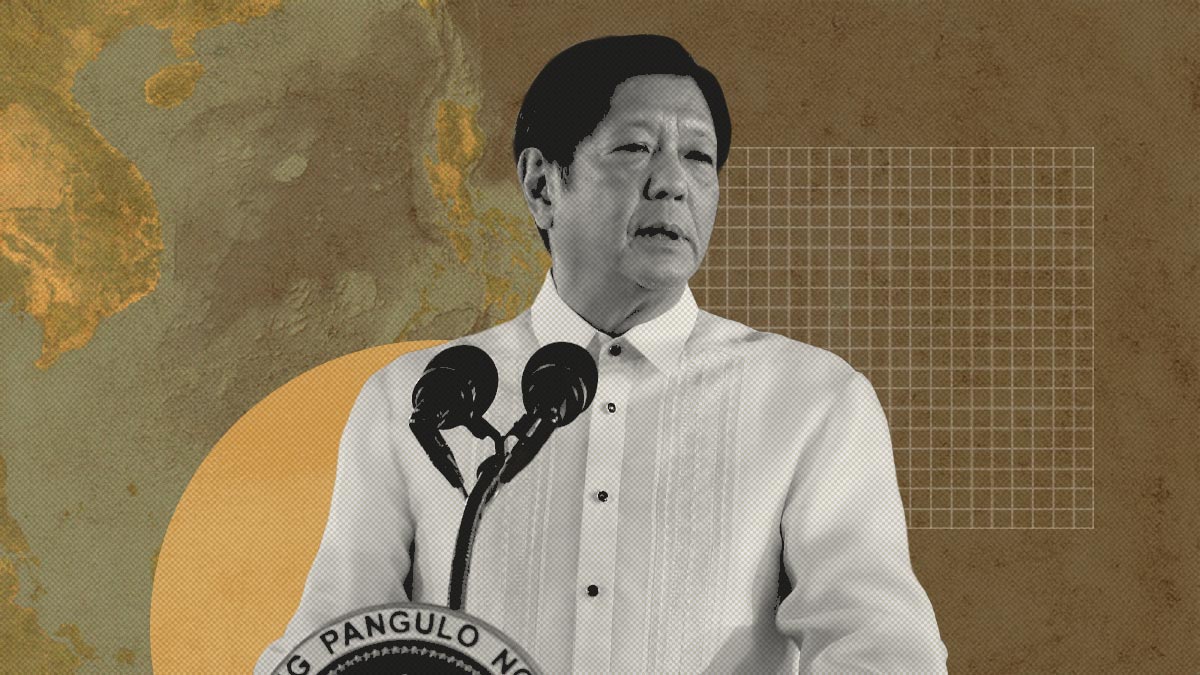
Philippine President Ferdinand “Bongbong” Marcos Jr. on May 26, Monday, renewed his call for his regional neighbors to come up with a code of conduct on the South China Sea amid continuing tensions with Beijing over its maritime dispute.
At the 46th Association of Southeast Asian Nations (ASEAN) Summit in Malaysia, the Philippine leader cited the necessity to adopt a legally binding framework and code of conduct for the disputed waterway to prevent “miscalculations at sea.”
“This measured and unified approach upholds ASEAN's commitment to dialogue, diplomacy, and a rules-based multilateral trading system,” he said before ASEAN leaders and heads of state.
“Let me thus urge all member states to remember that to meaningfully engage our partners, we must advance these values and interests [while being] sensitive, of course, to our external partners' respective strengths and challenges.”
The Chinese Embassy in the Philippines did not immediately respond to a request for comment.
The Philippine Department of Foreign Affairs has committed to peacefully resolving Manila’s sea tensions with China via diplomatic strategies and talks on a potential code of conduct.
Marcos urged his ASEAN partners to find a consensus in dealing with issues in the South China Sea which he called “disparate situations that the different member states are operating under.”
The President was also set to tackle key issues with ASEAN leaders such as the situation in Myanmar, climate change, and the reciprocal tariffs imposed by the United States. He is in Malaysia for the two-day summit as Manila seeks to reiterate its commitment to regional cooperation.
“The code of conduct is important to all parties in the South China Sea to promote good order at sea to overcome its current anarchy,” Rommel Banlaoi, who is the president of the Philippine Society for International Security Studies (PSISS) and former depity national security adviser, told Esquire Philippines in a Viber message.
“It will be applicable not only to China but to all parties. It is an important step towards rules-based international order in the South China Sea.”
Also Read
Why China Is Irked by US-Philippine War Games This Year
Why the Philippine Coast Guard is Worried About Chinese Research Vessels
China claims more than 80 percent of the South China Sea, which is seen as a crucial trade route that is host to an abundance of undersea gas and oil deposits.
The country insists on its claims derived from 1940s maps, which it sees as its historical claim over the waterway that sees more than than $3 trillion worth of global trade flow through it.
The Hague-based and United Nations-backed Permanent Court of Arbitration had voided China’s claim over the South China Sea for being illegal.
ASEAN countries like Malaysia, Indonesia, and Vietnam also have competing claims over the disputed waterway.
The Philippines has failed to enforce the arbitration ruling due to China’s Coast Guard and its vast fishing fleet. Manila has filed hundreds of protests since Marcos took office in 2022.
How Long Has Manila and ASEAN Been Pushing for This Code?
In 2002, the regional bloc and China committed to crafting a code of conduct and a framework to deter conflict through diplomatic means in the South China Sea, but progress has stalled over the years.
Former Foreign Affairs Secretary Enrique Manalo noted last year that Manila is ready to raise its sea row with China when it assumes the ASEAN chairmanship next year after tensions with Beijing worsened in the past year.
The Chinese Coast Guard has repeatedly blocked Philippine resupply missions to BRP Sierra Madre, a World War II-era ship intentionally grounded to stake Manila’s claim on the waterway.
“The Code of Conduct is a harbinger for the chairmanship of Manila next year. If not completed this year as Kuala Lumpur sits as the current chair, the Philippines will carry the heavy cudgel of pushing for the Code of Conduct,” Chester Cabalza, who is the president of the Manila-based security think tank International Development and Security Cooperation (IDCS).
“It is more effective if the Code of Conduct shall be completed under Malaysia’s chairmanship to lessen China’s biases against the Philippines once it holds the baton of the rotating leadership in ASEAN,” the security analyst added.
In late 2023, ASEAN Foreign Ministers issued a joint statement calling on all claimants in the South China Sea to pursue peaceful and diplomatic solutions to the disputes.
Marcos has said he had been trying to persuade neighbors like Malaysia and Vietnam to hold talks on the code of conduct after failing to strike a broader regional pact with China.
"The question of whether China will adhere to the Code of Conduct’s provisions is subject to continuous debate," Josue Raphael Cortez, who teaches diplomacy at the De La Salle College of Saint Benilde, told Esquire Philippines in an online exchange. “This is because the People's Republic of China is very much notorious for not adhering to what they have signed into.”
On May 22, the Philippines accused China of putting the lives of Filipino researchers in the South China Sea at risk after Beijing's coast guard harassed two civilian vessels at Sandy Cay, located on the northern edge of the Spratly Islands.
A day after the incident, Chinese Foreign Ministry spokesperson Mao Ning said at a regular news briefing in Beijing that China claimed sovereignty over the cay.
“China’s response is fully necessary, legitimate and lawful. The Philippines needs to immediately stop its infringement activities and provocations. Otherwise, China will make a resolute response,” the ministry official said.
Beijing’s state media last month reported that the Chinese Coast Guard had asserted sovereignty over Sandy Cay by displaying China’s flag on it.
The cay is situated near Manila’s military outpost in Thitu Island, where a small Filipino community has resided since 1971.
Manila and Beijing, in July last year, agreed on a "provisional arrangement" for Philippine resupply missions to Second Thomas Shoal, known in the Philippines as Ayungin.
Marcos earlier said in his third State of the Nation Address last year that his government would pursue ways to de-escalate tensions in the waterway, which has become a regional flashpoint, without “compromising our position and our principles.”
“With this, ASEAN, recognizing the integral role China plays in its economy and vice-versa, can devise strategies on how it will be able to exert pressure on China to adhere to the provisions they have agreed upon,” said Cortez.
