

Marcos Signs Law Creating Negros Island Region

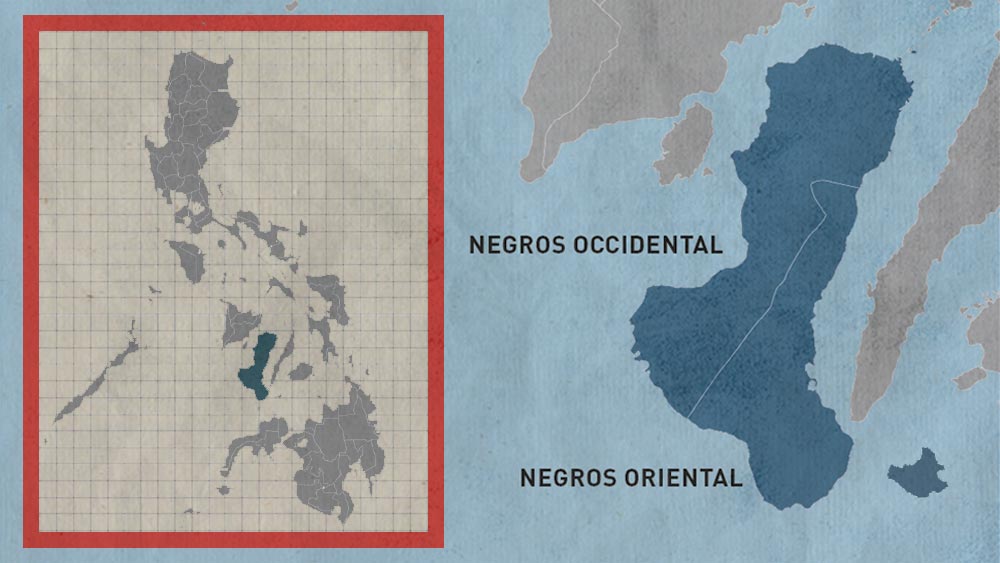
President Ferdinand Marcos Jr., on Thursday afternoon, June 13, signed into law the bill establishing the Negros Island Region (NIR), uniting Negros Occidental, Negros Oriental, and Siquijor into one administrative region.
This took place during the inauguration of the Cebu-Negros-Panay Backbone project in Bacolod City, where the President expressed his support for the NIR, emphasizing the logistical challenges faced by the provinces under the current regional setup. Negros Occidental, part of Western Visayas, has its regional center in Iloilo City, requiring ferry travel for government transactions. Similarly, Negros Oriental and Siquijor, under Central Visayas, have their regional centers in Cebu City.
Aside from the signing of the Negros Island Region Act, Marcos also signed the Real Property Valuation and Assessment Reform Act.
"These move us closer to attaining the vision of a resilient, and progressive, and newer Philippines. First, we have the NIR Act, the law establishing the Negros Island Region. This will not only unify the provinces of Negros Occidental, including the City of Bacolod, Negros Oriental, and now Siquijor. This union is long overdue and makes very practical sense, especially [on] Negros Island, where people are located on one island but are governed under separate administrative regions. For decades now, Negrenses have endured the rigors of sea travel, unnecessary expenses, bureaucratic red tape, [and] inefficiency that this arrangement has brought, especially when there is a need to urgently access government services from regional centers on other islands. Equally glaring is an uneven growth and disparity of funding between the two provinces," Marcos highlighted during the signing.
The President noted that the creation of the NIR would address this issue, enabling the establishment of regional offices within the new region, thereby bringing government services closer to the residents. The NIR is expected to boost the region's ease of doing business by empowering residents and instilling investor confidence in its capacity to facilitate efficient government transactions. This move is anticipated to create new growth areas within the region, fostering economic development and improving the quality of life for its inhabitants.
ALSO READ
Sugar Wars: Looking Back at the Negros Famine of the 1980s
What Life Was Like For a Sugar Baron in Pre-War Philippines
Timeline of the Negros Island Region Bill
The movement for a single-island region was first proposed in the 1980s, a time when the regional offices of two provinces on the same island were located on Panay Island (for Negros Occidental) and in Cebu (for Negros Oriental). House Bill No. 1477, or "An act merging the Province of Negros Occidental and Oriental into One-Island Region to be known as Region 6-A and For Other Purposes," was filed in Congress, highlighting four major reasons:
- The commonality of the two provinces, specifically that "the two Negros provinces nestle in one common island; have common fowls and beasts in the forest; share the same soil in our plains and mountains; benefit and suffer together from the rivers that snake through our land; and that our ancestors roamed the same length and breadth without complications of political, social, economic, religious and lingual obstacles."
- The distance between the two provinces to their political regions do not give them the benefit of sharing in the regional funds
- Employment opportunities
- Socio-economic development and balance of trade between Occidental and Oriental
This, however, was faced with opposing views, including differences in cultural heritage and language. Others claimed that it was easier to travel by ferry to Cebu from Dumaguete (Negros Oriental) than to travel by bus to Bacolod (Negros Occidental) from Dumaguate.
Talks about the proposal continued in the '90s, with later governors identifying Kabankalan in Negros Occidental and Mabinay in Negros Oriental as joining regional centers. Ultimately, the proposal was turned down due to lack of funding.
The idea was revived in 2013 by political leaders from both Negros provinces. Then, President Benigno Aquino III directed the Department of the Interior and Local Government to study the proposal. Executive Order No. 183 was signed on May 29, 2015, effectively merging the two Negros provinces into one region—the Negros Island Region.
The established NIR was abolished in 2017 by President Rodrigo Duterte through Executive Order No. 38, effectively revoking Aquino's Executive Order No. 183. The P19-billion cost of retaining the region was cited as the main reason for the dissolution. Budget Secretary Benjamin Diokno, back then, called it an "expensive exercise."
In 2020, officials from Negros once again brought up the proposal for the one-island region. In July 2022, Rep. Alfredo Marañon III of the second district of Negros Occidental filed House Bill 330, which proposed the cities of Bacolod and Dumaguete be the centers of NIR. The proposal did not include Siquijor, but the inclusion of the smaller island province in the one-island region was proposed by Rep. Jose Francisco Benitez of the third district of Negros Occidental. The two bills, along with three others, were approved by the Senate Committee on Local Government in December 2022. The panel, chaired by Senator JV Ejercito, passed Senate Bill Nos. 126, 89, 812, 1422, and 1469. Finally, on March 12, 2024, Senate Bill No. 2507 passed on third and final reading with the proposal to establish Negros Occidental, Negros Oriental, and Siquijor under one administrative region.
Negros Island Region Bill was signed into law by Marcos on June 13, 2024.
Administrative Regions in the Visayas
With the establishment of the Negros Island Region, the administrative regions in the Visayas are listed as follows:
Western Visayas (Region VI)
- Aklan
- Antique
- Capiz
- Guimaras
- Iloilo
Central Visayas (Region VII)
- Cebu
- Bohol
Eastern Visayas (Region VIII)
- Biliran
- Eastern Samar
- Leyte
- Northern Samar
- Samar
- Southern Leyte
Negros Island Region
- Negros Occidental (formerly Western Visayas Region)
- Negros Oriental (formerly Central Visayas)
- Siquijor (formerly Central Visayas Region)
This raises the number of administrative regions in the Philippines to 18.
