
This Negros Occidental Farm is Setting New Standards in Aquaculture

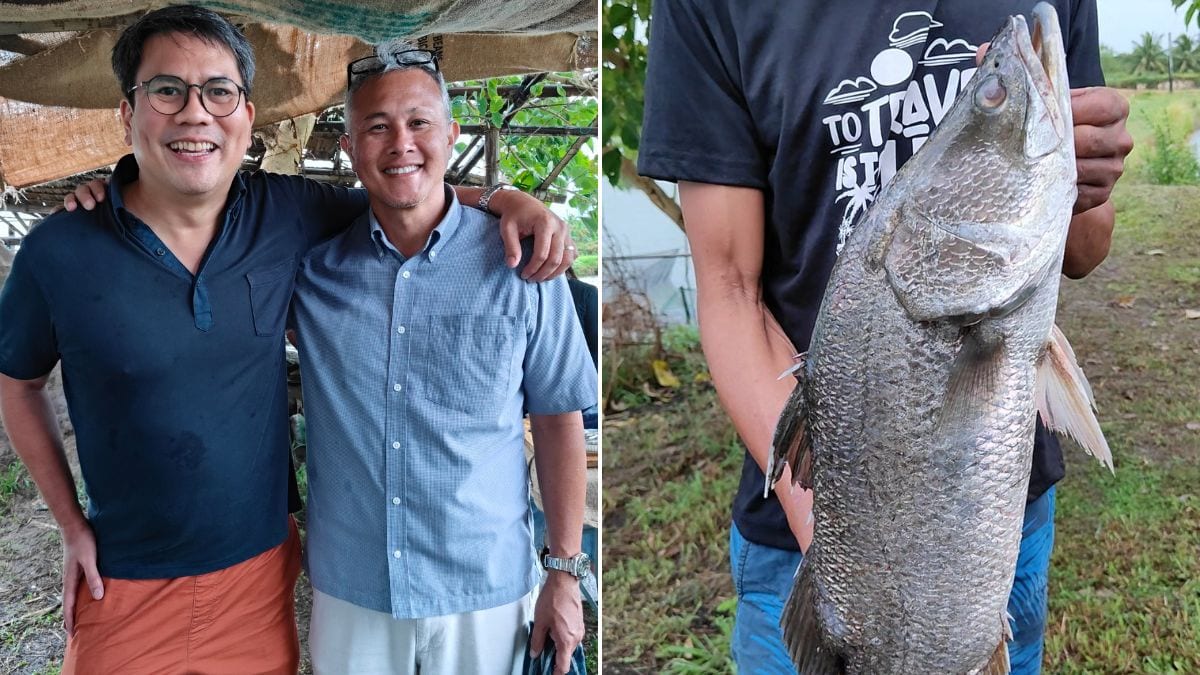
I had the privilege of being among a group of media members who visited 7 Hectares, a fish farm in E.B. Magalona (formerly known as Saravia), Negros Occidental, during a Slow Food press junket in November. On a drizzly afternoon, we met Kiko Torno, a former advertising professional turned sustainable agriculturist; Ton Gaitmaitan, head of partnership and marketing; and their team of farmers.
The fish farm takes prides in growing high quality, sustainable, and clean seafood. On their Facebook, the seafood producer declares that they "do not use any artificial feeds or growth hormones, nor subscribe to any intensive farming practices that wreak havoc to farmlands and surrounding ecosystems."
Aerial view of 7 Hectares fish farm in E.B. Magalona (formerly known as Saravia), Negros Occidental

How did Torno, who spent most of his career life in advertising, develop an interest in aquaculture?
"This started out as a passion project," he tells us. "Before my wife [Gretchen] and I got married, we agreed that corporate life would not be our endgame." They vowed to leave their stressful and fast-paced careers before retirement, discover their true passions, and savor life. Thus, in 2009, they began dabbling in fish farming, and by 2017, they had finally quit their corporate jobs to enter consultancy.
To know more about their new venture, the Tornos enrolled in a SEAFDEC course in 2014. SEAFDEC, founded in 1967, is an autonomous inter-governmental organization focused on sustainable fisheries development in Southeast Asia, aiming to boost member countries' ability to manage their fisheries sustainably.
ALSO READ:
A New Species of Fish Is Named After the Bakunawa, the Visayan Mythological Serpentine Figure
How Did the Janitor Fish End Up Surviving—and Thriving—in the Pasig River?
7 Hectares specializes in growing sea bass.

SEAFDEC consists of 18 countries and the Philippines serves as its research hub. "What happens is those who enroll in the course get to take home a batch of our Iloilo tilapia, grow it, culture it, and then patent it in their countries. What I noticed, though, is that my wife and I were the only Filipinos there," he recalls. There were Thais, Dutch, Malaysians, Koreans, Indonesians, and Danes. In other words, Filipino fishermen weren't benefiting from the knowledge that was being imparted to foreigners.
One thing Torno learned from studying aquaculture is the crucial role marine plants such as algae, seagrass, and seaweeds play in maintaining the health of aquatic ecosystems. Much like trees in a forest which purify the air we breathe, these marine plants act as natural filters for the ocean. They have the ability to clean water by absorbing pollutants and converting them into nutrients. These nutrients, in turn, serve as food for fish and other marine organisms.
Horn snails, locally known as bagongon, are just as tasty as escargot.

7 Hectares founder Kiko Torno

He also found out that in the '70s and '80s, Negros was among the top producers of tiger prawns globally. However, the industry crumbled in the late '80s to early '90s.
"Initially, the first wave of farming tiger prawns was highly profitable. The second wave still yielded earnings despite some setbacks. But by the third wave, everyone faced losses due to the virally loaded shoreline water. The root of the problem was overcrowding; ponds designed for 5,000 prawns were being stocked with 250,000, all fed on pellets. When one prawn got sick, the entire batch was affected," he shares.
When the infected prawns were discharged into the ocean, other ponds that were clean all became contaminated. This was the reason, he says, why it became challenging to cultivate tiger prawns on the island.
Mangrove crab (alimango)

When Torno established 7 Hectares, he worked closely with marine biologists and ensured that the whole ecosystem is clean, balanced, and controlled. Since he grows sea bass, which are carnivorous (they feed on fish, crustaceans, mollusks, and other invertebrates), he decided to cultivate tilapia, which serve as their food. Because tilapia are herbivores that feed on algae, he also grows algae by using the dung from their cattle. This process creates a sustainable food chain: algae feed tilapia, and tilapia, in turn, nourish sea bass, red snappers, mangrove crabs, and other species.
Mangrove clams (halaan)

They also incorporate filter feeders like oysters to maintain ecological balance. Filter feeders consume tiny organisms and organic matter, thus acting as natural biofilters, contributing to the cleanliness and health of their habitats. "Each oyster filters 24 liters of water per hour," says Torno.
He also grows horn snails (bagongon), which some consider pests. However, Torno realized that these mollusks taste even better than the pricey escargot. "I love escargot. But when I tried this one... it's bitter-sweet, and it's really delicious."
Torno served us this flavorful sea bass binakol.

They also propagate milkfish (bangus) because these fish don't sleep. "They eat 24/7, and because they keep swimming, they generate oxygen in the ponds. So, I don't need to aerate it," he says.
One of Torno's motivations in starting 7 Hectares was his desire to raise awareness among Filipino consumers about the challenges faced by our fishermen. "When our fellow countrymen travel abroad, they post on their Instagram about how wonderful it is that chefs have a great relationship with their farmers and they are willing to pay a premium. But when they visit our local markets and a fish farmer prices something at P350 per kilo, they still haggle. It's unfair to the fisherfolk if we treat them that way, especially considering the additional challenges posed by disputes over our coastal lines," he says.
Torno takes pride in their oysters, which are clean enough to be enjoyed raw.

His goal is also for Manileños to have swift access to fresh seafood. "We harvest the seafood on the day of shipping. From the pond to the consumer's house, it takes just four hours. Upon landing in Manila, a logistics team is already prepared for dispatch to each home address," he says. To ensure transparency, he regularly posts pictures of each harvest in real time on social media and chat groups.
We had the opportunity to sample some of the seafood from 7 Hectares, and I must say they are among the best I've ever had. The flavors clean and full-bodied, which is particularly impressive given the simplicity of the farmers' preparation methods—they were either grilled, cooked in gata (coconut milk), or in coconut water.
One person commented that after tasting the seabass binakol, you'd never crave chicken binakol again. I concur.
The razor clams (navajas) have a well-balanced sweetness and brininess to them, and the texture is meaty, firm, and juicy.
We also thoroughly enjoyed every bite of the horn snail (bagongon), which was cooked in gata with banana heart. The grilled sea bass was wholesome and indulgent, and the mangrove clams' flavor was robust, evoking the sea's freshness.

They also cultivate mangrove crabs (alimango) although they were not available at the time of our visit because their production goes on rotation. The crabs' diet comprises five components—horn snails, tilapia, oysters, mussels, and annelids (sea worms). "Nursing crabs undergo a sex change, and before this happens, they feed on annelids, which contributes to the crabs' fat content," offers Torno.
For several years now, 7 Hectares has been offering 10-course meals to their clients, both in Negros and Manila. This opportunity allows them not only to introduce their products and advocacy but also to teach recipes and cooking techniques, courtesy of their chef. Torno assures that no two courses have been the same over the years.
7 Hectares supplies seafood products to Lusso, Amano, Grace Park, and sometimes to Chef Chele Gonzalez's restaurants.
