

Orcas Are So Done With Humans That They Started Sinking Boats

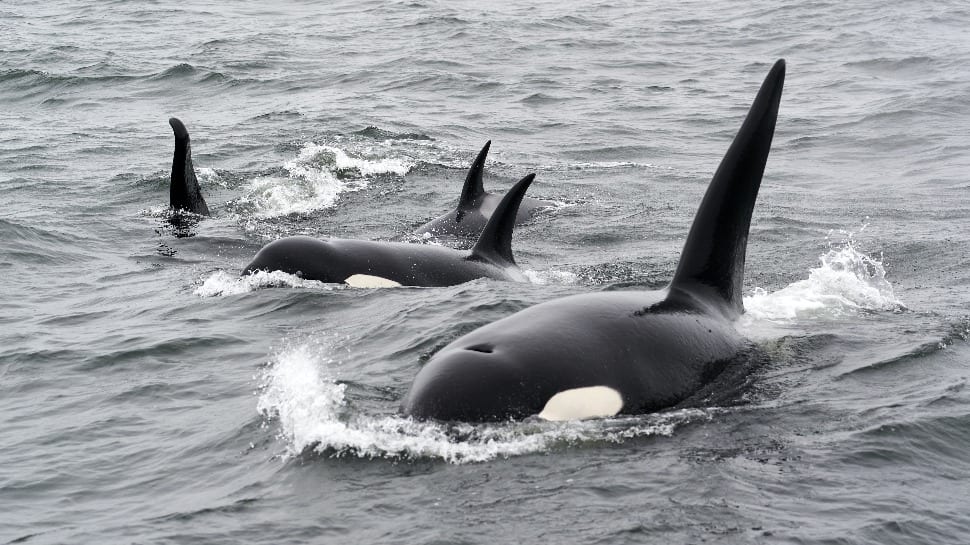
Looks like orcas are done with our shit.
Encounters between Orcas and boats have been increasing since 2020. According to Grupo de trabajo Orca Atlántica (GOTA)—a conservation group that specializes in orcas—there have been more than 350 orca interactions tracked since 2020, usually in southwestern Europe. However, as of late, GOTA suspects that these interactions may be spreading north. And the orcas aren’t traveling to sightsee.
Despite being given the nickname “killer whales,” orca interactions aren’t typically threatening to humans. They may be known as apex predators of the sea, but they’ve never been known to be violent toward humans in the wild. At least, until now.
GOTA classifies the way orcas react to approaching vessels into three categories: interaction without physical contact, physical contact with minimal damage, and physical contact that causes serious damage. Unfortunately, the last one has been true for some of the recent encounters.
Orcas have rammed and sank three boats so far this year, the most recent one occurring on June 19, when an orca hit a seven-ton yacht multiple times off the Shetland Islands in Scotland. This follows two separate incidents that happened off the coasts of Portugal and Spain back in May.
Experts have been debating the reason for this behavior for years, but while they’re still not entirely sure of the answer, they have come up with two leading theories:
Also Read:
Blue Whales Are Back in the Philippines
This Colorful Bird is the Real-Life Ibong Adarna from Philippine Myth
.jpg)
The orcas are just playing around.
While encounters with orcas are relatively common, there have been no recorded human injuries or deaths in history. Monika Wieland Shields, director of the Orca Behavior Institute, argue that this may just be some type of “play” for the species instead of an act of aggression. For creatures as large as orcas, their “play” might be a little intense. The ocean is, after all, their home and humans are technically the ones trespassing it. In this situation, Yachts are just very expensive collateral damage.
“I think it gets taken as aggression because it’s causing damage, but I don’t think we can say that the motivation is aggressive necessarily,” said Shields, pointing out that orcas are naturally playful and curious animals who like to explore their environment.
Andrew Trites, director of the Marine Mammal Research Unit at the University of British Columbia in Canada, supports this theory, saying “They're probably socializing, yucking it up with each other about their adventures without realizing the terror they're creating in their moments of joy.”
Trites also added that it could be as simple as orcas enjoying the sensations of ramming boats with their heads and ripping off rudders with their teeth. He said: “Orcas are very tactile and sensitive to touch. In my research, I've been struck by how often they touch each other and run into each other while swimming. It's just like with humans. We need to be touched.”

The orcas are seeking vengeance.
It sounds straight out of a James Cameron film, we know, but bear with us on this one. Alfredo López Fernandez, a biologist at the University of Aveiro in Portugal and GOTA representative, suspects that this pattern of behavior was passed down from a female orca they named White Gladis. He says White Gladis must have suffered a "critical moment of agony" after a bad run-in with an illegal fishing boat.
Belonging to the oceanic dolphin family, orcas are known to be intelligent and social creatures. Hence, using their very own sophisticated way of communication, orcas are able to teach their young hunting patterns that are passed down to generations. So it’s a real possibility that White Gladys inspired an uprising among juvenile, more impressionable orcas. Very Katniss Everdeen, indeed.
“We do not interpret that the orcas are teaching the young, although the behavior has spread to the young vertically, simply by imitation, and later horizontally among them, because they consider it something important in their lives,” said López Fernandez.
In short, generational trauma isn’t reserved for just humans. If that’s the case, then humans ought to start treating ocean animals better, or else we might end up like the humans in Avatar: The Way of Water when they angered the tulkuns. And we all know how that turned out.
