Metro Manila Workers Get a P50 Daily Pay Hike. Is This Enough?

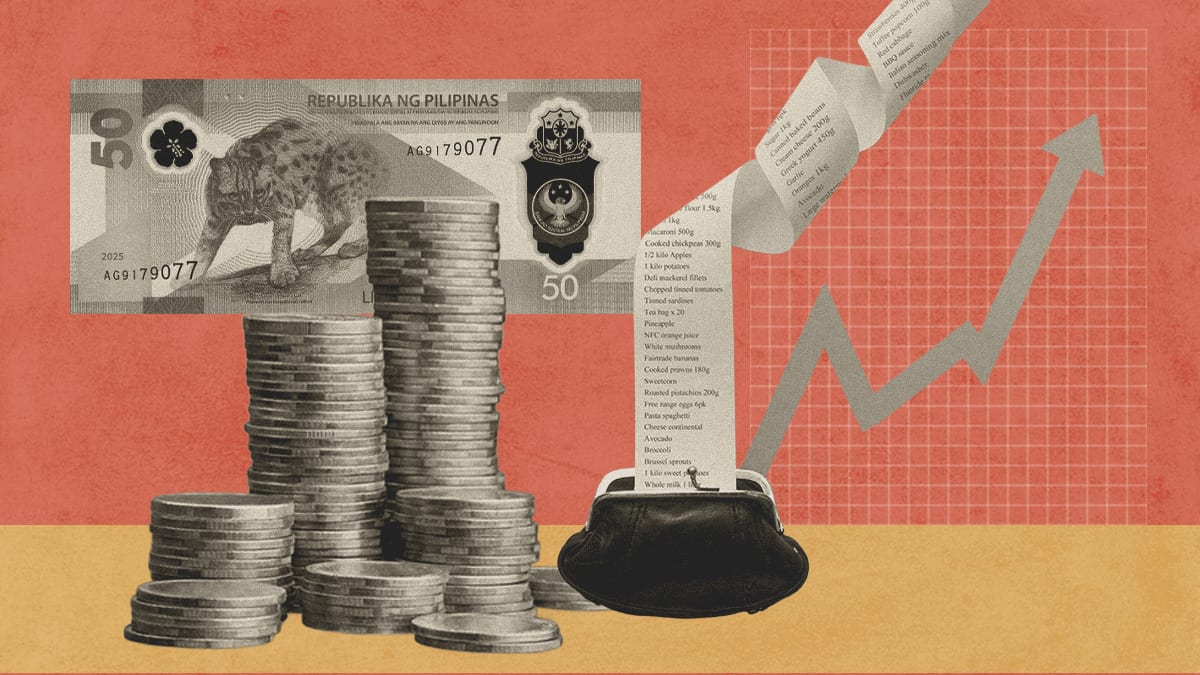
Workers in the country’s capital region will get higher basic pay starting July 18 after the NCR Regional Tripartite Wages and Productivity Board greenlit a P50 hike, it was announced on Monday (June 30). This is the highest increase ever granted by a regional wage board according to the Department of Labor and Employment (DOLE).
Based on Wage Order 26 issued by DOLE, workers in Metro Manila in non-agriculture sector jobs will now get a basic daily pay of P695 from P645. Workers in the agriculture sector, service and retail establishments with 15 or fewer workers, and manufacturing will get a basic daily minimum wage of P658 from P608.
This comes at the heels of lawmakers failing to come up with a reconciled version of a legislated wage hike bill after the 19th Congress adjourned without tackling the measure.
ALSO READ:
The Push For a P200 Minimum Wage Hike: What Exactly is a 'Living Wage?'
Could the Philippines Really Become a Trillion-Dollar Economy in the Next Decade?
Cavite First District Representative Jolo Revilla has said he would refile the measure right after during the 20th Congress. The Senate had approved a P100 minimum wage hike for private sector workers last year, while the House of Representatives sought and approved a P200 wage hike. Both chambers failed to convene as a Bicameral Conference Committee to come up with a consolidated measure for President Ferdinand “Bongbong” Marcos, Jr.’s signature.
Last year, the Metro Manila wage board approved a P40 increase in the daily minimum wage in Metro Manila, bringing it to P610 a day from P570 for those in non-agriculture sectors. This is a a far cry from the P570 increase sought by the Unity for Wage Increase Now’s petition, which would increase Metro Manila’s daily minimum pay to P1,100.
The recent P50 increase is set to benefit about 1.2 million minimum wage workers in the capital region, while 1.7 million full-time wage and salary workers earning above the minimum age will indirectly benefit from the hike as employers seek to correct wage distortion. When the minimum wage increases, those whose salaries are close to the new basic pay are to received adjustments to correct an imbalance caused by the increase.
Regional wage boards determine minimum wages but workers can also seek higher salaries through collective bargaining agreements and a bipartite mechanism between the employer and workers without a union.
Would a P50 Wage Hike Help Workers Cope With Inflation, Skyrocketing Prices?
“It’s no coincidence that the Regional Tripartite Wage and Productivity Boards (RTWPBs) are suddenly rushing to grant a token wage increase right after President Marcos Jr. killed the legislated wage hike,” Joshua Mata, Sentro ng mga Nagkakaisa at Progresibong Manggagawa secretary-general, told Esquire Philippines in an interview. “This paltry ?50 increase is a pathetic attempt to pacify workers—nothing more.
Marcos on Labor day, May 1, pushed for region-specific wage increases instead of the proposed P150 to P200 wages hikes via Congress. He said wage increases need to be studied carefully to ensure businesses can comply.
Labor groups have chided regional wage boards for failing to support workers cope with inflation and the skyrocketing prices of goods, citing the need for hikes to satisfy a living wage for the typical Filipino family.
Senator Imee Marcos authored a bill that seeks to abolish wage boards to set up just one wage body that would set a national minimum wage across the regions, which would be adjusted annually based on inflation.
The human rights watchdog Amnesty International defines a living wage as the minimum income needed for workers to meet their basic needs and to realize their human rights. A living wage factors in the cost of living, including essentials like food, housing, energy, water, sanitation, education, clothing and transportation. The human rights watchdog said that a living wage should be earned in a standard working week and would not need excessive and exploitative work hours to achieve.
“Worse, this leaves behind workers in other regions--regions where wages are even more depressed and poverty even more severe,” Mata said.
The think-tank IBON Foundation estimates that a living wage for a typical family of five across most regions in the country should be at P1,217 a day or P26,479 a month to live decently as of May.
Philippine inflation eased to a five-year low in May at 1.3 percent from 1.4 percent in April and 3.9 percent the same month a year earlier, based on data from the Philippine Statistics Authority.
May was the fourth straight month of inflation decelerating and the tenth straight month of inflation staying within the Bangko Sentral ng Pilipinas’ target range of two to four percent.
Renato Magtubo, a former congressman and current chairman of Partidong Manggagawa, still called the wage hike “woefully inadequate” to support workers.
“With a daily living wage of over PHP 1,200 for a family of five, this increase barely makes a dent in the poverty faced by workers,” he told Esquire Philippines in a Viber message. “Given the rising cost of living, the poverty threshold is likely even higher now, making workers in Metro Manila even poorer.”
He also reiterated the push for a P200 legislated wage hike that ought to be tackled in the next Congress which he said would improve the standard of living of the ordinary Filipino.
The country’s economic managers have warned lawmakers of “dangerous repercussions” that may be brought about by passing legislated wage hike bills, citing downward pressure on the Philippine gross domestic product and the measures likely fanning inflation.
The Department of Economy, Planning, and Development, which used to be the National Economic and Development Authority (NEDA), estimates that the measures could lower the GDP by 1.6 percentage points for a P200 hike and a 0.5 points for P100 hike. They also said that the legislated wage hikes could spur job cuts as companies try to reduce operational costs.
The last legislated wage hike was enacted in the 1980s, after Congress passed a law that set up regional wage boards that decide on basic wages.
The Philippine Chamber of Commerce and Industry (PCCI) has said the legislated wage hike would not benefit those in informal working conditions, who make up at least 50 to 60 percent of the population.
“We urge all workers to unite and join the fight for a legislated wage hike that will genuinely improve our standard of living. Together, we can demand a fair wage that allows us to live with dignity,” Magtubo said.