

How Close Is the Philippines to Purchasing Its First Submarine?

French naval systems provider Naval Group formally opened a physical office in the Philippines on Wednesday (July 12), nearly three years since it first commenced operations in the country. In a simple ceremony, officials of the company welcomed representatives of the Department of National Defense, the Philippine Navy, and the French Ambassador to the Philippines to the office, which they said symbolize the company’s commitment to strengthen partnership and cooperation between France and the Philippines.
Before opening its office in the country, Naval Group had been working with the Philippine government for nearly 10 years, primarily to develop naval capabilities. Two of the programs that the company is working on are an anti-torpedo solution, based on its CONTRALO/CANTO program, for which it expects to reach a contractual milestone this year; and the creation of a submarine fleet.

During a briefing with a small group of journalists on Thursday (July 13), a Naval Group official said negotiations with the Philippine government are ongoing for the latter’s plan to establish a submarine force to complement existing naval defense resources.
ALSO READ
The Philippines Backs Australia's Nuclear Submarine Bid
Sea Defense: The Philippines Will Prioritize Acquiring Two Submarines
“A submarine force will provide the Philippine Navy the capability to respond to multiple threats,” said Loic Beurepaire, corporate sales director for the Philippines of the Naval Group. “During peacetime the submarines can be used to gather information and intelligence. It would reinforce all the assets of the Philippines (defense) capabilities. It can be a force multiplier.”
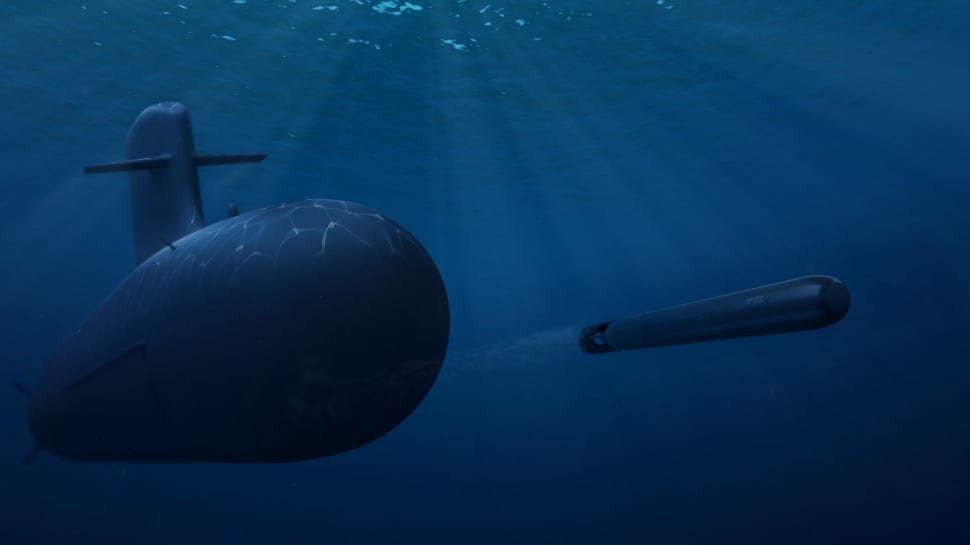
Beurepaire outlined Naval Group’s plan with the Philippines, which encompasses three pillars. The first is the submarine itself. Naval Group, which counts 400 years in the defense industry, is in the business of designing, building, integrating and providing in-service support for submarines and surface ships. Its main product is the Scorpene submarine, which it is trying to sell to the government.
At least four other countries currently maintain and operate a fleet of Scorpene submarines: Malaysia, India, Chile, and Brazil.
Artist's rendering of the naval base in Subic that would become the base for the future submarine force of the Philippines
.jpg)
The submarine can be fitted with 18 torpedoes and has six torpedo tubes or launch pads all capable of firing the weapons at the same time. The specific design being offered to the Philippine Navy can accommodate a crew of 31, with a range of over 10,000 NM and at-sea endurance of 80 days.
Navy Group is offering the Philippines at least two units of the Scorpene Submarine, which Beurepaire said is the minimum. Should a formal contract be signed for the Philippine government to purchase these submarines, delivery is not expected until five or six years after.
Beurepaire declined to mention how much the submarine costs, citing competition issues, but for comparison, India paid $3 billion in 2005 for six Scorpene-class submarines, which means each sub cost $500 million (about P27.3 billion). Beurepaire said Naval group is proposing a financing program for the Philippines consisting of a loan worth 100 percent of the project cost, payable in 20 years.
Previous news reports have said that the Philippine government has earmarked a budget of P70 billion for its submarine force program.
The second pillar is people, and this involves Naval Group training members of the Philippine Navy to operate the submarines “to ensure they have the know-how to plan, and manage missions, organize the sustainment of the submarine force over time, and operate autonomously in the long run.”
Marie-Laure Bourgeois, executive vice president of Naval Group, with French Ambassador Michèle Boccoz at the opening of the Naval group's office in the Philippines
.JPG)
Finally, Naval Group said the third pillar involves helping the Philippine government prepare for self-reliance through a naval base. The government has chosen Subic Bay Naval Base as the site of the submarine base when it finally happens, and Naval Base said it plans to support the government in designing and retooling the base to help make it ready for the modern age. The support also includes training maintenance specialists and the development of partnerships for knowledge transfer of a variety of issues related to operating and maintaining the naval base.
“Naval Group proposes a strategic partnership, offering the military and industrial autonomy that the Philippines require,” said Marie-Laure Bourgeois, executive vice president of Naval Group, during her speech at Wednesday’s ceremony. “It will contribute to strengthen their maritime sovereignty and reinforce their defense posture. Thanks to a partnership with a private sector company and through a transfer of technology and skills, Naval Group will accompany the local workers and submariners. We will train them and teach them how to build, operate and maintain their Scorpene submarines, here in the Philippines.
“By opening this Naval Group representative office here in Metro Manila today, we have one wish in mind: provide your navy with the autonomy and capacities that it deserves,” she added.
The Philippines has floated the idea of a submarine fleet since at least 2008. In Southeast Asia, only Malaysia, Indonesia, and Vietnam, and Myanmar have submarines. The Philippines and Thailand are deep in negotiations to acquire them.
