

Filipino Students Are Among the Last in the World in Creative Thinking, Study Finds

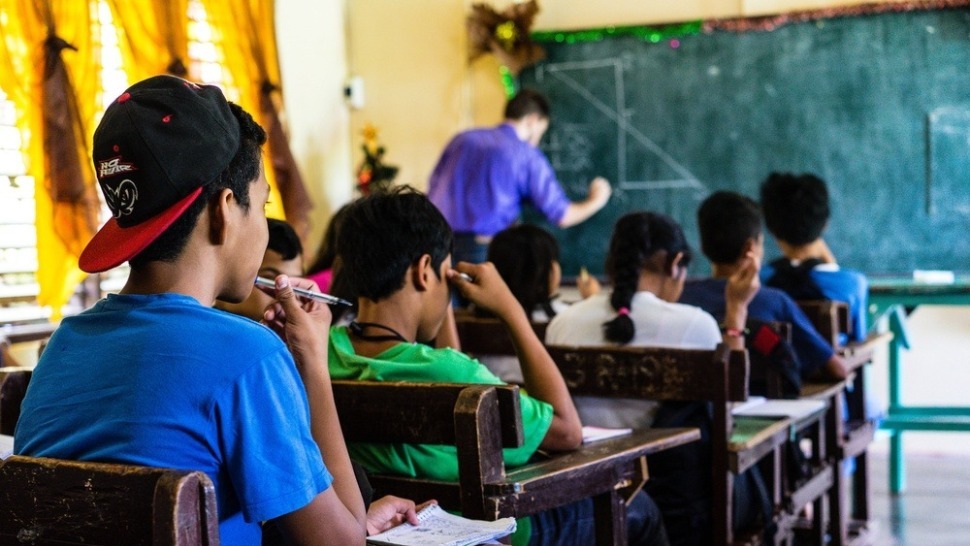
It's not a stretch to say that the Philippines' educational woes have escalated into a full-blown crisis, albeit quietly, we might note. As it turns out, most of our 15-year-old students have apparently fallen behind in the world rankings in terms of creative thinking, the the Programme for International Student Assessment (PISA) confirms.
Creative thinking is defined as the “ability to generate, evaluate and improve ideas to produce original and effective solutions, advance knowledge and create impactful expressions of imagination.” The data from the study had been based from the 2022 school year.
“This assessment measures the capacity of students to generate, evaluate and improve ideas in four different areas - creative writing, visual expression, scientific problem solving, and social problem solving - providing governments with data to help students and young people reach their full potential in our changing economies and societies,” OECD Secretary-General Mathias Cormann noted in a statement.
Interestingly, this was the first ever test by PISA that looked into creative thinking as a whole. Measured here are students' imaginations and how creative they can be within specific scenarios, either generating or improving given ideas.
In the said assessment, the Philippines clocked in at 60th place out of 62 countries. The research underscores issues like the number of textbooks and qualified teachers as two of the most pertinent issues in our education system. “The observed creative thinking performance in Philippines is lower than the expected performance, after accounting for performance in reading," the assessment said.
On the flip side, students in the same age group from countries such as Korea, Canada, Australia, New Zealand, Estonia, Finland, Denmark, Latvia, Belgium, Poland and Portugal all performed better than the OECD (Organization for Economic Cooperation and Development) average. The global average is 33. In the Philippines' case, it only scored 14.
Among the six ASEAN countries that have been part of the survey, the Philippines ranked dead last. Above the Philippines in the standings are Indonesia with 19 points, Thailand with 21, Brunei Darussalam with 24, Malaysia with 25 and Singapore with 41. For reference, the lowest-ranked students in creative thinking were from Albania, which score only 13.
Adding to these unfortunate numbers is the fact that only about 3.4 percent of students had a Level 5 proficiency. For comparison, students in a country such as Singapore were at 30 percent.
ALSO READ:
How Much Will COVID-19 Cost the Philippines?
UP Cracks Top 100 in Best Universities in Asia List, Is Named Fourth Best in Southeast Asia
Shocking But Not Surprising
Back in 2018, the Philippines had ranked the lowest in reading and second to the lowest in math and science.
Four years later, the Department of Education (DepEd) reported much of the same. Students here would see little improvement in reading, math, and science, based on another PISA study that suveyd 690,000 students. The assessment would have the Philippines rank sixth to the last in reading and math and third to the last in science.
Coincidentally, in 2022, the country also recorded one of the highest learning poverty rates in East Asia and the Pacific region, as well as lower-middle income economies, based on findings from the World Bank.
Learning poverty occurs when children can't read or understand simple texts by age 10. And nine out of 10 Filipino children were said to have struggled with reading simple age-appropriate texts. It is estimated that as much as 91 percent of kids in the Philippines are "not proficient in reading." The regional average is 34.5 percent.
In the rankings, the countries closest to the Philippines' situation are India and Indonesia, which each scored a learning poverty rate of 53 percent.
The World Bank identified a few reasons for the country's high learning poverty rate. "In the Philippines, five percent of primary school-aged children are not enrolled in schools. These children are excluded from learning in schools," it noted in the report.
How Far Is the Philippines Behind?
In June 2022, the World Bank, the United Nations Educational, Scientific and Cultural Organization, and the United Nations Children’s Fund released a joint report that detailed our current global trend.
It explained that the impact of the pandemic on the worldwide education sector was worse than expected. Regions all over the world should expect to see their learning crisis worsen. The global average is at 70 percent, which is a 13-percent increase from pre-pandemic numbers.
Learning poverty in East Asia and the Pacific has worsened by roughly 45 percent. It was only at 35 percent before the global health crisis.
Where Do We Go From Here?
Just a few days before her official resignation from the Cabinet, former Education Secretary lamented the country's unsatisfactory performance based on PISA's release. She said that she hoped to turn Filipino students into top performers somewhere down the line.
Advocacy group Philippine Business for Education, on the other hand, said that the numbers were an indication that "our education system is in its worst state and much work needs to be done.”
The World Bank also recommended that the Philippine government should spend more in terms of the regional and income-level average when it comes to public education. "Primary education expenditure per child of primary education age in the Philippines is $569 (P31,600), which is 83.5 percent below the average for the East Asia and Pacific region, and 29.5 percent below the average for lower-middle income countries," it emphasized.
But with Duterte's resignation, it remains to be seen how the country can come back from these dismal results.
