
RJ Jacinto—Yes, THAT RJ Jacinto—Is Now DICT Undersecretary. Here's What You Need To Know About Him

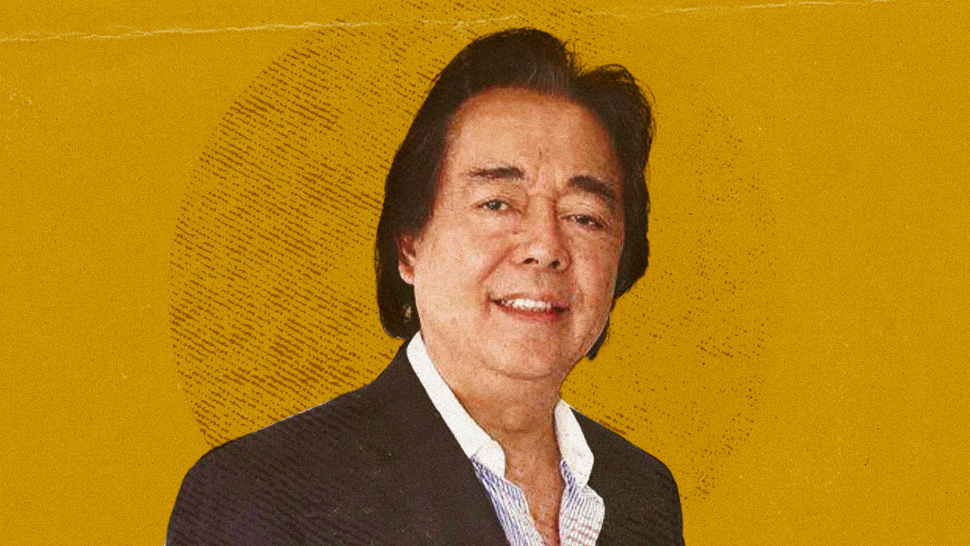
Ramon Jacinto has replaced Eliseo Rio Jr. as undersecretary of the Department of Information and Communications Technology. The announcement came from Malacañang on Tuesday, May 26, although the appointment letter was dated May 22.
According to reports, Rio was surprised about the announcement as he had submitted his resignation to President Rodrigo Duterte four months ago, on January 30. Rio had been acting chief of the department until former Senator Greogorio Honasan was named secretary in November 2018.
Regrdless of the circumstances, Jacinto is now undersecretary in charge of operations of the DICT. Many people have raised their eyebrows and wondered about the qualifications of someone best-known for being a rock guitarist and musician, especially in connection with handling information and communications technology. What is Jacinto’s background?
Who is Ramon Jacinto
Ramon Jacinto was born on June 3, 1945, which means he is 75 years old next week. He is third of eight children of the late Don Fernando Jacinto, who is widely acknowledged as the father of the steel industry in the country. The elder Jacinto was the first to manufacture galvanized iron sheets in the Philippines through Jacinto Steel, which he established in 1958.
RJ to his friends, Jacinto studied at Ateneo De Manila University and graduated at 19 with a degree in Economics, after which he joined the family steel business. But by then he had already established his own RJ Enterprises, which produced and released records of his own band RJ and the Riots. According to this biography, RJ Enteprises “also pioneered multi-track recording in the country, having purchased the first Amper 300-3 track machine in the country. It eventually became the studio of choice for many artists and advertising agencies at the time.”
Jacinto was still in his teens when he first dabbled in communications technology. He put up radio station DZRJ in his parents’ backyard, exposing legends like The Beatles, The Beach Boys and The Ventures to more Filipino listeners and helping usher the age of rock music in the country.
But the declaration of martial law in the country in 1972 put a damper on Jacinto’s plans. As the dictatorship of former President Ferdinand Marcos seized private assets, including the business interests of the Jacintos, RJ Jacinto himself was forced to go into exile in the U.S. for over 14 years.
It was while he was in the U.S. that he wrote and recorded one of his most enduring hits, “Muli,” which found itself being broadcast on his radio station back in the Philippines. His radio station and other Jacinto assets were returned to the family soon after Marcos’s ouster and democracy was restored in 1986.
Back in the Philippines
Ever the entrepreneur, Jacinto picked up where he had left off and established multiple businesses upon his return to the country, including broadcasting, consumer finance, retail (including a line of RJ-branded guitars), and even banking and real estate.
Jacinto is also quite known for establishing a roofing business, JacintoColor Steel Inc., which introduced several innovations in the industry.
Despite his reputation as a musician and businessman, Jacinto never strayed too far away from politics. During the tenure of President Fidel Ramos, he was named vice chairman of the Presidential Committee on Flagship Programs and Projects. He also publicly supported President Duterte during the campaign in 2016, and even composed a campaign jingle for him.
Soon after Duterte was sworn in, Jacinto was named Presidential Adviser on Economic Affairs and Information Technology Communications with the rank of undersecretary.
On top of all of this, it is perhaps Jacinto’s background with the Philippine Overseas Telecommunications Corp. (POTC) and the Philippine Communications Satellite Corporation (Philcomsat), that makes him knowledgeable about ICT issues and policy.
Jacinto is currently the chairman of the board of the POTC, which is the holding company of Philcomsat. Before that, he was president and CEO of Philcomsat since 2008. Under Philcomsat, the POTC also owns the Montemar Beach Club Inc. (70 percent) and the listed company Philcomsat Holdings Corp (80 percent). Philcomsat Management Enterprises Inc. and the Professional Stock Transfer Inc. are subsidiary companies under the PHC.
According to its website, Philcomsat (which is 35 percent owned by the government), “as the Philippine satellite pioneer for almost four decades, made the world smaller for Filipinos and impacted the lives of every person or enterprise by providing a medium for people to communicate within the archipelago and across oceans and continents, through voice/fax, data, audio, video, broadcast TV, internet or IP multimedia applications.”
“At present, Philcomsat is positioned to benefit from the convergence of global communications and internet protocol technologies and applications,” the website profile adds. “IP communication pervades every facet of industrial, commercial and social activity.”
Jacinto’s job
When Rio submitted his resignation letter, he reportedly cited “conflicting views” with other officials in the agency. He also questioned the department’s multi-million peso “confidential fund,” when DICT Secretary Gregorio Honasan allegedly charged P300 million against the P400 million earmarked for "confidential, intelligence and extraordinary expenses" of the agency in 2019. Later however, he released a joint statement with Honasan and said his resignation was because of "personal reasons, and not due to any rift with the Secretary, nor to any anomaly in the Confidential Expense."
Rio has been in the news constantly since 2018 as his department was in charge of the bidding process for the third telecommunications company that would compete with Globe and PLDT-Smart. The bidding was eventually won by Dennis Uy’s Mislatel, which has since been renamed Dito Telecommunity Corporation.
Rio's and Jacinto’s disagreements over a common cell tower proposal have been well-documented. When Jacinto was presidential adviser on economic affairs and information technology communications, he drafted a memorandum circular that would essentially prohibit telco service providers from building their own cell sites. Instead, the proposed rules would assign the job to independent companies in coordination with the telcos.
But Rio, through a Facebook post, publicly criticized the draft rules as “illegal” and “anti-competitive.”
Jacinto later relented and said he was open to increasing the previous limit of two tower companies to as many as four operators.
But now that Rio is out and Jacinto is in, we’ll have to wait to find out what the decision will be on this issue.
In a statement thanking the president for the appointment, Jacinto said he wants to “push for reforms in the telecommunications industry such as the implementation of the National Broadband Plan as well as free WiFi services.”
"I look forward to galvanizing and pushing reforms in the telecommunications industry in our country particularly the Independent Common Tower Policy that the President tasked me to do as the presidential adviser," he said.
