

Subic is Set to Become the Next Frontier for Warships Amid Souring Ties Between PH and China

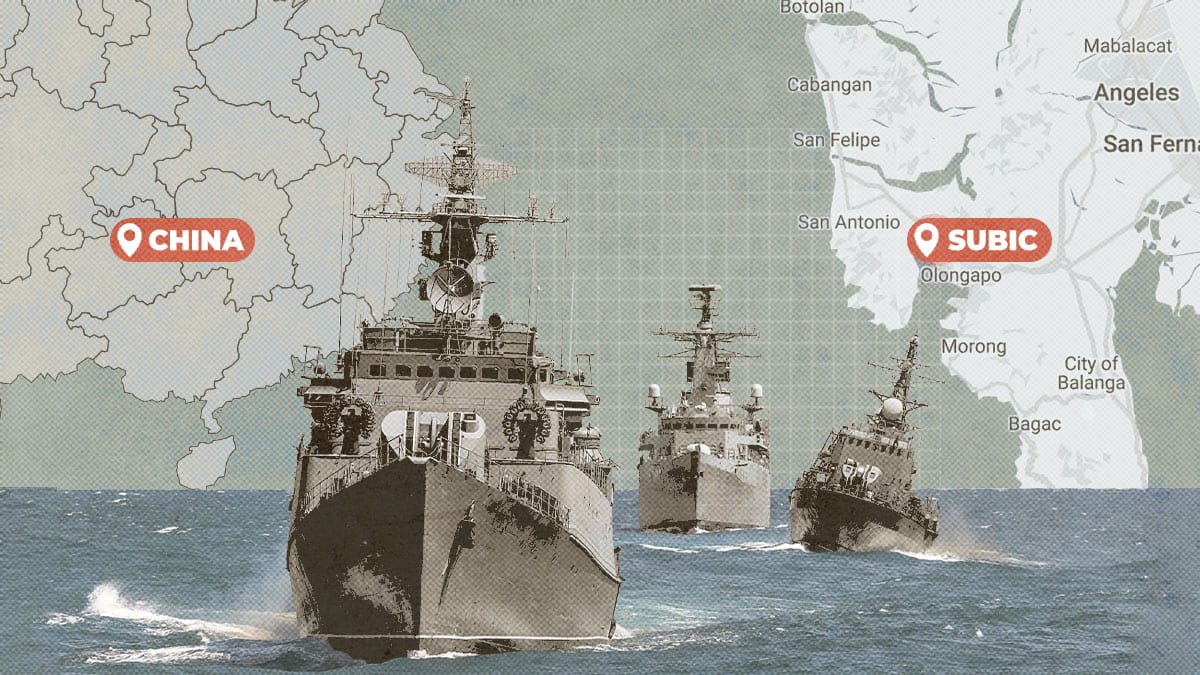
As tensions continue to heat up in the South China Sea, the United States and the Philippines are repositioning the storied Subic Bay shipyard as a major hub for warship building and Washington’s naval ventures, as well as an alternate income route for the Philippines.
The campaign for Manila’s comeback as a global shipbuilding hub was set into motion after Philippine President Ferdinand “Bongbong” Marcos, Jr. inaugurated the HD Hyundai Heavy Industries Philippines, Inc. in Subic.
“For decades, even centuries, the Philippines has given the world our finest seafarers. It is only fitting that we also supply the world with excellent vessels to sail on,” the President said at the ceremony that also showcased the steel-cutting of the shipyard’s first vessel under new management.
Philippine Ambassador to the US Jose “Babes” Manuel Romualdez floated the idea of the Subic shipyard as a building ground for American warships to business leaders in Washington last month. The shipyard could ramp up warship production in a span of the next three decades.
“(The US) wants to increase their shipbuilding industry. It’s been sort of on hold for many years, decades, and now they are reviving it.," the envoy said. "Ours is already operating right now. Economic strength is the foundation of strategic strength. When US companies invest here, it’s not just about returns on capital. It’s about returns on alliance.”
Subic's shipbuilding roots
The shipyard used to be called the Hanjin Subic Shipyard, a prolific vessel production hub for South Korea’s Hanjin Heavy Industries. From 2014 to 2018, the Philippines consistently ranked within the top five shipbuilders in the world as it produced 1.2 million and two million gross tons of ships every year.
A year later, Hyundai Heavy Industries Co. in the Philippines went bankrupt, losing over 30,000 workers and leaving the historic Subic shipyard idle.
With Hyundai Heavy Industry’s revival, the shipyard is set to boast an increased capacity of 2.5 million deadweight tons from 1.3 million, doubling its value from handling just four to five massive tankers to as many as eight.
Romualdez earlier said that both countries are in discussions to build “defense manufacturing plants” in the country involving facilities for ammunition and drone production.
ALSO READ:
How The DoF Is Trying to Get Fighter Jets To Beef Up Manila's Defenses
The DFA is Downplaying China’s Latest Travel Advisory Vs. the Philippines
Incubator for defense, economic growth
“Reviving Subic as a prime defense hub is a big welcome to the nation’s plan to revitalize a national defense industry,” Chester Cabalza, founding president of the security think tank International Development and Security Cooperation, told Esquire Philippines in an interview. “Given the geostrategic importance and historical importance of Subic, the shipyard will open new doors for the country’s defense economy.”
Repositioning the Subic shipyard may be a gamechanger for the local defense industry as the South China Sea continues to be a global flashpoint for the international community as more nations agree to bolster Manila’s defense capabilities via equipment deals and joint patrols.
China and the Philippines have been at each other’s throats after constant skirmishes in the disputed South China Sea, which Beijing claims almost in its entirety. The waterway is a crucial economic route with more than $3 trillion worth of global trade flowing through it.
Although the United Nations-backed Permanent Court of Arbitration struck down Beijing's so-called historical claim based on a 1940s map, Manila has failed to enforce the ruling due to its neighbor’s imposing fishing fleet and persistent coast guard made up of massive vessels.
The Philippines remains one of the world's weakest militaries and is heavily reliant on its global partners such as its treaty ally the United States for decent military equipment and artillery.
Washington is Manila’s major security partner as they are both bound by the 1951 Mutual Defense Treaty that compels the countries to defend each other in the event of an armed attack.
“By itself, the new shipyard is good news but the President needs to elaborate on the bigger context, which is establishing a robust maritime defense,” Michael Henry Yusingco, a resident fellow at the Ateneo de Manila University Policy Center, told Esquire Philippines via an online exchange.
Yusingco added that the shipbuilding sector is part of the recently passed Self-Reliant Defense Posture, which Marcos signed last year to boost the government’s local defense manufacturing industry under the Department of National Defense as the chief implementor.
Republic Act No. 12024 or the Self-Refliant Defense Posture Revitalization Act also seeks to give preference to Filipino-owned enterprises in terms of the development, servicing, and operation of defense material in the country. Think military technology, arms and ammunition, combat training, weapon systems, and armor. The law is also expected to foster economic growth via the creation of new jobs, advancing technological innovation through a robust local defense manufacturing industry.
“The goal remains to be becoming a maritime powerhouse in the region,” the policy analyst and lawyer noted. "Having a strong shipbuilding sector is a critical step towards this goal. And the public needs to be updated about the progress of achieving this goal."
Defense ties between the US and the Philippines have flourished under the Marcos administration, with the US Department of State greenlighting the potential sale of F-16 fighter jets and ammunition worth $5.5 billion to the Philippines.
The global superpower also kept its advanced multipurpose Typhon missile system that had been left in the country during last year’s joint war games or Balikatan (shoulder-to-shoulder) drills.
US Secretary of State Marco Rubio and Defense Secretary Peter Hegseth have underscored Washington’s ironclad defense commitment to Manila amid China’s “dangerous actions in the South China Sea."
The Southeast Asian nation is on the third phase of its military modernization plan called “Horizons” and has earmarked $35 billion to build up its military prowess to respond to China’s flexing of military might in the region.
Manila in 2022 purchased about $375 million worth of these anti-ship missiles from India and is set to receive more of these weapons in the coming years.
About two years ago, 300-year-old Spanish naval design and shipbuilding company Navantia proposed a $1.7 billion contract involving the delivery of two advanced S80 submarines and training Philippine Navy officials to operate and maintain these vessels.
“Politically speaking, the fact that Subic Bay may be the nearest hub to Scarborough Shoal may also be a signaling that the Philippines is toiling to further bolster its defense capabilities to act as a deterrent for potential attacks by China,” said Raphael Cortez, who teaches diplomacy and international relations at the De La Salle College of Saint Benilde School of Diplomacy and Governance.
