

What the Future of Super Typhoons in the Philippines Is Going to Look Like

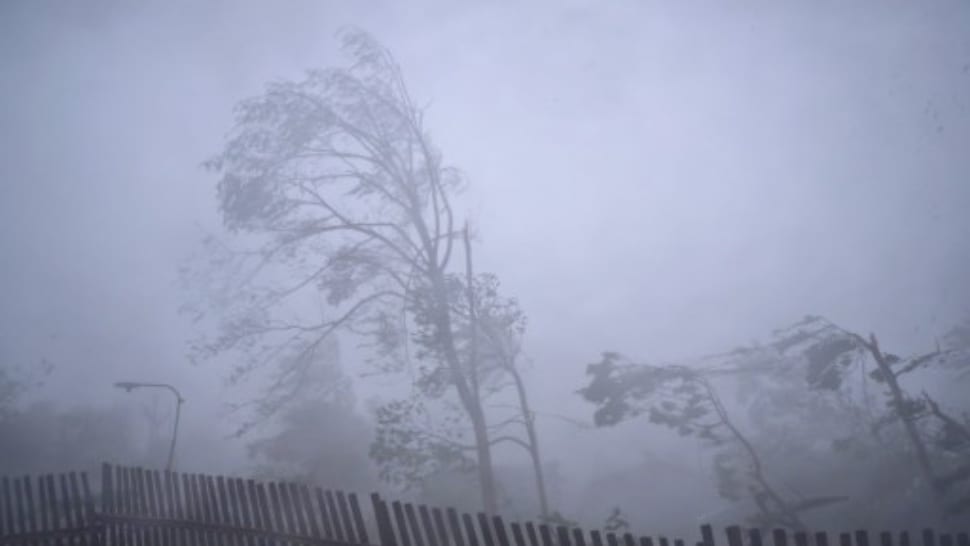
As climate change worsens, the Philippines is expected to bear the brunt of its worst effects. This means extreme heat waves, less crops ready for production, and, yes, much more severe typhoons. Based on the findings of the University of the Philippines-Diliman College of Science’s Institute of Environmental Science and Meteorology (UPD-CS IESM), the extent to which these super typhoons are going to develop will be far greater than the worst we've experienced so far.
Dr. Rafaela Jane Delfino and Dr. Gerry Bagtasa, together with colleagues from the UK, warn that the Philippines will soon have a higher cyclone damage potential (CDP) caused by super typhoons in recent memory. CDP is a good barometer for predicting future climate scenarios. It takes into account various factors, including the size of the cyclone as well as the speed of its winds. In a nutshell, the greater the CDP, the greater the potential damage costs, particularly from winds.
ALSO READ:
Metro Manila Is Expected to Get 4°C Hotter by 2050, Thanks to Climate Change
Study Shows More Than Half of Young People Have Climate Change Anxiety
Researchers looked into the history of Typhoon Yolanda (international name: Hayain) in 2013, Bopha in 2012, and Mangkhut in 2018. In the new study, these have been hypothesized in a future scenario when the world is warmer and more humid, based on multiple climate projections for the years 2070 to 2099.
“Based on our simulations, it is found that the most damaging tropical cyclones like Haiyan, Bopha, and Mangkhut will have higher wind-related damage potential in the future,” the researchers conclude in their paper. “Tropical cyclones of such intensity and damage potential in the future will have serious implications with the increasing exposure and vulnerability in the Philippines."
Factors like atmospheric temperature, sea surface temperature, pressure, and relative humidity are also taken into consideration. The results speak for themselves: future typhoons are going to be stronger and far more damaging. Because of faster winds and slower movement, these typhoons could linger longer over land.
To put things into perspective, the CDP from a future cyclone similar to that of Yolanda was seen to have a 37 percent greater damage than the one in 2013. Another simulation also confirms that Typhoon Ompong, which had a simulated maximum wind speed of 205 kph under present climate conditions, could reach speeds of about 270 kph under future climate conditions. Projections expect as much as a 50 kph increase in maximum wind speeds.
Unfortunately, all we can do is brace ourselves for the worst.
