
When it Comes to American Politics, ‘Weird’ (Apparently) Works
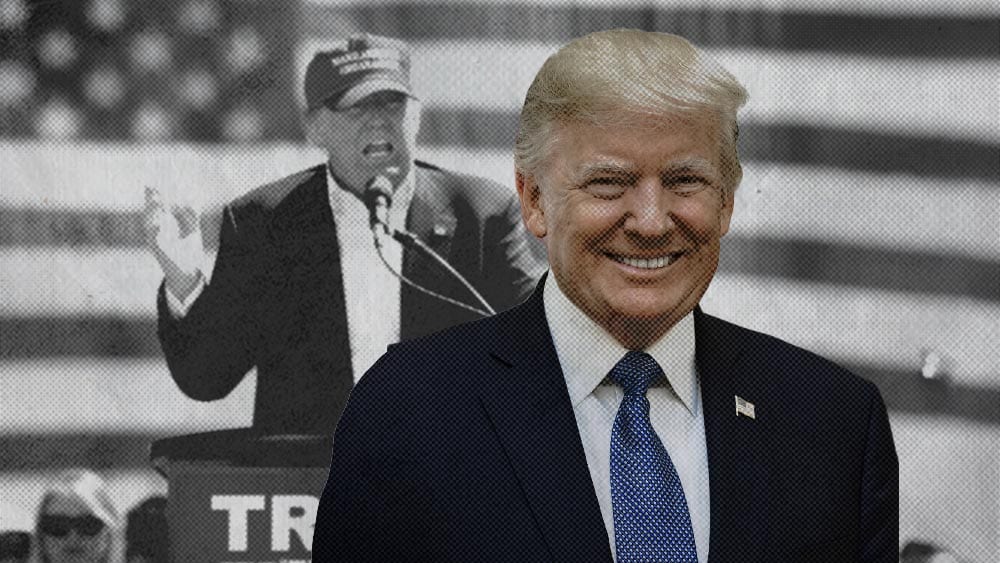
Those of us who have been following the upcoming US presidential election will notice that the newly resurgent Democratic Party has shifted its messaging about Republican nominee Donald Trump. Whether its Transportation Secretary Pete Buttigieg, Pennsylvania Governor Josh Shapiro, or even Vice President Kamala Harris herself, Democrats’ talking heads have been increasingly describing Trump and his running-mate JD Vance as “weird” or “weirdos.” As evidence, they cite Trump’s many stream-of-consciousness rants during his rallies and interviews, where he often talks about his strange fascination with sharks, Hannibal Lecter, windmills, toilets, and his peculiar way of dancing and fondling the American flag.
ALSO READ
Trump Found Liable For Sexual Abuse and Defaming E. Jean Carroll
The Storming of the US Capitol Reminded Us of Something. It Was Called EDSA III
Pundits have taken note and some of the reactions I’ve seen online worry that calling Trump a weirdo distracts from the very real and dangerous threat he poses to American democracy, rule of law, and the global order. When outgoing President Joe Biden would talk about Trump, he would often warn the American voter what was at stake in this election; that Trump was an existential threat to America. There is certainly enough evidence out there to make this argument, but the fact of the matter is that it hadn’t moved the needle as far as polling is concerned. Despite all the dire warnings, President Biden was still behind Trump in most polls when he dropped out.
Granted, there were other factors at play, such as the perception that Biden was too feeble to inspire confidence, let along enthusiasm, to win an election. While he and Trump are only a few years apart in age, Trump presented a much more energetic and vigorous façade than Biden, especially after the latter’s fatal debate performance last June 27, where he appeared confused and incoherent. Contrast that with Trump, who—after almost getting assassinated at a campaign rally on July 13—had the presence of mind to stand up and raise his fist in bold defiance of his attacker.
In short, Biden was weak, while Trump was strong. And as Bill Clinton is quoted to have once said, “Strong and wrong beats weak and right.”
Like it or not, many American voters would rather support a strong leader that they don’t completely agree with than a weak leader that shares their policy preferences.
But the past several days has changed the equation. Biden is out of the picture. The feeble man has been replaced by a youthful, vigorous, joyful candidate who doesn’t appear to be afraid of Trump the way Biden sometimes seemed to be. The perception of weakness that haunted the Democrats appears—at least for now—to have vanished overnight.
And this is where the weird comes in. When Democrats call Trump a threat to democracy, an authoritarian, or the head of a cult, they are acknowledging his boldness and his power. A weak or timid person could not have forced the Republican Party to abandon its professed principles and turn itself into a vehicle for the fulfillment of his whims. A weak or timid person would not be able to push back at all those pesky non-white, non-Christian, non-binary people demanding to be respected. But when Democrats say he’s weird, they are dismissing him as some crazy oddball who can’t function properly.
Calling Trump a weirdo is meant to transform him from a formidable fearsome adversary to an embarrassing butt-of-jokes that no one would want to vote for. In effect, they are trying to diminish Trump by giving people permission to ridicule him instead of fearing him. They are attempting to strip him of the perception that he is a strong vigorous leader, which is what survey after survey says he is admired for.
It’s human nature that we prefer our leaders to be strong people who can take charge of a given situation and determine the outcome. And we don’t tend to think that weirdos qualify. That’s what I believe is the reasoning behind this new tack.
Will it work? We’ll know in less than a hundred days.
