Opinion: The Festering Constitutional Rot of VP Sara Duterte's Impeachment Trial

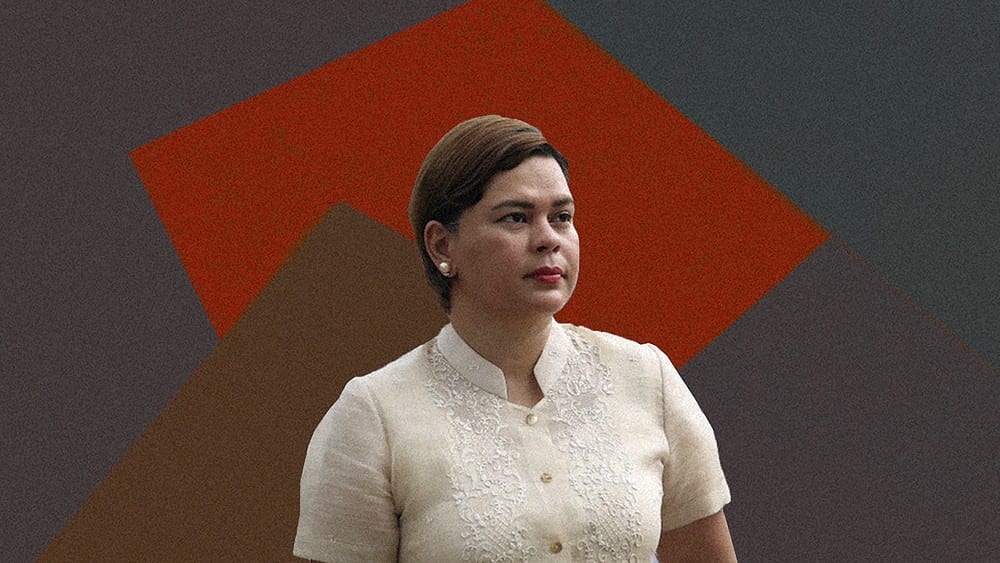
As the impeachment trial of Vice President Sara Duterte looms, the 1987 Philippine Constitution—often cited but rarely read—is once again shoved into the center of public debate. And rightly so. What is at stake is not just the political survival of a controversial vice president, but the vitality and credibility of the constitutional system we claim to uphold. This is not just another political drama; it is a litmus test of whether the rule of law still has teeth in a country long numbed by impunity and dynastic entitlement.
Indeed, a chorus of questions have emerged from this unfolding constitutional theatre. Can the Senate dismiss the impeachment complaint without conducting a trial? Can a single senator-judge unilaterally move for dismissal? Who should preside over the impeachment trial of the Vice President? What happens when Congress adjourns sine die? Will the next Senate resume the trial?
These questions are not just academic hypotheticals. They strike at the heart of how seriously we take the constitution and whether our institutions still have the integrity and independence to navigate a high-stakes political process without capitulating to factional pressure. Yet, the fact that we even have to ask these questions—in a supposedly mature democracy—already reveals something decaying at the core.
Constitutional Rot
What we are witnessing is not just legal ambiguity or procedural confusion. It is a deeper, more insidious condition: constitutional rot. The term, coined by Yale law professor Jack Balkin, refers to the gradual decay of democratic and republican norms in a constitutional system. Rot sets in when public officials and political leaders systematically undermine the enforcement of rules and regulations while paying lip service to their letter.
Balkin warns that constitutional rot is marked by two failures: a failure of democracy—when leaders cease to be responsive to the public’s will—and a failure of republicanism—when those in power abandon the public good in favor of personal or partisan interests. For us this is not a theory anymore. It is our reality.
The rot in our system is most visible in the domination of “fat” political dynasties. At last count, nearly 80 percent of House members belong to entrenched political families. The Senate, once regarded as a bastion of national statesmanship, is now largely occupied by dynastic politicians, too.
Politics and governance are now just a chessboard for dynastic consolidation. Loyalty to clan trumps loyalty to country. Public service is conflated with patronage. And institutions that are supposed to hold the powerful to account—like the Senate—increasingly act as political shields rather than independent checks.
Also Read
So, Why Are Senators 'Remanding' the Duterte Impeachment Case?
What a Beefed-Up Opposition Means for the Senate
So, when the Senate hesitates to even begin an impeachment trial, or when some senators entertain dismissing it without a hearing, it is not because the constitution lacks clarity. It is because constitutional rot has dulled their sense of duty. They are not asking what the supreme law requires. They are actually calculating what best serves their partisan interests.
Sovereignty Belongs to the People—So Use It
Article II, Section 1 of the 1987 Constitution declares: “The Philippines is a democratic and republican State. Sovereignty resides in the people and all government authority emanates from them.” This is not a poetic line. It is a legal mandate—and a revolutionary call to action.
This provision codifies the spirit of People Power. It affirms that the people are not mere subjects of governance but its ultimate source. Yet, for that sovereignty to matter, it must be exercised—not just on election day but in moments like we are facing now.
When institutions fail to live up to their constitutional role, the people must step in. Not with chaos, but with conviction; by demanding accountability, transparency, and fidelity to the law.
As the Supreme Court reiterated in Macalintal v. COMELEC (2023), republicanism means "representation and renovation." Leaders are not monarchs; they are agents of the people, entrusted with power for a fixed time and for a public purpose. When they betray that trust, it is a constitutional and democratic obligation to replace them.
This brings us to the most important but most neglected constitutional value: the public good. Republicanism demands that all public officials act as stewards of the common welfare—not enablers of dynastic power, not defenders of special interests.
When senators hesitate to act because of partisan fear or political calculation, they are not being pragmatic. They are being irresponsible. And when citizens shrug it off as politics as usual, they are surrendering their sovereignty.
The Path Forward
To reverse constitutional rot, we must build a culture of constitutionalism. That starts with civic education not just in law schools or policy circles but in barangays, classrooms, and digital platforms.
The 1987 Constitution must be demystified. It must be taught as a document that can guide us in our daily life. Every Filipino should know not just their rights, but also how institutions are supposed to function, especially during crises like impeachment.
In the short term, we need an urgent public reckoning over the role of the Senate in this trial. Will it act as a constitutional court, or as a partisan firewall? Will senator-judges uphold their oath, or cave to convenience? Every one of them must be forced to answer that—not in committee rooms, but in the court of public opinion. On this score, media must be forthright and relentless.
The impeachment trial of Vice President Duterte is not just a test of evidence. It is a test of our collective commitment to the constitutional order. Will we allow political elites to twist the law into a shield for impunity? Or will we rise as citizens to demand that the constitution be respected, not just referenced?
We are not powerless. Read the 1987 Constitution. Ask the hard questions. Speak out. Teach others. Because moments like this show us that our constitutional democracy depends not on the brilliance of a few but on the vigilance of the many. If we allow constitutional rot to fester, the fault is not just in our leaders—it is in our inaction.
Michael Henry Ll. Yusingco is a constitutionalist, law lecturer, and a senior research fellow of the Ateneo Policy Center.