

Heat Index Watch: Is It Time For the Philippines to Declare a National State of Calamity?

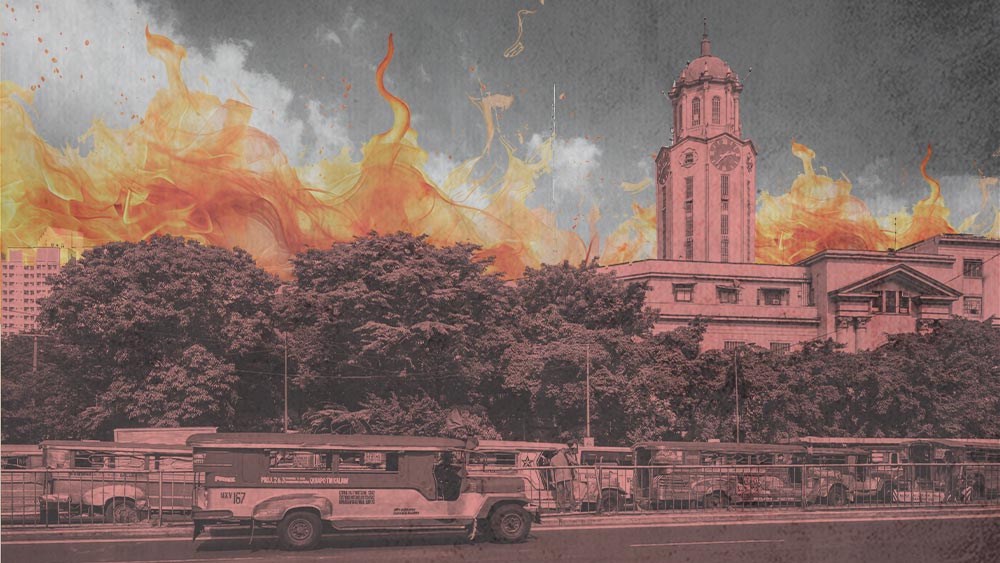
My partner and her colleagues arrived in La Union sometime around 2:00 p.m. last Sunday for a work trip. Like most guests, they'd been warned about the heat. This time, however, the discretion adopted an uncharacteristically somber tone. Someone apparently died earlier this sunny day. Heat stroke was the culprit.
The Philippines knows its summers. But suffice it to say, this heat wave is something else. It's merciless. Sizzling, an understatement. People are baked and not the fun kind. Today, much like all the other days since late March, I see the heat index reaching dangerous levels. Back home in Cavite, reports say that it'll reach a sweltering 47 degrees Celsius. Metro Manila isn't too far off at 45 (The asphalt, just unforgiving). Legazpi City had it worse a few weeks ago when temperatures clocked in at a record-breaking 50 degrees Celsius. A death sentence, really. The 42- to 45-degree mark feels a little too normal these days.
We can expect that record to be broken soon enough. Heat indexes are an effective basis for public health advisories, after all. It's an accurate measure of what it feels like to go outside. It tells us how much heat the human body should prepare for. At this point, the heat index watch in the Philippines is littered with red dots, meaning, in milder terms, that it's dangerously fucking hot.
The data backs up the eye test. Philippine Atmospheric, Geophysical and Astronomical Services Administration sounded the alarm over "danger" level indexes that go up to 51 degrees Celsius in nine areas recently, too.
A few days ago, the Department of Health logged about 34 heat-related illnesses amid the soaring heat index (wondering, too, if exhibit A was counted). Adding to that is a bulletin released by the Department of Agriculture, stating that losses and damages to our agriculture now clock in at about P4 billion. This includes P6.95 million in livestock and poultry industries. Health concerns, fires, outages, and shortages are only the beginning.
While March, April, and May have historically been the hottest and driest months, their conditions have been compounded by the El Niño weather phenomenon this year. Fortunately, institutions like the Department of Education have announced much-needed suspensions for the kids. The everyday Filipino, meanwhile, has nothing to show except for sweat and blisters and the constant threat of heat-related tragedies.
ALSO READ:
Metro Manila Is Expected to Get 4°C Hotter by 2050, Thanks to Climate Change
Climate Change Will Hit the Philippines the Worst, According to a Report
A National Crisis Heating Up (Pun Intended)
This heat is a matter of public health and safety now. So what type of intervention can we expect, if any?
Okay, some context. There are about 2,355 jurisdictions in 40 countries that have declared a climate emergency. The Welsh were the first to do it in 2019 and the Parliament of the United Kingdom followed. The U.K. was also the first nation in the world to declare a climate emergency. In the Philippines, the Lower House approved on final reading a bill declaring a "climate change emergency" in the Philippines in November 2023 (Makati even declared a climate emergency a year earlier).
Aimed at environmental reform, the bill should force the hand of the government to devise measures to prevent global warming and mitigate climate-induced impacts. It leads to the creation of a Climate Change Resiliency and Adaptability Program and likewise mandates local governments to implement solutions for such.
Sounds like a lot of lip service, I know. But it ties into the larger context of climate adaptation strategies we hope to employ sooner rather than later. President Marcos even presented People’s Survival Fund-approved climate adaptation funds for projects worth over PHP 541 million to local government unit (LGU) beneficiaries.
But... there's hardly anything that specifically addresses the kind of scorching predicament we find ourselves in. At the very least, on a local level, there's the option to declare a state of calamity by way of the local disaster risk reduction management councils. As of yesterday, April 24, there are now 103 cities and towns designated as such, affecting more than 2.1 million Filipinos, including farmers, fisherfolk, and many others, because of El Nino.
The Philippine Disaster Risk Reduction and Management Act of 2010, or Republic Act No. 10121, defines a state of calamity as “a condition involving mass casualty and/or major damage to property, disruption of means of livelihood, roads, and normal way of life of people in the affected areas, as a result of the occurrence of natural or human-induced hazard.” This country usually triggers this in response to typhoons, earthquakes, or outbreaks.
Declaring a state of calamity on a national level would help immensely. More calamity funds are appropriated, which could be distributed to those who have suffered great loss of income; A price freeze for basic necessities is imposed, so people can better deal with a potential drought or outage; and no-interest loans are granted. Of all these, humanitarian assistance should be a top priority.
Marcos made it clear earlier this month that this has been considered, but pointed out the varying intensities. The government has decided to instead have multiple responses carried out simultaneously. The president says that there has been more focus on the construction of dams, improvement of irrigation systems, and planting techniques, among other measures.
On the Department of Labor and Employment's part, it reminded employers to take the proper steps to ensure that workers' exposure to horrid conditions is reduced. Things like gear, rest breaks, heat insulation, ventilation, and more should ideally be in effect. Lawmakers like Sen. Jinggoy Estrada and Gabriela Women’s party-list Rep. Arlene Brosas have suggested offering workers incentives and "mandatory breaks."
The need, too, for more green spaces has only become more evident, especially in a hell hole like Metro Manila. The other day, I was reading about reports heralding Arroceros Urban Forest Park for being 5 degrees cooler than your average Manila area. Decent, right? How little we ask for. Rethinking our urban landscape should be a large part of the state's initiatives. Fewer cars (that includes electric ones, too) just make sense. Pocket gardens and parks are too obvious. Better walkways and transport mechanisms are just as vital. Of course, the evidence for revamping our cities is so overwhelming at this point that this is just a blip in this conversation.
This is a lot. All of these gaps and contradictions just show how unprepared the Philippines is for climate change. We're more passive than we should be, or more than we can ever afford to be. Heat index levels are touching more dangerous levels each passing day—and sadly, it's only going to get worse from here. How all this plays out, your guess is as good as mine.
