
Understanding Different Shirt Collars and How to Wear Them

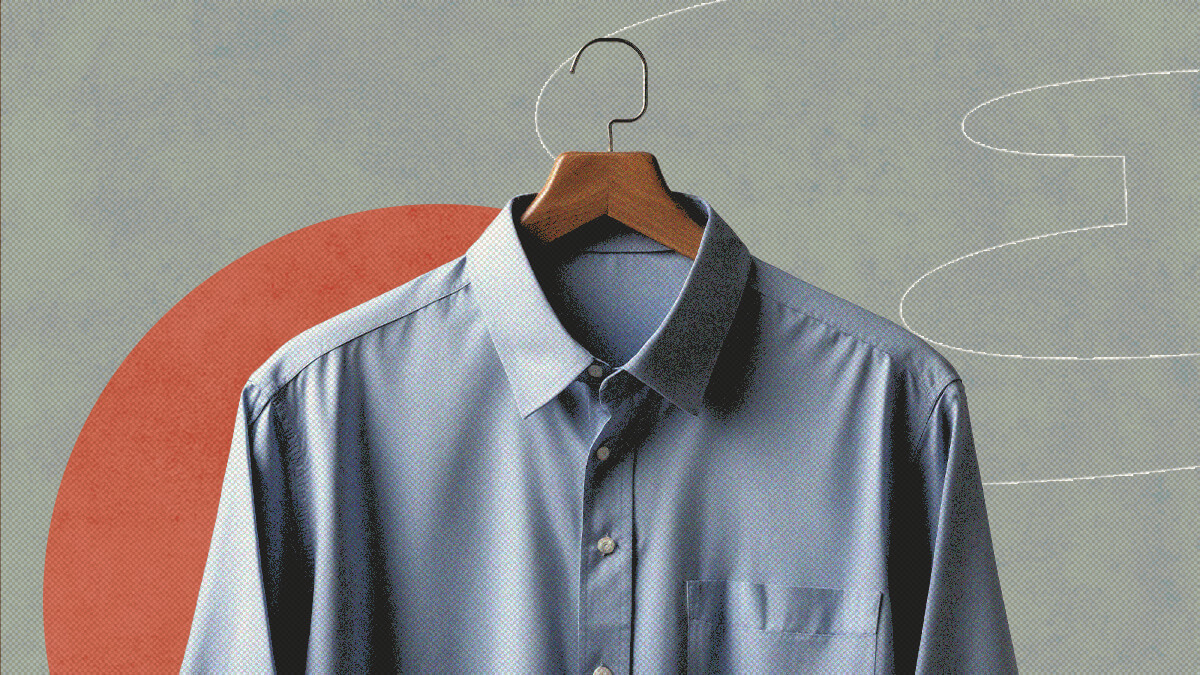
While not everyone has a tailor on speed dial or a closet full of Brioni, that’s no excuse to skip on understanding shirt collars. This part of your shirt matters more than you think. They define, elevate, and exude meaning, all the while framing your face. And yet, most men pick their shirts based on fit and color, overlooking the neckline and seeing it as more of a mere technicality rather than something you should also consider.
Collars are anything but insignificant. They shape your face, influence your silhouette, and signal your fashion sense before you can even approach someone. Whether you’re suited up for a boardroom meeting or dressing down for cocktails at The Curator, the wrong collar can undercut an otherwise stellar outfit. Fortunately, we’ve got you covered with the basics.
ALSO READ:
10 Types of Shirts Every Man Should Own
Bow Ties vs Neckties: Which One Suits You Best?
Anatomy of a Shirt Collar
Starting off, let’s understand the key elements of a collar so you know what to look out for: collar points, the collar band which wraps around the neck, spread (distance between the points), and interlining (which provides stiffness or otherwise). These may seem trivial, but they’re what separates a relaxed neckline suited for casual Sundays from a crisp collar that supports your tie knot. The collar height (how tall it sits on your neck) and stiffness (soft vs. structure) also influence whether you look like you understood the dress code in the invitation perfectly, or got lost in translation.
And if there’s anyone you should listen to when it comes to the importance of shirt collars, that would be English Fashion Designer Ozwald Boateng, whose flagship store is located in the famous Savile Row and was also the former Creative Director of Menswear of Givenchy.
Boateng once said, “Shirt collars are very important to me. Putting a very soft shirt collar with a formal suit doesn’t work for me at all.”
Collars aren’t all the same, but this guide may help you understand the differences better. So the next time you peruse through shirts at the mall, you know exactly which one to buy, no matter the occasion you’re dressing up for.
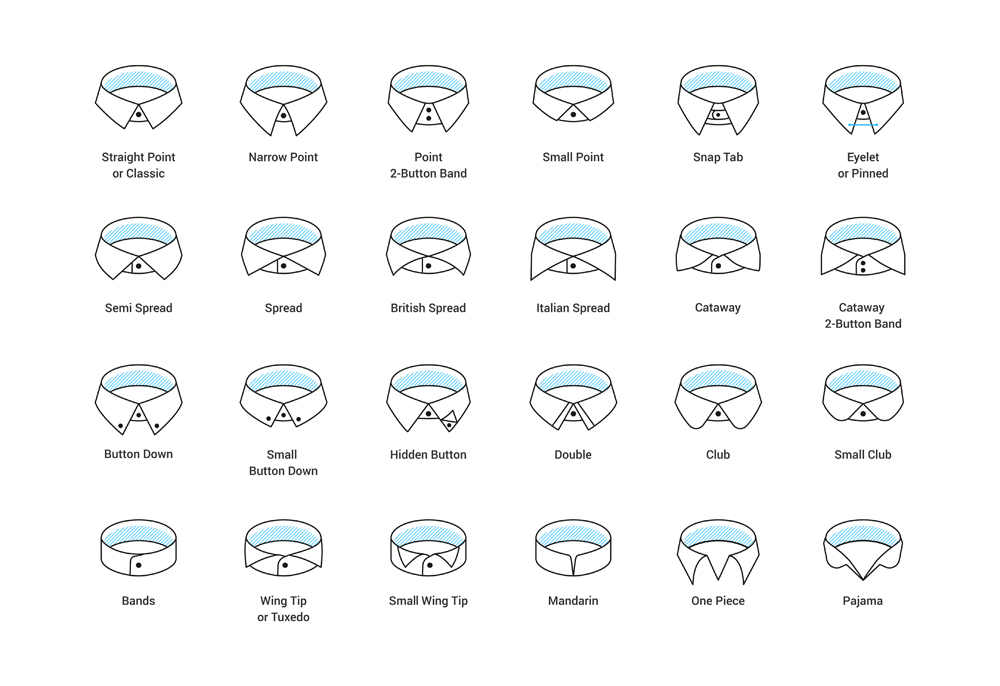
Different Collar Styles
Classic Point Collar
This is your old, reliable, no-fuss friend. It’s the kind of collar that doesn’t call too much attention but gets the job done. The point collar has narrow collar points angled downward, often with a smaller spread between them. This type usually elongates the face, which makes it ideal for rounder or wider faces.
It’s a favorite in conservative work environments and pairs well with traditional neckties and smaller tie knots. If you’re someone who doesn’t want to think too hard in the morning during workdays, go for a point collar. It looks best with a tie, however, as it tends to fall flat and spread when unbuttoned.
Spread Collar
The spread collar is all about power and risk, but tasteful, like a splash of Dior Sauvage. Its collar points are angled outward, usually with a spread between four and six inches. This openness creates room for larger tie knots like the Windsor, which project confidence, formality, and boldness.
Men with longer or narrower faces benefit from this collar, as it adds balance and width. It’s often seen on bespoke shirts, and it’s a top choice among European tailors. Tom Ford and Cary Grant typically wore classic white shirts with spread collars, while James Bond (who has been played by numerous actors over the decades) is also often seen sporting spread or semi-spread collared shirts.
That said, the spread collar needs to be intentional. When worn without a tie, it can appear unfinished unless the shirt is impeccably tailored, and your goal is to have that suave post-gala lounge vibe going for you.
Button-Down Collar
Invented by John Brooks of Brooks Brothers in 1900 after observing English polo players who would button their collars to keep them from flapping, the button-down collar changed the game – literally. The brand debuted this invention with their “Original Polo® Button-Down,” the definitive shirt that holds this ingenious collar. Its one of the more casual collars, with the buttons at the tips giving it a sporty, preppy look.
Brooks Brothers' Original Polo® Button-Down
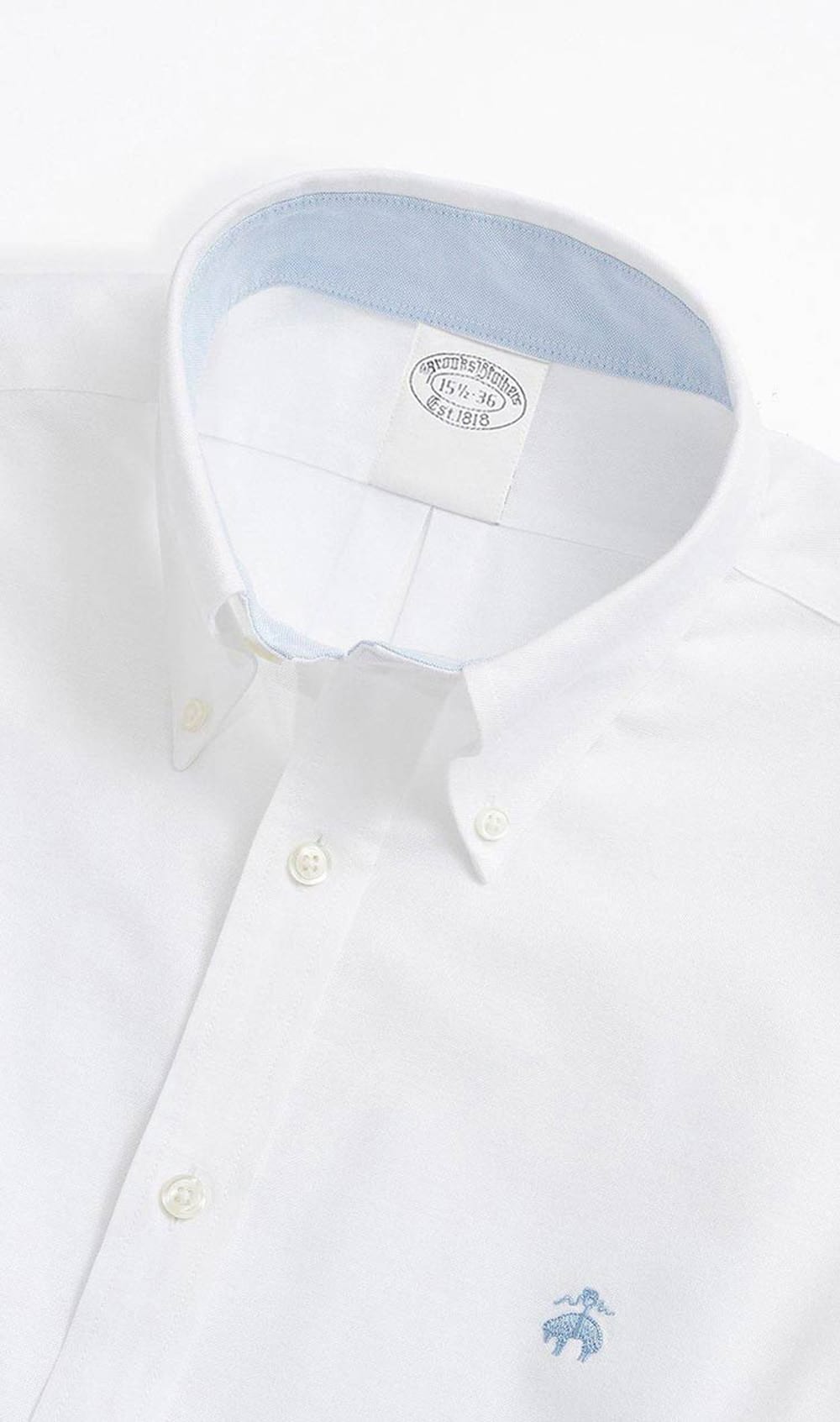
Because of this, it walks the line between smart and relaxed. You can pair it with jeans and boots or dress it up with chinos and a blazer. Some purists argue it should never be worn with a tie, as its “Ivy League uniform” reputation makes it less suitable for formal events. But rules are meant to be challenged, and you can spot men sporting this collar with patterned ties – some even upping the ante by wearing ties with whimsical prints. Cause if you’re already breaking the rules, might as well make it fun, right?
Wear it on casual Fridays, weekend dates, or creative agency meetings. Just make sure the roll of the collar (the slight curve created when the buttons are done up) is smooth and intentional.
Club Collar
Characterized by its rounded points, it harkens back to the early 20th century and was once the uniform of prep school elites. You can say it’s like the secret passcode of shirt collar aficionados, but it’s a little less popular here in the Philippines.
Nucky Thompson in 'Boardwalk Empire'
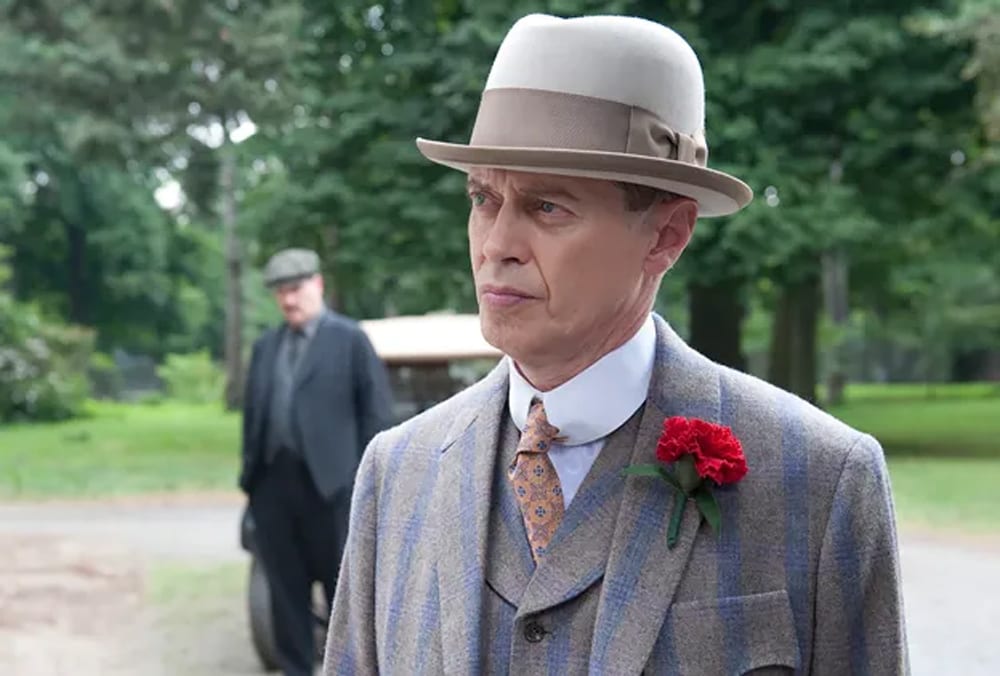
Shows like Boardwalk Empire, however, where Nucky Thompson is often seen wearing this collar, have made it more popular in recent times. It has a charmingly retro quality, but just enough eccentricity to stand out, without slipping into a costume look.
Best paired with a collar pin (yes, these still exist), which lifts the tie knot and adds more dimension and flair to your outfit. It’s not for everyone, but if you like your cocktails with a bit of a Prohibition vibe and vintage-inspired tailoring, then the club collar might just be your next sartorial power move.
Cutaway Collar
Also known as the Windsor Collar, the cutaway collar is the peacock of the collar world. With its ultra-wide spread – sometimes bordering on horizontal – it screams modern European tailoring. It’s bold, fashion-forward, and made for Windsor and full Windsor knots.
If you don’t want to be noticed, this collar isn’t for you. When worn right, it frames the face perfectly, especially for men with strong jawlines or high cheekbones. If you’re going for a fashion-forward look with a double-breasted suit or a slim-cut tuxedo, a cutaway collar brings the right energy.
Wingtip Collar
Traditionally reserved for white-tie events, such as one a groom might wear to his wedding, the wingtip collar is the most formal of them all. The small, stiff, stand-up collar with its pointed “wings” is meant to sit behind a bow tie.
While some wear it for black-tie weddings or formal galas, it’s gained a negative reputation for showing up in prom suit rentals. Still, it has its moments – as long as you choose wisely. A true wingtip collar is never worn with a necktie, only a bowtie, and most would advise a tuxedo shirt featuring pleats or a bib front.
But unless you’re heading to a diplomatic dinner or walking down the aisle, this collar might be best left to rare occasions. But when done right, it’s timeless and elegant – exactly the kind of confidence booster you may need when saying your vows or rubbing elbows with the one percent.
Tab Collar
This one is a refined choice for those who like their ties to sit just so. Featuring a small tab of fabric connecting the two collar points under the tie, it forces the knot to stand proud and remain neat.
Popularized in the 1920s to '30s and revived by modern-day menswear enthusiasts, the tab collar is often seen on tailored dress shirts. It’s discreet, elegant, and makes any tie immediately stand out and any suit appear more polished. The Duke of Windsor made this collar style in vogue.
Just remember that this collar absolutely requires a tie. Without one, the tab awkwardly flaps, which defeats the whole purpose.
Mandarin Collar
A Mandarin collar is a band collar with no traditional points or spread. Inspired by traditional Chinese garments, it has become a staple in minimalist wardrobes and warm-weather fashion.
It exudes quiet confidence and works well for those looking to ditch ties altogether. Wear it with lightweight blazers or unstructured jackets for a relaxed, but refined look. Because of its lack of lapel-flattering shape, it’s best for smart casual settings, but it also has its place in formal settings when wearing traditional garments. Not ideal for tie lovers, but the Mandarin collar is excellent for those experimenting with clean silhouettes and Eastern-inspired outfits.
Band Collar
It’s the collar for men who want the suggestion of structure without the full commitment. It’s essentially the base of a shirt collar – literally just the band that wraps around your neck, minus any collar points or folds. Some mistake it for the Mandarin collar, but the band collar is a bit more versatile and Western in sensibility. Think of it as the collar equivalent of rolling up your sleeves: casual, confident, and slightly rebellious.
Often found on linen or chambray shirts, the band collar is ideal for tropical climates such as the Philippines, breezy outdoor events, or creative industries where a full tie-and-collar combo might feel like overkill. It’s not something you wear with a tie (as there’s literally nowhere for it to go), but that’s exactly the point. Style-wise, you can pair it with light jackets or layer under knitwear.
Collar Height, Structure, and More
Beyond the shape, there’s the matter of structure. Soft collars tend to collapse gently, ideal for casual settings and laid-back days. Structured collars, with interlining, give a crisp, professional finish, perfect for formal occasions where a stiff collar can lend you just enough confidence and aura to network your way to a promotion.
Collar height is another factor you have to consider. A taller band gives an elevated, regal look, while shorter collars can seem more contemporary or casual. If you have a round face, a point collar can elongate your face shape. While a narrow face may be well balanced with a spread collar. For those with oval faces, consider yourselves lucky as nearly any collar could suit you.
Then there’s the matter of tie knots. Tie knots should also complement the collar spread. A narrow point collar begs for a four-in-hand, while a spread or cutaway collar best matches with a Windsor knot.
Another important tip: take note of the occasion. Don’t wear a button-down collar to a funeral or a wingtip to brunch. Structured collars are best for formal, professional settings, while soft collars or unbuttoned collars are perfect for casual, informal happenings.
It’s Not a Minor Detail
In the world of menswear, shirt collars might seem minor to the uninitiated. But a stylish man knows, it’s those tiny details that separate those who have zero care for looks and the gentleman whose sartorial knowledge makes heads turn when he walks into a room. Whether you prefer a power move such as a Windsor knot under a spread or the soft roll of a button-down, choosing the right collar matters more than you think. Master this, and you’ll never fumble when picking a shirt again.
