• Man at His Best 2025
  • Long Reads
  • Style
  • Money
  • Wheels
  • Culture
  • Opinion
  • CORNER OFFICE
Search
Menu
Close
Close
  • Man at His Best 2025
  • Long Reads
  • Style
  • Money
  • Wheels
  • Culture
  • Opinion
  • Style
    • Fashion
    • Grooming
    • Watches
  • The Good Life
    • Pursuits
    • What She Wants
    • Mavericks
    • The Directory
    • The Noble Man
  • Culture
    • Food & Drink
    • Arts & Entertainment
    • Lifestyle
    • Tech
    • Movies & TV
    • Music
    • Books & Art
    • Design
  • Wheels
    • Cars
    • Motorcycles
    • Drive
  • Money
    • Industry
    • Wealth
    • Capital
    • Movers
  • Long Reads
    • Notes & Essays
    • ESQ&A
    • What I've Learned
    • Fiction
    • Features
  • Life
    • Sports
    • Health & Fitness
    • Women
    • Sex & Relationships
    • Travel
  • Politics
    • Opinion
    • News
  • COUPONS
  • About Us
  • Terms of Use
  • Privacy Policy

NPC Seal of Registration

Esquire has been granted the NPC Seal of Registration in recognition of the successful registration of its DPO and DPS

© 2026 EsquireMag.ph, All Rights Reserved
Long Reads

See Glimpses of History in the Shipwrecks of Subic Bay

By Klaus Stiefel
Nov 22, 2023
Post a Comment

Geography is the key in tourism and war; and in the case of Subic Bay, it played and plays an important role in both. The large bay is such an obvious choice for an easily defended natural harbor close to the nation’s capital that both the Spanish and the American colonial powers established their naval bases in Subic. Add to that a few years of Japanese control of Subic Bay during World War 2, and we get a cross-section of Philippine history in the form of shipwrecks at the bottom of the bay. 

These days the pretty bay just a few hours by car north of Manila attracts tourists, not naval strategists. If they are divers, they can appreciate this underwater naval history museum.

ADVERTISEMENT - CONTINUE READING BELOW

History under the water

The most famous and most historically significant wreck in Subic is the USS New York, one of the world’s most modern battleships (an “armored cruiser”) when she was built. The ship participated in the Spanish-American war, which of course saw control of the Philippines switch hands to the Americans, albeit on the other side of the world, in Cuba. Later on, when naval technology had advanced to the point that the New York (which had been renamed a few times by then) became technologically redundant, she was used as a floating warehouse in Subic Bay. 

ALSO READ

PHOTOS: These are the Fascinating Creatures You Can See When You Go 'Muck Diving'

The Mighty Sardines of Moalboal Are a Sight to Behold 

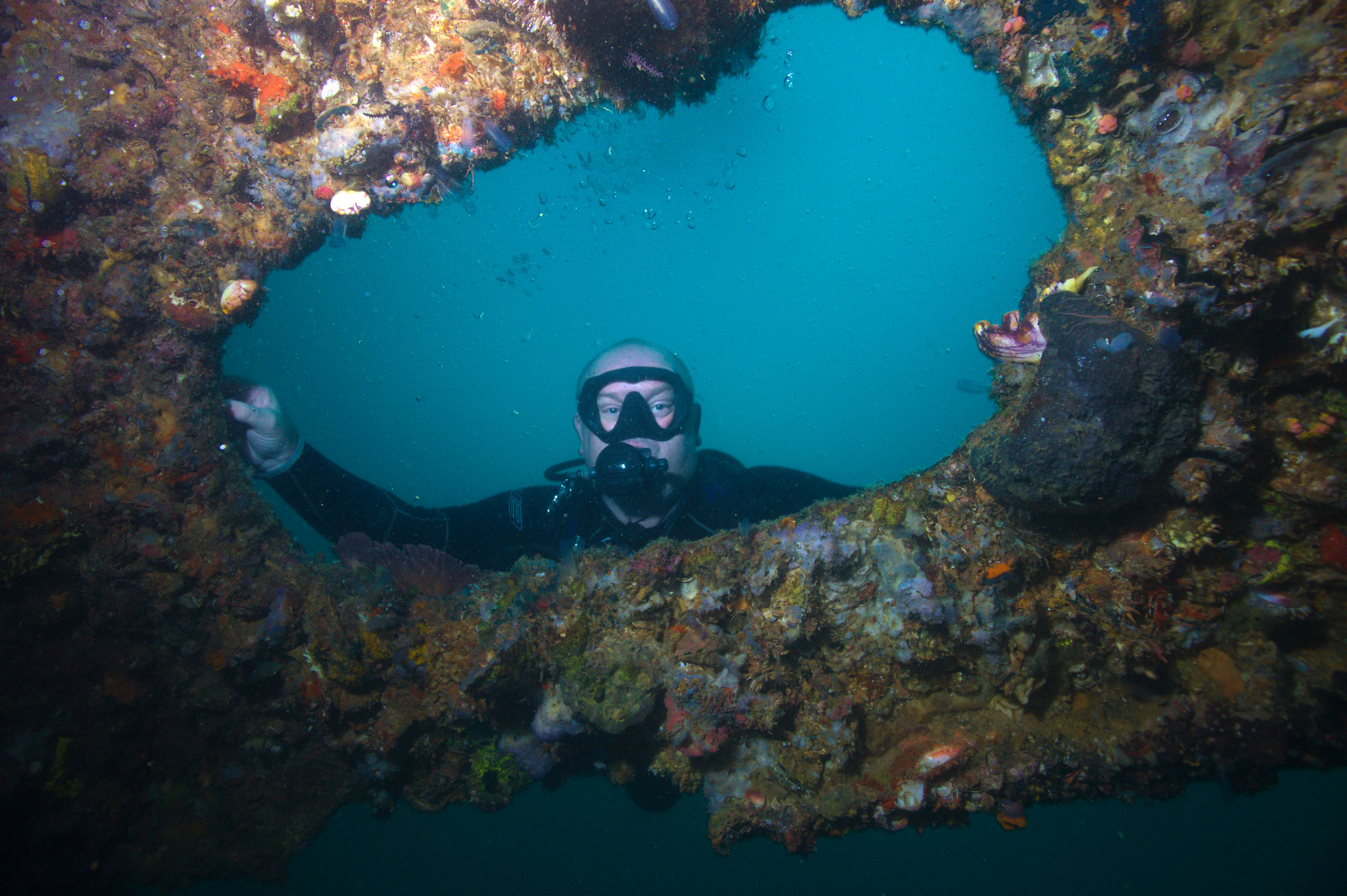
Once the Japanese approached at the onset of WWII, the Americans rather scuttled the ship than have it fall into enemy hands. As a result, the top of the wreck which used to be the New York is quite shallow, making it an accessible dive site even for moderately experienced divers. It’s a massive wreck, and several dives can be necessary to explore all of its external structures, including its impressive guns. 

CONTINUE READING BELOW
watch now

A look at the rich coral cover and the fairy basslets (the fish) on the wreck of the Banshu Maru
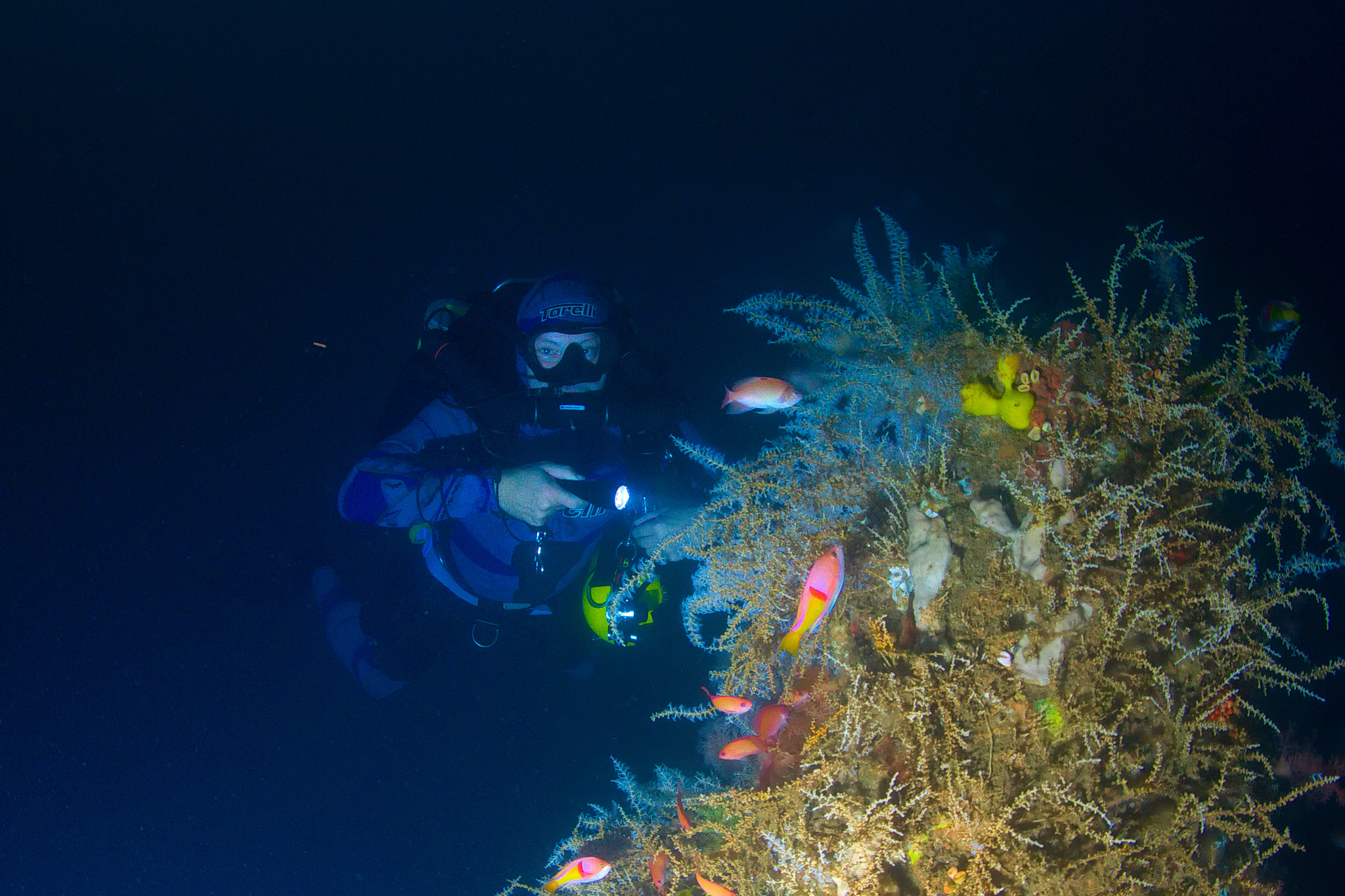

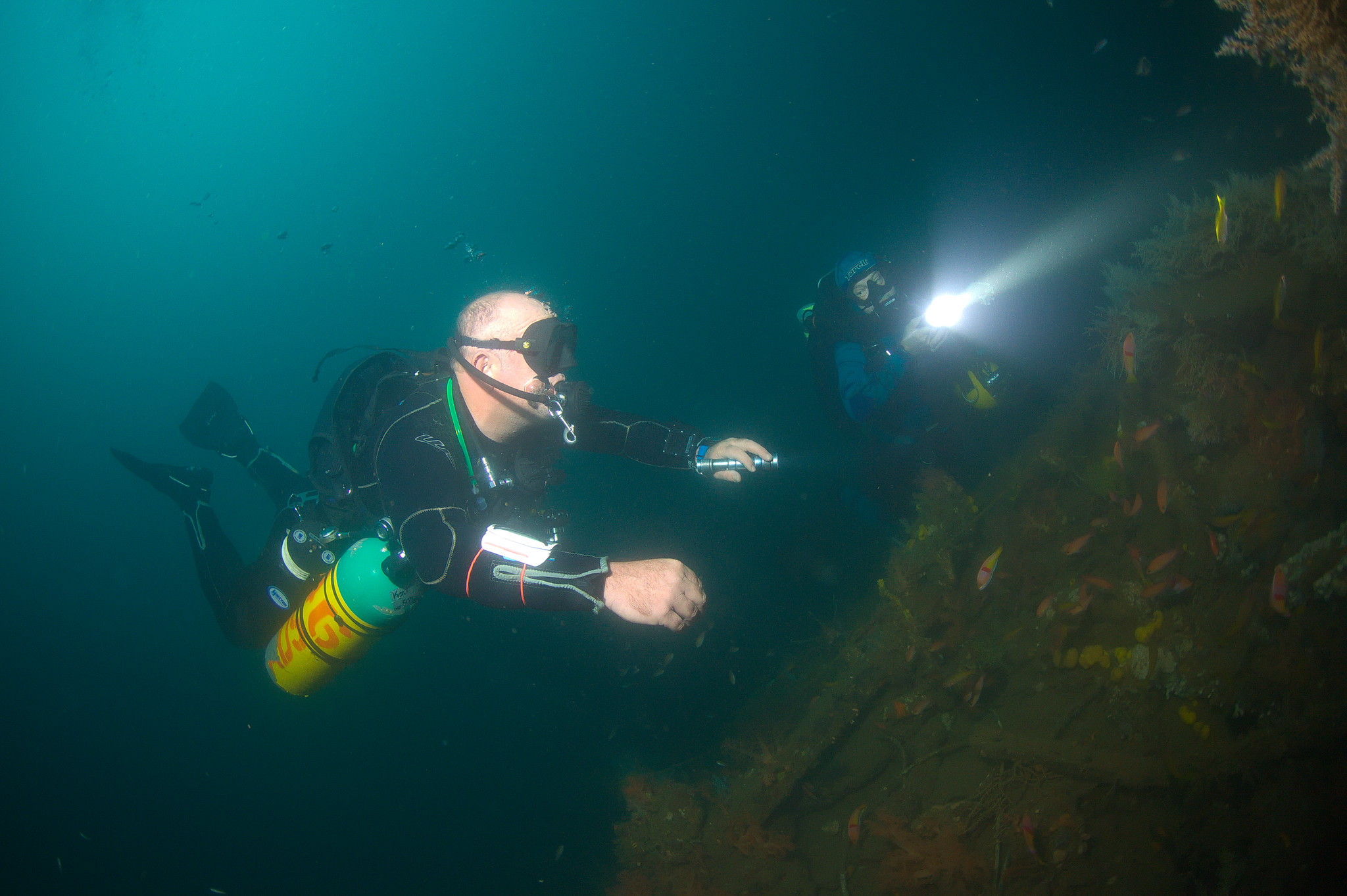
Exploring the Japanese WWII mine-sweeper Banshu, deeper than 50 meters

ADVERTISEMENT - CONTINUE READING BELOW

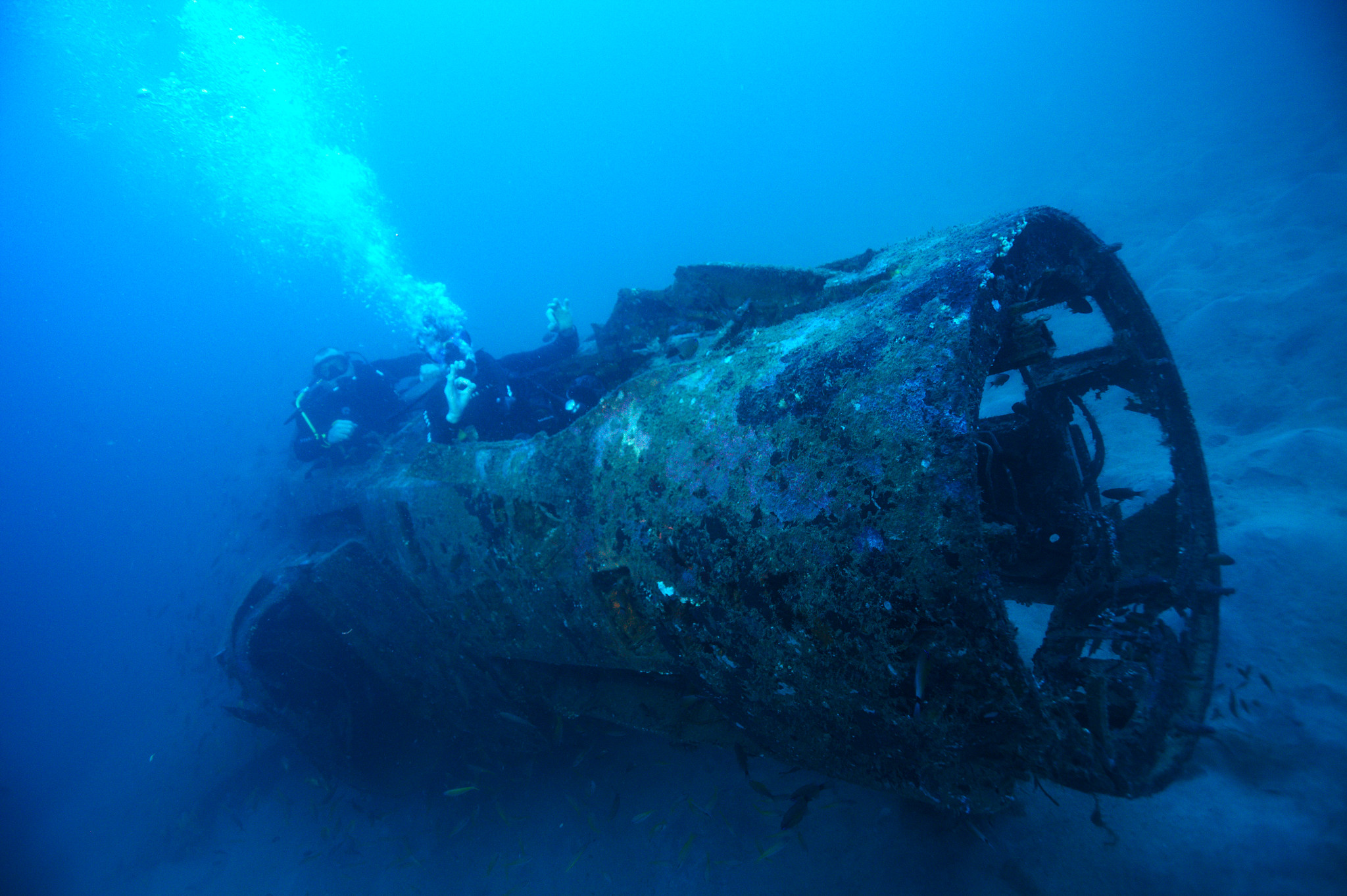
A diver looking into the wreck of the USS New York.

The short Japanese period of Philippine history is on display underwater in Subic Bay in the shape of the minesweeper Banshu Maru. The ship hit a mine in 1942 and sank to its resting place in about 55 meters—a significant depth, below what recreational scuba divers can safely reach. This wreck is a playground for technical divers; men and women descending with three or more tanks and with a precisely timed plan for returning to the surface. Only such a plan can ensure that nitrogen bubbles don’t form in the body of a diver, otherwise causing the dreaded decompression sickness (“the bends”). 

A technical dive is a challenging undertaking, but being able to visit a wreck from a long-past war at a depth where it’s hidden from almost everyone else makes the effort well worth it. At this depth the sunlight reaching the wreck is much reduced (seawater absorbs light), and together with the sometimes murky waters in Subic Bay, it’s not always obvious what part of the minesweeper you are currently looking at during a dive—yet another interesting challenge for the wreck diver. 

ADVERTISEMENT - CONTINUE READING BELOW


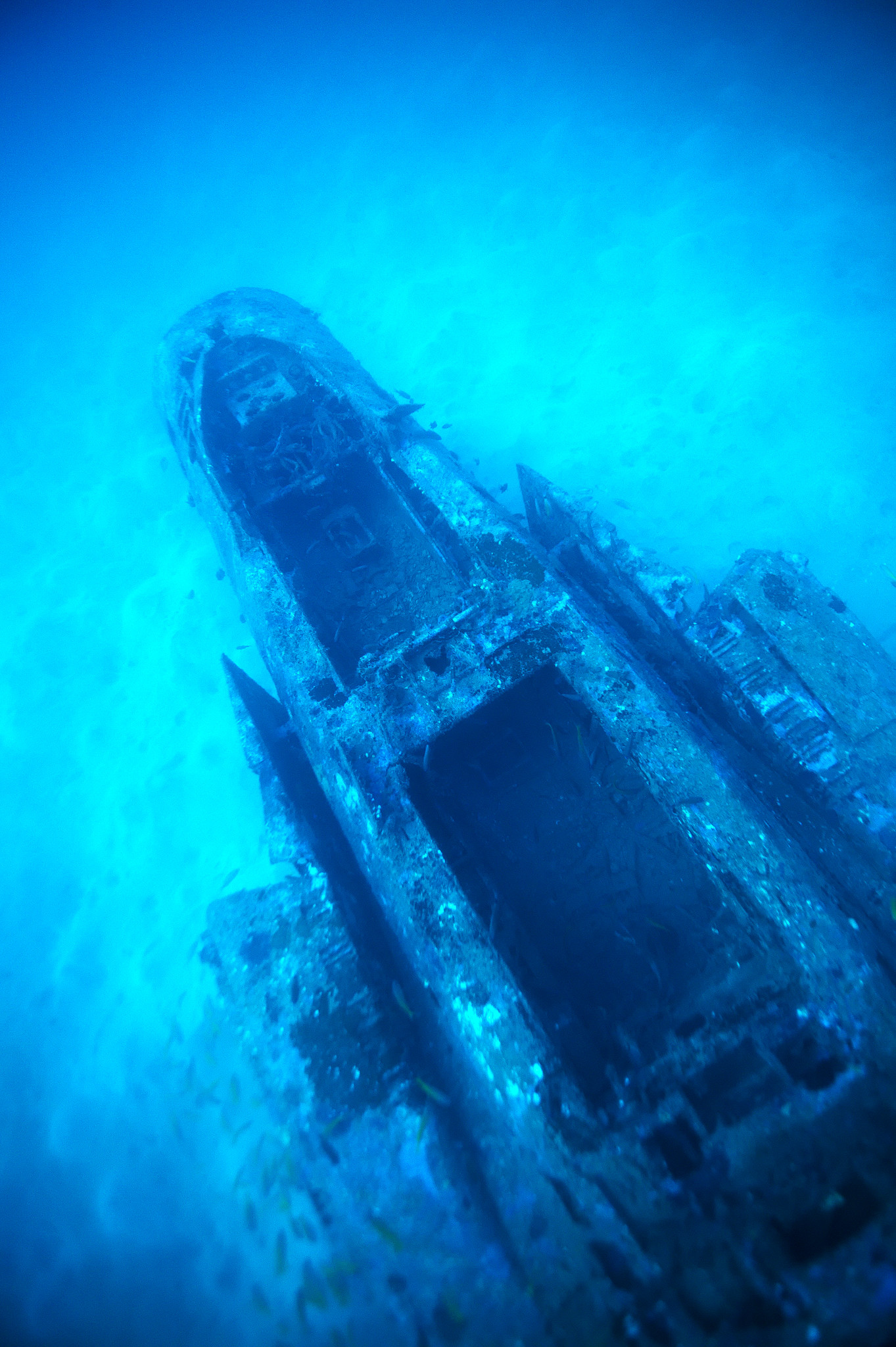
Finally, the post-war period is also on display in Subic Bay in the form of a wreck. By then the Philippines had become an independent nation but courtesy of forces agreements, the US Navy still maintained a massive base in Subic Bay. From this time stems the F4 Phantom fighter jet wreck. The airplane rests at a depth of 40 meters. Fighter jets are complex weapons, and they are exposed to vicious forces during their use.

Eventually, the wear and tear become so excessive that the fighter jet is unusable, and at that point the US military used this one for in-water target practice. The jet lies on the bottom of the bay in an upright position, and it’s an often-repeated underwater prank to sit in the cockpit of the plane wreck, as if the diver was a pilot in full scuba gear.

Seeing the wrecks in low visibility
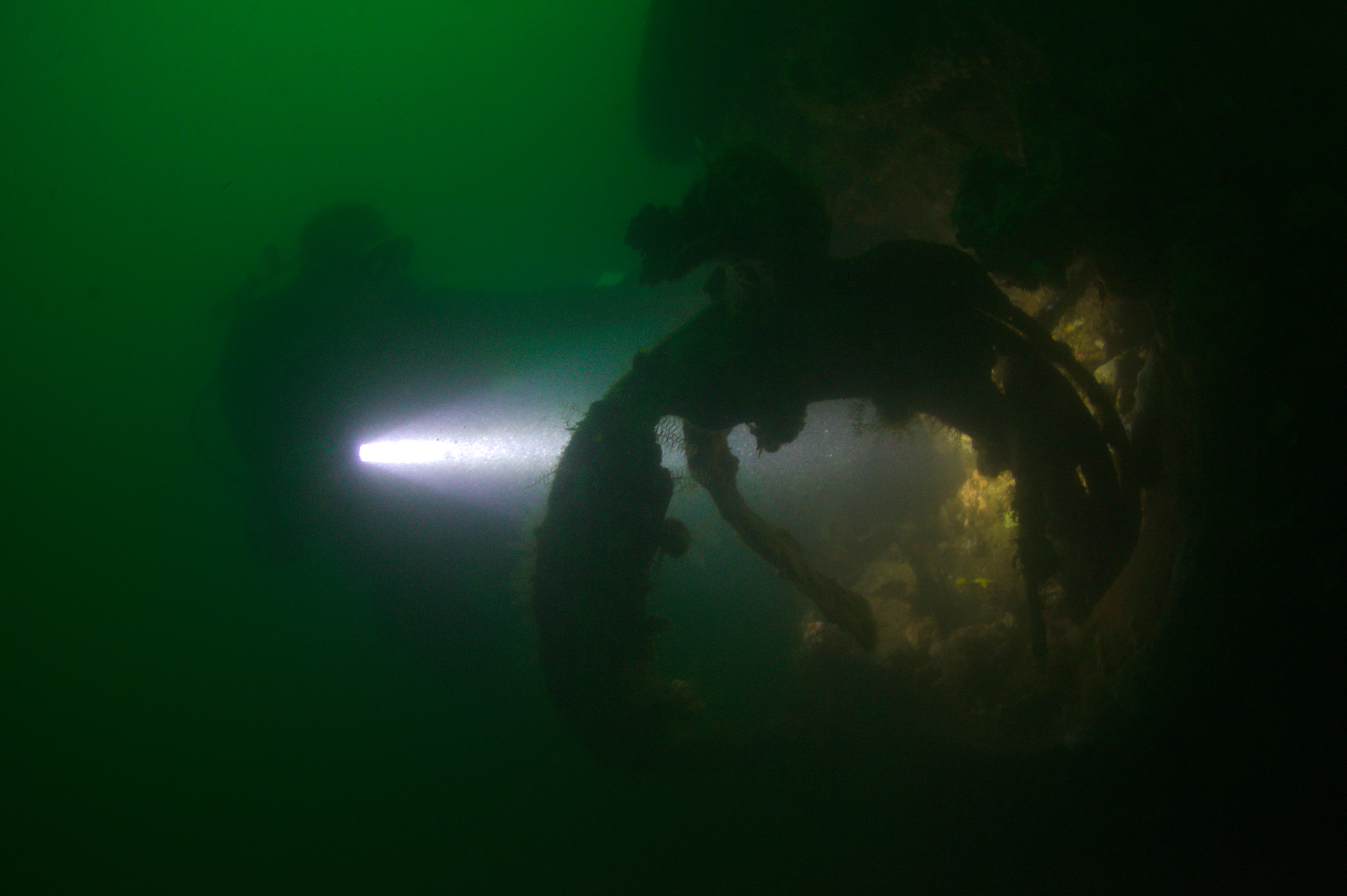

The wreck of the F4 Phantom fighter jet, seen from above.
article big image
PHOTO: Klaus Stiefel
Post a Comment

It’s a stunning experience to descend from the surface of the Bay onto its wrecks. Depending on recent rainfalls and the location of the wreck within the Bay, the visibility in Subic can be quite low, and the wrecks often won’t be visible from the surface. Only after dropping down to 10 meters or deeper, suddenly the shipwrecks’ outlines emerge from the dark. 

The clarity of the seawater will suffer further if a diver carelessly stirs up the fine silt next to the wrecks. And even that silt tells a story about Philippine history: much of it is fine ash from the 1991 Mount Pinatubo eruption. At that point in recent history, the administrations of the post-Ferdinand Marcos era were likely to reduce the US military presence in any case; but the massive volcanic eruption which covered much of the Naval base in volcanic ash hastened the troop withdrawal.


The F4 fighter jet wreck 


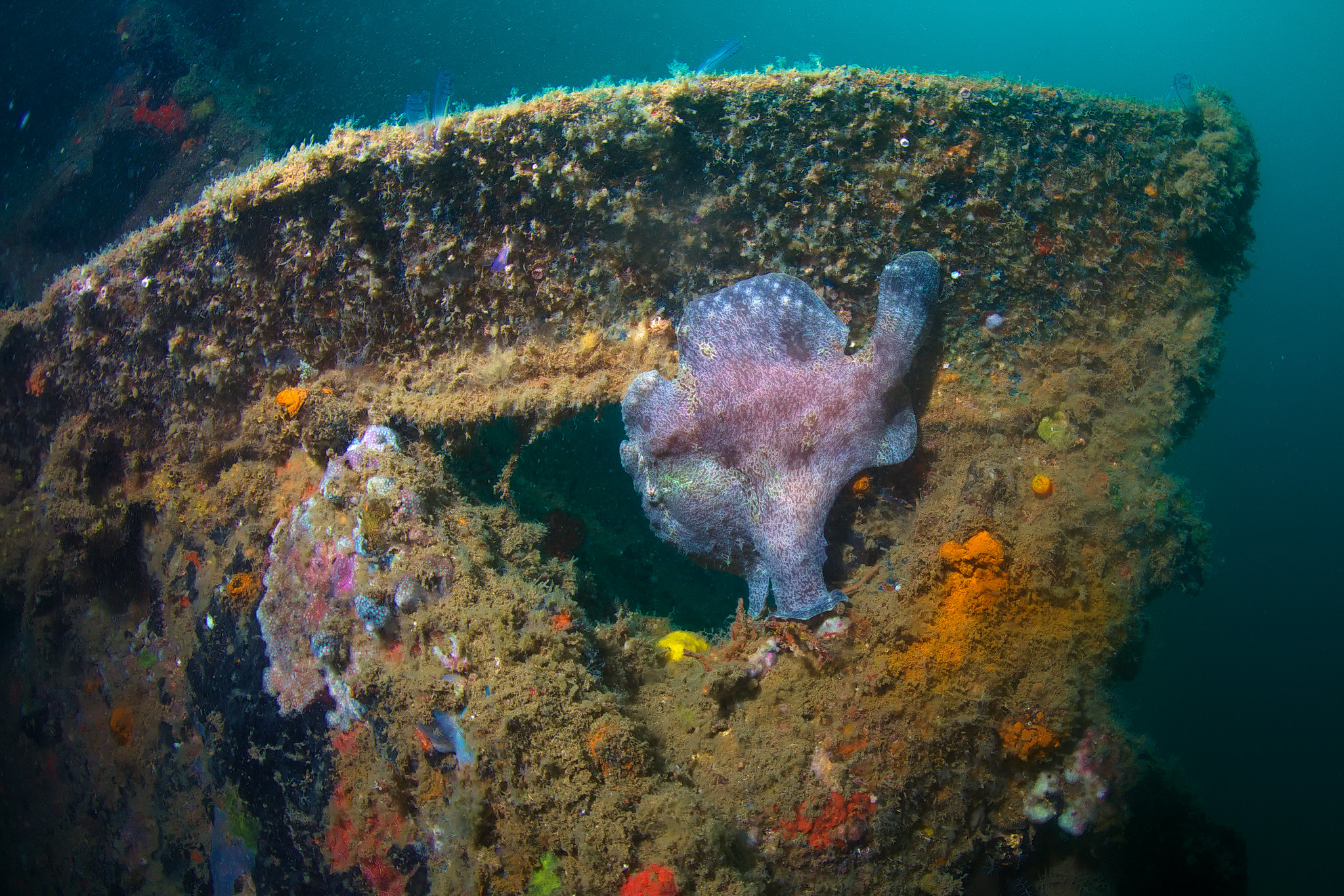
A rare Commerson’s frogfish, at home on a wreck


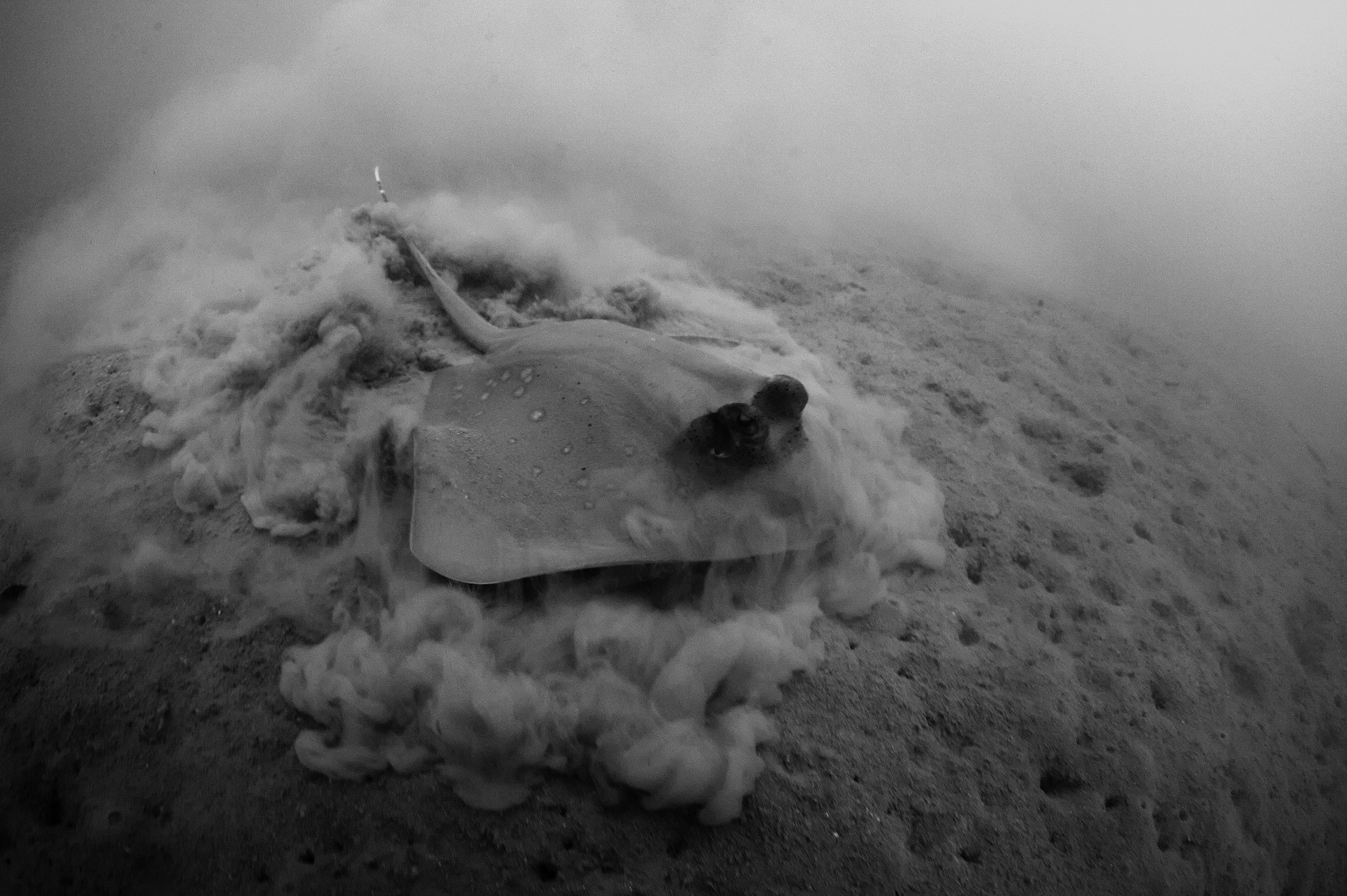
The ash has long been cleared on land, and the former military base has been turned into a special economic zone. But underwater, the fine ash still lingers, and a diver with poor swimming technique can easily stir it up. Such an unskilled diver will become the subject of his dive buddies’ ridicule. In contrast, if the marine fauna stirs up the silt, it’s an awe-inspiring spectacle. Particularly the large stingrays, which inhabit the seafloor next to many of Subic’s wrecks, often stir up an impressive cloud of ash when they notice a group of divers and decide to emerge from the sand and swim off.

A stingray stirring up the fine silt next to a wreck in Subic Bay


Home for marine life

Besides the rich underwater history, the wrecks of Subic Bay are also amazing artificial reefs. Fish need cracks and crevices to thrive and survive, which is the reason why coral reefs harbor such an amazing fish biodiversity. The otherwise featureless sandy bottom of Subic Bay would not provide many fish homes, but the presence of a number of large shipwrecks changes the situation. Some of the wrecks have schools of silvery jacks circling above them; others have their cargo bays filled with small, bright yellow cardinalfish.

A skilled spotter of marine life will find frogfish, seahorses, and pipefish on the outsides of the wrecks. At night (yes, some of the shallower wrecks are great night dive sites!), many sea slugs come out, and the metal structures are frequently covered with big groups of banded cleaner shrimp. What used to be weapons of war have now become magnets for underwater life. 

Tourism Tips: The main location for diving tourism in Subic Bay is Barrio Barretto, which used to be the entertainment district for the US sailors when the naval base was up and running. There are still girly bars remaining from that time, which you can easily ignore if you don’t like sleaze.

Barretto has ample excellent dining options, from American steaks to Mexican tacos and Thai noodles. Nearby Olongapo is a modern town with shiny malls. The terminal in Olongapo is where you arrive if you take a bus from Manila. There is also a sea plane service from Manila to Subic, which is a great way to see the coastline of Luzon, and Subic Bay from above.

Subic Town, north of Olongapo, is mainly a residential area for shipyard workers and should not be confused with the diving destination “Subic,” which refers to Barretto.

Read Next
A Goodbye Letter to Conrado de Quiros
Read more stories about
  • diving,
  • con-00289,
  • shipwreck,
  • Subic Bay
Most Shared
by author
Esquire Money
Most Popular
Latest Feed
The New Dean of New York University's Faculty of Arts and Science Is a Filipino
Armscor CEO Martin O. Tuason Passes Away at 51
A Fond Farewell to Chocolate Lover Inc.
The 8-Ball of Greatness in Philippine Pool
Tom Cruise Wore an Extremely Rare £70,000 'President' Rolex Watch to Accept His First Oscar
What Can Poetry Teach Us about Natural Disasters?
#InTheLoop
  • Politics
  • Culture
  • MONEY
  • Style
  • Long Reads
© EsquireMag.ph, All Rights Reserved.
  • About Us
  • Contact Us
  • Terms of Use
  • Privacy Policy
  • Sitemap
Close

We use cookies to ensure you get the best experience on Esquiremag.ph. By continued use, you agree to our privacy policy and accept our use of such cookies. Find out more here.

Present
Read Cover Story
Read Cover Story
Catfish Image