
Come From Away Hopes to Restore Our Faith in Humanity


"When someone is in need, you don't ask, 'What color is your skin?' 'What faith do you have?' You don't ask any of those questions, you just help," Steven Cadd, almost in tears, tells Esquire Philippines in an interview on his biggest takeaway from Come From Away. Cadd plays the role of Mayor Claude in the Tony Award-winning musical, with book, music, and lyrics by Irene Sankoff and David Hein. Come From Away is coming to Manila from June 6 to 29 at the Samsung Performing Arts Theater in Circuit Makati.
Set in the remote town of Gander, Newfoundland, Canada, Come From Away chronicles the five extraordinary days that unfolded in the immediate aftermath of the September 11, 2001, terrorist attacks. When U.S. airspace was abruptly closed, 38 international flights carrying nearly 7,000 passengers were diverted and forced to land in Gander, effectively doubling the town's population overnight.
ALSO READ:
'All Eyes on Rafah': How an AI-Generated Image Went Viral
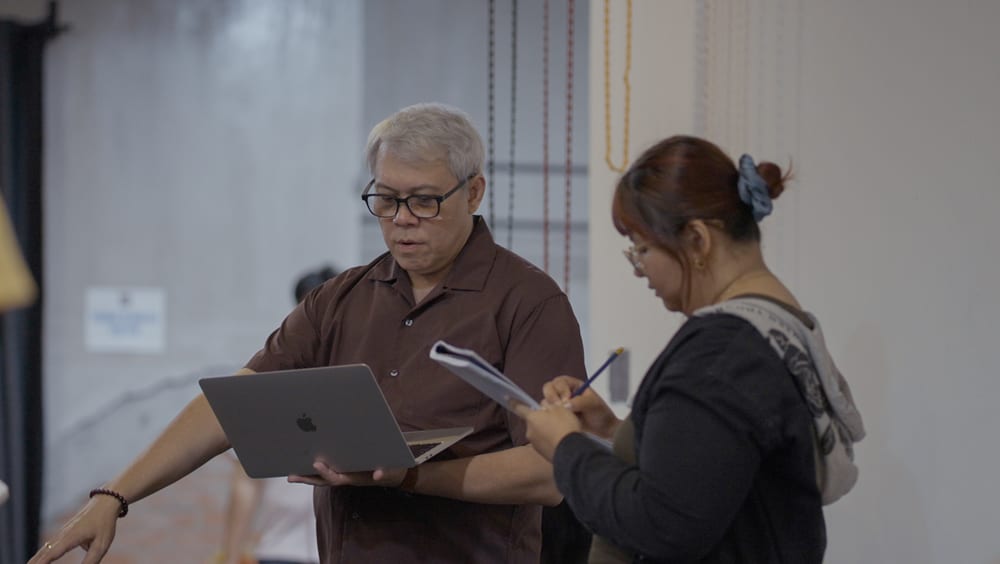
'Come From Away' Director Michael Williams
The Enduring Relevance of Come From Away in 2025
Director Michael Williams emphasizes that while the inciting incident of the play is 9/11, its true essence lies in the aftermath. "The story is much, much more beyond that. It's about the reaction to it. It's about how people came together and gave the world hope after that really horrible tragic event," he explains.
He highlights the discovery of "comfort in the regular, ordinary, everyday things of acts of kindness and generosity and acceptance that the people of Gander have shown the displaced people that have been forced to land there in their community." This timeless theme of community and compassion in the face of adversity is precisely what makes Come From Away so relevant in 2025.
Musical Director Rony Fortich draws a poignant parallel to the Filipino spirit, noting how natural disasters often push communities to help one another, our innate value of the bayanihan.
"If you look at how, whenever a natural disaster hits, how people come together to help out," he observes, recalling his own experience during Ondoy when "the next day everyone was trying to get to relief centers to help distribute goods. And I myself was turned down in three locations, and I finally found a place where I can help because all the locations were full of people just wanting to give their time and relief goods and money to help everybody else." This intrinsic generosity, a hallmark of both the Gander residents and the Filipino people, underscores the musical's universal appeal.
Williams also elaborates on the broader implications of the events depicted. "And also the idea that from that moment, the world had changed. Travel became different, more difficult. People started to suspect each other. The divisions between people became wider," he notes.
He presents the Ganderites' response as "the antidote," showcasing how "the people in Gander just responded to it as human beings should, with a generosity and kindness. They looked after those people, and it was the antidote." In an increasingly divided world, the simple yet profound acts of acceptance and selflessness portrayed in "Come From Away" serve as a potent reminder of humanity's capacity for good. "I think the world could learn a really potent lesson from and that is really the takeaway, you know," Williams asserts.
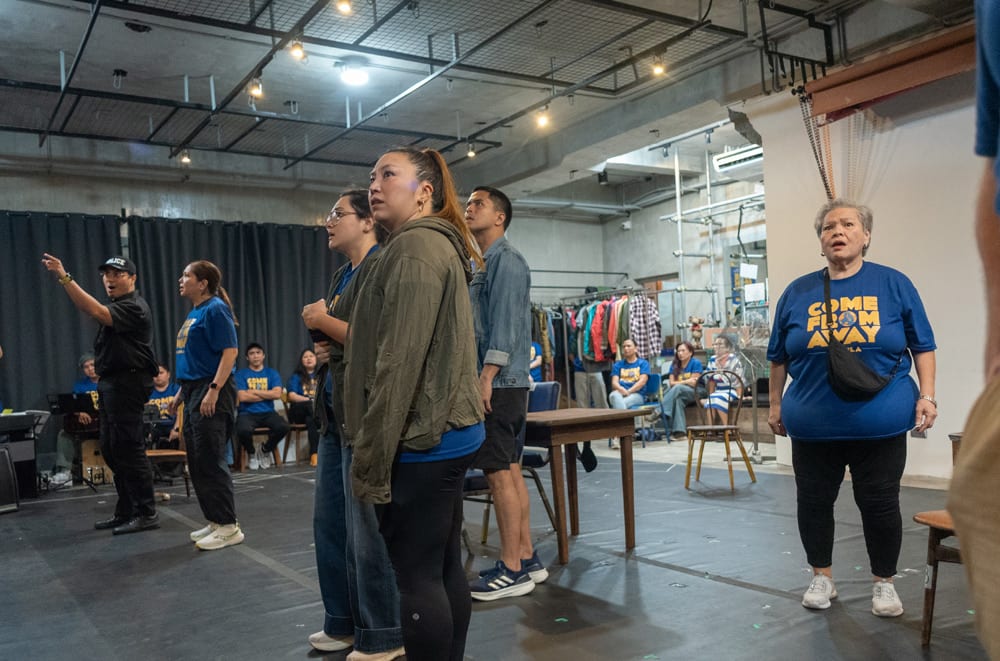
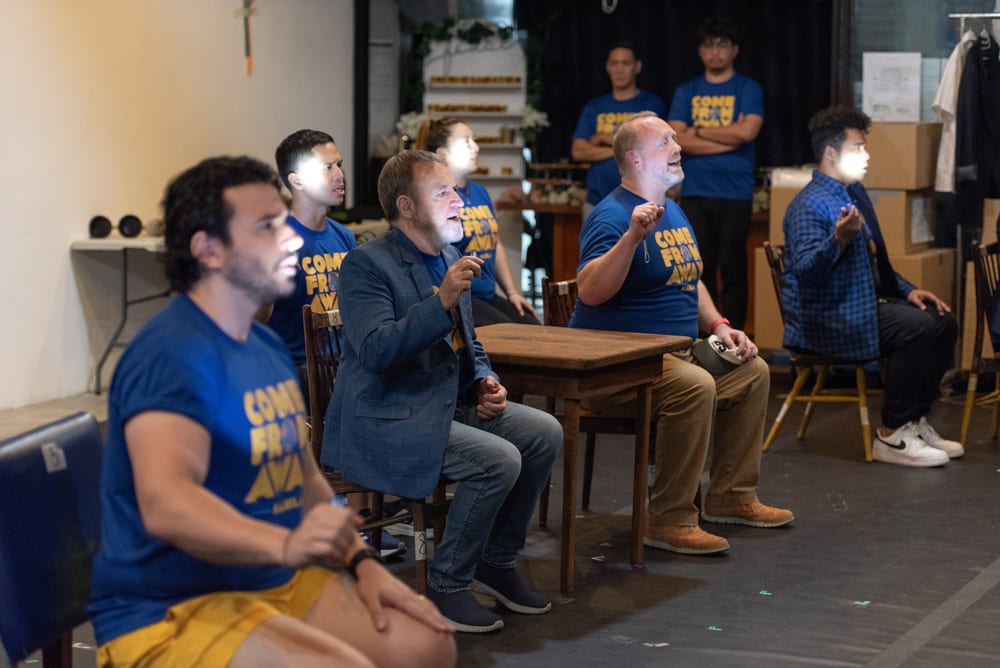
'Come from Away' cast and director at rehearsals

The Vision of Come From Away in the Philippines
When asked about his directorial vision, Williams emphasizes a commitment to authenticity and clarity of the text by Sankoff and Hein.
"The material is so well-written. It's really definitive. Our responsibility really is to be true to it and to tell it in its simplistic form. It really is the bare bones of theater. It allows the audience to participate by engaging their imagination. We just need to provide them with the seed of the message," he states.
The aim is to deliver the message effectively, allowing the material to speak for itself. "Our ambition is to be clear, to tell the story as it should be told in keeping with the spirit of the production, where it is simple, and allowing the material to be carried through us to our audience as effectively as we can." This approach ensures that the powerful narrative is conveyed with sincerity and impact.

Come From Away's narrative is also deeply intertwined with its music, as Fortich noted.
"The music is just wonderful storytelling. What I love about musicals is the sort of the great combination of strong lyrics, very poignant lyrics, tied with excellent music, right? And when you put these two together, you have a musical with fantastic storytelling, and that's what Come From Away is," he says.
The musical director highlights how the music masterfully reflects the emotional shifts within the narrative: "The melodies all tell the story of where there was tension, where there was kindness, where there was angst. The feeling when they're stuck on the plane for 28 hours, the music rides with that. But then also when at the 28-hour mark and they're being given alcohol to sort of calm their nerves, the music reflects that as well. The music reflects the joy when they take off and get to go back to their homes, as well as the sort of emptiness when they're going back to their homes and missing the friendships and the generosity that they felt in Gander. It all reflects that beautifully. So, I can't wait for audiences to hear it."
Williams further elaborates on the music's role, calling it "like another character in the musical." He explains that it "sort of encapsulates the personality of the people living in Gander, the sort of robust kind of people that they are. But it's capable of going into these very sensitive moments, and it describes the inner world of the characters in the musical. And that's where a lot of the heart is felt."
Lessons in Generosity and Humanity
When asked to describe Come From Away in a single word, Fortich chose "generous." "I think it's a great word to describe the heart of the show. And the idea of generosity comes from a place of not wanting something in return, which goes from both in the storytelling, from the performances on stage, from actors being generous with what they give to an audience, and to the music. So my word is generous," he explains, encompassing the giving spirit of the story, the performances, and even the music itself.
Williams, on the other hand, selected "human." He believes the musical speaks to "those things that people really are, should be," echoing the core message of empathy and connection that defines the production.
"Every part of it has something poignant or heartfelt or a beautiful moment. The whole script is filled with that. And it's all these different moments that people show either kindness or generosity or acceptance or understanding or empathy. All these things that you think should be part of our daily lives that we share with other people." Williams hopes these countless instances will prompt audiences to reflect, asking themselves, "Maybe this is the show that will make us think, 'Bakit nga ba hindi ganoon?' 'What can we do to be more like that?'" He believes "Come From Away" can inspire a greater sense of shared humanity, particularly in these challenging times. "When I see them going through the script, going through their lines, and telling us the story, I feel that this is really, really good material. This is a really, really good show to mount in these times, especially in these times."
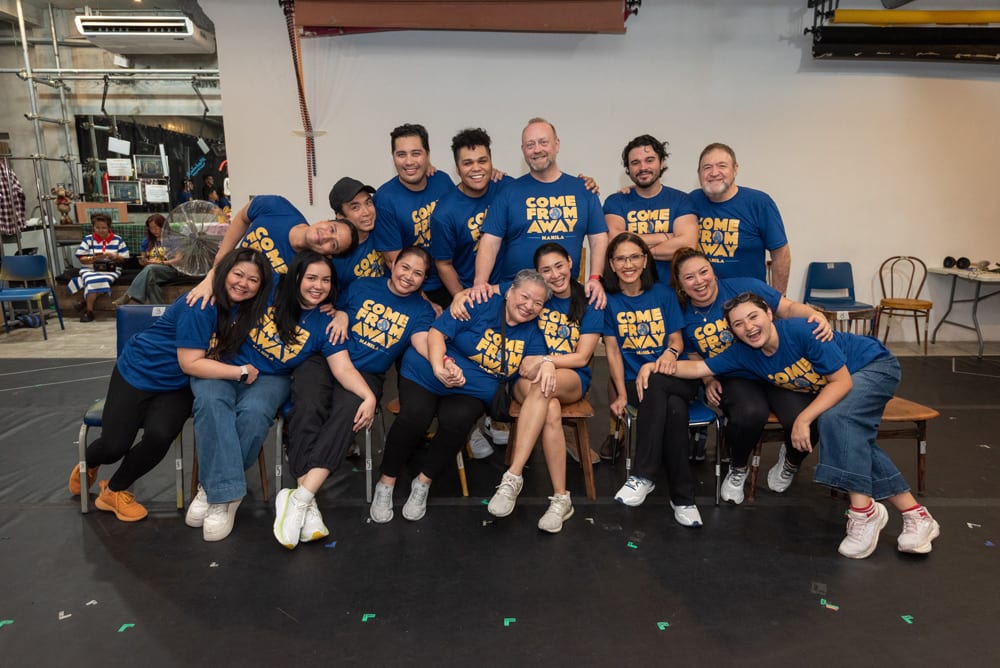
Likewise, the rest of Come From Away's star-studded cast shared profound insights gleaned from their experiences portraying the diverse characters in the musical:
Menchu Lauchengco-Yulo: "That in times of catastrophe, humanity does come together. It's human nature for us to help people without thinking about it. And that's been proven in all the storms, typhoons, and floods we've had. Not necessarily just 9/11, but in general. Especially when it comes to helping people and helping them out of that catastrophe, we always come together, regardless of who you are, regardless of what you are in society. The need to help people, I think, is in all of us. And that's very apparent to this day. That still happens, and it always happens, and it will always happen."
Becca Coates: "For me, it's that you don't need certain endless resources to be a kind person. I think we sometimes get caught up in...when we wanna help other people, we think that there are all of these prerequisites. But really, the greatest thing that the Ganderites gave to the people from those planes was their kindness and that feeling of being welcome and being in a family. So just to practice kindness in even small things, because those really make a huge difference."
Garrett Bolden: "Helping people is really innate to us humans in any situation. And with my character, what I could say is, it's okay to feel anxious, to feel worried if you're safe or not. But, the thing is, in situations that you don't expect, it's when people just show up and help, you know?"
Carla Guevara Laforteza: "I think when push comes to shove, any human being, any decent human being, will do anything to help a person or help a group of people."
Cathy Azanza Dy: "Definitely, we've learned that love is the answer to hate. You meet darkness with light all the time. You must go to your heart and the answer is always there. It's not complicated, it's not something you have to keep thinking about, it's not something that requires so much of your time. It's just staying in the present moment with someone, being with them, and helping them when they need it."
Sheila Francisco: "That kindness, empathy, generosity is a choice. And that you don't lose anything, you don't lose anything by doing it. It's a choice. Everybody can make a choice whether to help or not. But the Ganderites, that was their choice to help people. So, that's just an amazing quality of a certain community, and everybody felt the same way."
Gian Magdangal: "I think in the worst of the scenarios in life, that's really when the realness of humanity comes out, here the real you comes out. In Come From Away, the Come-from-aways and the people from Gander, they've all really reacted differently. You could see each character. There are some characters that probably were not too happy because they were so rattled with the situation, or because of this tragedy. Or some have just been thinking about their kids, whom they've been disconnected from. Their realness, they really come out. And how the Ganderites have accepted them, and how to take care of and handle these people who are distressed. It's amazing, it leads to what she said. It's a choice on how to handle these people. That really comes out in tragedies that have happened, just like 9/11."
Caisa Borromeo: "I think it's also such a wonderful reminder that everyone is going through their own personal things. It's a nice reminder to be able to remember that everyone comes from different backgrounds, everyone is suffering silently, or going through their own personal things. That even when collectively there's one tragedy, like 9/11, for example, they will deal with it differently. Everyone copes differently. Everyone grieves differently. And the best we can do is be kind. Again, like what they were saying, it's a choice of being kind and just being there, however you think you can be. And remembering that people suffer differently and go through different things. And sometimes we're not aware of it, and we just have to be kind about it."
Mayen Cadd: "That there is a God-given, God-planted kindness in every person that rises up when there's a need. It's something inside that puts others before self."
Topper Fabregas: "The show is about all these people from different parts of the globe who come together, who are welcomed from this small town, who kind of welcome them and adopt them for the four to five days. And it just shows that you can come from anywhere, you can come from different cultures, different backgrounds, different upbringings, but we'd like to think that at the end of the day, you put others before you, that you think about your neighbor first. That's what I love most about it. It's not just about this Canadian town, it's not just about the Americans. It's every single person. Every single person came together and just showed the same amount of kindness as anyone else would."
Chino Veguillas: "It's the unconditional love that they give. They were just doing it because they wanted to help. If somebody feels sad, they want to comfort them. You don't ask for anything in return."
As Come From Away prepares to grace the Manila stage, it brings with it a powerful reminder of humanity's capacity for compassion and connection in the face of crisis. In 2025, a world grappling with division and violence, the story of Gander offers a beacon of hope, demonstrating that even in the darkest of times, acts of kindness and generosity can illuminate the way forward.
Come From Away runs from June 6 to 29 at the Samsung Performing Arts Theater, Circuit Makati. Ticket prices range from P952.20 to P5,819 on Ticketworld.
