

Theater Review: Little Shop of Horrors Is a Reminder That We're All But Slaves to Capitalism

Little Shop of Horrors, an absurd narrative with a talking and singing plant, has gone through a few adaptations. It first came out as The Little Shop of Horrors in 1960, matching the story's timeline, as an American film directed by Roger Corman and written by Charles B. Griffith. Then, it became the basis for the 1982 horror comedy rock musical, Little Shop of Horrors (without 'The"), with music by Alan Menken and lyrics and a book by Howard Ashman. (Menken and Ashman are to be thanked for Beauty and the Beast, The Little Mermaid, Aladdin, and other Disney animations we grew up with.) In 1986, Little Shop of Horrors was adapted into a horror comedy musical film starring Rick Moranis, Ellen Greene, Vincent Gardenia, Steve Martin, and the voice of Levi Stubbs.
Little Shop of Horrors earned a cult following, making The Sandbox Collective's most recent staging at the Globe Auditorium in Bonifacio Global City an event that many people looked forward to. We got the chance to watch two versions of their staging with alternating sets of cast members. Speaking as someone who did not watch either of the films, I have to say that the experience was an acquired taste. Its surreal humor was a bit of a challenge to bite into (pun intended), but the takeaway was an aha moment.
Little Shop of Horrors as a Dark Comedy Musical
Little Shop of Horrors is a musical that seamlessly blends dark comedy, horror, and rock music to tell a story that is as captivating as it is cautionary.
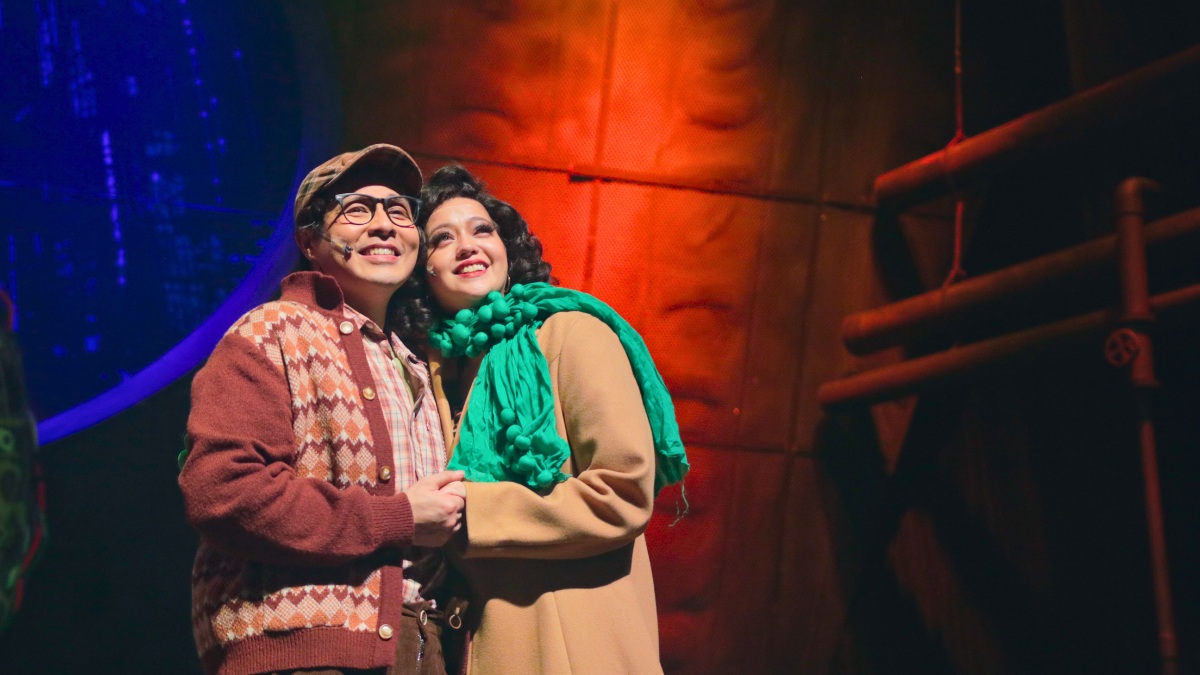
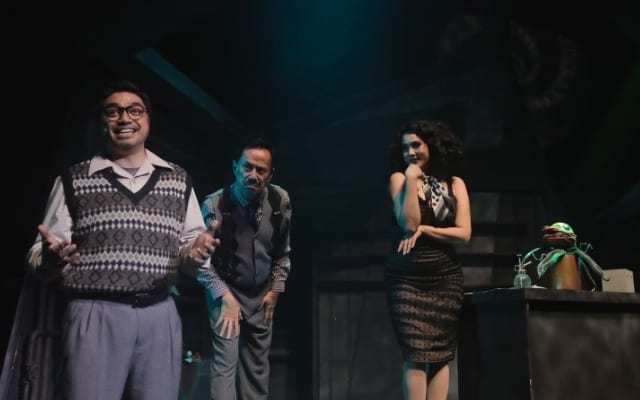
Set in the dilapidated Mushnik’s Flower Shop on Skid Row, the narrative introduces us to Mr. Mushnik (played by Audie Gemora) and his two employees, Audrey (Karylle Tatlonghari and Sue Ramirez) and the nerdy Seymour Krelborn (Nyoy Volante and Reb Atadero). Seymour harbors a secret crush on Audrey, who is trapped in an abusive relationship with her sadistic dentist boyfriend, Orin Scrivello (Markki Stroem and David Ezra).
The story picks up pace when Audrey persuades Mushnik to showcase one of Seymour's exotic plants, a peculiar flytrap-looking specimen named Audrey II. This strange plant, which Seymour bought from Chang’s Flower Shop during a mysterious solar eclipse, quickly becomes the shop's main attraction. As business booms, Seymour's life takes a dramatic turn.
We later find out that Audrey II is not just any plant; it has absurd demands that Seymour had to grant—or else.
Highlighting Themes of Capitalism and Desolation in The Sandbox Collective's 2024 Staging
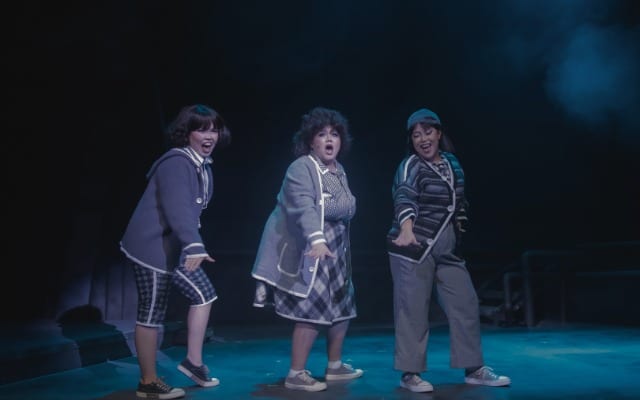
Little Shop of Horrors' plot twist of a blood-sucking plant seems ridiculous—and it actually is. The exposition is too long, but as the wee Venus flytrap-like botanical wonder grows in size (and becomes even weirder than ever), so does the narrative grow on audience members. Menken and Ashman's catchy tracks help a lot in luring viewers along for the ride. It's hard not to follow the beat, especially with a live band led by musical director Ejay Yatco playing in the background. The street urchins, led by Abi Sulit, as the chuwarirap girls add to the ludicrousness of the show.
Mio Infante's gray-tinted motif set design highlighted the Little Shop of Horrors' desolate setting in 1960s Skid Row, a downtown place where "the folks are broke" and "life's a joke." We see this set transform in Act II into a more industrialized design (complemented by the designs of Joseph Matheu for lights and Joee Mejias for video projection), hinting at the familiar narrative thread of a sketchy town being tricked by so-called development.
You see, Little Shop of Horrors can be read as a critique of capitalism and similar ills of society. At the center is Seymour, an anti-hero who longs for a father (personified by Mr. Mushnik), yearns for the love of Audrey, and wishes to get out of Skid Row (and of poverty). We sympathize with Seymour because, as people living in our version of Skid Row, we can relate. Reb Atadero plays this role perfectly, especially with his awkwardness, which highlights Seymour's status as a loser in life.
To advertise Mushnik’s Flower Shop (and, ultimately, impress everyone), Seymour brings out a unique plant and is later enslaved by its demands. He gets a taste of fame and fortune and never wants to let go at the expense of everyone and everything he loves. Audrey II has become a symbol of "success" (air quotes for emphasis), and the Powers That Be wants in on the profit. OJ Mariano brings an almost haunting portrayal of Audrey II, perfectly blending that deceitful clinginess and sinister vision for world domination.
This show also marks David Ezra's return to Philippine theater after a three-year gig at Hong Kong Disneyland, and we're just glad he's back. His rendition of Orin is all too convincing, just munching on that sadism and craziness in the dentist's character (pun intended again).
What's probably the highlight of The Sandbox Collective's staging is the theatrical debut of Sue Ramirez, who surprised guests not only with her vocal talent but also with a spot-on portrayal of Audrey's Betty Boop-like persona. Not to compare, but Nyoy Volante and Karylle Tatlonghari's definitely have their individual singing prowess, but the cute chemistry between Atadero and Ramirez just brings it home.
Little Shop of Horrors runs until July 28 at Globe Auditorium, Maybank Performing Arts Theater, Bonifacio Global City. Tickets, with prices ranging from P2,272 to P4,089.60, are available through Ticketworld.
