Today I Learned: Ayala Museum's Diorama Exhibit Was Almost Impossible to Make

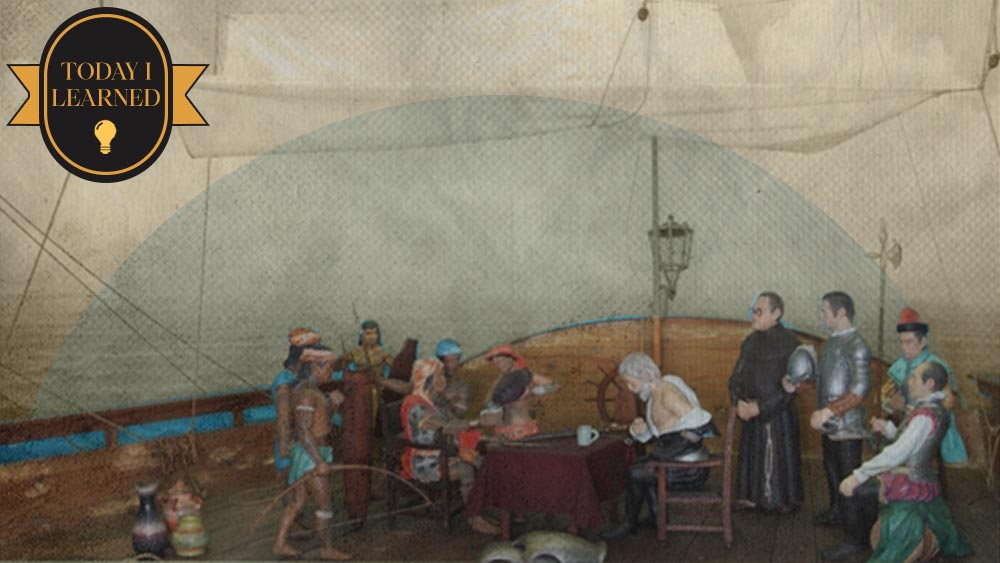
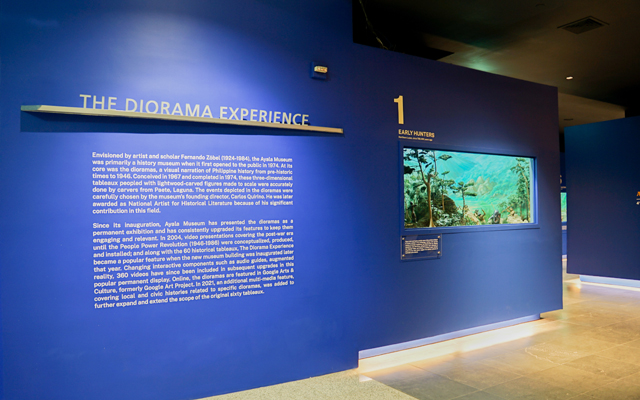
Whether it’s for school field trips or spontaneous excursions with friends, visiting the Ayala Museum's The Diorama Experience is a rite of passage. These 60 vignettes of Filipino life are the museum’s crowning jewel—rightfully visited by more than 100,000 locals and tourists in the past year, an overwhelming number of them members of Generation MZ.
Aside from being a testament to local craftsmanship, the exhibit is a pillar of our country’s cultural imagination. Gazing at each of these windows into our past provides the necessary foundations to build our future. That’s why it’s impossible to believe that once upon a time, it almost didn’t come to be.
ALSO READ
Ayala Museum Opens Three New Exhibitions on Philippine History
10 Reasons to Visit The National Museum Now
Ayala Museum's Diorama Experience as Labor and Love
Fernando Zobel first envisioned the ambitious project in the context of the post-war Philippines, when both the government and private sector worked together to ideate early nation-building initiatives. He felt that we needed to be reminded of what it was to be Filipino, hopefully in an art form that had not been attempted before.
Thankfully, there was an industry of artisans capable of executing this vision. "When the team of [Ayala Museum’s first director] Carlos Quirino started putting these dioramas together, they began to engage with partners from Paete, knowing that we have a long tradition of very talented woodcarving. I guess that was part of the leap of faith," said Marinella Mina, Ayala Museum’s curator and senior manager for research and publications.
Paete wood carvers are best known for their intricate, life-like statues of religious figures. But the process of making an individual santo could not have been more different from the task at hand: "It was not just an assemblage of figures. They would have to be dynamic. They would have to convey that this was a historical event that people can imagine happening before their eyes," Mina said.
Initial mock-ups of the sculptures came out quite stiff and looked awkward when placed on a small-scale stage. Quirino searched across Asia for experts with the hyper-specific skill set needed for the initiative. But ultimately, a lot of learning took place on the fly. With the imminent danger of the project being called off, Simeon Abaya, one of the members of the pioneering team, asked for a chance to make one prototype.
After bringing together extensive research as well as knowledge from friends in stage production and curation, one might say that the rest is—literally—history.
Subject Matters
One of the defining features of the Ayala Museum dioramas is its inclusion of both watershed and routinary moments. The story of a nation, after all, is incomplete without ordinary people and their practices.
Diorama 11: Legazpi-Sikatuna Blood Compact, 1565
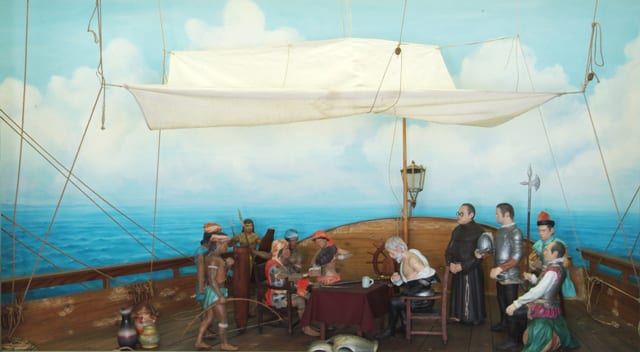
Events were not just confined to urban Manila but also included our indigenous groups. "There was a drive to make the perspective as balanced as possible because significant things were happening all around the country that were making huge cultural and economic impacts here in Manila," Mina explained.
Quirino and his researchers traversed the archipelago, visiting historical sites, excavations, and town plazas. Since customs and locations inevitably evolved, they had to comb through old documents and interview locals in the hopes of reconstructing the past as accurately as possible. It can be said that they were guided by the words of historian and philosopher R.G. Collingwood: "The piecing together of history requires creative faculties but should not be confused with the writing of fiction."
Miraculously, the team distilled the progress we made over thousands of years into 60 dioramas. (Some ideas that didn’t make the final cut include Francisco Balagtas writing Florante at Laura, a fluvial parade in Makati, and 1600 bullfighting in Manila.) We start with the forefathers of Cagayan Valley and come to a fitting end with the 1946 Declaration of Independence.
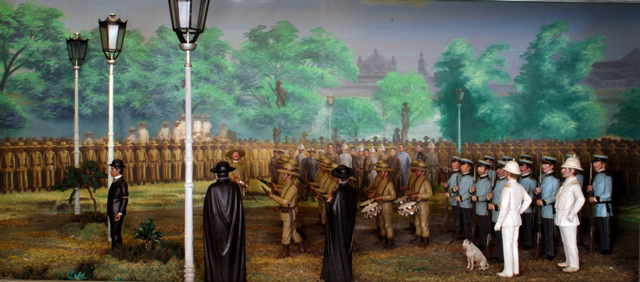
Diorama 35: The Execution of Jose Rizal (Manila, 1896)
In With the Old
With all the developments that have taken place since, it’s normal to wonder if the museum has space for a few more installations. "That conversation keeps popping up every so often, I must admit," Mina says with a chuckle. "In the post-Martial Law period, the museum commissioned an additional three dioramas, showing events following our independence up to the first EDSA Revolution. But upon much evaluation and discussion, they had to pull them out. They simply were not up to par with the rest."
In lieu of these failed attempts is a series of video presentations using archival footage and narration from historian and former Ayala Museum curator Manolo Quezon III. (Visitors can watch this right before exiting the exhibit and after comparing their height with our previous presidents.) "We’ve tried to look at how people consume information and engage with stories when we think of ways to keep them coming back," Mina shared.
In the analog age, the museum provided cassette tapes at the entrance and launched DVDs of the diorama experience that were sent to public schools around the country. In the digital era, there has been some experimentation with strategically placed QR codes that lead to augmented reality (AR) animations and audio guides on the A Museum app. Had COVID not happened, we could have enjoyed virtual reality (VR) headsets that allow visitors to experience Rizal’s execution from different vantage points.
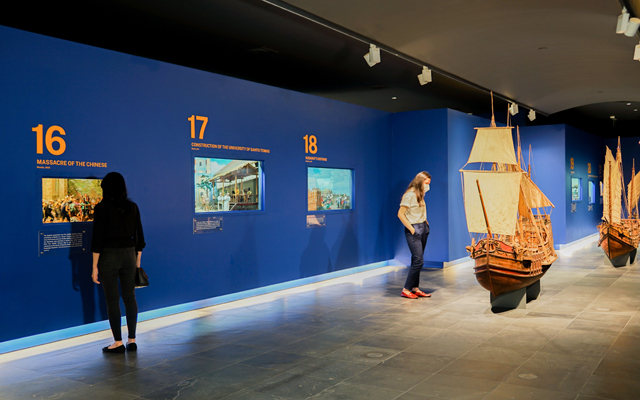
But even without these technological advancements, there is still much to be rediscovered with each visit. "We do get a lot of kids, for example, who enjoy just trying to spot the variety of furry friends surrounding our characters," Mina said. "There are some funny Easter eggs, like how the original Ayala Museum team actually painted their faces in the background of Rizal’s execution or how the faces of Don Jaime Zobel de Ayala, Enrique, and Fernando Zobel sit behind Miguel Lopez de Legazpi in the blood compact. It’s quite interesting, no? How they’re literally standing witness to the development of history."
While these dioramas have a definitive end visually, their narrative is never really over. The exhibit was never meant to be a plain regurgitation of facts but a dialogue. That’s why it’s frustrating how the academic study of the olden days is often reduced to rote memorization. To learn our shared history is to make sense of our individual stories—to unravel the threads of life that connect us to our ancestors and use them to weave a rich tapestry that future generations will be proud of.
The Ayala Museum is at Makati Avenue corner De La Rosa Street, Greenbelt Park, Makati City. It is open from Tuesday to Sunday, from 10 a.m. to 6 p.m. Museum admission is at P750. Several scenes from The Diorama Experience are also available on Google Arts and Culture.