
How the New Senate Building Deviates From Tradition

In one of his letters, the English poet John Keats asked, “Do you not see how necessary a world of pains and troubles is to school an intelligence and make it a soul?”
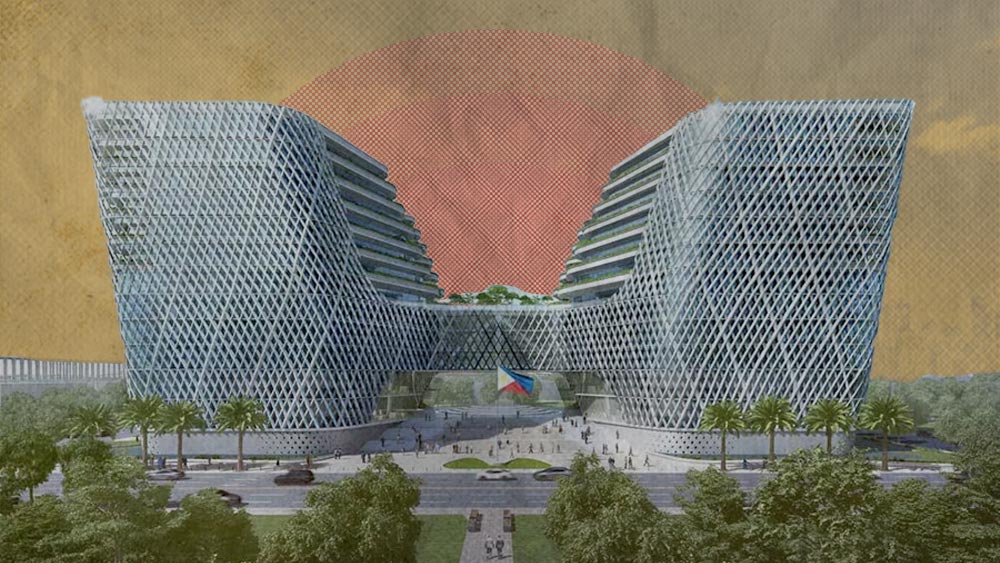
So physically removed from the pains and troubles of the Filipino people is the site the Senate chose for its new building in Bonifacio Global City, that one wonders what it might do to the soul of the institution.
By this, I do not mean to moralize about spending P27 billion on a single government building. Significant, even ostentatious, spending on public edifices has always had a civilizational role. We can perfectly spend that much money on our most important institutions in one year, and still have 99.5 percent of the annual budget left for the hungry, the needy, the sick, and the wages of public officials who tend to them.
And, if it were a corporate building, it would not necessarily have been ugly. Boring. Boilerplate. Sure, some critics could say that. But not ugly.
What it does not look like is a state building, much less the home of a Senate, historically the most hollowed of all institutions of republicanism. Two millennia or so from now, when climate change buries or drowns all that we hold dear and love, will the archaeologists among our descendants recognize the ruins of the new Senate building as remnants of an esteemed institution, an “august body,” as Senators are fond of calling their chamber? Probably not.
Why take Senate buildings seriously
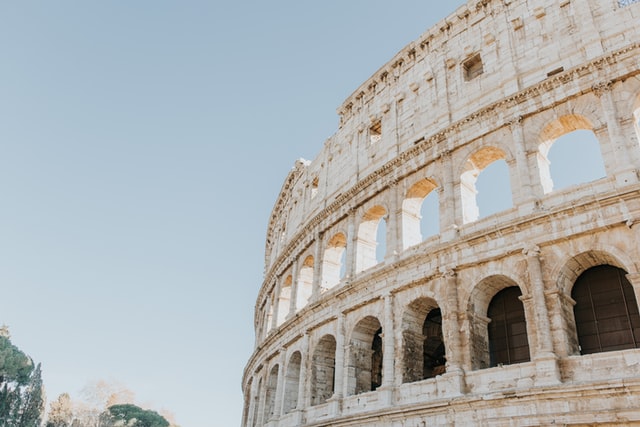
The republic as a form of government traces its most recognizable ancestry to Rome. The name Rome, which is used to refer to itself, reveals what institution it values above all: The Senate and the People of Rome. So crucial to republicanism is the legislative and representative branch that republican constitutions define their legislatures first, above all other institutions, usually just after the document is ordained by “We, the People.”
Among bicameral legislatures, the Senate is typically the bulwark against modernist impulses. That is by design. The root word of “Senate” is “senex,” Latin for "old man."
That is also why, in most countries, the terms of Senators are also longer than those of their counterparts in the equivalents of the House of Representatives. They are supposed to be less swayed by the pressures of the new, and answer more to the retrospective tests of future generations than to the fleeting impulses of present times.
In other words, a hypermodern Senate building might contradict all that a Senate ought to be: old because it endures, slow because it is timeless.
It’s not like Senators do not know this. Against accusations that they are “mabagal na kapulungan” or the Slower House, Senators typically counter that they pass higher quality legislation.
And between the House and the Senate’s own official histories of themselves (see the House and the Senate websites’ respective “About Us” pages), the Senate is more explicit about its claim of being an old institution.
What do Senate buildings usually look like?
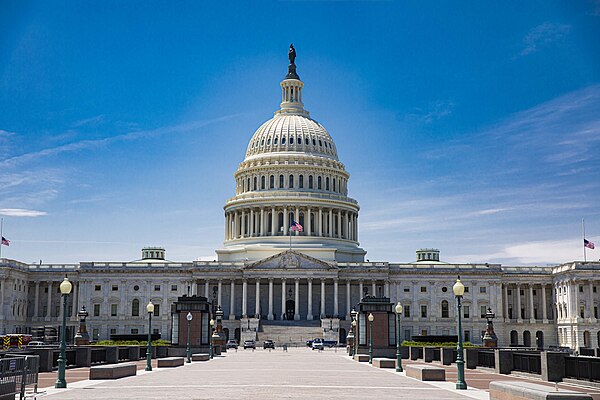
Several Senates are housed in buildings that evoke history. The U.S. Senate, for example, shares the Capitol with the House of Representatives. The Capitol, designed in the Neoclassical tradition, displays how the American Founding Fathers viewed themselves – as inheritors of the Greco-Roman legacy of republicanism and democracy.
Buildings with similar Neoclassical characteristics house the Senates of Argentina, Paraguay, Uruguay, Bolivia, and, for a time, Chile. That, perhaps, owes to their being American republics.
Meanwhile, the Italian Senate is housed in the Palazzo Madama, once home to two Medici popes, and later, the seat of the Papal Government during the time of Benedict XIV. There is no doubt of historicity there.
To be fair, the upper houses of the Malaysian and Indonesian legislatures are housed in buildings that evoke modernity. But they still look like state buildings – in their stately size and symbolism.
Their upper houses do not have any direct link to the American republican experiment. Their Senatorial traditions do not trace directly back to the American democratic project.
Our Senate, on the other hand, was established under American tutelage – and continues to operate in large part on procedures and practices borrowed from or inspired by the US Senate. We have no reason to ditch the Neoclassical look that the Americans adopted for their state edifices, an aesthetic that is universally recognized as representing history and authority (see, for example, the UNESCO’s logo being the Parthenon, and the standard graphic icon for a “Government” being something similar).
The Old Senate building
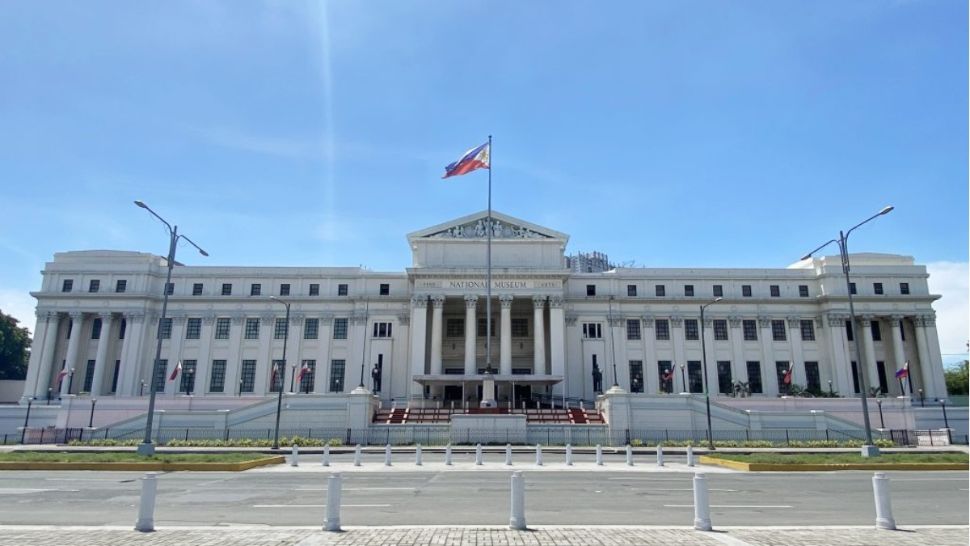
It’s not like we don’t have a model for an iconic Senate building. As recently as 1997, the Philippine Senate still held sessions in what is now called the Old Legislative Building along Padre Burgos Avenue.
Completed in 1926, the building was intended to host the National Library of the Philippines according to Daniel Burnham’s plan for Manila, while the Philippine legislature was supposed to have its own Capitol building inspired by the American example. The Capitol not yet being built, legislature decided to move into the building. Changes to make it compatible with legislature’s needs were designed by architect Juan Arellano. Heavily damaged during the Second World War, the structure was rebuilt in 1949.
ALSO READ:
The Glory Days of Escolta, Manila's 'Queen of the Streets'
An Art Deco Masterpiece: Remembering the Crystal Arcade, Manila's First Mall
The Senate chamber in the building was padlocked during Martial Law. Later, the building hosted the offices of the Prime Minister. In 1987, the Senate, reestablished under the new Constitution, reoccupied the building.
I have no pretense of authority to call a building “beautiful” or not. But it is a matter of fact that the building was deemed worthy of hosting the National Museum of Fine Arts, the repository of this country’s finest aesthetic treasures. So, there.
What could have been
The Philippines is not an ethnostate. It has no “blood and soil” history to lean on. It is a plural, multicultural, and multilingual society. Our only hope of imagining ourselves as a single cohesive unit is through a civic religion that holds that we are bound by certain common ideals and aspirations.
That was how Rome was governed: the Empire must do what pleases the Pantheon of gods, ever increasing as new deities from conquered states were accommodated.
So unified was government and religion that the Roman Treasury was housed in the Temple of Saturn, and several other institutions were held in buildings that also functioned as places of worship.
Representative democracy is a religion: It holds, as a matter of faith, that the rule of the people, through their elected representatives, is the best form of government. Like all religions, it must be sustained by ritual and ceremony, by iconography and symbols universally recognizable to its adherents, by the reenactment of historical drama.
The British Parliament is replete with scenes that symbolize its ultimately successful struggle for supremacy over absolute monarchy.
The Black Rod, for example, an officer representing the reigning monarch, has the door of the House of Commons slammed in their face at the opening of Parliament, to represent the chamber’s independence from the monarchy. The newly elected Speaker is usually dragged to take his place – recalling how it used to be the Speaker’s job to report to the monarch about the goings-on of Parliament, a task that could draw the monarch’s anger. (Between 1471 and 1535, at least six Speakers were ordered killed by the reigning monarch.)
The Philippines, a young country with a thin history as a nation-state, could do well to try and start its own democratic traditions. And the building that hosts legislature could be a striking set for dramatic reenactment.
Imagine Senators forcing open a padlocked Senate chamber at the opening of each session – in memory of the shuttering and subsequent restoration of the Senate in the 1970s and 1980s, and as a symbol of civilian supremacy over martial rule.
Imagine presidential appointees having to ascend the steps of some elevated Senate building on foot during their confirmation hearings, in deference to the legislature’s powers over such appointments.
Imagine the Chief of the Presidential Security Group having to request the Senate Sergeant-at-arms permission for the President to enter the Senate – symbolizing the Senate’s independence from the Presidency and the inviolability of its premises as being outside the scope of Presidential power and armed force.
Perhaps, these traditions could still be conjured up and practiced in the New Senate Building. But it sure is easier to imagine them being performed in a building that looks closer to the Old Legislative Building.
The need for a space for public demonstrations
For better or for worse, the Fifth Philippine Republic was built on mass action (its critics would say ‘mob rule.’) The lore of post-EDSA democracy is that our institutions were built on the mandate of the peaceably assembled millions. For that reason, the 1987 Constitution guarantees “the freedom of speech, of expression, or of the press, or the right of the people peaceably to assemble and petition the government for redress of grievances.”
Naturally, our democratic institutions should not be immune (and perhaps should even be more subject than usual) to the petitions of the peaceable rally. Try doing that in BGC.
This is where we return to Keats. “A world of pains and troubles” that is Philippine history and social reality ought to consistently inform legislation.
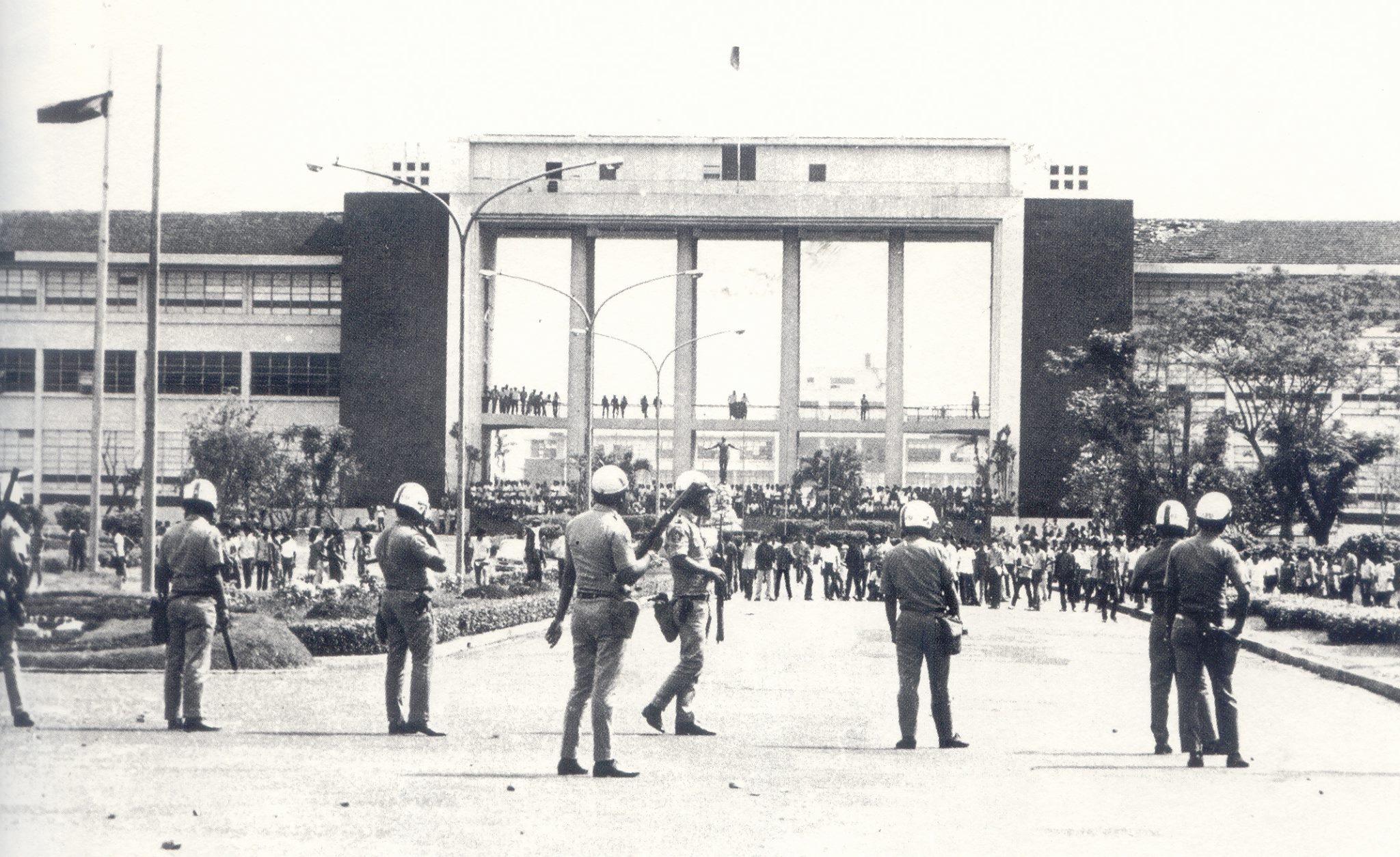
My biggest problem with the New Senate Building is that it is located and designed to be safe from public protest or petition. Crowds can easily be denied even a chance to get near the whole BGC complex. There are few public transport options that would allow ordinary citizens to get to the area. Through its massive helipad, senators can easily be conveyed to and from the location by air – without having to suffer the traffic that ought to be their concern.
Set aside for now the remote, but historically real possibility that the military could very easily surround the Senate should it decide to overthrow civilian government. The greater danger to democracy is when the military and the civilian authorities ally with each other against the freedoms and interests of the people. Surrounded by military premises (and interestingly, military golf courses), Senators could (and might not even need to) solicit the assistance of the military to disperse a crowd.
That is hopefully not going to happen. But enveloping presence of military institutions alone could intimidate or deter peaceful mass action.
What can we still do?
What will most likely happen is that the Senate will move to the new building and location anyway, despite controversy. Perhaps, the Senate interior can still be adorned and decorated in a way that reflects our history, culture, and national ambitions more effectively than the corporatist exterior.
For now, the lowest hanging fruit is to cure the anti-democratic elements in the space.
For starters, perhaps something similar to the 1989 U.P.-DND Accord can be arranged for the security of the area surrounding the New Senate Building, so that Senatorial independence as well as the freedom of assembly without violent dispersal by the military or the police can be guaranteed. Anyway, if something as violent as the siege of the U.S. Capitol in 2021 takes place, the military is outside but nearby.
For sure, more public transport options should be made available to the Senate – to make it more accessible to more people.
In any event, the ongoing hearings on the New Senate Building will hopefully not only zero in on financial considerations, but also direct the discussion towards making the space more consciously affirming of our history, our civic traditions, and above all, our democratic aspirations, so that at least in myth and symbolism, the Senate and the People of the Philippines can be one and the same.
Christian Dy is a history and culture advocate previously involved in cultural and historical projects such as the Banaue Rice Terraces Restoration Project and the Bansay Bikolnon series of Ateneo de Naga University Press. He is currently Policy Chief for a member of the House of Representatives. Naturally, the views and opinions he expresses here do not reflect those of his current principal.
