
Lechonero from Carcar Named Best in Cebu

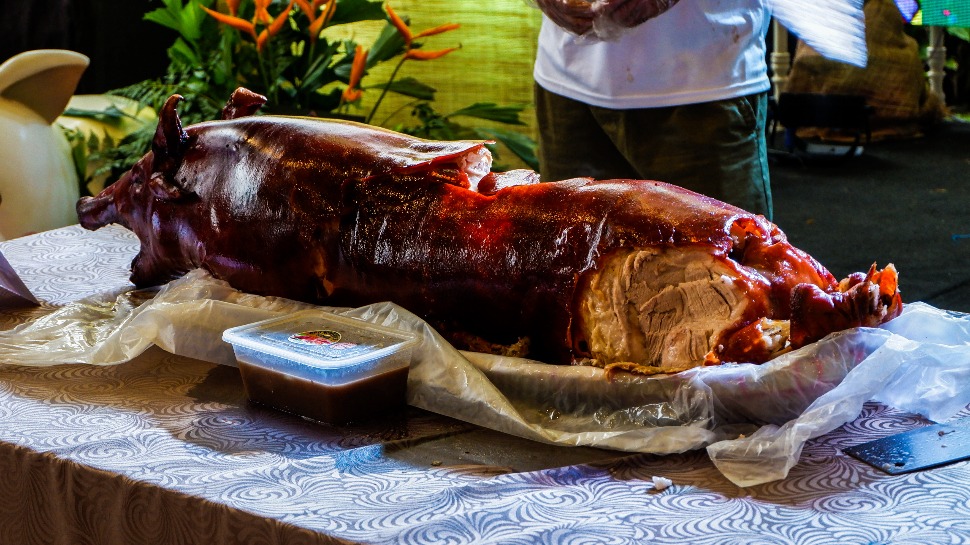
Crispy skin, juicy and tasty meat, and consistent cooking are the non-negotiables when it comes to Cebu lechon, according to renowned celebrity chef Myke “Tatung” Sarthou.
“What is remarkable about Cebu lechon is its flavor,” the celebrated chef and restaurateur said at the sidelines of the Cebu Lechon Festival held over the weekend at The Mactan Newtown in Lapu-Lapu City. “Cebuanos are not shy in giving it as much flavor as possible.”
The festival, organized for six years now by property development company Megaworld, held the first-ever Best Lechonero Award that saw entries from known lechon locations such as the cities of Carcar, Talisay, Cebu, and Lapu-Lapu.
ALSO READ
Esquire's Essential Lechon List For the Year of the Pig
Lechon Wars: Supreme Court Issues Verdict in Elar's vs. Elarz Case
Ask any Cebu resident and often the answer to the question on where one can get the best lechon is often a toss-up between Carcar City or Talisay City.
Henry Cui (left) of Apo Ni Bebe’s Lechon holds his award as Best Lechonero during the Cebu Lechon Festival. He is shown with Chef Myke “Tatung” Sarthou, who was one of the judges
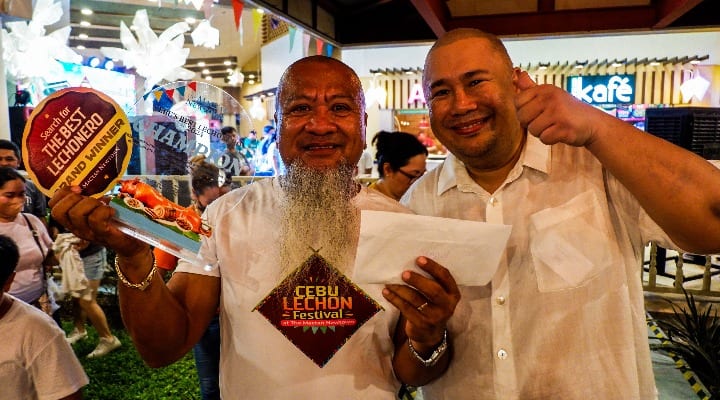
On Saturday (August 31), a panel of judges that included Chef Sarthou named Apo Ni Bebie’s Lechon from Carcar City as the province’s best lechonero.
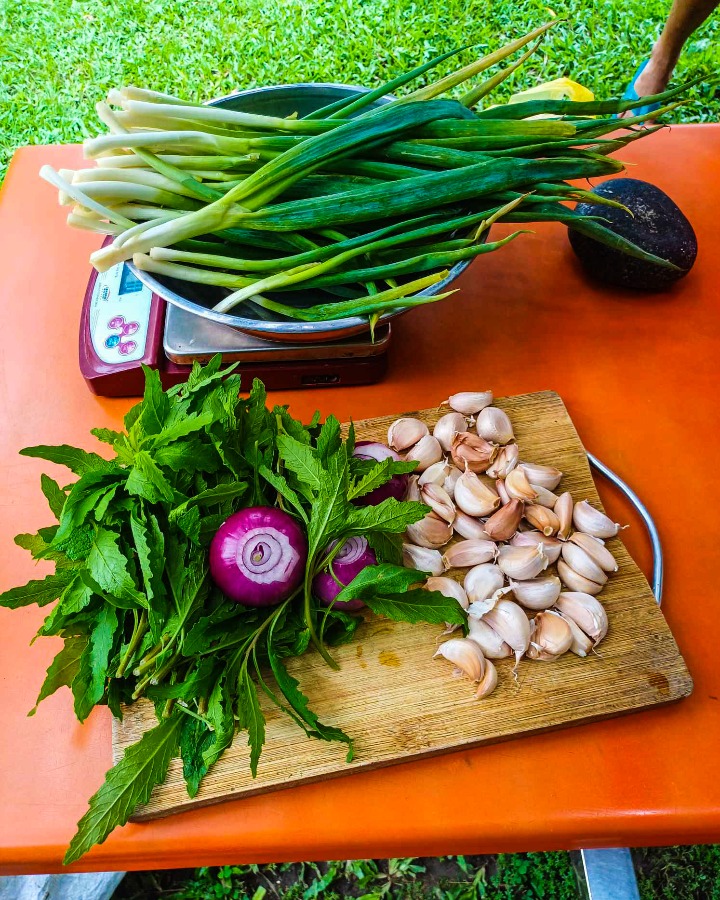
What distinguishes Carcar lechon from those in other parts of Cebu and the country is the use of the herb epazote or pasyotes, Sarthou told Esquire Philippines in an interview. He said only two places in the Philippines are known to use pasyotes in their meats: Ilocos for the chicken stew pipian, and Carcar for its lechon. Sarthou said Filipinos got the pasyotes from Mexico during the Spanish colonial rule.
These are the herbs used as stuffing for the lechon from Carcar City. The green leafy vegetables on the chopping board are the pasyotes, which makes the lechon distinct from all the others in the country
Sarthou, who is also a Cebuano, said the Carcar lechon was cooked perfectly, with a glassy character to its skin, cracking when you take a bite. It was also flavored perfectly and cooked consistently.
Sealing the win was the owner Henry Cui’s presentation and serving. The lechon looked perfect, which Sarthou said was a result of managing the heat and cooking time well.
Cui said roasting lechon in their family started with his grandmother in the 1970s. It was passed on to his mother, Bebie, from whom he learned the craft of roasting lechon.
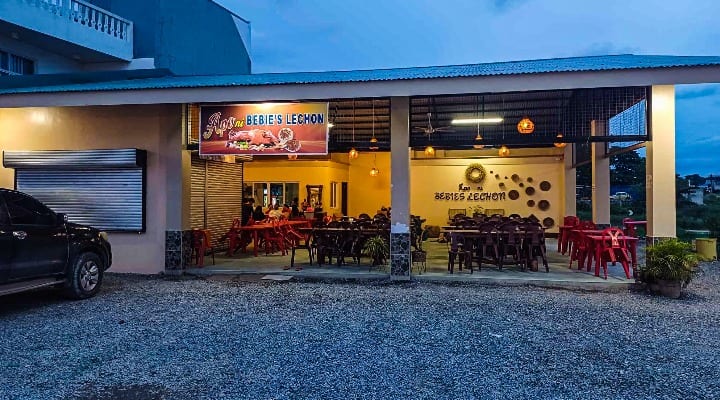
Cui said he later decided to start his own lechon house, which is located on the diversion road in Carcar City, next to the rows of another pork delicacy the southern city is more known for: chicharon or pork cracklings.
Henry Cui serves a sample of his winning lechon to the judges of the Best Lechonero Award (seated from left) Art Boncato, Group General Manager of Megaworld Hotels and Resorts; Chef Myke “Tatung” Sarthou; Tourism Undersecretary Ferdinand Jumapao; and The Mactan Newtown General Manager Thesbe Alonso
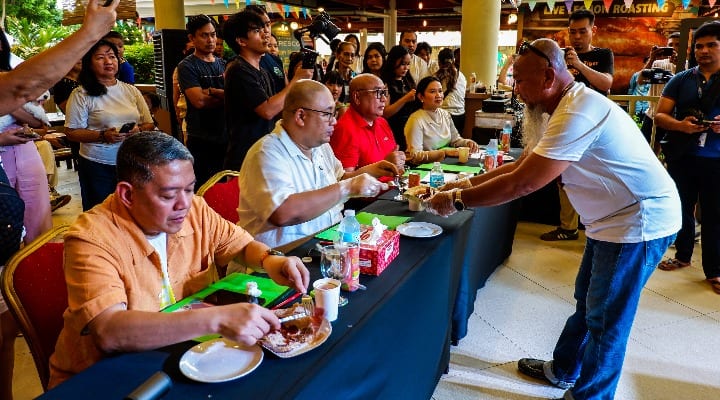
What makes Cebu lechon stand out is that unlike those of other places, lechon “is not a secondary dish” in Cebu. Cebuanos don’t need other stuff to make it special, Sarthou said. A feast can be as simple as lechon and puso or rice cooked in a palm pouch, he said.
The lechon festival was held in collaboration with the Department of Tourism and the Lapu-Lapu City Government. Sarthou said Cebu should support events like the festival because it “iconizes Cebu lechon and educates the people on why we should support the industry and own it as something very Cebuano.”
Apo ni Bebie’s Lechon is located at the diversion road in Carcar City, which is about 3 hours away from Cebu City
Sarthou also held a cooking demo of dishes that can be made from lechon during the festival.
