
Francis Ang’s Abacá Offers Novel Ways to Experience Filipino Food

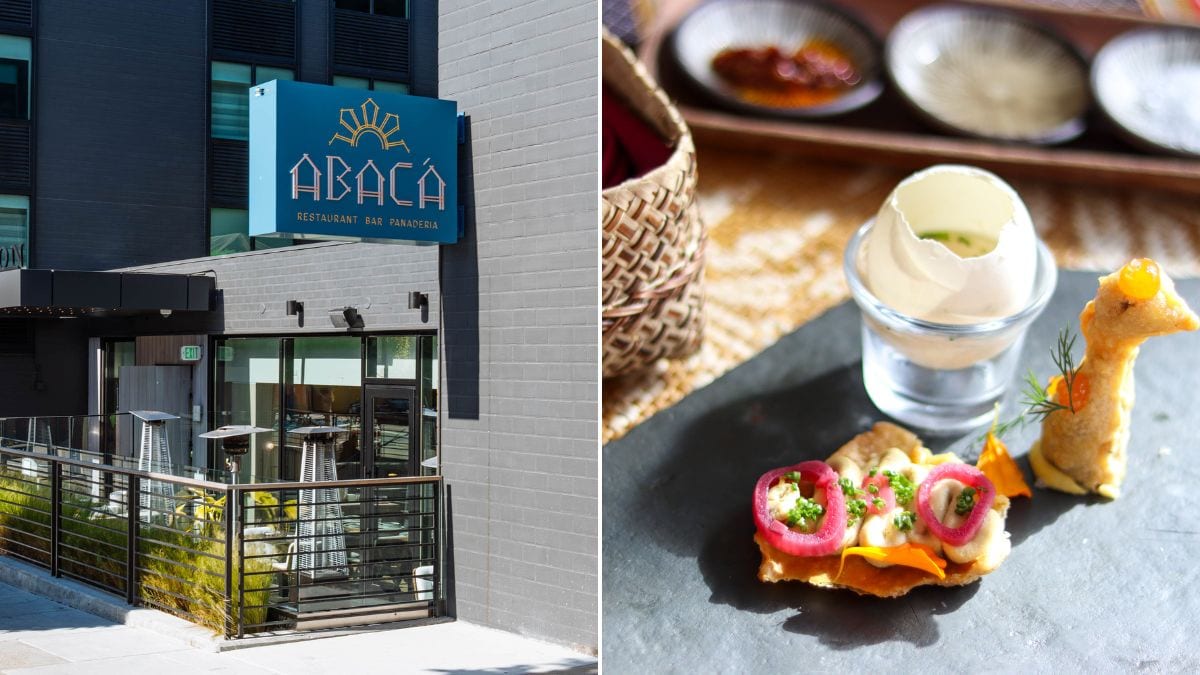
At 19, when Francis Ang moved to the U.S. to study Culinary Arts, he couldn’t even fry an egg. Fast forward: he’s now the co-founder and executive chef of Abacá, one of San Francisco’s most acclaimed restaurants. Since opening in 2021, it’s racked up accolades—named one of America’s Best New Restaurants by Esquire US, included in The New York Times’ 50 Best Restaurants in America, and hailed a James Beard Award Semifinalist for Best New Restaurant. Eater San Francisco praised its Most Innovative Menu, and the San Francisco Chronicle keeps it on the Top 100 Restaurants list.
Esquire Philippines caught up with Ang during his recent trip to the country for the International Manila Food Festival (IMFF). We talked about how he found his way into the culinary world, what inspired him to focus on Filipino cuisine, the journey of building Abacá, and how he and his team are shaping contemporary Filipino dining in the U.S.
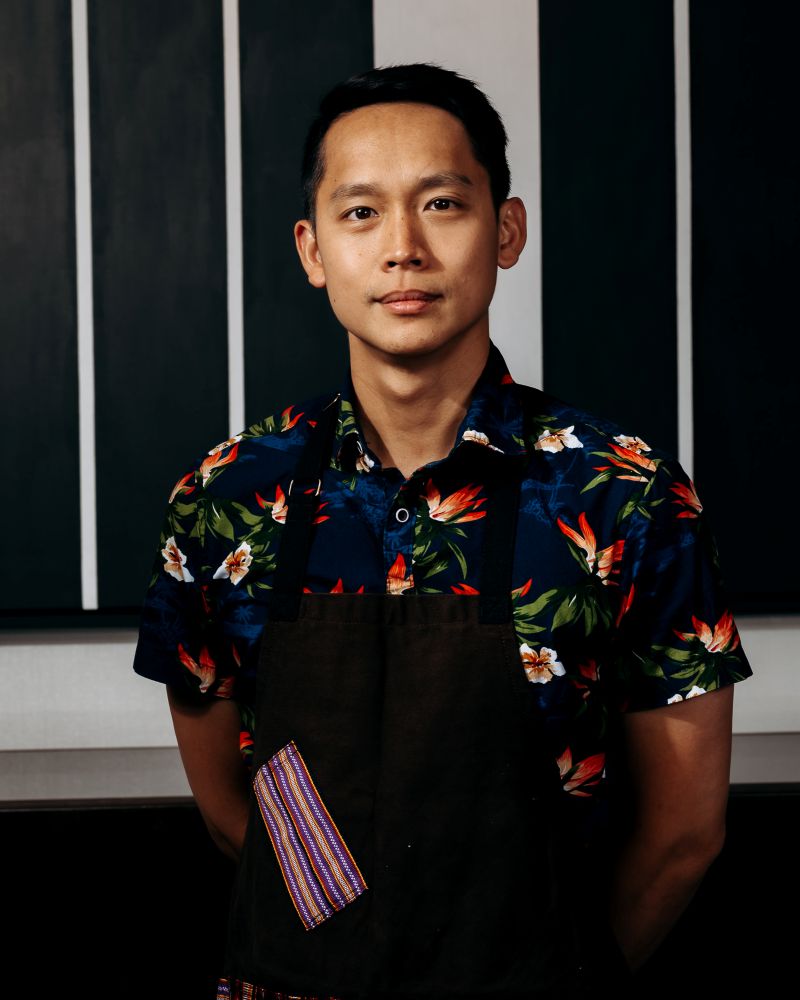
Abacá's Executive Chef, Francis Ang
Igniting a Love for Cooking
“When I went to culinary school I've never cooked, ever,” he recalls. “So when I started to learn to cook, it was really cool because it kind of gave me a sense of purpose. Like, ‘Wow, now I can do stuff for myself.’”
Ang swears he wasn’t the kind of kid who shined on stage or on the court. “I was the person who couldn’t sing, dance, or play sports—walang talent,” he says with a chuckle. “Then I discovered pastry and that blew my mind. Being able to plate and decorate, that was the moment I thought, ‘Okay, this is it. I'm gonna get stuck in this.’”
Looking back, his interest in food may have developed from watching cooking shows during his childhood and from his family’s love of dining out. “I didn’t really watch a lot of cartoons; it was more home improvement and cooking shows. I think that planted a seed,” he reflects.
Ang started as a pastry cook in the U.S. but, following an older chef’s advice, also learned savory. He bounced between the two. “Pastry’s great,” the chef told him, “but if you’re planning to run your own place, you need to learn savory.” In mastering both worlds, Ang realized that he gained a powerful edge in harnessing his creativity as a chef.
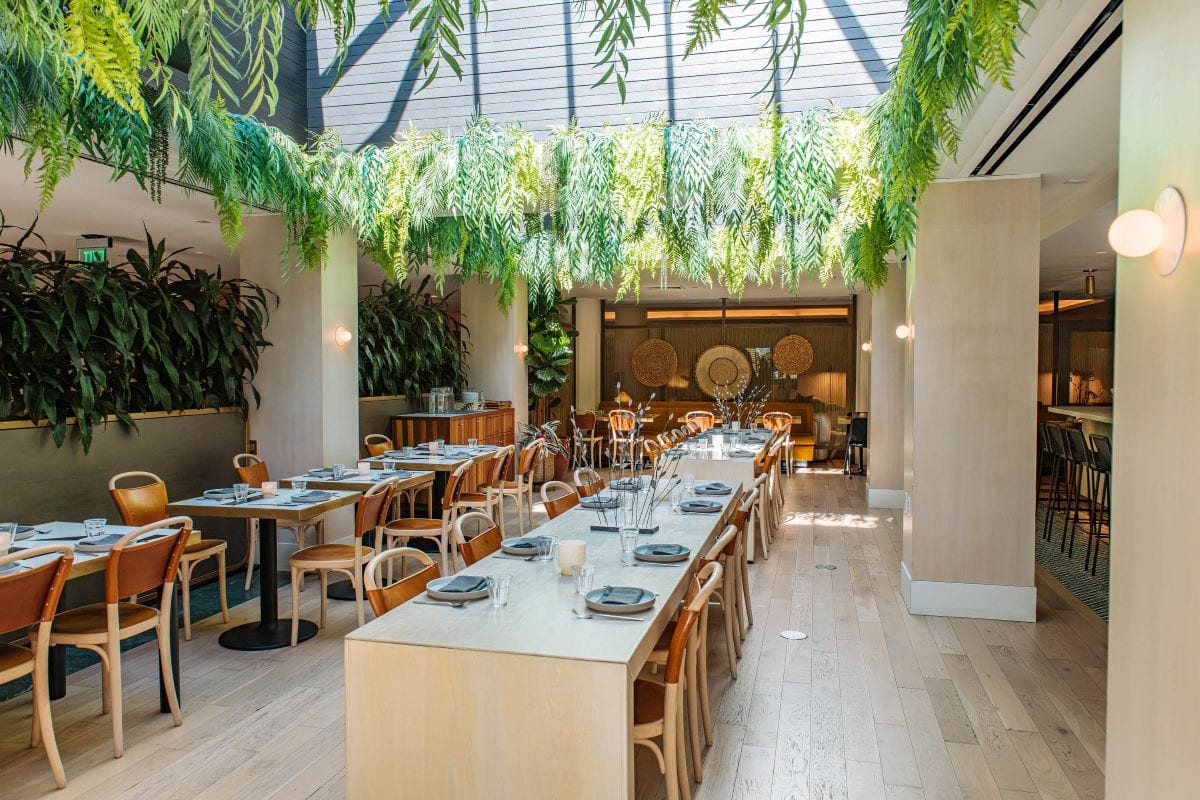
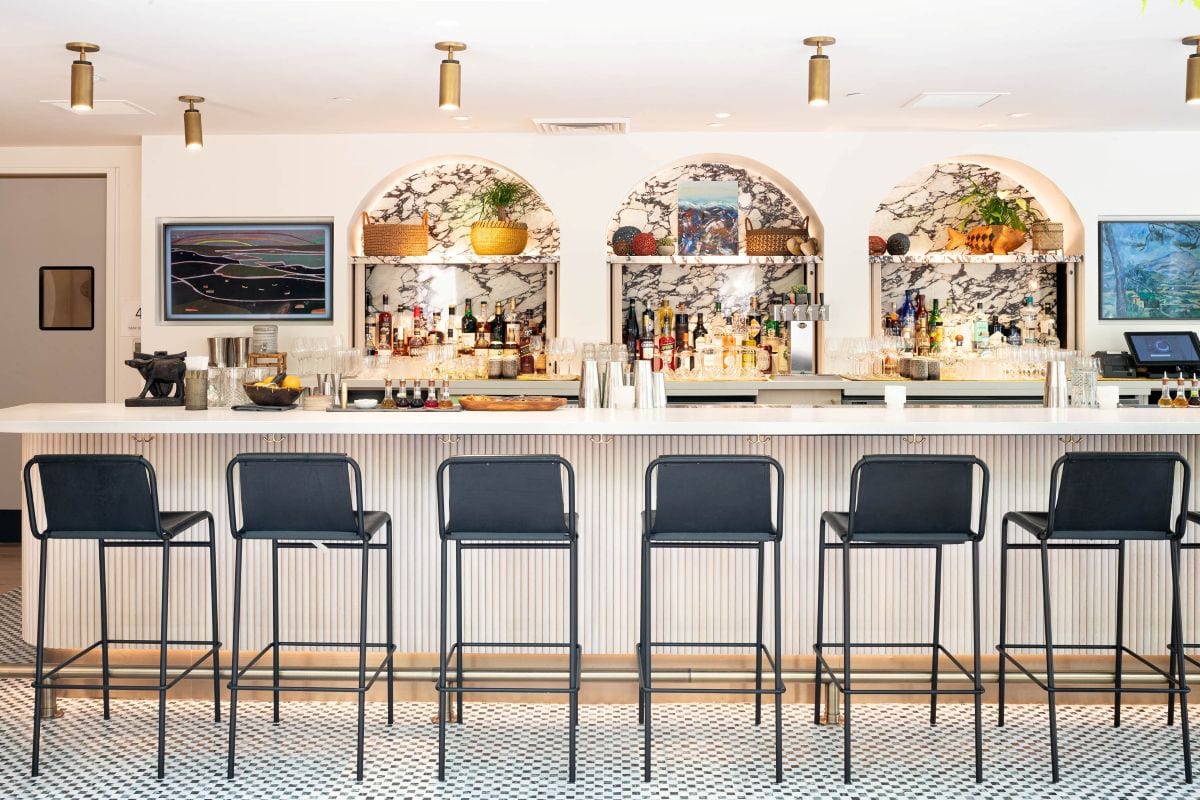
Bright and airy, Abacá’s dining room blends natural light, greenery, and warm wood tones for a welcoming, contemporary Filipino dining experience.
Finding Purpose in Yolanda’s Aftermath
The young chef worked in fine dining non-Filipino restaurants. But an experience sparked a calling to focus on Filipino cuisine—typhoon Yolanda in 2013. He and his wife, Dian, were visiting the latter’s hometown of Borongan, Samar when the super typhoon struck.
Luckily, they survived that tragedy, as there were two islets blocking the water surge from their town. “It was pretty bad where we were,” he recalls. “But when we started roaming around the next day to check out how everybody was, we saw the devastation. We told ourselves, ‘We gotta do something.’”
When they returned to San Francisco, they organized a fundraiser at the Michelin-starred restaurant The Fifth Floor, where he and Dian were both working at the time. The event, which featured an all-Filipino menu, was so well-received that it convinced the couple this was their calling. From then on, they began to dream of opening a Filipino restaurant.
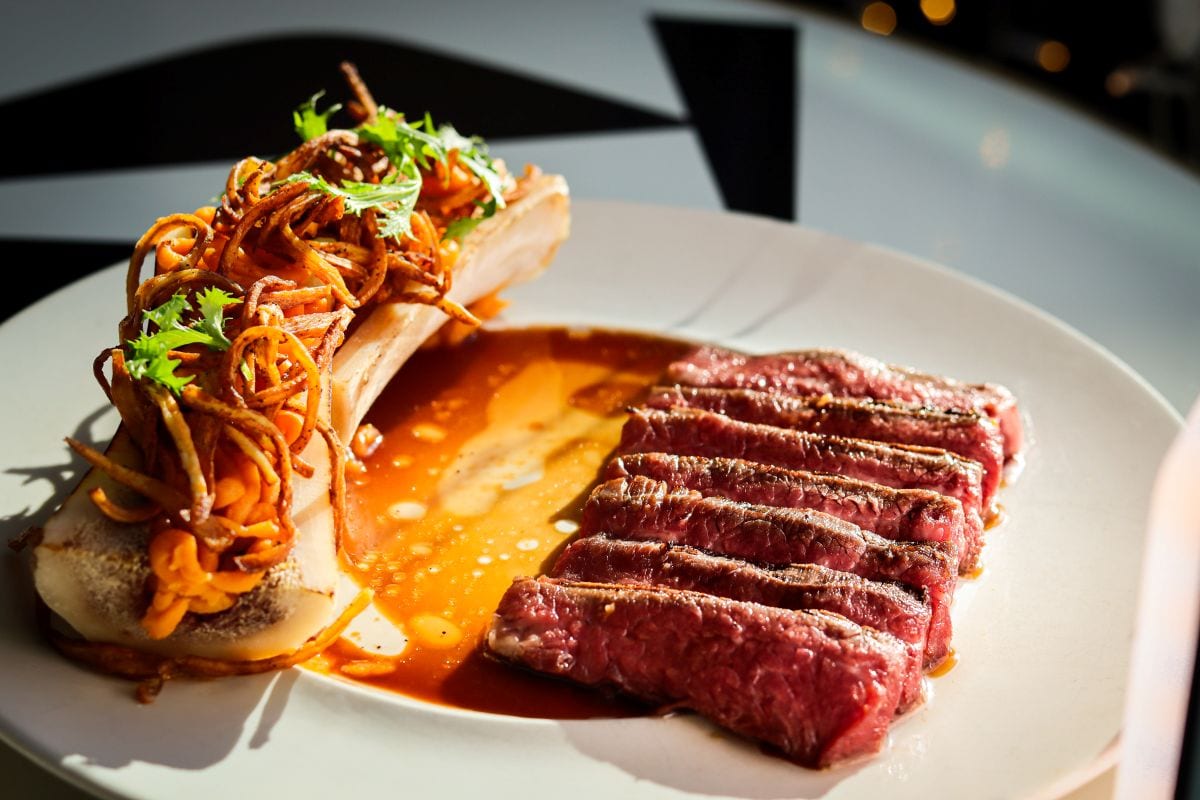
American Wagyu Beef Pares
But that didn’t come easy. They knew creating a dining concept was going to be a big risk, so on the advice of a veteran chef, they began testing the waters first through pop-ups, slowly building their brand over eight years. “We spent so many months traveling to different provinces in the Philippines just to understand its regional cuisines. That way we can represent it well,” he says.
Then in 2021, as diners eagerly returned to restaurants after the pandemic, they finally opened Abacá, which they described as a “contemporary Filipino-Californian restaurant, showcasing the beauty and vibrance of Filipino culture and cuisine.”
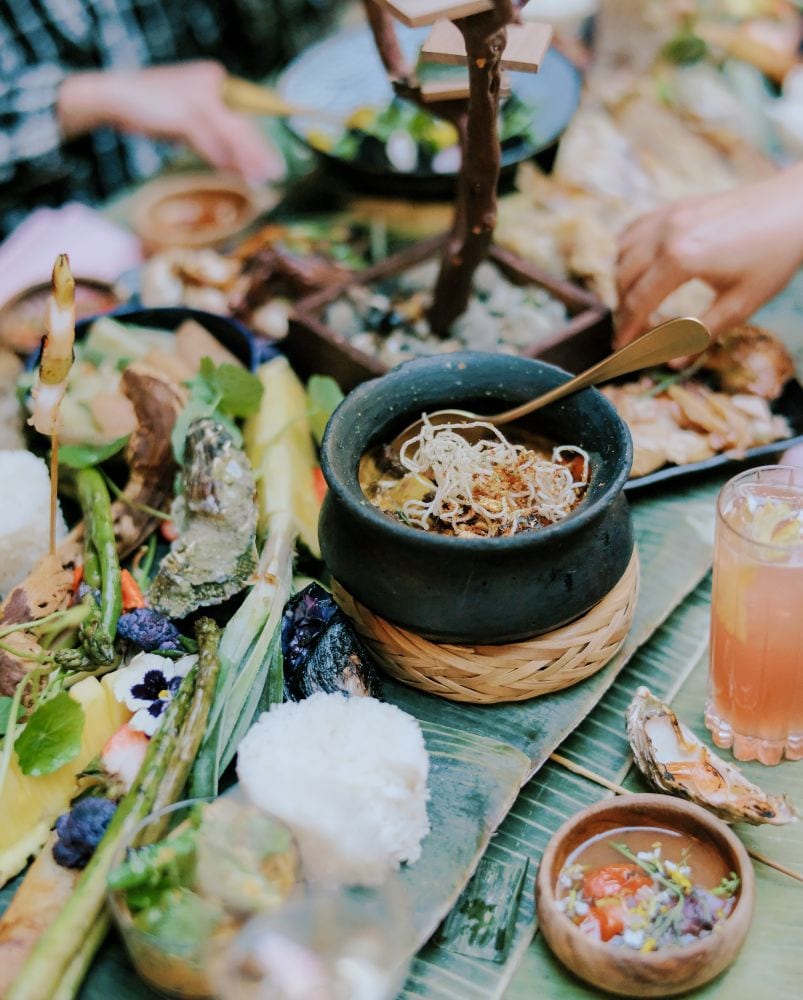
Kamayan dinner at Abacá
Innovation Meets Tradition
Ang believes his bicultural upbringing influenced his culinary approach. “Growing up in the Philippines definitely humbles me; simple ingredients are very important here. In San Francisco, I learned about quality produce and how textures marry with Filipino flavors,” he says.
His training as a pastry and savory cook was also a great advantage. “I have a savory chef’s mentality, so my pastries are different. I put garlic in ice cream, add tuyo to a chocolate mousse with raspberry,” he cites an example.
For Ang, one of the dishes that best represents the restaurant is their version of kinilaw. “Right now, our kinilaw is bluefin tuna with watermelon. Summer watermelon in California is just amazing. We made it into a poke—something that blends tradition with the flavors of California.”
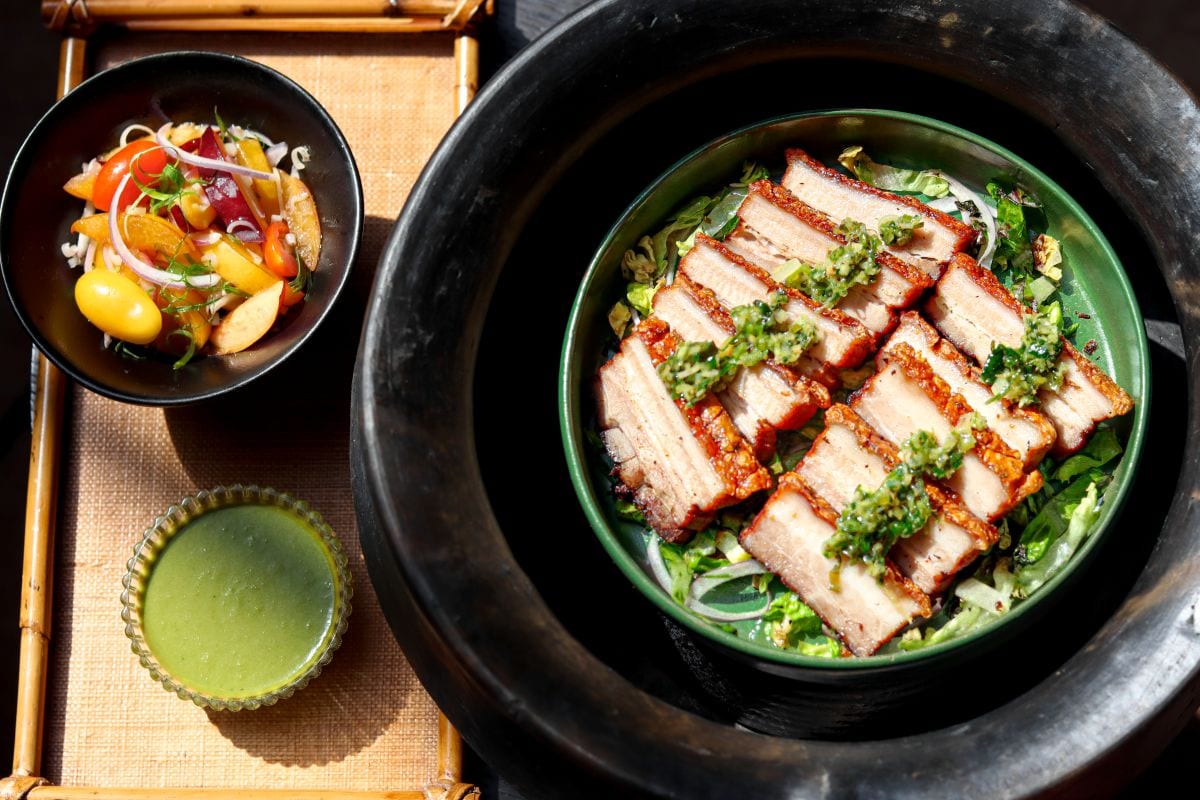
Abacá's Smoked Lechon Pork Belly
Guests who would like a fuller experience may try Paubaya (a Tagalog word which means “to entrust”), a multi-course, family-style tasting menu showcasing seasonal produce from both California and the Philippines.”
Diners who would like to try uniquely Filipino food may order their “secret menu,” which includes the Isaw Barbecue and Balut Three Ways. “With the balut, we take it apart. The bird—we beer-batter it so it’s like fried chicken. The egg yolk we cook, blend, and turn into a mousse, kind of like deviled eggs, served over chicken skin. It still looks like balut because you can see the duckling—we make sure to emphasize that, so you know exactly what you’re eating. Then we make a separate broth, pour it back into the duck egg, and you sip it straight from the shell,” he describes.
In time for its fourth anniversary, Team Abacá has crafted a special tasting menu featuring their bestselling dishes from the past years. These include their “greatest hits” such as Beef Kulma, Crispy Squash Okoy Fritter, and Halo-Halo Topped with Ube Ice Cream and Leche Flan. This menu is available beginning August 22, 2025.
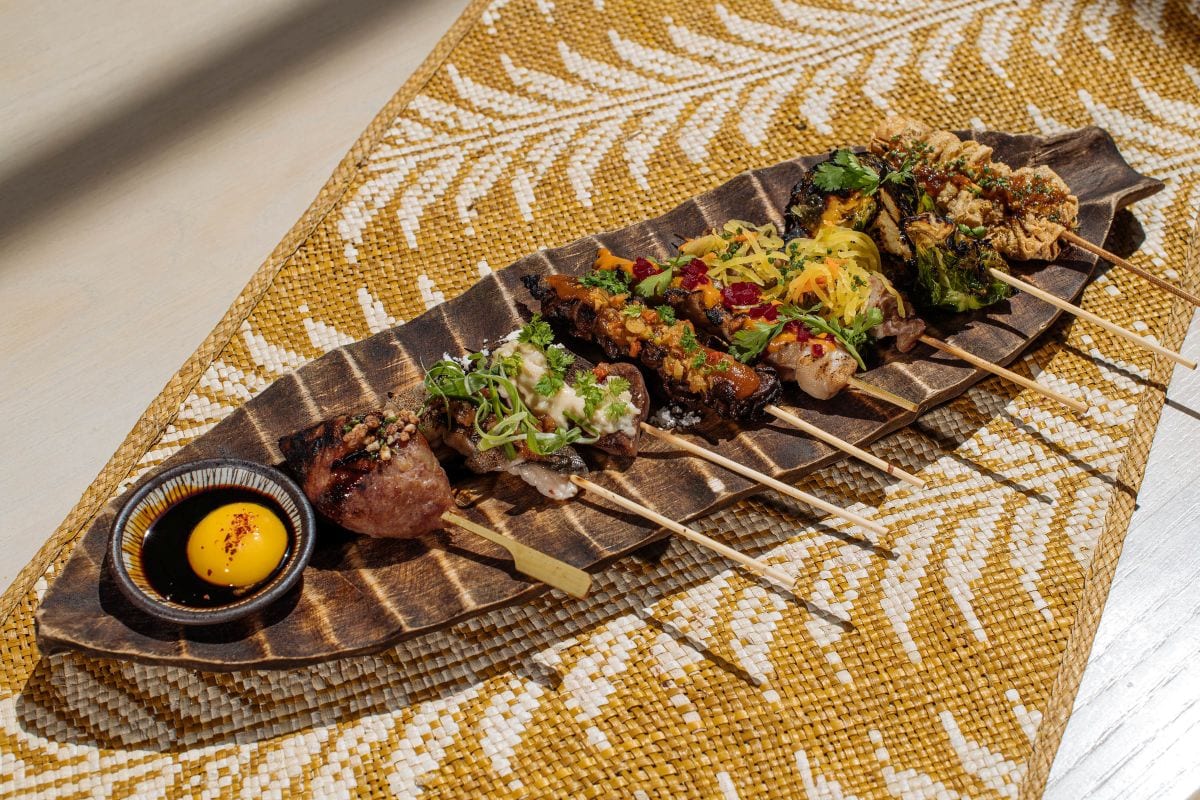
From left: Longganisa Tsukune, Laing Black Cod Belly, Lengua Estofado, Beef Heart Kaldereta, Chicken Satti Pork Barbecue with Atchara, Brussels Sprouts with Patis Mansi, Hodo Soy Yuba with Adobo Gastrique
Collaboration, Not Competition
With more Filipino chefs and restaurateurs earning global recognition, the world has grown smaller and more welcoming for champions of Filipino cuisine. A testament to this was the recent gathering of Filipino chefs from across the globe at the IMFF.
“Overall, I think we kind of stirred the pot and put ourselves in the global spotlight—not just in the Philippines and the US, but also in Australia, Europe, and France. I think that’s really, really good,” he observes.
ALSO READ
What’s Next for Dubai Chocolate Chef Nouel Catis After Shark Tank?
A Culinary Tour of Zamboanga, Basilan, and Tawi-Tawi at Hapag
With the growing number of Filipino restaurants across the US, does he feel the competition?
“We don’t see each other as competition. We even collaborate and cook at each other’s restaurants for free,” he says with a broad smile. They draw inspiration from each other’s dishes with mutual respect and celebrate each other’s success. “[Our thinking is] the more Filipino restaurants there are, the better. That way, people will start thinking, ‘Hey, let’s eat Filipino food tonight. Where should we go?’ They’ll try different places one by one. Sometimes people say, ‘I went here, I went there—yours is better.’ And I tell them, ‘No, we’re just different.’ No more of that old competitive mentality.”
Bar inside Abacá
In time for Filipino-American History Month in October, Abacá is flying in several chefs for a four-day event. “We’re doing a whole restaurant kamayan, or budol fight, then a tasting menu, a brunch, and even a pulutan night. I think it’s exciting for the Filipino community across the U.S.,” he says. Abacá is also set to host Team Hapag in the U.S. this November.
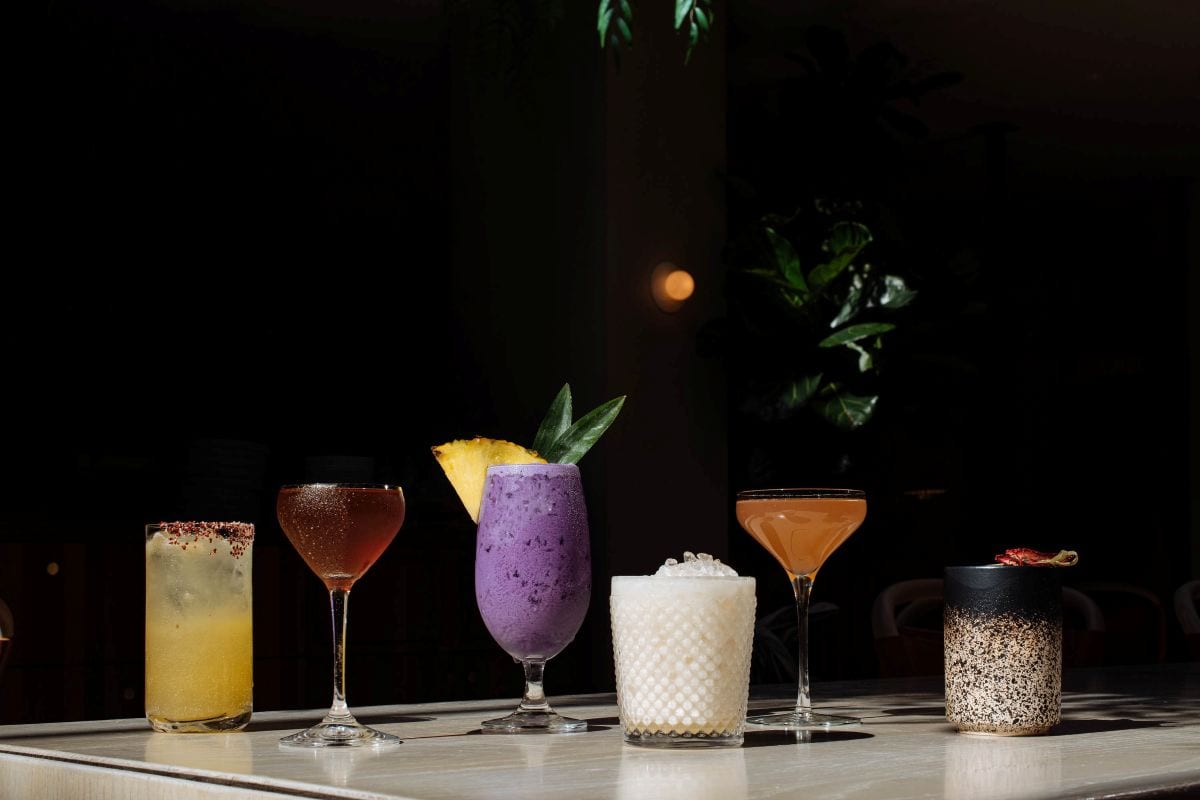
Cocktails at Abacá
As Abacá marks its fourth year, Ang reflects on how far they’ve come.
“It’s still young, but I think its identity has formed very well, and people have been receiving it with so much warmth. Guests travel from all over the world to dine with us, which is such a blessing. Of course, it comes with a lot of pressure—but we’re not fine dining, we’re upscale casual. And it’s mind-blowing how people embrace it.
“What touches me most is when guests thank us and say, ‘I’ve never had Filipino food before. Now I want to visit the Philippines.’ Those moments—nakakataba ng puso—make it all worthwhile.”
