
A Culinary Tour of Zamboanga, Basilan, and Tawi-Tawi at Hapag

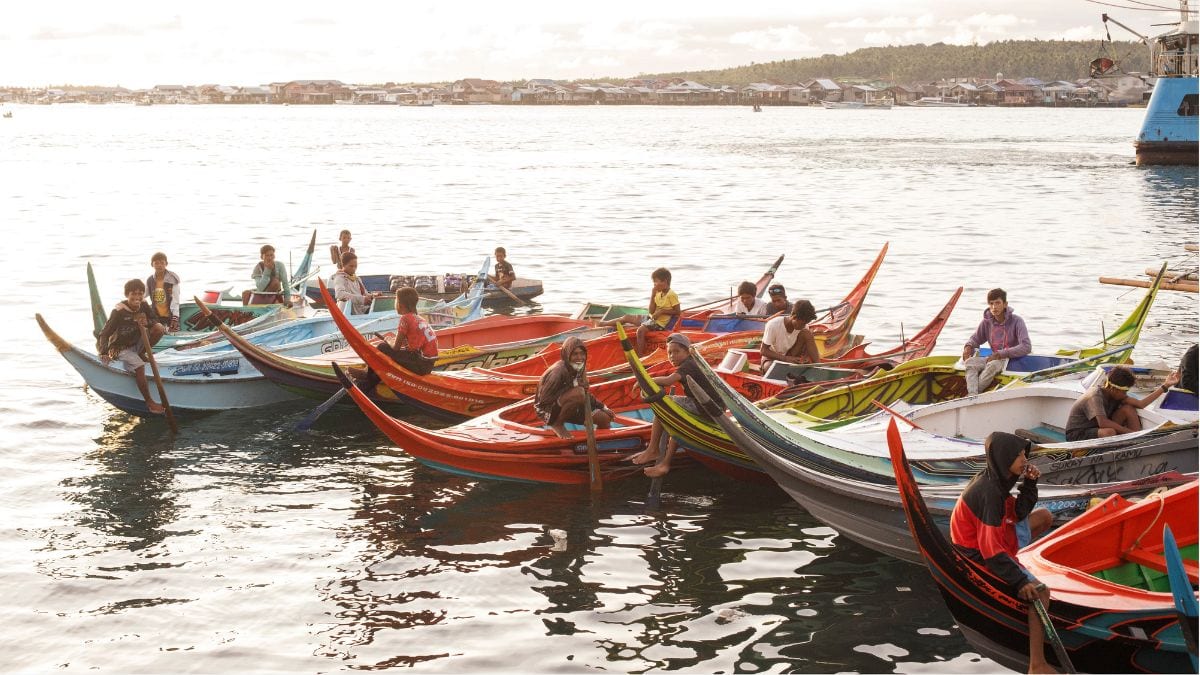
Zamboanga, Basilan, and Tawi-Tawi are three destinations I’ve long wished to explore but haven’t yet had the chance to visit. I know that there’s so much more to learn about Filipino culture in those regions, especially when it comes to their food, art, customs, and everyday life. So when Hapag invited me to experience its Western Mindanao tasting menu, I was more than thrilled. I had the opportunity to try Hapag’s Western Visayas menu last year, and the familiar flavors stirred a sense of nostalgia, bringing back memories of old friends and shared moments in Iloilo, Negros Occidental, Aklan, and Bacolod.
Much like myself, the team behind Hapag shared a deep curiosity about the Western Mindanao region. They wanted to understand more than just Tausug, Yakan, and Chavacano cuisines—they were eager to learn about the daily life of its people, shaped by geography, religion, and generations of cultural exchange.
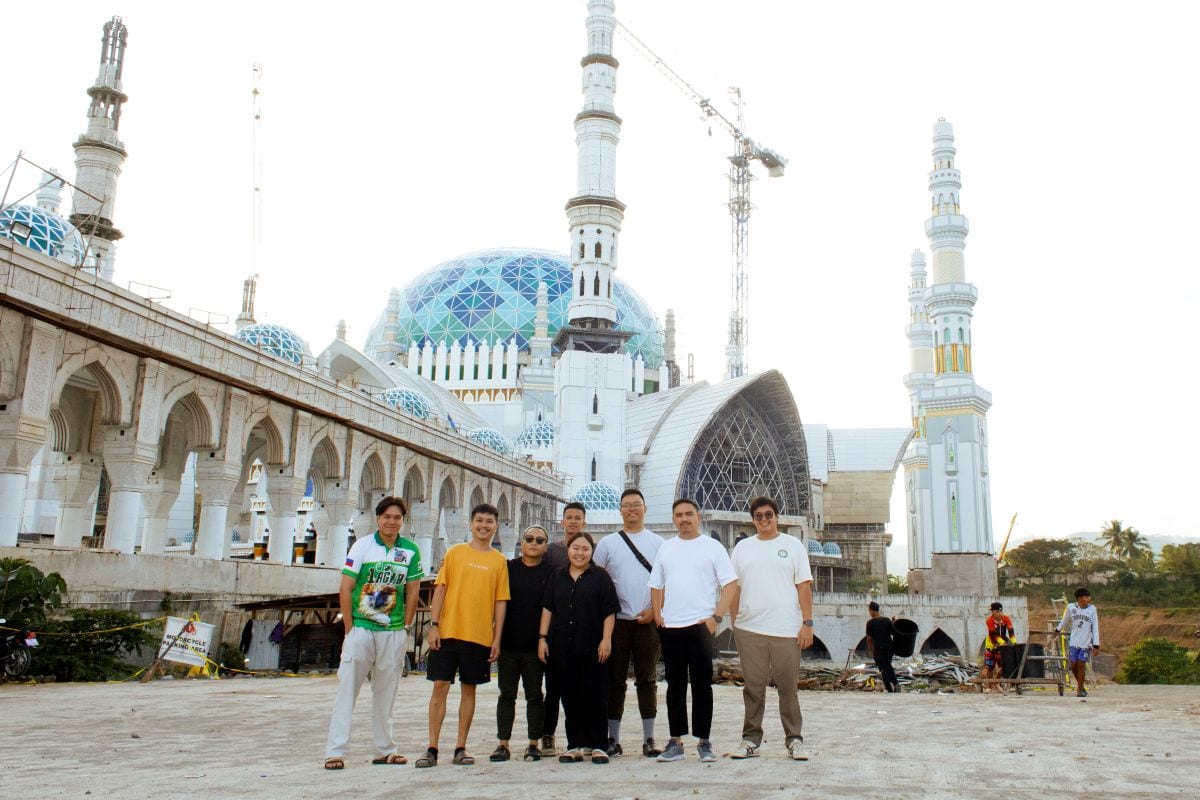
The Hapag team exploring Zamboanga
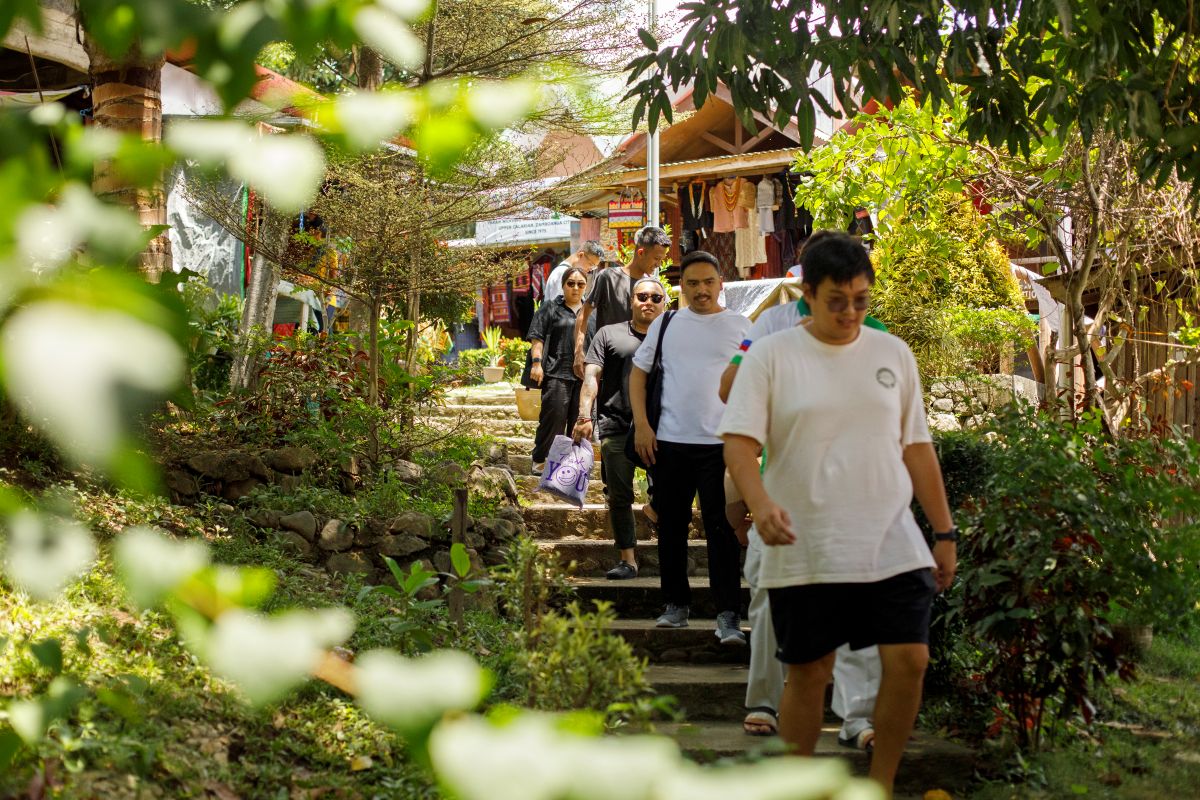
“None of us really knew much about the cuisine from that part of the Philippines,” admitted Kevin "Nav" Navoa, chef and partner of Hapag. “As a Filipino chef, I felt it was important to understand regional food techniques and traditions. After working on the Western Visayas menu, we wanted to keep digging deeper into the country's diverse culinary roots.”
They picked Zamboanga, Basilan, and Tawi-Tawi for practical reasons—they were the most accessible within a six-day trip. Other destinations would have required 10-hour boat rides. They were aware of the potential risks, “which only made us more curious,” said Navoa.
Among the three places, Zamboanga and its neighboring provinces piqued their interest the most “because they felt ‘foreign’ even to us,” said Navoa, “and we were intrigued by the strong Muslim and Malaysian influences in the region.”
Bustling streets of Tawi-Tawi
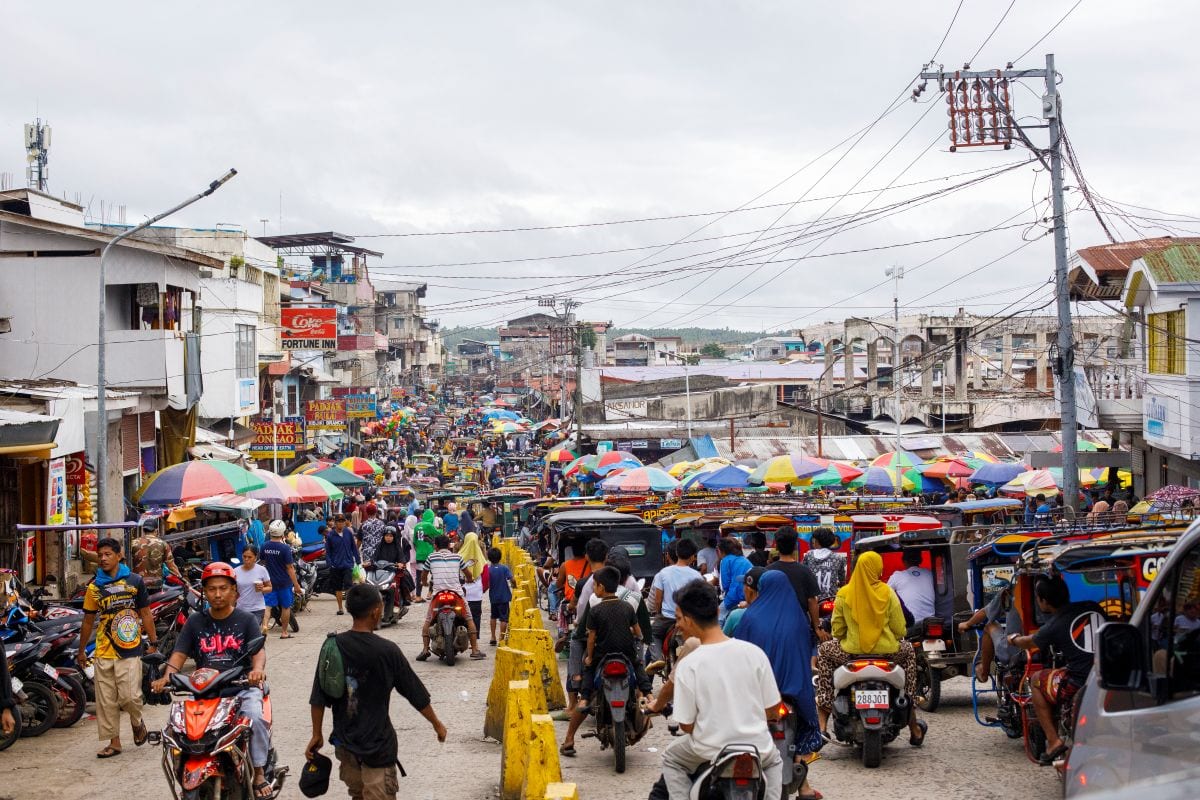
I’d imagine the highlight of their trip would be exploring the public markets. “The markets were deeply localized,” observed Thirdy Dolatre, chef and partner of Hapag. “In Lamitan, Basilan, most goods came directly from the area or nearby Malaysia—no big brands or outside products, aside from maybe candy from Zamboanga. Tawi-Tawi’s markets were especially eye-opening during Ramadan. There were stalls selling unexpected dishes like Mee Goreng with hotdogs and Murtabak with Milo. Very Malaysian-inspired. It felt like a different world.”
When asked if any flavors or dishes surprised them during their culinary journey, Dolatre said the sweetness took them by surprise. “Even seafood dishes like clams and crabs were sweet. Then there were dishes like Tiyula Itum—a beef stew with burnt coconut—and different versions of Pianggang (also with charred coconut), which were beautifully balanced and smoky. We also loved the seaweed salad with toasted coconut and were impressed by how subtle and refined Tausug flavors could be,” he recalled.
A trip to a local coffee shop in Tawi-Tawi was quite memorable for Erin Ganueles-Recto, head sommelier of Hapag. “They serve a bilao of pastries and you pay only for what you eat. One snack, pastil, is eaten like cereal with vinegar. It gave us insight into the community's trust and culture,” she said.
The above-mentioned experiences, simple yet revealing, captured the broader spirit of the team’s journey. “Mindanao has always felt distant, even to us. But once we were there, the food, the people, and the stories opened up a part of the Philippines we hadn’t seen,” said Navoa. “This menu is our way of saying: there’s more to Filipino food than what we think we know.”
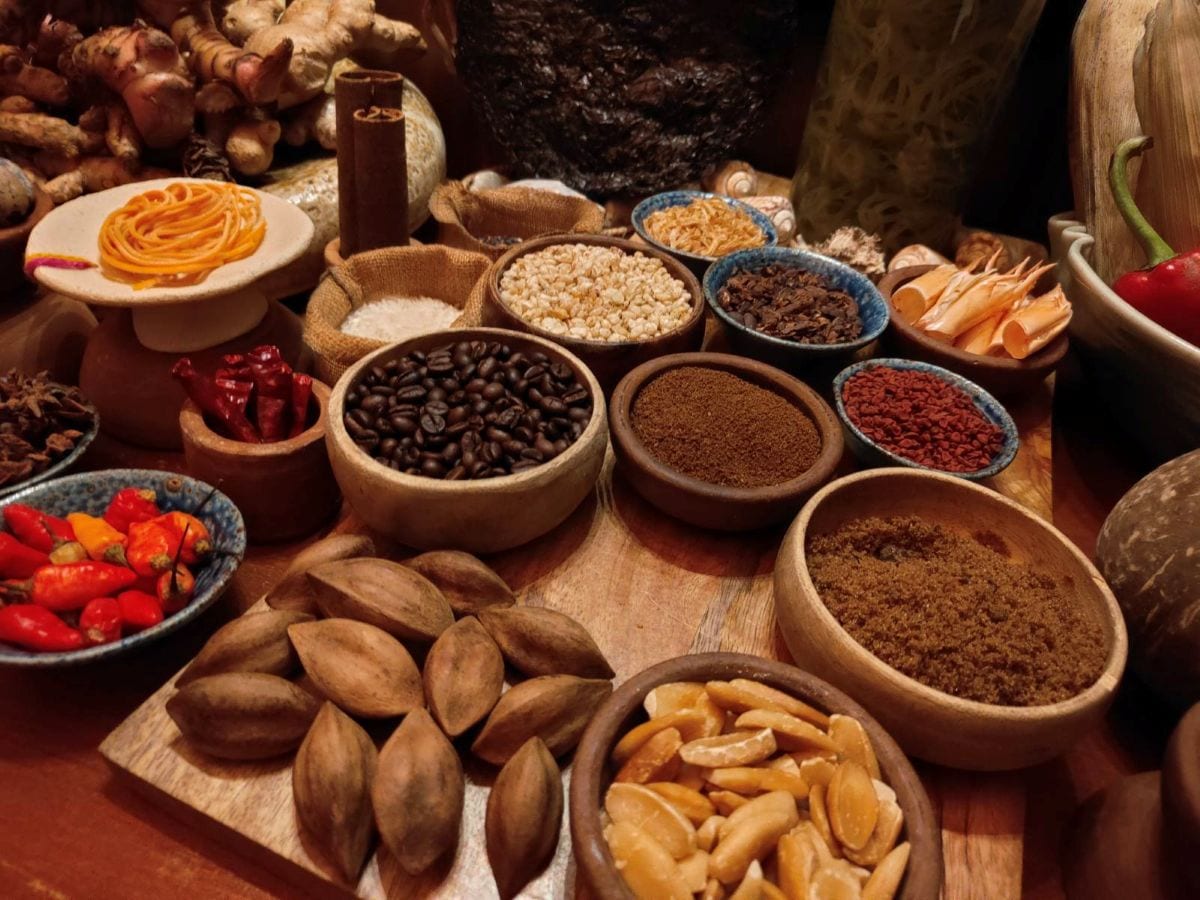
Dinner began with a brief introduction to some of the local ingredients used in the menu.
Savoring Western Mindanao
Experiencing Hapag’s Western Mindanao menu is an immersive introduction to this region often overlooked, yet rich in history, culture, and complexity. The nine courses reflect Tausug, Chavacano, and Yakan influences. “We’re focusing on honest storytelling, showing how our understanding evolved. We’re being thoughtful about pairings, too—like whether to include wine alongside Muslim dishes,” Dolatre said.
For a more enriching experience, we were first introduced to some of the ingredients used in the menu, then taken on a kitchen tour where we met the people behind Hapag, whose intentional approach makes the dining experience more personal.
Tiyula Itum in Tawi-Tawi
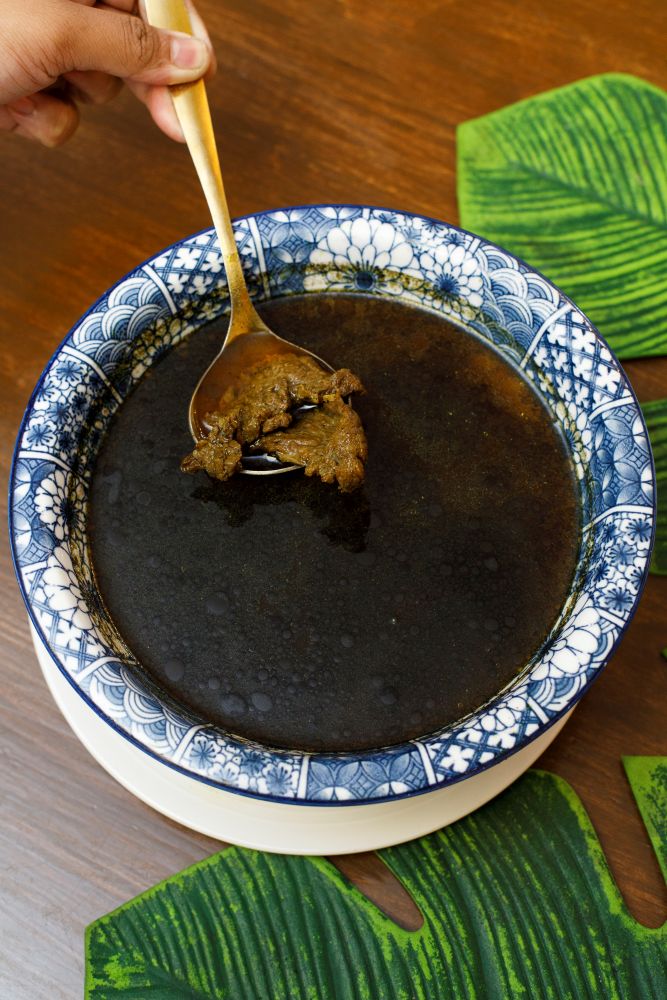
First Course: Tiyula Itum
A fitting first course to the dinner was a warm, savory, and aromatic broth called Tiyula Itum—a signature Tausug dish typically served on special occasions. The dish was introduced to the Hapag’s culinary team during a visit to Restaurant Antien in Zamboanga.
Hapag’s version features ginger, galangal, turmeric, native shallots, lemongrass, chilies, and burnt coconut, from which it gets its dark color. The aromatics are simmered for 24 hours with beef tendon and bones, resulting in a broth that is rich and flavorful.
The soup is reminiscent of tinola, but with richer, more layered flavors. It's the kind of dish you reach for when you're not quite feeling like yourself—it's warm and nourishing.
Satti stores in Zamboanga
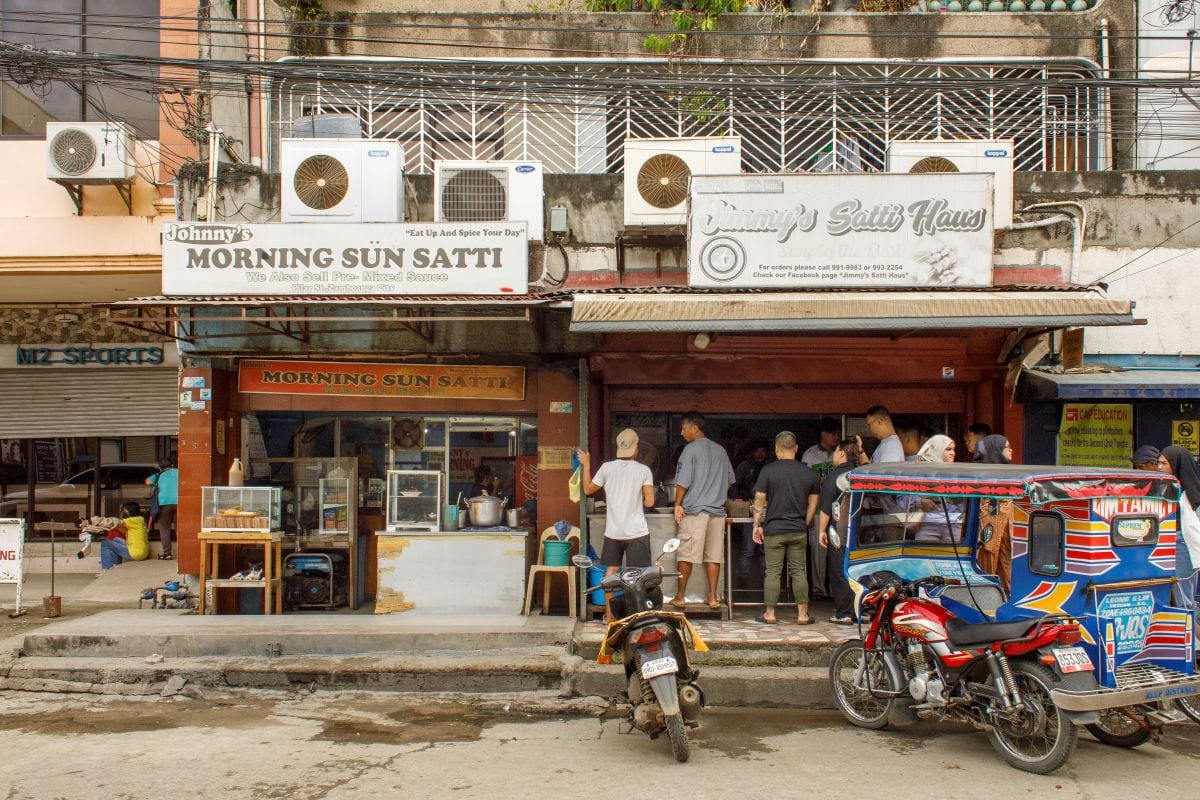
Second Course: Satti
The next course called Satti is a local classic with strong Southeast Asian satay influences. As discovered by the Hapag team, satti is a staple breakfast in Zamboanga, served from early morning at local satti houses like Jimmy’s Satti Haus. The dish features grilled beef and chicken skewers served over rice, drenched in a spicy, slightly sweet red sauce made from coconut, peanuts, and chili.
Satti is a staple breakfast in Zamboanga.
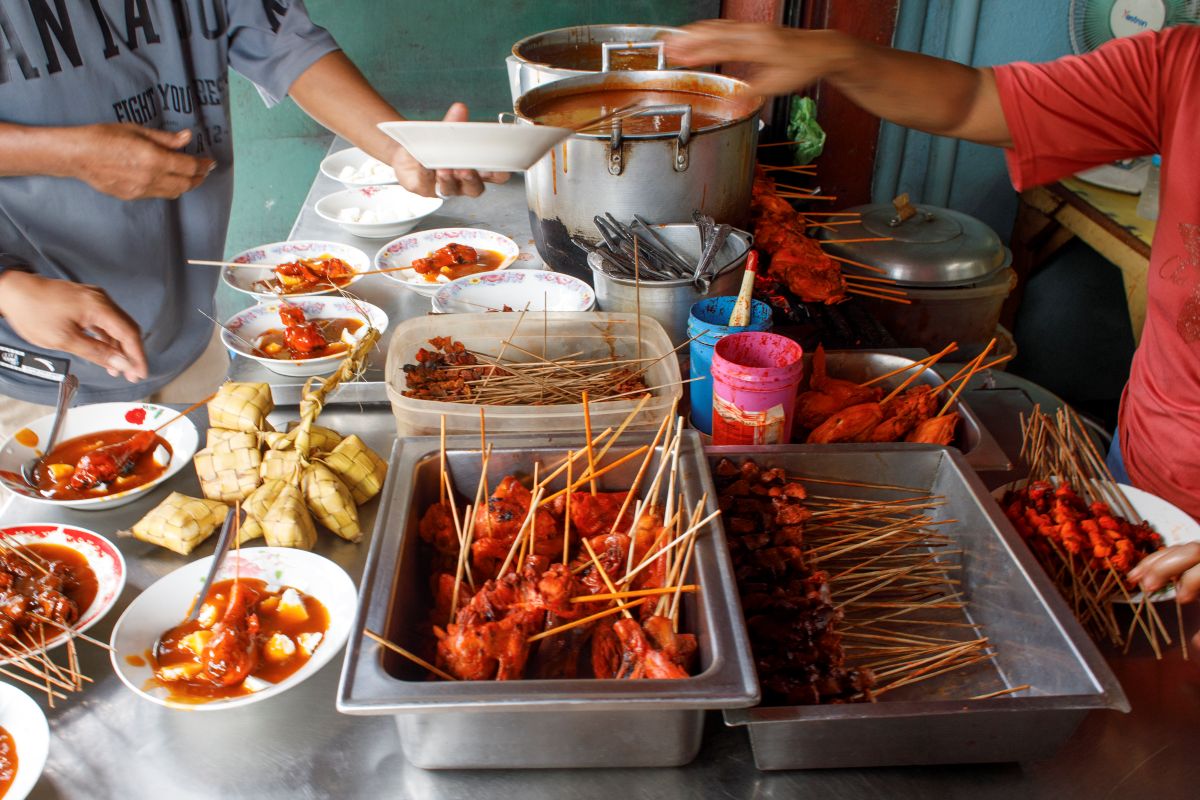
Hapag’s version offers four skewers—beef rump, beef tongue, chicken skin, and chicken isol—each with a distinct texture, served alongside a thick, vibrant satti sauce. Traditionally, the sauce is poured directly over the skewers, but the Hapag chefs encourage diners to taste each one on its own first, then dip as they please.
Agal-agal sold in Tawi-Tawi
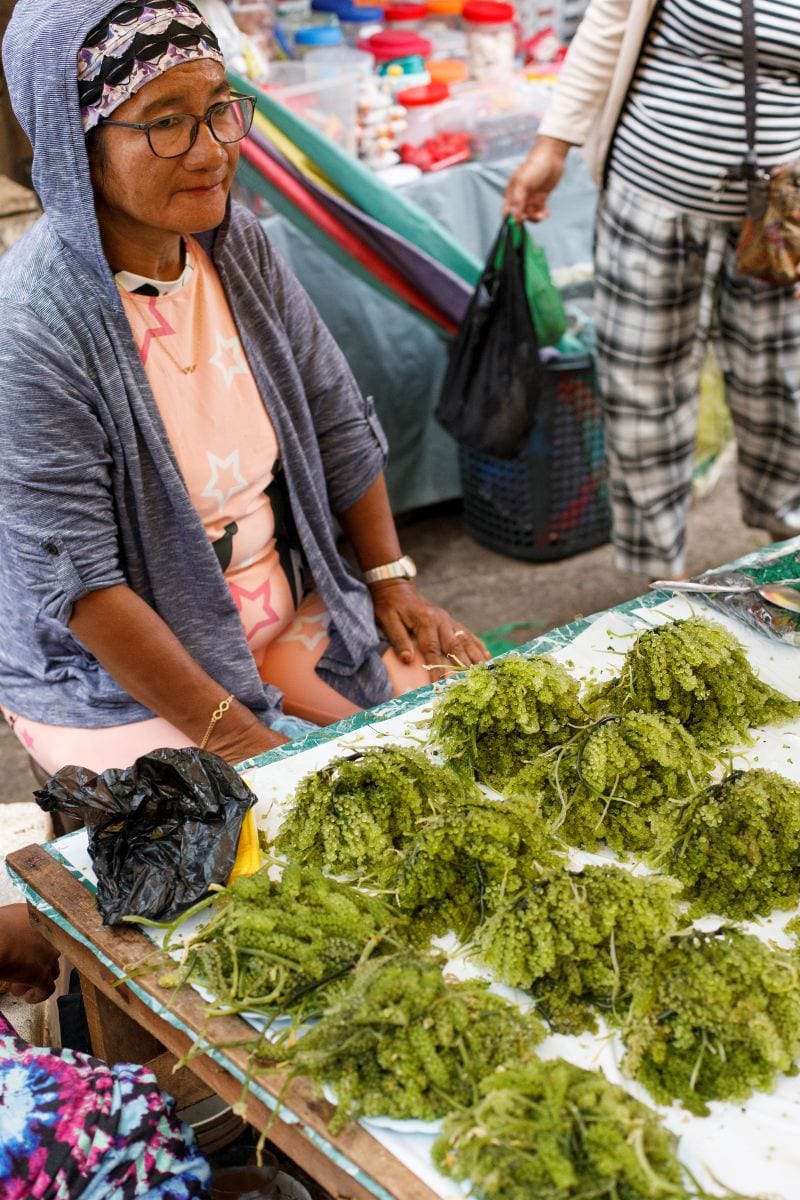
Third course: Agal-agal Salad
For the third course, the team introduced us to agal-agal, a type of seaweed abundant in Basilan and Tawi-Tawi. Chewy, slightly gelatinous, with a gentle, briny sweetness, agal-agal is typically served as a salad with soy sauce and calamansi, topped with bubuk (toasted spiced coconut). The chefs shared that this was a favorite during their visit.
At Hapag, the dish begins with a base of aiko tomatoes, combined with green mango slices and red onions. On top, they place agal-agal that has been soaked in their house-made, two-year-old shoyu. They let it sit for a while to allow the seaweed to absorb the saltiness of the shoyu, then add slices of tuna dressed in a gamet calamansi vinaigrette.
Agal-Agal Salad
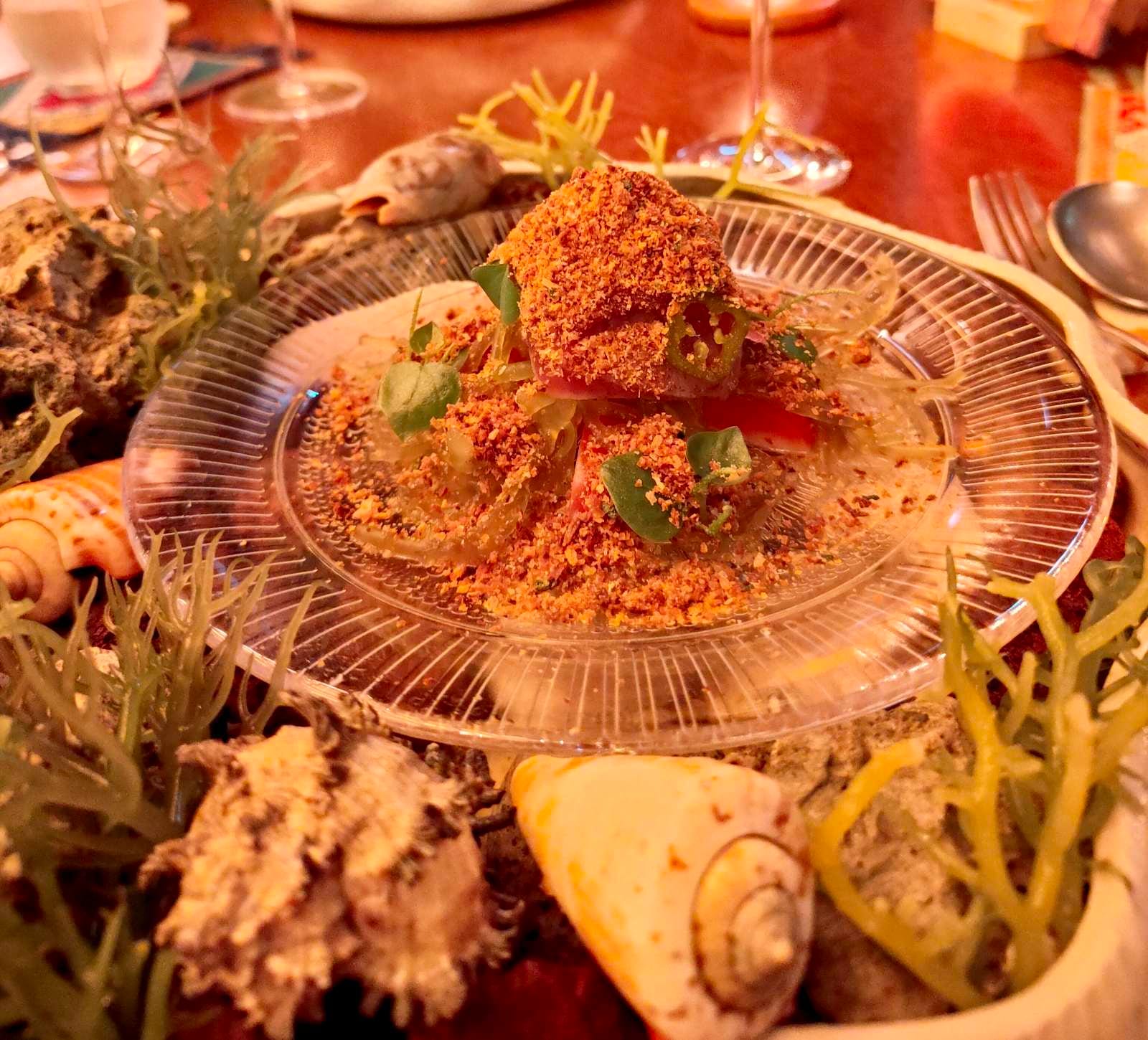
We noticed that the salad had a slightly grainy texture. That’s because of the bubuk—toasted coconut seasoned with powdered garlic, jalapeños, and shallots, giving it that nutty, savory crunch. You have to mix everything together before eating, so the bubuk is fully incorporated into the salad. I found myself drawn to the rich contrast of textures and vibrant flavors of this dish.
Hapag's Mee Goreng
Fourth course: Mee Goreng
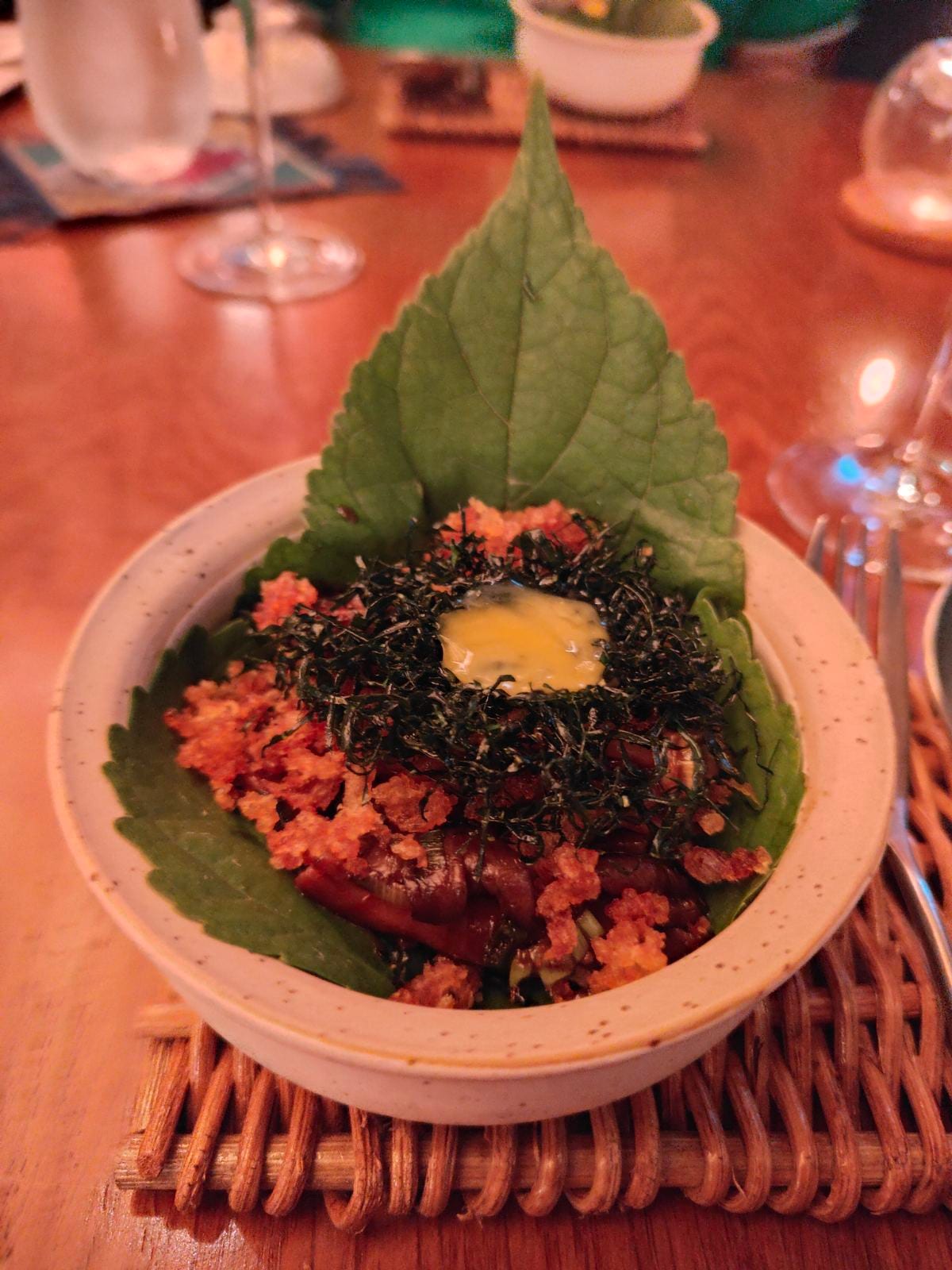
According to Rob, who introduced the noodle dish to us, the Hapag team discovered Mee Goreng on their first night in Zamboanga, where it is a popular late-night snack. It’s typically stir-fried with soy sauce, chili, and vegetables.
“When we went out to Zamboanga Bay around midnight, we discovered a line of food carts mainly selling just three things: shawarma, mee goreng, and milk tea. We came across a Muslim vendor who made mee goreng fresh to order. That became the inspiration behind this dish—a reflection of that honest man’s work,” went his spiel.
Hapag’s version features homemade noodles, wok-fried mushrooms, housemade oyster sauce, sambal, and a quail egg yolk. It’s rich in umami, lightly spicy, and has a chewy-crisp bite. I’m not particularly fond of the dish, but my husband loved its bold flavors and finished his serving in seconds.
Siyagul with Roti Martabak
Fifth course: Siyagul with Roti Martabak
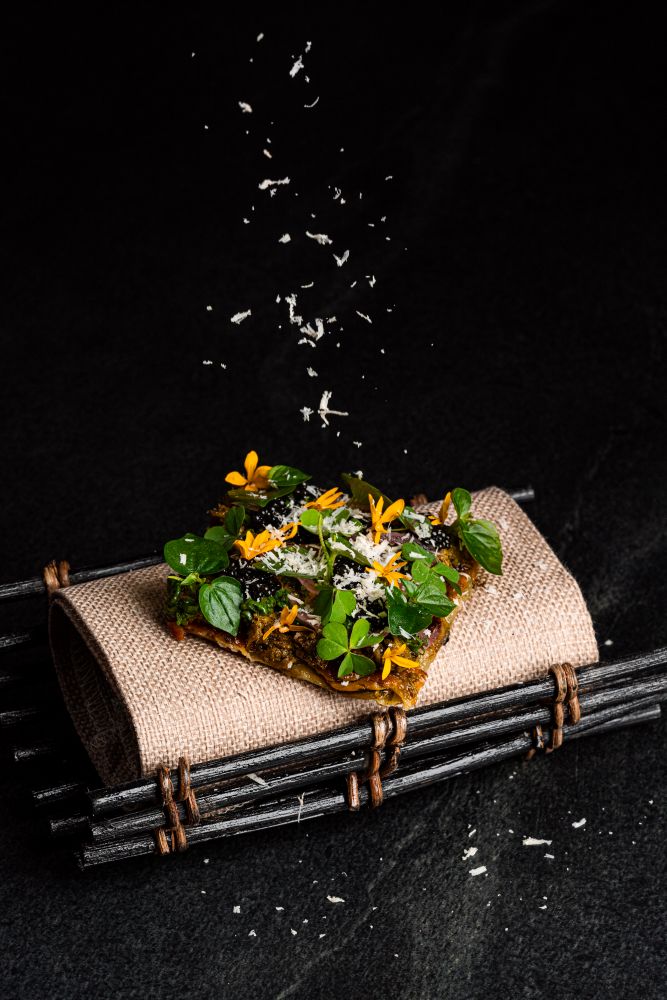
The Hapag chefs shared that Siyagul is a Yakan specialty made with seafood—traditionally stingray—cooked in coconut and burnt aromatics. Since stingray is not readily available in Luzon, Hapag’s version makes use of swordfish, infused with a coconut turmeric mornay sauce.
Roti and siyagul aren’t usually served together. But since the chefs visited during Ramadan, they saw rotis being sold on the streets. That sparked the idea to combine the two—and it turned out to be a great match.
ALSO READ
Culinary Art Meets Tradition in Hapag's Ode to Western Visayas
These Millennial Chefs Break Filipino Tradition at Hapag
To present the dish, the Hapag team layered the Siyagul over a crisp, savory martabak-style flatbread spread with herb pesto, then finished it with pansit-pansitan, marigold flowers, and a touch of caviar and Borracho Cheese from Malagos, Davao for added richness. Each bite was a gentle burst of earthy, herby, and cheesy flavors—familiar yet entirely new.
Hapag's Leche Flan
Sixth Course: Leche Flan with Granita
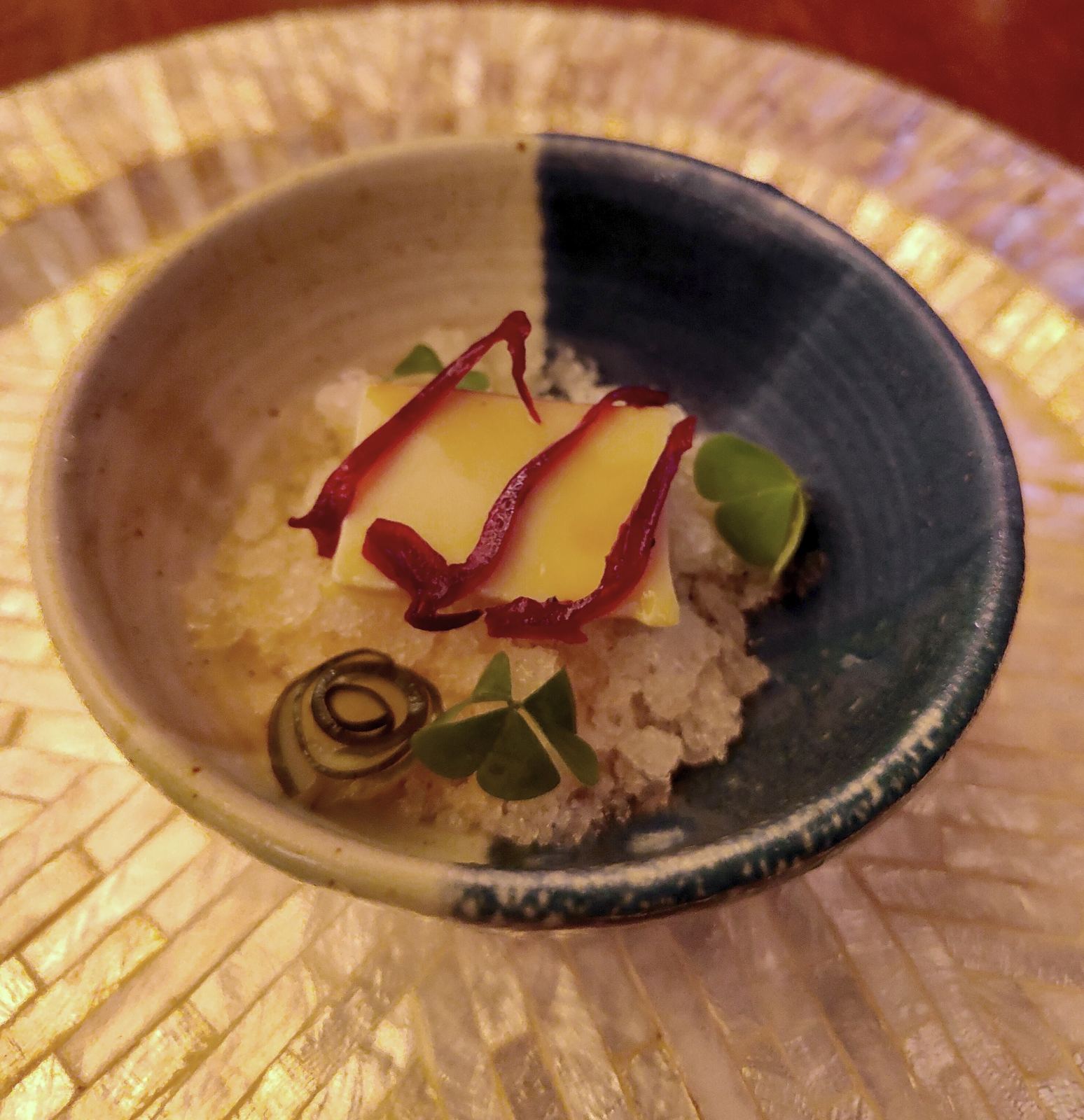
The chefs discovered that in Western Mindanao, leche flan is often served not as a dessert but as a palate cleanser, since many of the region’s dishes are boldly seasoned. The leche flan’s creaminess helps reset the palate between bites of the main courses.
Hapag’s version maintains the dense custard base, sweetened with dark muscovado syrup. But to balance it out, they served the leche flan with a tart calamansi and tanglad (lemongrass) granita.
Hapag's version of Junay
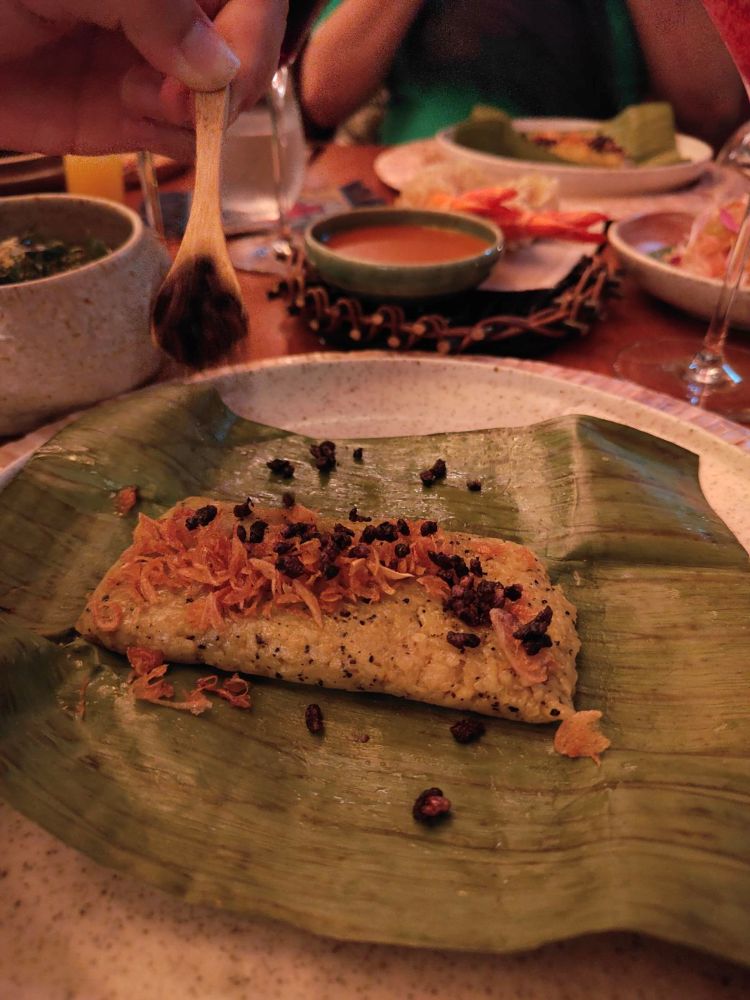
Seventh course: Salu-Salo
According to the Hapag team, Salu-Salo pays homage to the tradition of shared Filipino meals and highlights flavors they experienced in Zamboanga, Basilan, and Tawi-Tawi.
The feast is composed of four dishes. Junay is a Basilan rice cake cooked in burnt coconut and topped with fried shrimp (kalkag) and shallots. Riyandang is a Maranao-style beef short rib stew slow-cooked in coconut and toasted spices—akin to rendang, brought in via regional connections to Indonesia and Malaysia. Camaron Alavar is a prawn dish in curry-style sauce inspired by Zamboanga’s Alavar Seafood Restaurant. To balance all those rich and complex flavors, they also served a light and refreshing Pomelo Salad—a great way to cut through the richness of the other dishes.
Salu-Salo is a thoughtfully composed feast that captures the depth, warmth, and richness of Filipino cuisine.
Knickerbocker in Zamboanga
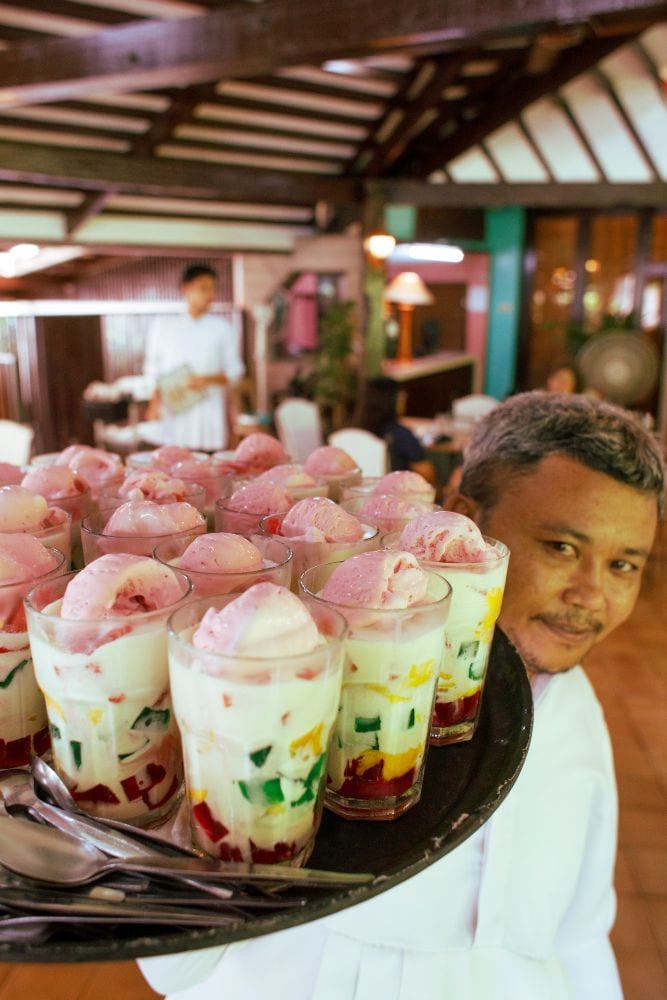
Eighth Course: Knickerbocker
It’s Zamboanga’s answer to halo-halo. Originating from Hacienda de Palmeras in Zamboanga, the knickerbocker is a regional dessert made with fruits, jelly, and milk, topped with strawberry ice cream.
Hapag's Knickerbocker
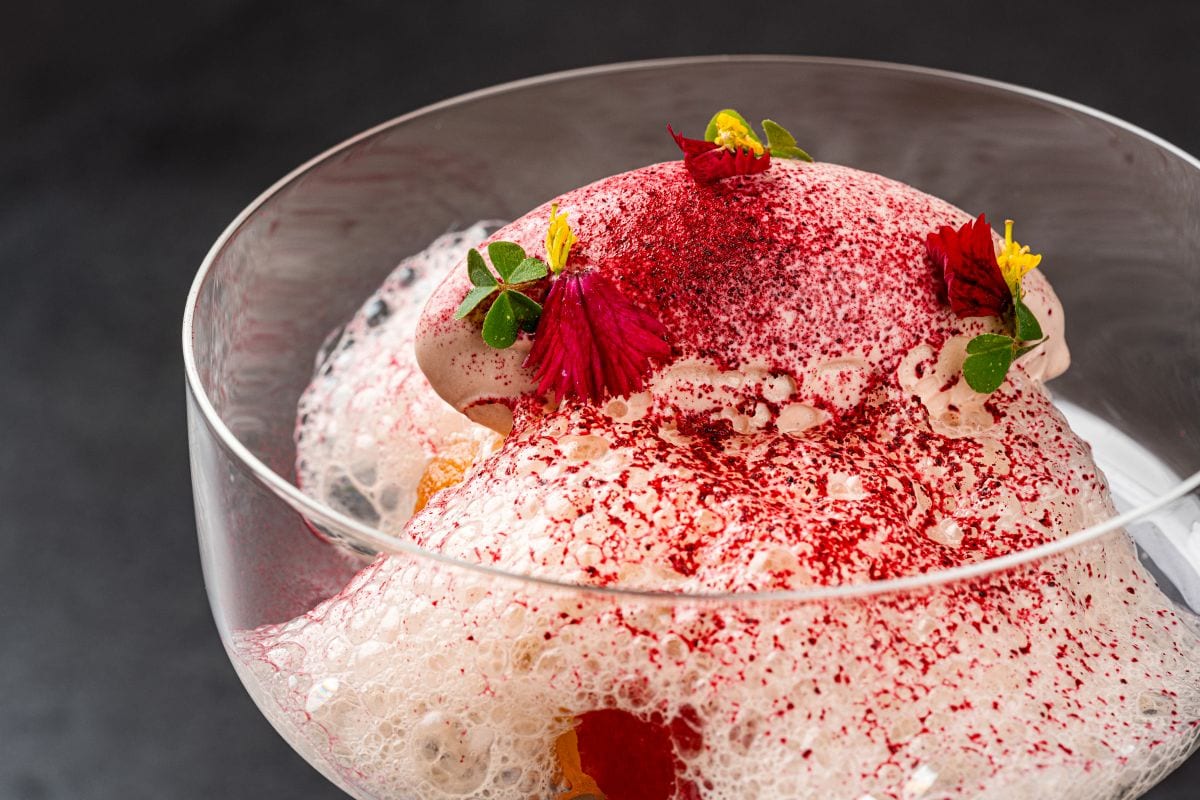
Hapag’s version includes a mix of compressed tropical fruit, pineapple jelly, langka jam, and a lightly sweet amazake-pili nut foam, all finished with strawberry ice cream and edible flowers. It’s light, creamy, and playful—a modern twist on a cherished local treat.
Rice cakes in Basilan
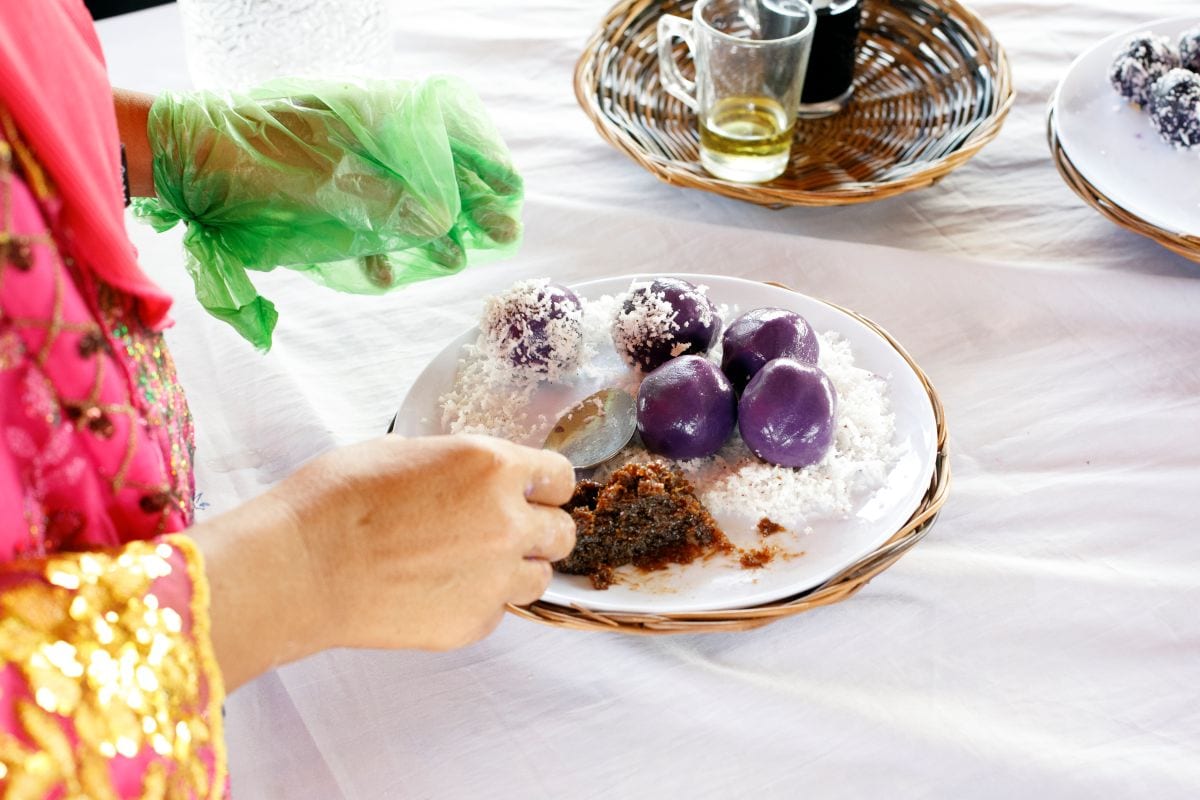
Ninth Course: Bang-Bang Sug
Bang-Bang Sug refers to a spread of Tausug rice cakes traditionally enjoyed with strong Kahawa Sug coffee. The chefs encountered this custom across Zamboanga and Basilan, in coffee houses and floating cottages.
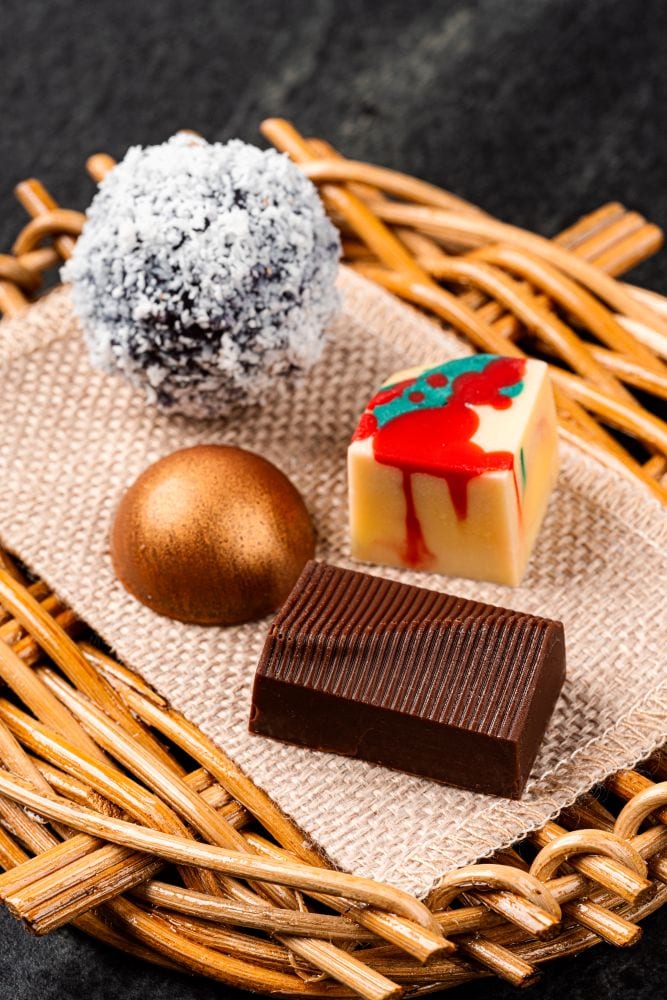
Hapag reinterprets these treats as petit fours: Palikambing—smoked banana with caramel and cinnamon in milk chocolate; Wadjit—sticky rice (biko-style) in dark chocolate; Biyaki—corn mousse in white chocolate; and Putli Mandi—Bukayo syrup in chewy kakanin, coated with grated coconut and white chocolate. Each bite retains its traditional essence while updating the form. Milalitra coffee, with its layers of chocolate and gentle fruitiness, makes for a perfect companion to the petit fours.
Hapag's petit fours
'Filipino food isn't just adobo'
The Western Mindanao menu features wine pairings of fuller Champagne Rosés and sweeter Rieslings that balance spice and intensity. Instead of the usual Pinot Noir, Hapag highlights Syrah and Left Bank Bordeaux for their depth and structure.
I love the fact that they also have non-alcoholic beverages that offer layered, complex flavors, complementing the bold, regional dishes crafted by Navoa and Dolatre.
"Western Mindanao’s flavors are unapologetically bold, so our pairings had to meet that energy," said Hapag’s head sommelier. "We leaned into spice, smoke, and richness, both in the wines and the fermented beverages, to create harmony with the menu."
The Hapag team in Zamboanga
Through this exploration of dishes from Zamboanga, Basilan, and Tawi-Tawi, Hapag not only presents a compelling culinary experience, it also challenges long-held assumptions about what Filipino food is and can be. By highlighting lesser-known flavors, techniques, and ingredients from Western Mindanao, the team invites diners to expand their understanding of our cuisine’s depth and diversity.
As Dolatre put it: “Filipino food isn’t just adobo, sisig, or lumpia. It’s diverse and deeply regional. People in Metro Manila—and abroad—often only know one version. We want to help change that. If diners walk away understanding that Filipino food includes Tiyula Itum and Pianggang, then we’ve done our job.”
The Western Mindanao menu is available for P7,500+ per person. Wine pairing is priced at P2,800+ per person, while non-alcoholic beverage pairing costs P2,000+ per person. To make a reservation, visit the Hapag website at www.hapagmnl.com/reserve.
