

How The Giving Café Builds Communities Through Coffee

Coffee aficionados who find pleasure in sipping their favorite cup of joe should take the opportunity to sit down and have a little chat with award-winning barista and social entrepreneur Michael Harris Conlin, the visionary behind The Giving Café (TGC). The guy might just change the way you appreciate your coffee.
Conlin is quite known in the coffee circle for his remarkable barista skills. His most recent achievement was at the 2022 Global Coffee Championships, where he clinched the bronze medal in the Brewing category and silver in the Latte category.
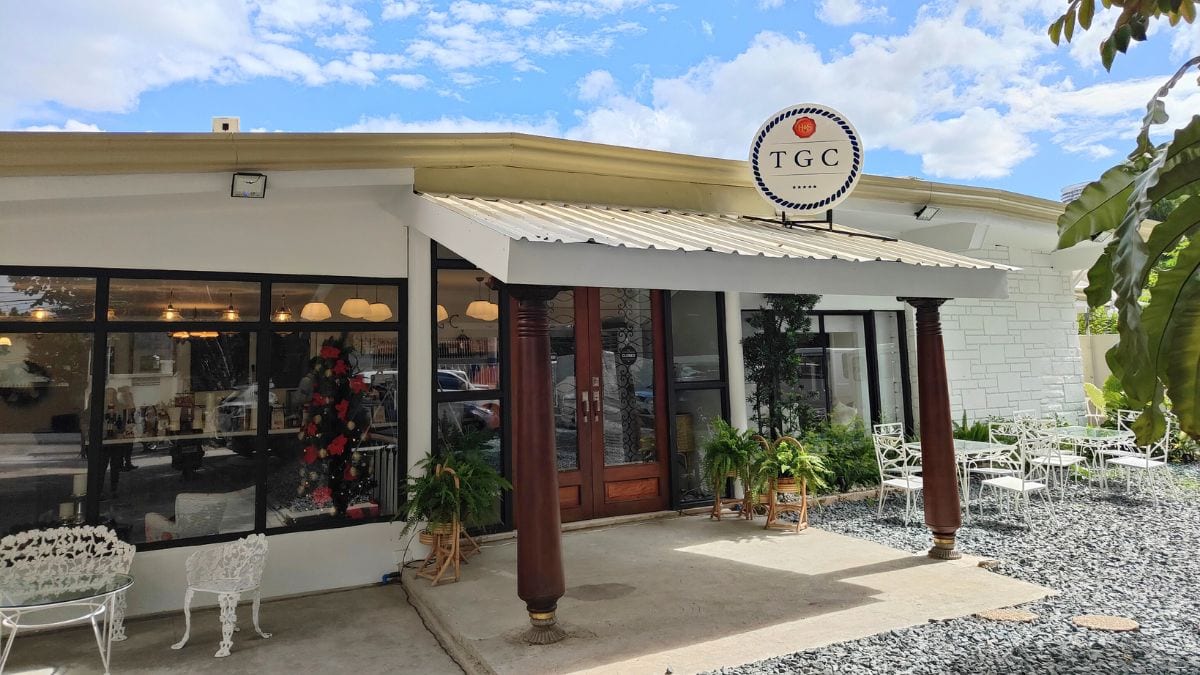
For the Brewing category, he competed using Arabica coffee from Agnep Coffee Farms in Mankayan, Benguet. "They use a Korean system called Jadam farming practices. It's entirely organic and the farm itself is in a forest," he shared during an interview at the launch of TGC A. Mabini, the latest branch of his café, housed in a sprawling 1950s bungalow located along A. Mabini St., Mandaluyong City.
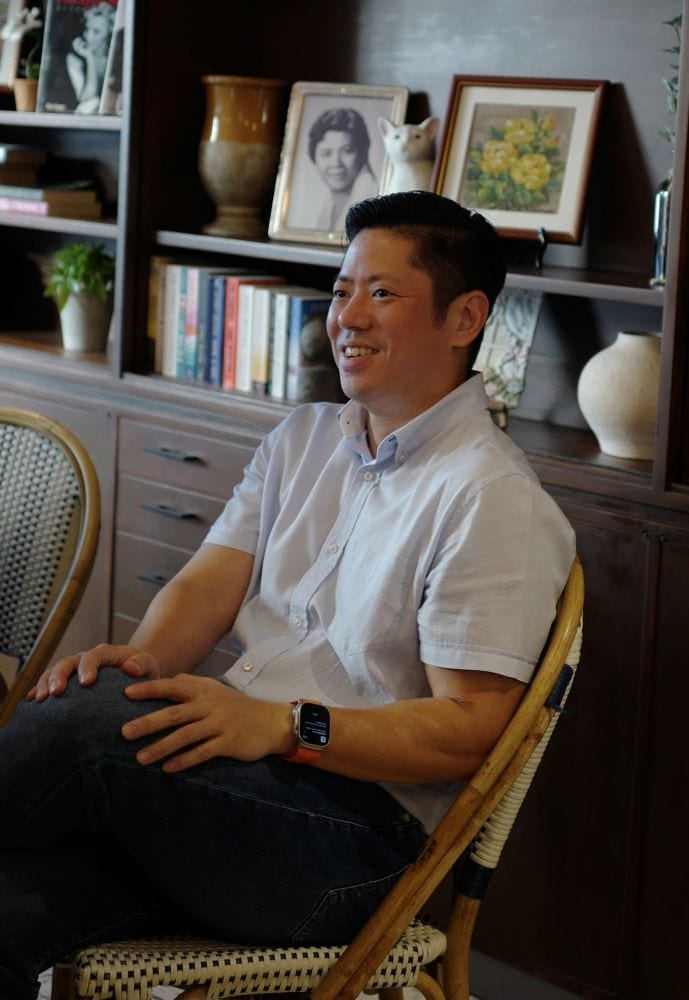
The Giving Café founder Michael Harris Conlin
"When I first tasted [Agnep Farm's] coffee, I thought it was world-class. I thought it was amazing. And I felt that the owners of the farm worked so hard on it that I wanted them to become award-winning. So, I used this coffee to compete in the Brewing category," he said. Fortunately, it earned a bronze medal among 50 other contenders.
The second coffee variety was from a Liberica farm in Calamba, Laguna. "This is one of the last farms in the country that grows pure Liberica. Hindi siya nahaluan ng ibang varietal," he said. "Liberica is such a rare coffee. It has the lowest caffeine content among the three main coffee species (Liberica, Arabica, and Robusta). We, Filipinos, are very lucky to have Liberica, so I felt that it's something we need to highlight."
He dives deep into the intricacies of coffee bean drying processes, especially considering the unique challenges posed by the Philippine climate. "Here, it's hot during the day and the humidity is low, but in the evening, humidity reaches 100 percent. When you're drying something, moisture escapes during the day. At night, the moisture comes back in. The flavor in coffee, especially the volatile aromas, is very hygroscopic. So, imagine the daily cycle of moisture moving in and out. By the time it's dry, the coffee might taste bland or even become unpleasantly pungent or sour," he explained.
"But if you control the drying process—as we did—the flavor profile of Liberica is truly amazing. It can taste like roses or even like turon. It's very sweet with very low bitterness because there's no caffeine. I competed with this coffee in the Latte category, and the judges loved it. I won second place," he added.
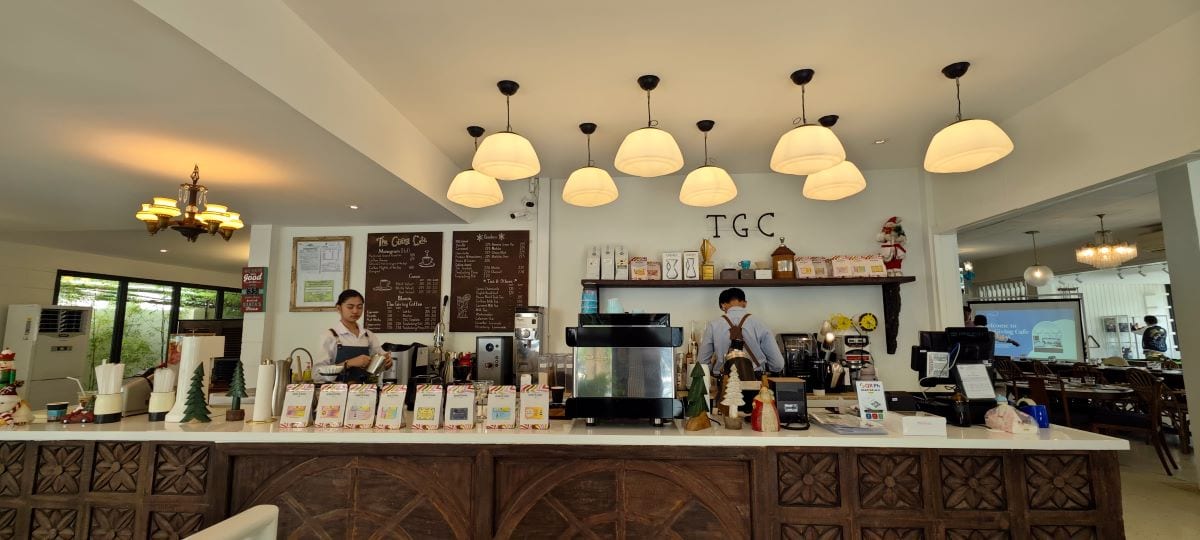
TGC A. Mabini offers an expansive food and beverage menu.
ALSO READ
How Amado Fores is Carving His Own Path in the Restaurant Business: 'It's Not About Being Trendy'
Casa Luisa Offers a Twist on Filipino Cuisine with French Flair
Nurturing the Coffee Value Chain
Talking about his passion for promoting local coffee industry, Conlin said one of his personal advocacies is "to give more value to Philippine coffee. One of the best and fastest ways to achieve this is to bring it abroad and champion it. Compete with it. Be confident with it."
Working in the Philippine coffee market presents many challenges, Conlin admitted. "Producing coffee is very expensive. The reason we need to add value to coffee, or at least show people the value in coffee, is that if the selling price of coffee in a coffee shop is 60 pesos, what's going down the value chain? How much is the farmer actually getting?"
With TGC, his social enterprise, Conlin's goal is to get more people to realize, appreciate, and recognize the craftspeople along the value chain. "That way, they'd be willing to pay a little bit more to enjoy that coffee. Without that understanding, without knowing who those people are, the hard work that goes into it leads to nothing. Bagsak ang presyo."
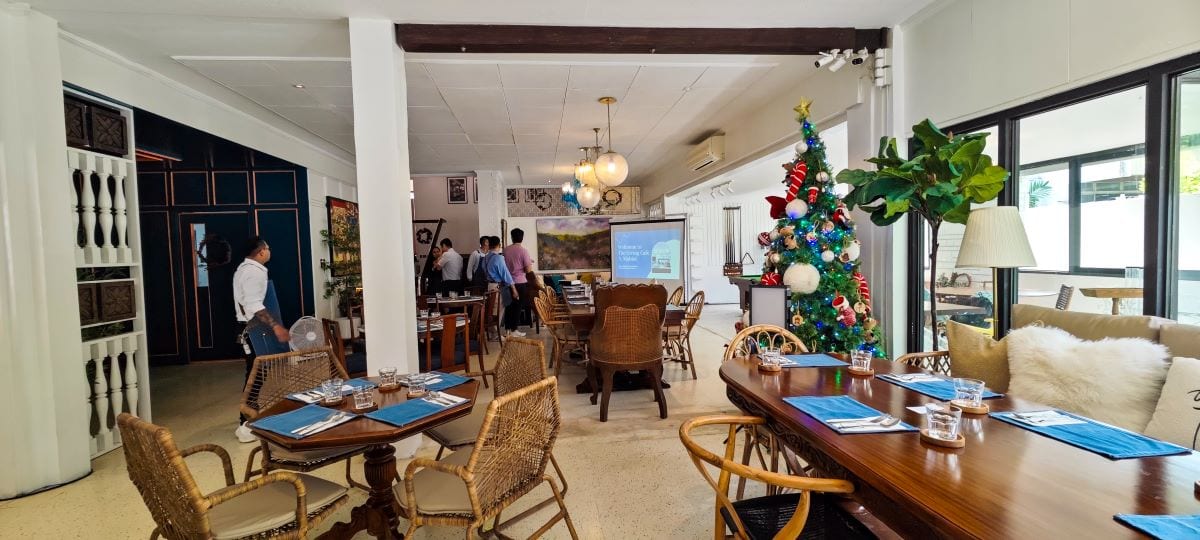
TGC A. Mabini can seat about 168 people, so it's perfect for all sorts of gatherings and reunions.
Conlin, who's the the president and CEO of the coffee solutions company Henry & Sons, established the Foundation for Sustainable Coffee Excellence (FSCE) in 2016. His aim was to provide livelihood for local coffee farmers and build a stronger, more sustainable coffee industry in the country. FSCE supports programs that uplift farming communities by offering educational assistance, conducting seminars on sustainable farming practices, and providing access to basic healthcare.
To fund these programs, he opened TGC Sheridan in 2016. "Here at TGC, it's not just about indulging in food. It's about indulging in the stories, the people, and the lives we touch—from the farmers, the people managing the fermentation, drying, and picking processes, to the barista. All these people have families they need to provide for. My mission is to add value and make people realize that if we want to continue growing coffee in the Philippines, we need to support those at the start of the value chain," he stressed.
When they traveled around Benguet in 2016 and spoke to the sons and daughters of coffee farmers, many shared that they didn't want to continue coffee farming because their families struggled to make ends meet. Thus, it became the FSCE's goal "to ensure that future generations can still enjoy Philippine coffee."
You can find a quiet spot in the café where you can work or read books.

Nourishing Community Spirit
The social entrepreneur is pleased to see their efforts bearing fruit. The number of farmers in Sitio Hartwell, Itogon, Benguet has grown from 60 families, each producing about five kilos of coffee, to over 100 members, producing five tons. "One-third of that goes to Australia. Our friends there buy it at $43 per kilo. Our friends from Montreal also buy it at $43 per kilo. The last third is sold at TGC," he said.
With the opening of TGC A. Mabini, they will be able to adopt a farming community in Calamba, Laguna that produces the award-winning Liberica coffee variety, which is known for its distinct floral and fruity aroma.
"What we realize as a social enterprise is we cannot adopt every community that comes to us. A lot of our coffee farming communities need help. The funding from one branch is not enough, so I really wanted to put up a second branch," he said.
"We designed TGC A. Mabini in such a way that it could be anything for everyone," said Conlin.
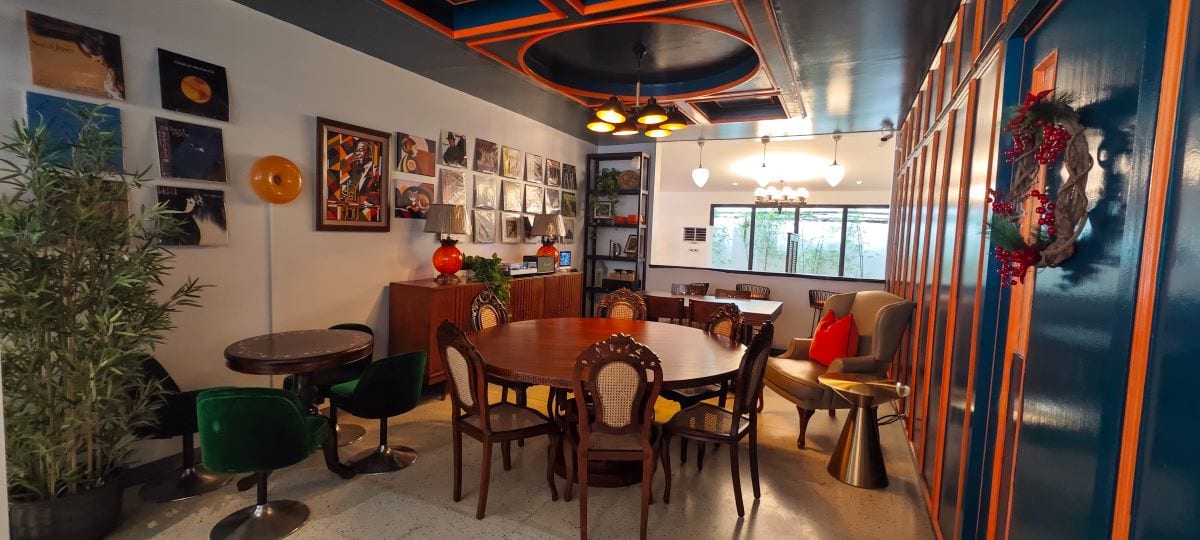
Then, as if by fate, he discovered that his late grandfather, Juan Bautista Lee's house was available for rent. "If my first branch is an extension of our living room to our customers, let this be the extension of our customers' house as their living room. More people these days live in condominiums. They live in one-bedroom units with no space. Let this be their space—a common space, a community. And I believe in building communities," he said.
At the recent media launch, Conlin gave us a tour of the ancestral home-turned-café. With its airy open gardens and large dining rooms, the house can be booked for wedding receptions, family reunions, baby showers, and corporate events and parties. In fact, each room has been designed with a specific occasion in mind. "We made it in such a way that it could be anything for everyone," said Conlin.
The original architecture is left untouched and much of the period furniture pieces have been restored. The ambiance is warm and cheerful. The garden and the various rooms are ideal settings for prenups, group portraits, or just simple selfies and groupies.
TGC A. Mabini offers a selection of Filipino-Chinese comfort food. These include TGC’s classic pancit, shanghai lumpia, lomi, and champorado, all of which can be paired with TGC’s signature coffee.
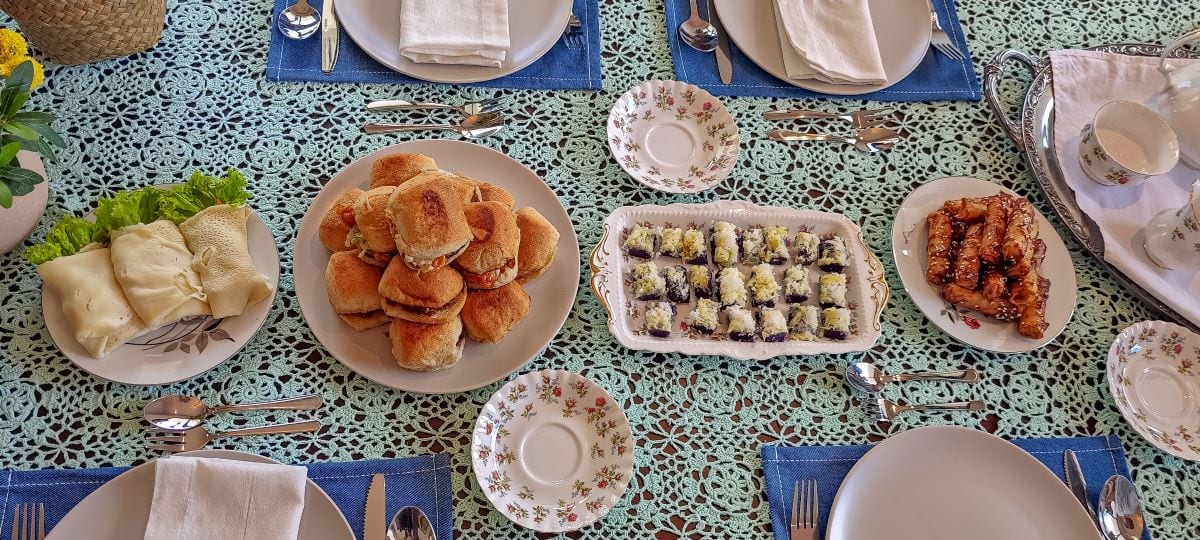
A sample Pinoy Afternoon Coffee and Tea Set at "Mom's Room" in TGC A. Mabini
Guests can enjoy a working lunch in what was once Conlin's grandfather's bedroom. The menu includes Crispy Wontons, Spinach Soup, Yang Chow Rice, TGC Pancit, Lengua con Champignon, Salt and Pepper Pork, Sweet and Sour Chicken, Crispy Tofu, and TGC Ice Cream for dessert. These dishes are available buffet-style or family-style, accompanied by a coffee bar.
In another room, "Mom's Room Pinoy Afternoon Coffee, Tea, and Chocolate Set" evokes the childhood of Conlin's mother and her sisters, who spent afternoons playing with imaginary tea sets. As adults, this make-believe tradition became real, with genuine tea parties held during their travels abroad.
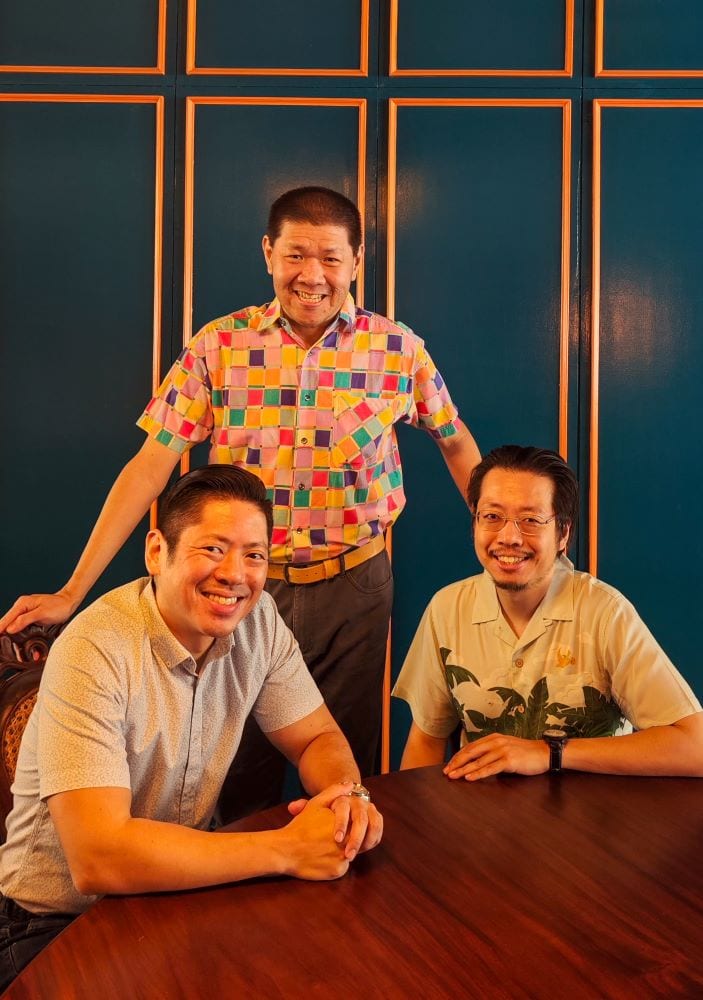
As kids, Michael, younger brother Lloyd Eric (right, seated) and cousin Raymond Lee Syling, would stay at the family's ancestral house in A. Mabini St.
The menu begins with Mini Adobo Sliders, Mini Honey Sriracha Pandesal, and Lumpiang Sariwa. The second course features Mini Champorado Cups with Crispy Danggit, Ginataang Mais Shots, and Ginataang Bilo Bilo Cups. For dessert, enjoy Bibingka, Mini Turon Balls, and Mango Tapioca. Beverages offered are Tsokolate de Batirol, Barako Coffee, Salabat, Tea, Pandan Lemongrass, and Barako Latte with Muscovado Syrup.
Conlin said his family has long believed that food has "the power of bringing people together to create new and lasting memories.”
"We hope that every visit to The Giving Café A. Mabini feels like coming home—a place where you are welcomed, where stories are shared, relationships grow, and the heart of our culture thrives,” he said.
The Giving Café A. Mabini is located at 858a A. Mabini St., Addition Hills, Mandaluyong City. It’s open Tuesday to Sunday, from 7 a.m. to 9 p.m. Its first outlet, at the corner of Sheridan and Pines Streets, Highway Hills, Mandaluyong City, is open Monday to Sunday, from 7 a.m. to 10 p.m.
