
Singapore's Glorious Culinary Identity Is Centuries in the Making

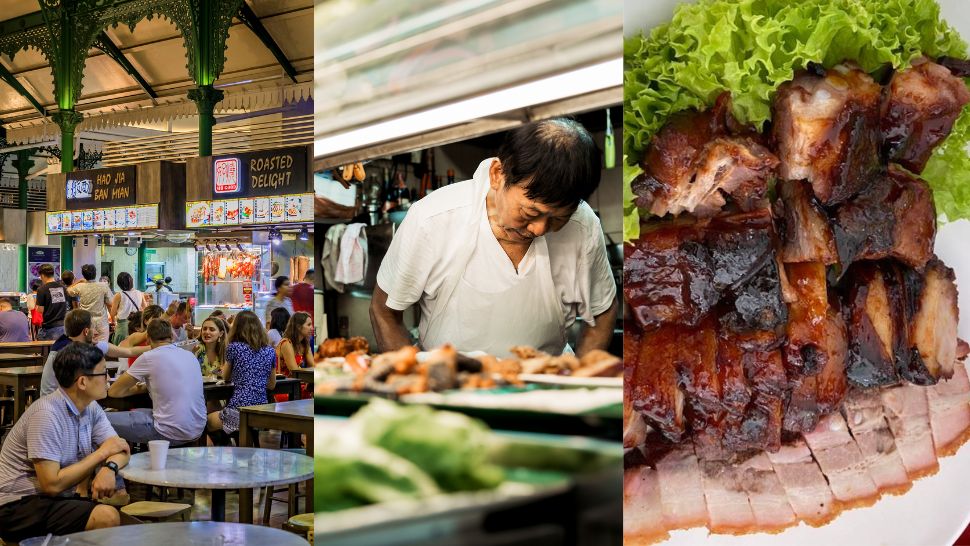
August to September, they say, are two of the most important months of the year for Singapore. August 9 is National Day. August is the one month out of the year when citizens are allowed to display the Singaporean flag out in the open. This time is also defined by Ghost Month. Singapore's largest ethnic group, after all, are Chinese-Singaporeans (roughly 75 percent of the population) and the festival is a pretty big deal, suffice to say.
In September, it's the Singapore Food Festival that is front and center for the world to see. Singapore is known internationally as a gastronomic hub, acknowledged by everyone from random visitors from elsewhere to big-time chefs like Marco Pierre White, Chele Gonzalez, and LG Han, among others. One of Anthony Bourdain's finest episodes from Parts Unknown was shot in Singapore, too.
Bourdain wrote in his field notes: "Sometimes we do adventure shows. Sometimes historical. Other times political or even personal … or self-indulgent immersions in whatever or wherever is of interest to me at the moment... But sometimes—sometimes we go back and do what we used to do all the time: straight-up, old-school, 100 percent pure, uncut, unapologetic food porn."
That's what it really is, frankly: food porn, meals that are just orgasmic and scintillating. Of course, we don't have to tell locals that. Food is considered a national pastime here, as we've come to learn during our trip (people don't cook in their homes, our tour guide quipped; all the more reason to go out to eat). The country's cuisine is a direct reflection of its identity, with a commitment for multiculturalism to endure.
There's this quote by a Filipino poet I really like, which I had used as a sort of launching pad for this visit to the Lion City. Chingbee Cruz once said of Singapore: "In Singapore, I think of Cubao in June." I thought that was beautiful, as a third-worlder looking at first-world Asian examples (plus, because it was my first time here and I can always trust a poet).
Back in the '60s, Singapore was hardly of any interest to the world, except for maybe the Brits or before that, the Japanese. It was a forest-y enclave reeling from the Southeast Asian theater of the Pacific War. Now, it arguably is the most exciting small big country in the East. A local will never run out of praises for the father of modern-day Singapore, Lee Kuan Yew. And I see why.
I will always remember the variety in which Singapore's shades, faces, and flavors moved, such as: gloomy skies, skyscrapers, man-made rivers, lovely sidewalks, Peranakan homes, and British English; Chinese, Indians, Malays, Eurasians, Filipinos, Muslims, Christians, Jews, and Buddhists; and seafood, chili, pepper, coconut milk, rice, noodles, hawker centers, or kopi.
Of course, I also have these fuzzy notes to look back to.
The Great (Flavor) Migration and the Subject of Hawkers

"At least when it comes to food, there's no snobbery in Singapore."
- Kevin Kwan, Singaporean Author
Being one of the world's most important trading ports, Singapore and its Malay cuisine, by extension, has benefited from centuries of Chinese, Indian, Arabic, British and every other migrant in between. The best examples of this can be found in its hawker centers, which capture the zeitgeist of Singaporean cuisine.
Hakwers date as far back as the early 19th century due to early migrant population selling quick meals along street pavements. It's a way of life here, with more than 220 hawkers around the country standing today. These hubs are for dining, bonding, unwinding, and unraveling. Back in 2021, hawker culture had also been recognized by UNESCO for its intangible cultural significance.
Situated on the Eastern side is Joo Chiat Road, and this is a good place to start. It used to be the financial district of Singapore back in the late '60s to the early '70s. It's one of the first heritage towns in the city, best known for its association with Peranakan culture (Chinese, Portuguese, and Malay or Indonesian heritage that is best seen at Koon Seng Road).
Around these neighborhoods are shophouses, stores, and pocket hawkers. Dunman Food Centre houses the likes of Say Seng Famous Tau Kwa Pau, which has been around since 1959, and Tekong Soya Bean Drinks & Curd, a second-generation hawker that stays true to its soy bean milking and bean curding roots.
Say Seng's Tau Kwa Pau.

While Say Seng is famous for its braised duck, pork belly, or Ngoh Hiang (fried pork roll), its Tau Kwa Pau is perhaps its most interesting meal in the most uninteresting of ways. These are bricks of tofu, outsides crunchy and insides moist and tender, stuffed with chopped egg, fried yam, and fishball, and drizzled in the same sauce the stall's braised duck comes with. Plus, it comes with this amazing specialty chili sauce (a common theme in most Singaporean restaurants, really). This pick-me-upper, if you will, is of Chinese origins. There was a time they would stuff chopped pork belly in it, too. Unfortunately, I was too late for those days.
Speaking of Chinese origins, let's head on over to Chinatown, a complex that comes with second- and third-generation hawkers that have been here since 1983. Here, Liao Fan Hawker Chan is world famous for one particular reason: It houses the least expensive Michelin-starred meal in the world—or at least, it used to. Hawker Chan, led by Chan Hong Meng, may have lost a star along the way but that hasn't gotten in the way of its charm and gravitational (and gastronomic) pull.
Once known as Liao Fan Hong Kong Soya Sauce Chicken Rice & Noodles, the stall, nevertheless, is still one of Singapore's most respected joints. Some personal favorites of mine are the Bak-Wa (Chinese bacon), Chai Tow Kway (carrot cake), and, of course, Char Siew Pork.

Because our group came during Ghost month (even though it has some Hokkien roots to it), the gelatinous Bak-Wa was served as an appetizer. It's basically barbecued pork jerky (a lot of similarities with the Philippines' tocino, I'm telling you) that packs quite the flavor in these wafer-thin slices. Grilled over charcoal, the meat has a herby, smoky, savory flavor. There's a little bit of sweetness to it, too. Tender and sweet always go well with each other.
Chai Tow Kway, or fried radish cake, meanwhile, is a pleasant surprise. Being a carrot cake guy myself, I expected it to be sweet and I was wrong. I have never been so glad to be corrected. It's a savory omelette that makes use of fish sauce, preserved vegetables, garlic, and onion. Get a little bit of that black sauce, a dark sweet soy type thing, and you'll think back to the quiet thrills of comfort food at the end of a long shopping trip.
Char Siew Pork, on the other hand, encapsulates the best of what Singaporean cuisine can be to foreign tongues. The contrast of saltiness and sweetness, as well as a little bit of spice, is as box office as it gets. Its impeccable balance umami, sugar, oyster sauce, and honey is, for lack of a better word, god-tier. It exhibits a cultural blend that is indicative of Singaporean life.
Alternatively, Keng Eng Kee, which our group was first fed at during our stay, lives in the annals of my mind. What ended up as an introduction to local food culture perhaps became one of my most cherished of introductions to a country. Located along Bukit Merah Lane 1, Keng Eng Kee is one of Singapore's most beloved Zi Char eateries. It's situated in one of the area's oldest socialized housing projects, which is common in the city-state (80 percent of citizens live in areas like these and they are happy).
This is where the locals eat, they tell us. Three dishes that stood out to me were the Coffee Pork Ribs, Salted Egg Prawn, and Soft Shell Crab with Chilli Crab Sauce and Fried Bun.

The Coffee Pork Ribs is one of the place's best exports and a must-order for anyone who visits. Its coffee sauce exposes all the possibilities and the depth you never knew pork had. Salted Egg Prawn, likewise, possesses the kind of creativity locals pride themselves in. How can we not indulge in the gorgeously golden yolky crisp and the rich, creamy sauces that engulf it?
The same boldness and creaminess is found in the Chilli Crab Sauce and Fried Bun. This is intense. The flavor is grounded on the spice paste, which combines garlic, shallots, chili (a lot of it), and tomatoes. I remember thinking to myself that this must be what seafood supremacy feels like. A dish that conquers the palate, stays on the palate.
We can't talk about hawker culture without mentioning satay, as well.

Along Boon Tat Street, Satay Street offers 10 hawkers that serve these marinated and grilled pieces of meat, usually lamb, beef, chicken, and pork on sticks. Satay is said to be of Malaysian descent, but as those of us who live in the Southeast Asian region know: Sticks and meat over grills just go together. When at Satay Street, it's best to grab a friend and some beer while you're gobbling the sticks down. Tiger bottles, to be exact. What a tragedy that this isn't a sponspored post.
ALSO READ:
Return to SG: A Curated Guide to 48 Hours in Singapore
Singapore to Bangkok By Railway: A 48-Hour Adventure
A Crash Course on Kopi, Chocolate, and Cocktails

Singaporean coffee culture is another conversation in itself. It is glorious. Kopi is the Malay word for the black beverage, and is Singapore's version of a good (or bad) morning cup as we process the trauma of waking up. This lush coffee combines Malay, Hokkien, Cantonese, Vietnamese influences. It relies on Robusta coffee beans coated in sugar and margarine. The drink usually comes with sugar and condensed milk.
2.
"All morning the rattle of
newspapers, the thick smell
of cheap coffee that shakes
you awake slowly. Small
petty units of time slip by
uncounted, and are lost
forever."
- Alvin Pang, Singaporean Poet, "A Selection from 'Work'" From Testing the Silence (1997)
We were taken to Little India for this caffeinated expedition, which only happens to be a few blocks away from Little Israel.
It was at Wanderlust Boutique Hotel that we were asked to brew our own cups. It was a delight and a departure from the basic, too-processed, extra-sugary, calorie-ridden drinks we get from those monopolistic international coffee chains.
There, I found out that there is actually more than 10 different kinds of kopi and every local in Singapore apparently knows them all by heart. Hell, I can't even remember my usual coffee shop order. Here's a quick guide to some of them:

The funny thing about this is that it doesn't exactly end here. There is a whole lot more to kopi than what articles like this say. What a great sin it would be to put a cap on it.
A regular morning for someone who lives in Singapore would consist of kopi, toast, and egg yolks, like the dishes served at Ya Kun Kaya Toast. It is emboldened by heritage, having been established in 1948. The shop has created a long-standing tradition found in petty corners all over Singapore and Asia.
Among the other stops on our food crawl was the Fossa Chocolate factory. Fossa Chocolate is known for its artisanal bean-to-bar chocolate. They usually get their cacao from all around the world, including from countries like Ecuador, Tanzania, and even the Philippines.
To say that Fossa takes its chocolate seriously is an understatement. It even has something called Duck Shit Dancing Tea Chocolate and they made it taste pretty damn good. Fossa has gotten chocolate down to a science, carefully curating flavor profiles. Chocolates, I have come to find out, can have herbal, floral, woody, nutty, fruity, acidic, and astringent tendencies to them, apart from the basic bitterness and, well, the chocolatiness of it. The richness. The profile. The choco-filled drama. We appreciate the sincerity.
As far as night life goes, beneath its stern appearance, Singapore has a side that never sleeps, as well.
Let's circle back to Joo Chiat Road a little bit to talk about booze and Blue Smoke. This micro-brewery comes from the imagination of Singaporean brewers and is made for Singaporean drinkers (and rookie tourists like me). Might I recommend Small Monster and Liang Teh for you? I'll take that silence as a yes.
Small Monster (ABV 4.8 percent) is an IPA-brewed drink that blends Amarillo, Cascade, and Sentinel hops. It's real smooth, take it from me. Liang Teh (ABV 4.2 percent), on the other hand, is a crisp lager that's incredibly light and good for some day-time drinking. They say it goes best with spicy seafood and they are right.
A lot has been said about a place like Emerald Hill at Orchard Road. So I'm not going to get too much into it. Instead, I want to shed some light on the vibrance of Teck Lim Road. Here we can find The Elephant Room.
View this post on InstagramIn this Mumbai takeover of the local district, the cocktail bar is built on the flavors of India. Waiters usually like to ask what guests' favorite drinks are first before they serve them anything.>pA friend of mine, a guy named Kiko, ordered an Old-Fashioned during this drunken experimentation. This was his go-to drink. Interestingly, The Elephant Room's version of the classic drink comes with curry spices and orange coin. As for me, I got a Whisky Sour. This is my go-to drink. The bartender tells me he made it especially for me, and that it's an "Indian festival to the senses." Pungent, sour, and divine, it was. It still is.>pKamasutra is a nice cocktail, too. It's made with Two Indies Rum and "Kamasutra Potion." They throw in some White Garlic Wine and Damask Rose, too, for good measure.>pBorn out of the Punjab State, The Elephant Room's The Indian Lion has earthy and zesty notes with its Fenugreek-leaf infused vermouth and citrus brine.>p
 Photo by Facebook/The Elephant Room Singapore.
>p
@esquireph The Elephant Room at Teck Lim Road has figured out how to put the flavors of India in its cocktails—and they are just glorious. Visit them on your Singapore trip, folks. #esquirephilippines #LittleIndia #ElephantRoom #Singapore #cocktails #luxury #luxurylifestyle ? original sound - Esquire Philippines
>pSee, what other countries trace through museums and books, Singapore traces through its food. Each degree is a different fragment of a different time, identity, community, and place. In Singapore, I think of an explosion of character tucked away in its local plates.>pWhen comparing the country to my homeland, I find parallels and stark contrasts. I marinate in thoughts of how beautiful my home must have been if not for this or that. I marinate in thoughts of what my home could still be. But of all things, I marinate in the otherworldy boldness of Singaporean flavor. May my palate never forget. May this palate sulk in what it's missing out on.>pFor more information, check out the Singapore Tourism Board's official Facebook page.>p
>p
