

16 Things You Need To Know About Spam On Its 83rd Anniversary

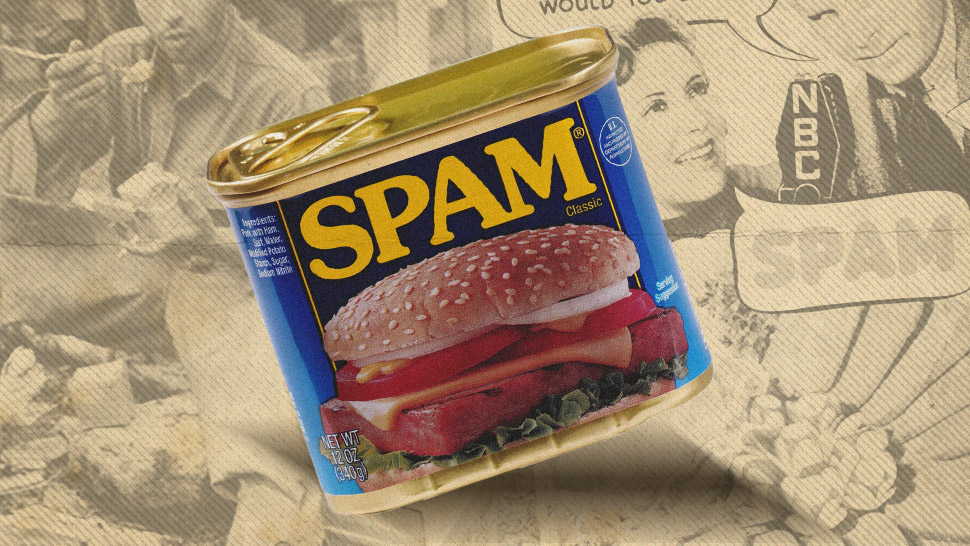
Spam first rolled off the factory line on July 5, 1937, which makes the versatile canned meat 83 years old today. What was initially thought of as a kind of “poor man’s meat” isn’t exactly cheap by canned food standards here in the Philippines, which is why it sort of cuts across social and economic barriers. You’re just as likely to see a can of Spam stored in a lower or middle-class barangay as you would in some posh village or subdivision.
A lot has already been said about how much people all over the world, including us Filipinos, love Spam. So we’ll just gather a few little tidbits and interesting facts for those of us who can’t get enough of it.
1| 8 billion
Since it was introduced in 1937, over eight billion cans of Spam have been sold all over the world. That eight-billionth can was sold in 2012, so it’s fair to say that the brand has sold far more since then.
2| Spam per second
According to the folks at Hormel, the company that makes Spam, 12.8 cans of Spam are eaten in the world every second.
3| 44 countries
Spam is sold in a total of 44 countries around the world.
4| South Korean fans
The biggest consumer of Spam—next to the United States—is South Korea. The brand has sold a total of 1.2 billion cans in South Korea, or the equivalent of about 24 cans for every person in the country. It’s so popular there that Spam products are given as gifts, especially during the Lunar New Year and the “Chuseok” holidays.
5| 350 per minute
A Spam brand plant can produce 350 cans of Spam a minute.
6| A Spam belt around the world
If you wanted to make a Spam “belt” around the earth, you would need exactly 415, 469,599 cans of Spam.
7| 7 million cans
In the US, the undisputed leader in Spam consumption is the state of Hawaii, where seven million cans of Spam are eaten every year. The US territory of Guam is no slouch either. There, the average annual Spam product consumption is about 16 cans per person.
8| A Spam museum
If you’re a major Spam fan, you should check out the Spam Museum located in the city of its birth: Austin, Minnesota.
9| Spam varieties
Spam is sold in 15 different varieties. (Have you tried Spam Tocino?)
10| Ingredients of Spam
If you’ve ever wondered what Spam is actually made of, here it is: Hormel says Spam is actually made up of only six ingredients: pork with ham, salt, water, sugar, sodium nitrite and potato starch.
11| Origins of the Spam name
Spam’s name was the result of a contest that was won by a man named Ken Daigneau, who received $100 for his efforts. No one has ever really come up with a solid explanation for the name, although the most popular theory seems to be that it’s simply a cotraction of the words “spiced ham.” But the company says the real answer “is known only by a small circle of former Hormel executives. And probably Nostradamus.”
12| An expiration date
No, Spam is not meant to last for all eternity. There is actually an expiration date (although the company calls it a “best by” date) stamped on the bottom of the can.
13| Spam in the Philippines
Spam has been popular in the Philippines since World War 2, when it was served to American GIs. By the end of the war, Spam products were adopted into local culture, especially with SpamSiLog (Spam, friend rice and egg), which has become a breakfast staple.
14| Largest joint venture outisde the US
Spam’s manufacturing company Hormel formed its largest joint venture outside the United States in the Philippines. Purefoods-Hormel was created in 1999, under the Ayala Group, which owned Purefoods at the time. In 2001, the company was sold to San Miguel Corporation (SMC).
15| Spam that's made in the Philippines?
The Philippines imports Spam products from elsewhere in the world, but in 2018, SMC announced that it was planning to manufacture Spam in the country. Ramon Ang, SMC’s president, had said then that Purefoods-Hormel actually has the license to manufacture some of Hormel’s products locally. SMC announced plans to build a mnufacturing plant that would be capable of producing up to 500 tons a day, or 150,000 tons a year. That plant has yet to be built as of 2020, however.
16| A Spam restaurant
Spam lovers will remember that there used to be a restaurant called Spam Jam that served variations of Spam products. The menu consisted of items like Spam nuggets, Spam Spaghetti, Spam Burgers, and Spam Musubi (or a Spam sandwich with rice and nori instead of buns).
