
Today I Learned: Tilapia Ice Cream Is Being Developed in Nueva Ecija

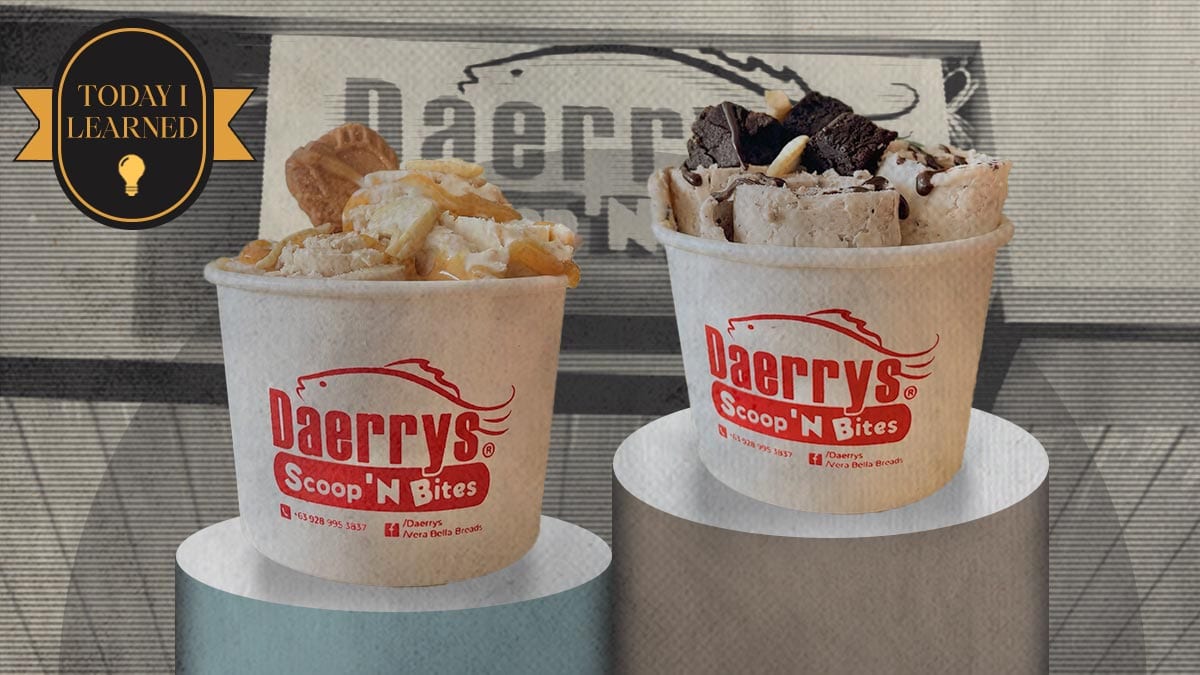
How many times have you found an ice cream container in your freezer, only to realize that what's inside is not that sweet, creamy goodness you've been craving, but frozen fish or other kinds of meat?
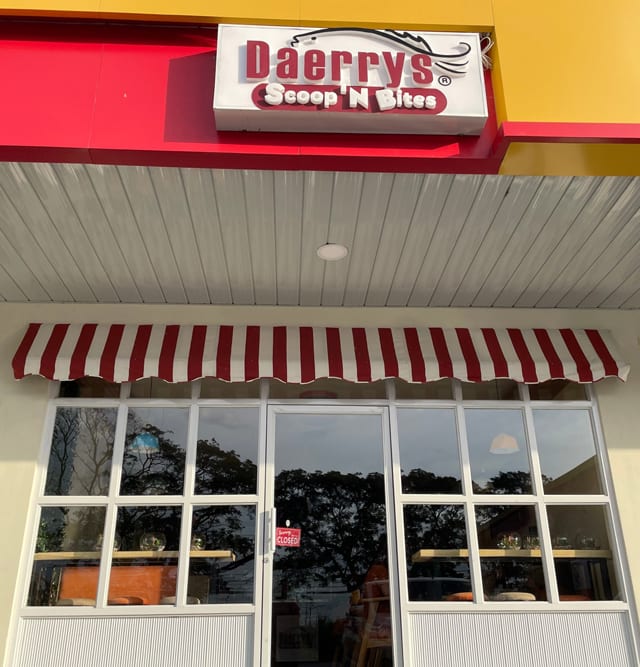
Interestingly, in Nueva Ecija, they're combining these two things: tilapia as the main ingredient of ice cream. Taking on this endeavor is the Daerrys Scoop 'N Bites located in the Science City of Muñoz. The ice cream parlor offers different tilapia ice cream flavors and products, the prices of which range from P50 to P160.
ALSO READ:
Enjoy Good Food and Nature at This Newly Opened Restaurant In Nueva Ecija
How Art Radicals Transformed a Rice Silo in Nueva Ecija into a Nexus of Action and Community
Origins of Tilapia Ice Cream
Dr. Dana G. Vera Cruz, a professor at Central Luzon State University’s College of Home Science and Industry, described the development of tilapia ice cream as unexpected. The idea started with former CLSU President Dr. Tereso Abella, who tasted shrimp-flavored ice cream and challenged them to create an ice cream from tilapia.
Central Luzon State University’s College of Home Science and Industry

Vera Cruz initially did not like the idea since tilapia has a distinct foul odor. But things changed when they were trying to complete a recipe book. The professor rushed into her kitchen, found some steamed tilapia meat, turned it into ice cream, and the rest was history. In the process, this innovation aligns with her goal to provide a solution to the alarming decline in seafood consumption globally.
In a study published by the Oceana and MRAG Asia Pacific in cooperation with the Department of Science and Technology - Food and Nutrition Institute, it was reported that the average annual seafood consumption per individual in the Philippines is equated to 14.32 kilograms, significantly lower than the per capita rate of consumption in 1993 at 36 kilograms per year.
A paper published in 2021 explained that the consumption of fish and other types of seafood helps in improving the health of our brain, eyes, and heart and should be a vital part of our diets.
Meticulous Production
The professor revealed that what makes their tilapia ice cream unique is the absence of the foul smell and aftertaste. She disclosed that they follow a strict water management protocol and use cultured tilapia. They also ensured that the fish were not infused with antibiotics and were not genetically improved or modified. They personally train fisherfolk in the right and meticulous process of growing tilapia.
"Now, after harvest, the tilapia still needed to be placed in a tank for a few days. Then, to start the process of removing the fishy smell, from the time we harvest them, they must be fresh. They can’t be left for long. We need to process them immediately. They can’t be frozen first and then processed later," Vera Cruz explained in detail.
To prolong its shelf life and maintain its quality, the fish was said to be sealed in a vacuum pack upon delivery.
"So, of course, the process of eliminating the fishy smell and aftertaste is a secret. But the process of growing the tilapia is important," the professor added.
Support for Tilapia Ice Cream
Launched in 2013, tilapia ice cream has come a long way. "You know, it was still fishy back then. It was already delicious, but it had an aftertaste. It wasn’t as delicious as it is now," Vera Cruz described. However, even though the product was still far from perfect, demand skyrocketed because of people's curiosity.
Things started to change in 2015 when the product received a P2 million research and development grant from the Department of Agriculture – Bureau of Agricultural Research (DA-BAR) to support its enhancement and commercialization.
In 2016, the tilapia ice cream won the Innovation Gold Award at the Salon International de L'Agroalimentaire (SIAL), besting 350 exhibitors from 25 countries, including renowned brands like Hershey’s and Quinoa.
They also won the 2024 Gregorio Y. Zara Technology Commercialization Award from the National Academy of Science and Technology, the 2024 BELLA Award for Inclusivity in Agribusiness by the Asia Community for Small Business, 2023 Go Negosyo Inspiring Entrepreneurship Award: Food Tourism, 2022 Inspiring Humanitarian Award by World Humanitarian Drive and so forth.
Right after their project with the DA-BAR was completed, the Department of Agriculture - Agricultural Competitiveness Enhancement Fund provided them with a P5 million grant for the upscale production and commercialization of their tilapia ice cream and cookies. It was then followed by a grant from the Department of Science and Technology - Philippine Council for Agriculture, Aquatic, and Natural Resources Research and Development amounting to P3.9 million that gave birth to Daerrys Scoop 'N Bites.
Beating the Challenges
Because of its main ingredient, Vera Cruz shared that the product always received a negative first impression. She even recalled being instructed by marketing gurus not to associate the word 'tilapia' with their ice cream product, but she resisted the idea.
"This is what we discovered, and this is the technology that was developed. Might as well be honest. It’s up to the consumers whether they will like it or not. Whether the word 'tilapia' is there or not, it’s the taste of the product that will speak for itself."
Vera Cruz admitted that their team really took some time before it was perfected to the standards of the consumers. Continuous consumer tests were done, and they listened to feedback given to them.
She also shared that there was even an instance where fish bones were found inside the product, but the team acted promptly to negate this situation and focused on developing a process and technique to eliminate the thorns that could be accidentally found in the product that may potentially harm the consumers.
Like other small businesses, she said that they were also challenged with the packaging at the beginning since they couldn't meet the minimum order quantity required by the suppliers.
When the pandemic struck, uncertainty about their decisions grew as their company was just getting started.
"Why would we be asked to build a company, especially during a pandemic? You know, the risks are high. But I just trusted God. I said, He wants us to do something. Of course, my husband was hesitant. But in the end, our faith prevailed. So I said, let’s just see what God wants us to do," Vera Cruz shared.
Their business, which grew through walking by faith, then surpassed all those challenges as demands continued to rise, which led them to generate a P1.5 million gross income, reaping the fruits of their hard work.
Creating Job Opportunities
As part of their commitment to corporate and social responsibility, they train fish farmers in growing cultured tilapia and sourcing raw products from them. They also use carabao’s milk in making the ice cream and source their milk supply directly from small dairy farms of farmers and cooperatives.
Due to increasing demand, they also forged partnerships with the Philippine Carabao Center and Freshwater Aquaculture Center to further meet their needs in creating the product.
Laid-off workers during the pandemic were also employed by the ice cream shop. Starting with only two staff, they now have 18 workers who have been provided a job opportunity because of the tilapia ice cream.
Ways Forward
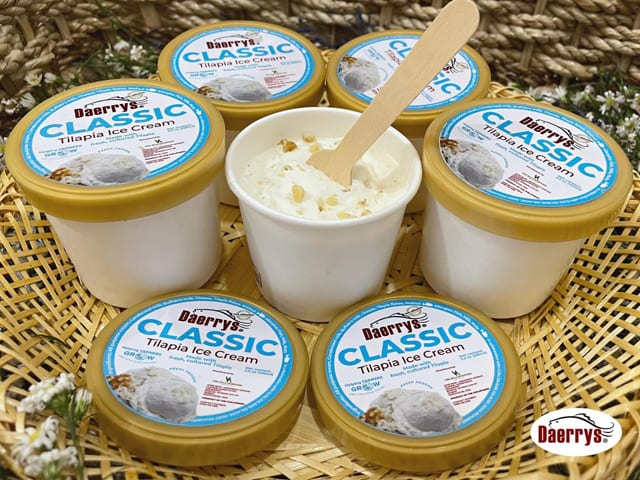
Apart from the classic tilapia ice cream flavor, they have also developed different tilapia ice cream flavors such as Mango Berry, Brownie Bliss, Daerrys Overload, Ube Blast, and Choco Mint that consumers can enjoy through their spin-off company, the Vera Bella.
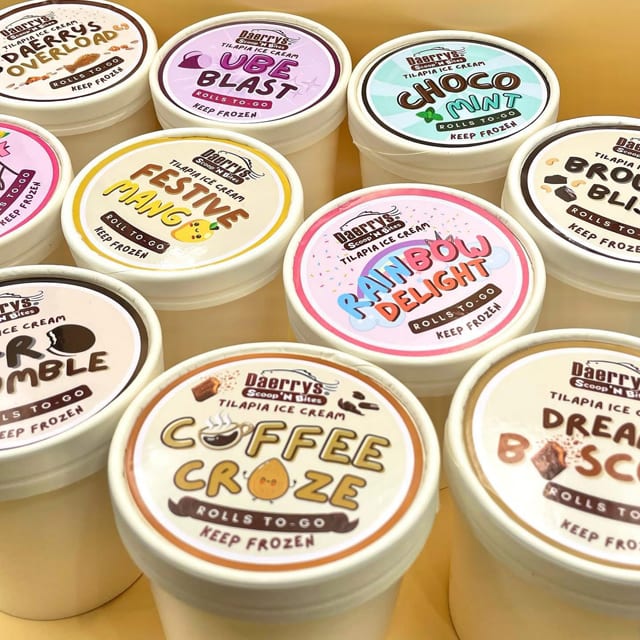
"And what’s good about this is that it will be prepared in front of the customers. So, customers who don’t believe that it contains tilapia can actually see it being prepared. They’ll see the tilapia flakes in it. That’s one thing. And another is, we really want this to be more than just an ice cream parlor."
Since their shop is located near a gasoline station, they also offer a diverse set of menus for travelers who would like to stop by and rest. Tilapia oatmeal cookies, tilapia ice cream sandwiches, and breads made of carabao's milk, camote, and taro chips to continue helping and supporting farmers' livelihood with partnerships from micro, small, and medium enterprises.
